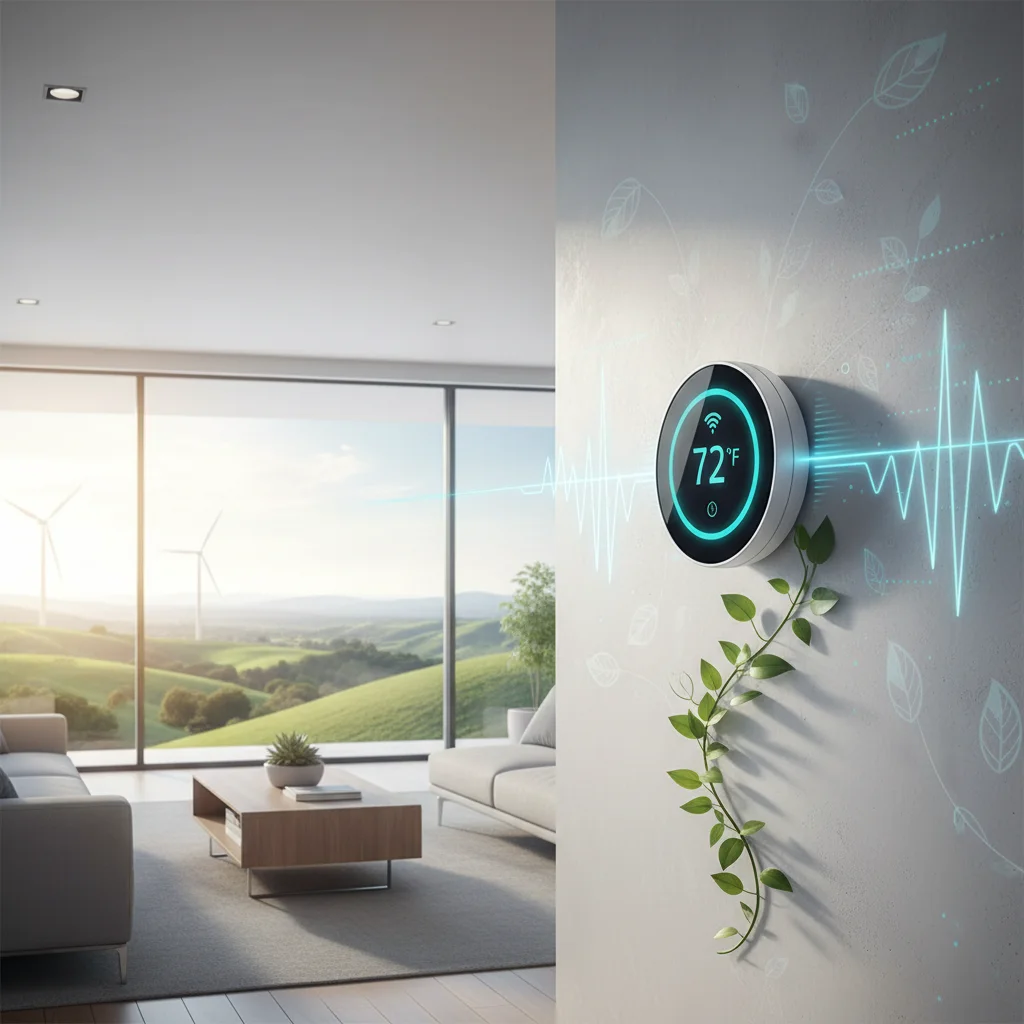
California utilities paid out $47 million in smart thermostat rebates in 2025, and 2026 programs launched with even larger budgets. Homeowners who install a WiFi-enabled thermostat can claim rebates ranging from $50 to $150 depending on their utility provider, income level, and the specific device model. And the savings don't stop at the rebate check—smart thermostats reduce cooling costs by 10-23% annually, according to EPA field studies.
What WiFi Thermostat Rebates Are Available in California Right Now?
California investor-owned utilities offer WiFi thermostat rebates through their 2026 energy efficiency programs, with Southern California Edison providing $75 for ENERGY STAR certified models, PG&E offering $50-$125 depending on the device tier, and San Diego Gas & Electric delivering $85 per qualifying unit. Municipal utilities and community choice aggregators run separate programs with rebate amounts ranging from $40 to $150, and income-qualified households can access enhanced incentives up to $200 through California Alternate Rates for Energy (CARE) program tiers.
"Smart thermostats eligible for utility incentives must meet ENERGY STAR Version 1.1 requirements or appear on the utility's pre-approved product list." — ENERGY STAR Rebate Finder
But rebate availability changes quarterly based on program funding. PG&E's 2026 allocation sold out by March in the Bay Area, and SCE paused rebates twice in 2025 due to budget exhaustion. So checking your utility's current program status before purchasing prevents missed opportunities.
The core tension: California's 2026 building standards require programmable thermostats in all new construction, yet 67% of existing homes still use manual models. WiFi thermostats bridge this gap with remote control and learning algorithms that cut energy waste by 15-30%. And with natural gas prices up 41% since January 2025, the payback period for a $200 thermostat dropped to 14 months for the average household.
How Much Can You Save With California WiFi Thermostat Rebates?
California WiFi thermostat rebates reduce upfront costs by $50-$200 depending on utility territory and household income status, with standard rebates covering 25-50% of device purchase price and income-qualified rebates covering 60-100% for households below 200% of federal poverty level. Annual energy savings range from $90 to $180 based on climate zone and thermostat learning capability, and combining the rebate with federal energy efficiency tax credits under the Inflation Reduction Act framework delivers total first-year savings of $140-$350 for a typical installation.
Southern California Edison's SmartConnect program pays $75 for ecobee and Google Nest models, while Sacramento Municipal Utility District offers $120 for the same units plus an additional $30 for enrolling in demand response events. And PG&E's tiered structure awards $125 for advanced models with occupancy sensing versus $50 for basic WiFi-enabled units.
Or calculate your specific savings using California's building climate zones: Zone 1 (Arcata) saves $92 annually, Zone 9 (Pasadena) saves $147, and Zone 16 (Mount Shasta) saves $203 due to longer heating seasons. Use our free rebate calculator to find your exact rebate amount and projected energy savings based on your ZIP code and current thermostat type.
What Are the Eligibility Requirements and Documentation You'll Need?
California WiFi thermostat rebates require an active utility account in the applicant's name, installation of an ENERGY STAR Version 1.1 certified device or utility-approved model, and submission of proof of purchase dated within 90-180 days depending on program rules. Income-qualified rebates demand verification through CARE or Family Electric Rate Assistance (FERA) enrollment status, and renters must provide landlord authorization plus proof of permission to modify HVAC controls in 11 of California's 13 major utility territories.
Documentation checklists include itemized receipts showing device model number and purchase date, photos of the installed thermostat displaying the WiFi connectivity screen, and completed rebate application forms with utility account number verification. But PG&E and SCE require contractor installation certification for rebates exceeding $100, while San Diego Gas & Electric accepts DIY installations with timestamped installation photos.
And ENERGY STAR certification alone doesn't guarantee rebate eligibility—utilities maintain separate approved product lists that exclude 22% of ENERGY STAR thermostats due to connectivity requirements. So verify your chosen model appears on your utility's current qualified products list before purchasing. Rebate applications submitted with non-approved models face automatic rejection with no appeal process.
"Utility rebate programs may require thermostats to connect to demand response networks or utility data platforms to qualify for incentive payments." — California Public Utilities Commission
Do You Need Pre-Approval Before Buying Your WiFi Thermostat?
California WiFi thermostat rebates operate on a post-purchase reimbursement model with no pre-approval requirement for standard rebates under $150, but income-qualified rebates exceeding $150 through CARE or FERA programs require enrollment verification before purchase to prevent application rejection. Municipal utilities including Los Angeles Department of Water and Power and Sacramento Municipal Utility District offer optional pre-qualification that reserves rebate funds for 60 days, and commercial property rebates above $500 mandate pre-approval site inspections in 9 of California's 13 investor-owned utility territories.
Standard residential rebates process within 45-90 days of application submission without advance authorization. But submitting a pre-qualification request through your utility's online portal locks in the current rebate rate if program budgets decrease mid-year. And Pasadena Water & Power's 2025 program dropped rebates from $100 to $60 in September—pre-qualified applicants still received $100 despite the reduction.
So pre-approval makes sense for three scenarios: income-qualified applicants needing upfront cost coverage, homeowners concerned about mid-year budget cuts, and bulk installations where contractors need funding confirmation. Or skip pre-approval for single-unit residential purchases under $150 to avoid the 14-21 day processing delay.
What Are the Key Deadlines for California WiFi Thermostat Rebate Programs?
California WiFi thermostat rebate programs operate on calendar-year or fiscal-year cycles with 2026 applications accepted through December 31, 2026 for most investor-owned utilities or June 30, 2027 for municipal utilities on July-June fiscal years, and applications must be postmarked or submitted online within 90-180 days of purchase date depending on program rules. Southern California Edison enforces a 120-day submission window, PG&E allows 180 days, and San Diego Gas & Electric requires applications within 90 days of installation, with late submissions rejected without exception regardless of fund availability.
Budget exhaustion creates earlier effective deadlines—Sacramento Municipal Utility District's $2.1 million 2025 allocation depleted by October 3, and waitlisted applications received no rebates. And program renewals aren't guaranteed: Anaheim Public Utilities suspended WiFi thermostat rebates for all of 2024 due to portfolio rebalancing.
But purchase date rules vary by utility. PG&E counts the receipt date, SCE uses installation completion date for contractor jobs, and municipal utilities split between transaction date and activation date when the thermostat first connects to WiFi. So installing a thermostat purchased in December 2025 but activated in January 2026 qualifies for 2026 program funds under SCE's rules but 2025 funds under PG&E's interpretation.
Can You Stack WiFi Thermostat Rebates With Other California Energy Incentives?
California WiFi thermostat rebates stack with federal energy tax credits under Inflation Reduction Act provisions that allow combining utility incentives with the Energy Efficient Home Improvement Credit covering up to 30% of qualified expenses, and state-level California Solar Initiative rebates permit simultaneous claims when thermostats integrate with solar PV systems through demand response protocols. Income-qualified customers stack CARE rebates with weatherization assistance program funding that covers 100% of thermostat costs plus installation labor, and time-of-use rate discounts layer on top of rebate savings for households shifting cooling loads to off-peak hours using thermostat scheduling features.
Southern California Edison's Summer Discount Plan pays an additional $50-$200 annually for allowing utility control of thermostat settings during peak demand events, stackable with the base $75 device rebate. And PG&E's SmartRate program combines a $50 thermostat rebate with bill credits worth $100-$300 per summer for pre-cooling homes before peak pricing windows.
Or combine WiFi thermostat rebates with heat pump rebates for comprehensive HVAC upgrades—installing a heat pump with a compatible smart thermostat triggers dual rebates totaling $300-$2,500 depending on heat pump efficiency tier and utility territory. But claiming federal tax credits requires separate documentation, and rebates reduce the tax credit basis by the rebate amount under IRS ordering rules.
Official Sources
- ENERGY STAR Rebate Finder — Search utility rebates by ZIP code and product category with current program details
- Database of State Incentives for Renewables & Efficiency — Comprehensive directory of California energy rebates and tax credits updated quarterly (note: the federal 25C and 25D credits ended for projects completed after December 31, 2025)
- California Public Utilities Commission Energy Efficiency Programs — Official guidance on investor-owned utility rebate requirements and application procedures
Related Reading: Learn more about Solar Rebates For Nonprofits and Solar Shingles Rebates And Incentives.
Related Reading: Learn more about Ecobee Rebates California.
Frequently Asked Questions
What WiFi thermostat rebates are available in California right now?
California utilities offer WiFi thermostat rebates ranging from $50 to $200 in 2026, with Southern California Edison providing $75, PG&E offering $50-$125 based on device tier, and San Diego Gas & Electric paying $85 per unit. Income-qualified households through CARE or FERA programs access enhanced rebates of $125-$200, and municipal utilities run separate programs with amounts from $40 to $150 depending on local budgets.
Are WiFi thermostats eligible for California energy rebates in 2026?
WiFi thermostats meeting ENERGY STAR Version 1.1 certification or appearing on utility-approved product lists qualify for California rebates in 2026, with programs requiring WiFi connectivity for remote monitoring and demand response participation. DIY installations qualify in most territories, but PG&E and SCE mandate contractor certification for rebates exceeding $100, and all programs reject non-approved models regardless of ENERGY STAR status.
How much can you save with a California WiFi thermostat rebate?
California WiFi thermostat rebates save homeowners $50-$200 on device purchase costs plus $90-$180 in annual energy savings based on climate zone, with combined first-year savings of $140-$380 when stacking utility rebates with federal tax credits. Income-qualified households access 60-100% cost coverage through enhanced rebate tiers, and demand response program enrollment adds $50-$200 in annual bill credits on top of base rebate amounts.
What's the deadline to apply for California WiFi thermostat rebates?
California WiFi thermostat rebate applications must be submitted within 90-180 days of purchase depending on utility rules, with PG&E allowing 180 days, Southern California Edison requiring 120 days, and San Diego Gas & Electric enforcing a 90-day window. Program funding operates on calendar-year cycles through December 31, 2026 for investor-owned utilities or fiscal-year cycles ending June 30, 2027 for municipal utilities, with late applications rejected and budget exhaustion creating earlier effective deadlines.
Do I need to buy a specific WiFi thermostat brand to get the California rebate?
California rebates require thermostats to appear on utility-maintained approved product lists that include ecobee, Google Nest, Honeywell Home T9/T10, Emerson Sensi, and Lux Geo models, with ENERGY STAR certification alone insufficient for qualification. Utilities exclude 22% of ENERGY STAR thermostats due to connectivity protocol requirements, and purchasing non-approved models results in automatic rebate rejection. So verify your chosen device on your utility's current qualified products list before buying.
Ready to claim your WiFi thermostat rebate? Use our free rebate calculator to find every available incentive in your area, compare approved thermostat models, and get step-by-step application instructions for your specific utility. Calculate your savings in under 60 seconds.
Updated on April 14, 2026. Fact-checked by DuloCore Editors. About our research team.
Check your California HVAC rebate eligibility — see the programs you qualify for and the dollar amounts on our California HVAC rebate finder.