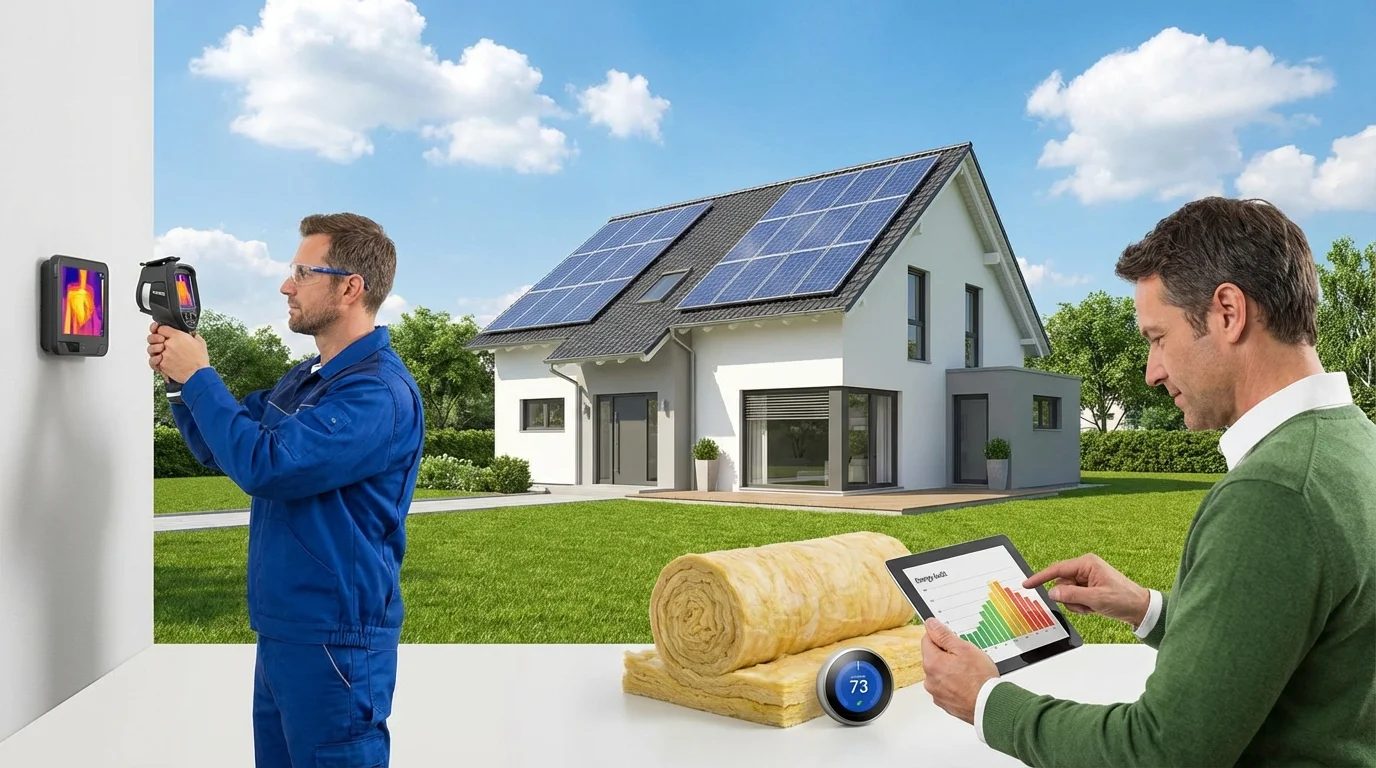
Low-income households in the United States spend up to three times more of their income on energy bills than other households, a gap that widens during extreme weather events. This disproportionate energy burden forces families to make difficult choices between heating, cooling, and other basic necessities. So federal and state initiatives aim to close this gap by directly improving home energy efficiency, which permanently lowers monthly utility costs.
How Much Financial Assistance Can I Get from WAP and Is Funding Still Available?
The Weatherization Assistance Program (WAP) provides an average of $8,000 in home energy upgrades per eligible household in 2026. Funding, administered by the U.S. Department of Energy and supplemented by the Bipartisan Infrastructure Law, remains available through state and local agencies nationwide.
Financial assistance from WAP isn't a direct check to the homeowner. Instead, the program covers 100% of the cost for approved energy-efficiency services and upgrades, with an average value of $8,000 per home. And this amount varies based on the specific needs identified during a professional home energy audit. The Bipartisan Infrastructure Law allocated an additional $3.5 billion to WAP, ensuring robust funding through 2026 and beyond. So households don't need to worry about the program ending soon. But funding is distributed through local community action agencies on a first-come, first-served basis, making timely application essential. The program's goal is to reduce annual energy costs for low-income families by an average of over $372.
"The U.S. Department of Energy's (DOE) Weatherization Assistance Program (WAP) reduces energy costs for low-income households by increasing the energy efficiency of their homes, while ensuring their health and safety." — U.S. Department of Energy
Am I Eligible for WAP? What Are the Income Limits for My State?
Eligibility for the 2026 Weatherization Assistance Program is primarily determined by household income, which cannot exceed 200% of the federal poverty level. States also use 60% of the state median income as a qualifying threshold, prioritizing seniors, families with children, and individuals with disabilities.
To qualify for WAP, a household's income must fall at or below 200% of the federal poverty guidelines. For example, in 2026, the limit for a four-person household is approximately $62,400, though this figure is adjusted annually. And some states use an alternative metric: 60% of the state's median income, which is often a higher threshold. But income isn't the only factor. So priority is given to households with members who are over 60 years old, have disabilities, or include children under 19. If a household receives Supplemental Security Income (SSI) or Aid to Families with Dependent Children, it is automatically considered income-eligible for WAP. Applicants must provide proof of income for all household members to verify eligibility. Many of these upgrades also qualify for federal energy tax credits.
What Weatherization Improvements and Equipment Are Covered by WAP, and How Do I Apply?
WAP covers a range of improvements, including installing insulation, air sealing, and upgrading or repairing heating and cooling systems. The application process for 2026 requires contacting your state's designated local weatherization agency to verify eligibility and schedule a home energy assessment.
The program focuses on improvements that deliver the highest energy savings. So common upgrades include installing attic, wall, and floor insulation; sealing air leaks around windows and doors; and tuning, repairing, or replacing inefficient heating and cooling systems. And diagnostic testing is a key part of the process, ensuring measures address health and safety concerns like carbon monoxide levels. To apply, you must find your local WAP provider through your state's energy office or housing authority website. The agency will provide an application and guide you through the required documentation, which typically includes income verification and proof of residency. Once approved, the agency schedules a comprehensive energy audit to determine which specific upgrades your home needs.
Do I Need a Specific Contractor for WAP, and What Are the Application Deadlines?
Homeowners do not select their own contractors for WAP services; the program uses a network of accredited and trained professionals assigned by the local agency. Application deadlines are not nationally fixed for 2026; they vary by state and depend on local funding availability, operating on a rolling basis.
The WAP program maintains high standards for all work performed. And to ensure quality and safety, only contractors who have received specific training and certifications are authorized to complete WAP projects. So the local WAP agency manages the entire process, from hiring these professionals to inspecting the final work. This system protects the homeowner from vetting contractors and guarantees the improvements meet strict Department of Energy guidelines. Because funding is allocated annually and distributed locally, there isn't a single national deadline. So interested households should contact their local agency as early as possible, as assistance is typically provided until that year's funds are exhausted.
Can I Combine WAP with Other State or Utility Weatherization Rebates and Programs?
Yes, WAP funds can be combined with other assistance programs, including the Low Income Home Energy Assistance Program (LIHEAP) and various state and utility rebates. This "stacking" approach in 2026 allows for more comprehensive home energy retrofits than one program alone provides.
Leveraging multiple programs is a common strategy to maximize home energy improvements. For example, WAP funds are often used for structural improvements like insulation and air sealing, while LIHEAP funds can help pay for immediate heating or cooling bills or emergency furnace repairs. And many local utilities offer their own rebates for specific equipment, such as new high-efficiency heat pump rebates or smart thermostats. The local WAP agency is the best resource for identifying these opportunities. So they can coordinate services to ensure all available funds are used effectively without duplication. Use our free rebate calculator to discover local incentives you can stack with WAP.
Comparing Energy Assistance Programs
| Program | Assistance Type | Eligibility Focus | Typical 2026 Benefit |
|---|---|---|---|
| WAP | Home energy efficiency upgrades | Income-based (200% of poverty level) | $8,000 in home improvements |
| LIHEAP | Bill payment assistance, crisis aid | Income-based (150% of poverty level) | $500 - $1,500 in bill credits |
| Utility Rebates | Equipment-specific cash back | Varies by utility, often not income-based | $50 - $2,000 per appliance |
Official Sources
- Department of Energy (DOE) WAP Page — The official federal resource for the Weatherization Assistance Program, including state contacts and program rules.
- DSIRE Database of State Incentives — A comprehensive database of state, local, utility, and federal incentives that promote renewable energy and energy efficiency.
Frequently Asked Questions
Who is eligible for the Weatherization Assistance Program (WAP)?
Eligibility is primarily based on income. For 2026, households must have an income at or below 200% of the federal poverty guidelines. Priority is given to households containing elderly persons (60 or older), individuals with disabilities, or families with children under 19. Automatic eligibility is often granted to recipients of SSI or other federal assistance programs.
How do I apply for WAP services?
To apply, you must contact your local WAP agency. These are typically non-profit organizations or community action agencies designated by your state. You can find your local provider through the DOE's state-by-state contact map. The agency will provide an application and request documentation to verify your income and household status.
What types of home improvements are covered by the Weatherization Assistance Program?
WAP covers a wide range of energy efficiency measures. The most common improvements include adding insulation to attics, walls, and floors; sealing air leaks; duct sealing and repair; and repairing or replacing inefficient heating and cooling systems. The program also addresses health and safety issues, such as ensuring proper ventilation and testing for carbon monoxide.
Is there a deadline to apply for the Weatherization Assistance Program?
There is no national application deadline for WAP. Programs are administered at the state and local level, and most operate on a rolling basis throughout the year. However, funding is limited and typically distributed on a first-come, first-served basis. It is best to apply as early as possible once your local agency begins accepting 2026 applications.
How does WAP differ from other energy assistance programs?
WAP provides long-term solutions by making physical improvements to a home, which permanently reduces energy consumption and lowers utility bills. In contrast, programs like the Low Income Home Energy Assistance Program (LIHEAP) primarily offer short-term financial aid to help families pay their existing energy bills, especially during crises.
Find All Available Home Improvement Rebates
Don't leave money on the table. Use DuloCore's free tool to instantly discover every federal, state, and utility rebate available for your home improvement project in 2026.
Calculate Your Savings NowLast reviewed: April 14, 2026. Reviewed by DuloCore Energy Specialists. About the team.