Update (2026): The federal Energy Efficient Home Improvement Credit (Section 25C) expired December 31, 2025, following the passage of the OBBBA. Check state and local programs for current incentives.
Your home's water heater is the second-largest energy consumer after your HVAC system, silently adding to your utility bills every single month. For millions of households, this appliance operates inefficiently, wasting hundreds of dollars annually without a single warning sign. But a targeted assessment pinpoints exactly where that energy is escaping and how to reclaim it through modern, high-efficiency upgrades backed by 2026 government incentives.
What is a Water Heater Energy Audit and Why Should I Consider One?
A water heater energy audit is a diagnostic assessment that evaluates an existing water heater's performance, insulation, and safety settings to identify energy waste. This 2026 evaluation provides homeowners with a data-driven report detailing specific upgrades that reduce energy consumption by 20-50% annually.
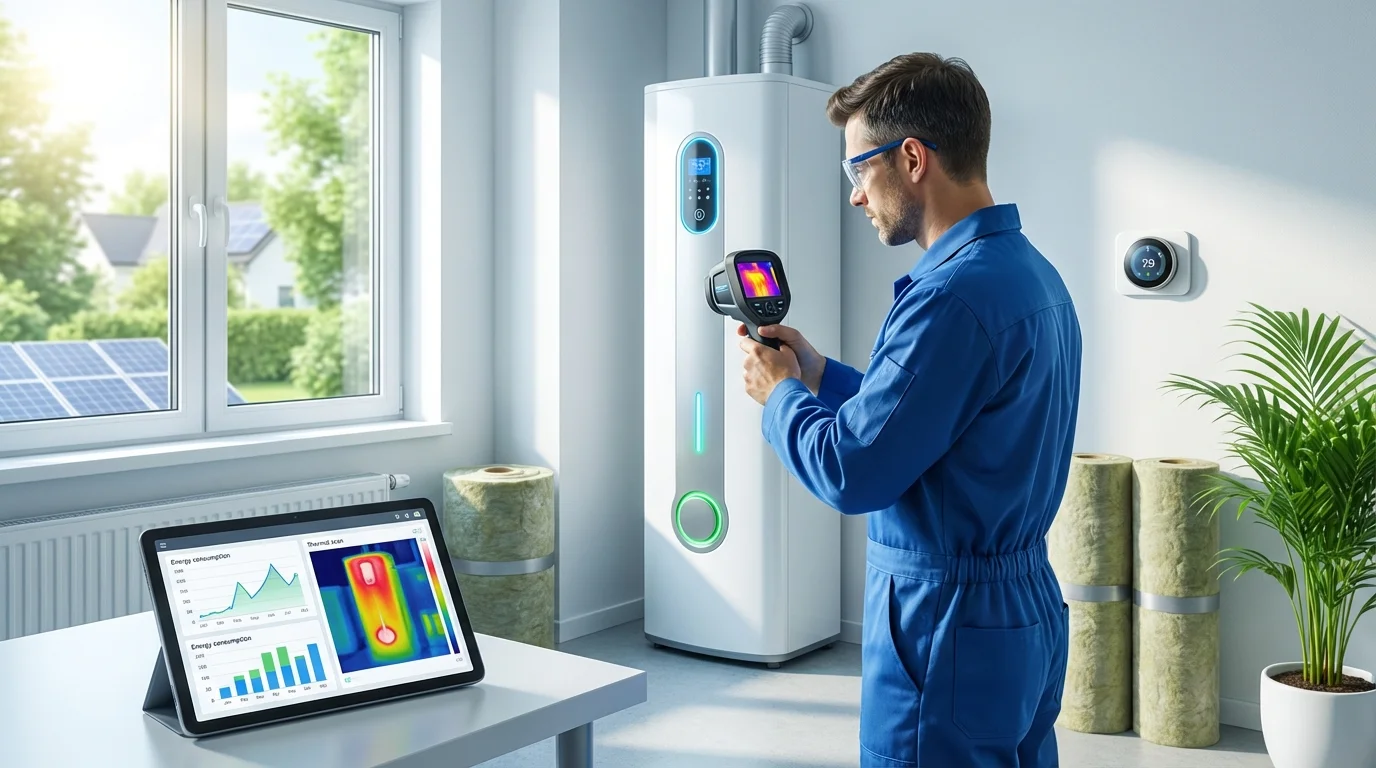
A water heater energy audit moves beyond a simple visual inspection. So professionals use tools like thermal cameras to detect heat loss from the tank and pipes, and they measure the unit's actual energy consumption versus its rated efficiency. This process uncovers hidden problems like excessive sediment buildup, incorrect temperature settings, or a failing anode rod, all of which force the unit to work harder and consume more power. The core tension is that water heating accounts for nearly 18% of a typical home's energy bill. So an audit provides a clear, actionable roadmap to lower that specific expense, often recommending upgrades that qualify for new energy tax credits. And without this specialized assessment, homeowners continue to pay for wasted energy, unaware that solutions with a 3-5 year payback period are available. It's a critical first step before investing in a new system.
How Much Does a Water Heater Energy Audit Typically Cost, and What's Included?
A standalone water heater energy audit typically costs between $100 and $300 in 2026. So the price depends on the provider and the audit's depth, which includes a full inspection of the tank, insulation, piping, temperature settings, and the temperature-pressure relief (TPR) valve.
The fee covers a technician's time to perform several key diagnostic tests. And this includes checking for sediment buildup inside the tank, which reduces efficiency by 15% or more, and inspecting the anode rod for corrosion. The audit also involves measuring the standby heat loss—the energy wasted just keeping water hot—and assessing the insulation on both the tank and the first 6-10 feet of hot water pipes. But the final deliverable is a detailed report outlining the unit's current efficiency rating, its estimated annual operating cost, and a prioritized list of recommendations. These recommendations range from simple fixes like adding an insulation blanket for $30 to a full system replacement with specific, rebate-eligible models. The audit provides the business case for making an upgrade.
Which High-Efficiency Water Heaters Qualify for Rebates, and How Do I Apply?
High-efficiency water heaters qualifying for 2026 rebates include ENERGY STAR certified heat pump (hybrid), solar, and high-efficiency gas storage models. To qualify, a heat pump water heater needs a Uniform Energy Factor (UEF) of 2.2 or higher, while tankless gas models require a UEF above 0.95.
The federal Energy Efficient Home Improvement Credit (Section 25C) ended for property placed in service after December 31, 2025 (IRS FS-2025-05). Federal tax credits for this work have ended, but state, local and utility rebates may still apply; check what is available at your address with the DuloCore rebate calculator. And many state and local utility programs offer additional cash rebates, often between $300 and $1,000, for installing these specific models from brands like Rheem, A.O. Smith, and Bradford White. To apply, homeowners typically submit the purchase receipt and the unit's AHRI certificate to their utility provider's online portal or claim the federal credit on their tax return using IRS Form 5695. So a comprehensive home energy audit will identify all available incentives in your specific zip code. The process is straightforward but requires correct documentation.
"By choosing an ENERGY STAR certified water heater, you can save money on your utility bills and help protect the environment." — ENERGY STAR
What's the ROI Payback Period for Different Efficient Water Heaters in My Climate Zone?
The return on investment for a new water heater varies by climate zone, with payback periods for 2026 installations ranging from 3 to 10 years. Heat pump water heaters offer the fastest ROI of 3-7 years in warmer climates (Zones 1-4) where ambient air is warmer.
In colder regions (Zones 5-7), the payback period for a heat pump water heater extends to 5-9 years because the unit works harder to extract heat from cooler air. But in these zones, a high-efficiency condensing gas water heater often provides a faster ROI of 4-8 years, especially if natural gas prices are low. Tankless gas models have a longer payback of 5-10 years due to higher installation costs, but they offer a lifespan of 20+ years. So homeowners can use our free rebate calculator to get a precise ROI estimate based on their zip code, local utility rates, and available 2026 incentives. This calculation is essential for making a financially sound decision.
How Do Alternative Water Heater Types Compare in Lifespan and Maintenance Requirements?
Heat pump, tankless, and traditional storage tank water heaters have distinct lifespans and maintenance needs. A standard gas or electric tank heater lasts 8-12 years and requires annual flushing to prevent sediment buildup, which costs around $150 if professionally done. But failure to flush reduces efficiency by up to 25%.
In contrast, tankless water heaters last 20 years or more. So their primary maintenance is an annual or bi-annual descaling service to remove mineral deposits, a critical task in areas with hard water that costs $150-$300. Heat pump water heaters, which are often eligible for heat pump rebates, have a lifespan of 10-15 years. And their maintenance is a hybrid of the two: they require annual flushing like a tank model but also need their air filters cleaned every few months to maintain airflow and efficiency. Neglecting these specific maintenance tasks voids warranties and shortens the appliance's operational life, erasing any initial energy savings.
2026 Water Heater Rebate Program Comparison
| Program Name | Max Rebate/Credit Amount | Key Eligibility Requirements | 2026 Deadline |
|---|---|---|---|
| Federal IRA Tax Credit | Ended Dec 31, 2025 | — | Dec 31, 2025 |
| State Clean Energy Fund | $500 - $1,500 | Varies by state; often requires UEF > 3.0 | Check DSIRE |
| Local Utility Rebate | $300 - $1,000 | Must be a customer; model must be on approved list | Varies; often Dec. 31 |
Official Sources
- Database of State Incentives for Renewables & Efficiency (DSIRE) — The most comprehensive source for up-to-date information on state, local, utility, and federal incentives for energy efficiency.
- ENERGY.GOV Water Heating — Federal guidance on selecting, installing, and maintaining energy-efficient water heaters.
"There are a number of high-efficiency water heaters to choose from. These include heat pump, solar, and high-efficiency gas storage water heaters. Though more expensive upfront, they can save you money in the long run." — U.S. Department of Energy
Related Reading: Learn more about Indoor Air Quality Energy Audit and Landlord Energy Audit Requirements.
Frequently Asked Questions
What does a water heater energy audit involve?
A water heater energy audit involves a professional inspection of your current unit's condition, efficiency, and safety. A technician measures standby heat loss, checks for sediment buildup, inspects insulation on the tank and pipes, and verifies the temperature-pressure relief valve functions correctly. The audit concludes with a report detailing the unit's annual operating cost and a list of recommended improvements, from insulation blankets to a full replacement with a 2026 rebate-eligible model.
How much can I save on energy bills after a water heater energy audit?
Homeowners save between 20% and 50% on their water heating bills after implementing recommendations from an audit. For a typical family, this translates to annual savings of $150 to $450. Upgrading to an ENERGY STAR certified heat pump water heater, a common recommendation, saves a family of four approximately $350 per year on electricity bills compared to a standard electric resistance model.
What are the most common recommendations from a water heater energy audit?
The most common recommendations include lowering the thermostat setting to 120°F, which saves 6-10% annually, and adding an insulating blanket to the tank for a 7-16% reduction in standby heat loss. For older, inefficient units, the primary recommendation is a replacement with a high-efficiency model, such as a heat pump water heater that qualifies for the $2,000 federal tax credit available through December 31, 2025.
Find Your 2026 Water Heater Rebates
Your old water heater is costing you money every day. Use DuloCore's free tool to instantly see how much you can get back in federal, state, and utility rebates for a new high-efficiency model.
Calculate Your Savings NowUpdated: April 14, 2026 — fact-checked by DuloCore Research. About our editorial process.
Check your California water heater rebate eligibility — see the programs you qualify for and the dollar amounts on our California water heater rebate finder.