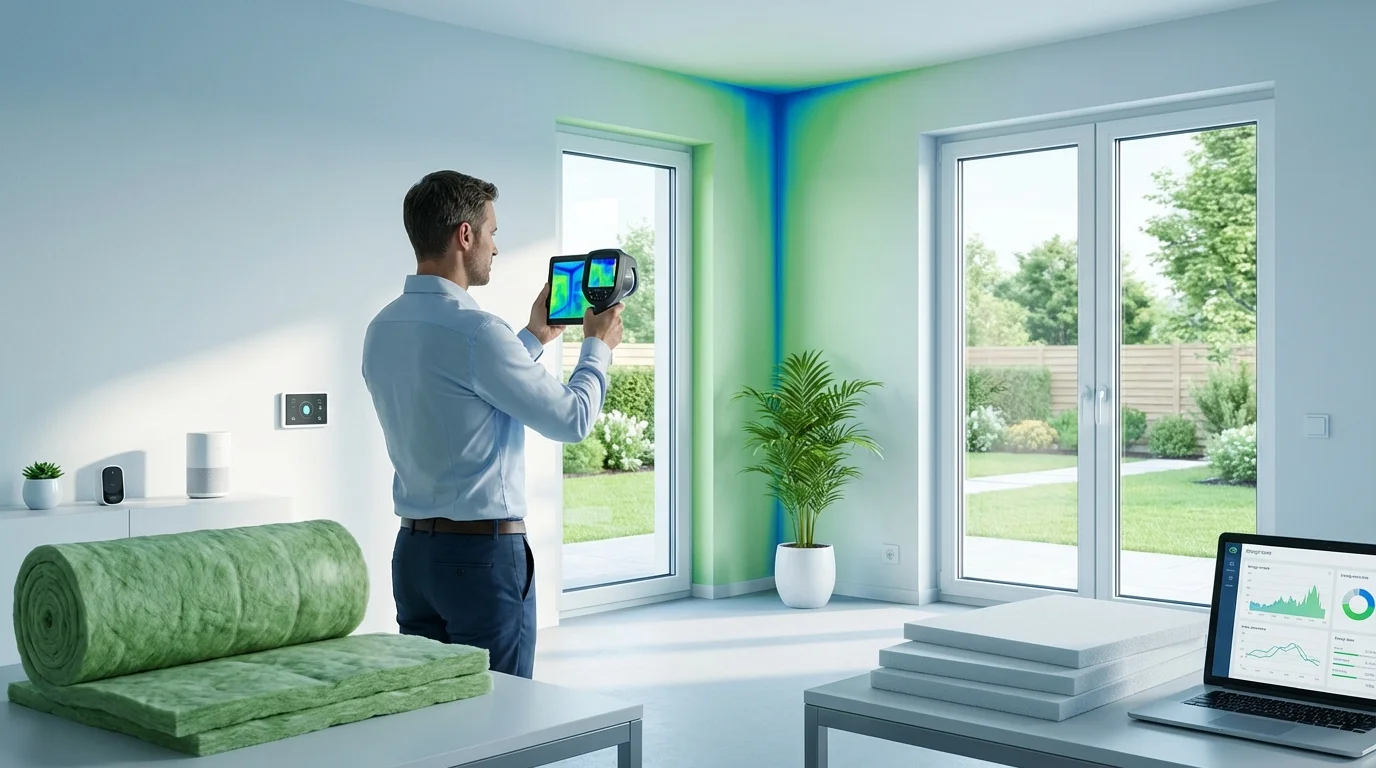
Your home's insulation isn't a perfect shield against the cold. Unseen gaps and structural elements act like highways for heat, silently draining warmth from your living spaces and driving up your energy bills by as much as 30%. These thermal bridges are the hidden culprits behind cold spots, drafts, and wasted energy, but a specialized audit pinpoints them with precision, paving the way for targeted, cost-effective fixes.
What is a Thermal Bridging Home Audit and Why Is It Crucial for Energy Savings?
A thermal bridging home audit is a diagnostic inspection using infrared thermography to identify specific points where heat bypasses a home's insulation. This specialized assessment quantifies energy loss through conductive materials like wall studs, window frames, and foundation slabs, providing a roadmap for targeted efficiency upgrades in 2026.
A standard home energy audit provides a general overview, but a thermal bridging audit digs deeper. So why does this matter? Up to 30% of a home's total heat loss escapes through these thermal bridges, completely negating the effectiveness of surrounding insulation. Think of it like wearing a winter coat with a broken zipper. And this audit uses an infrared camera to create a "heat map" of your home, making invisible problems visible. The resulting report shows exactly where to add continuous insulation, apply air sealing, or upgrade components. But correcting these issues doesn't just lower your utility bills by 15-25%; it also improves comfort by eliminating cold spots and reducing the risk of moisture condensation and mold growth within wall cavities. It’s a foundational step before investing in larger upgrades.
What State and Utility Rebates Are Available for Thermal Bridging Audits and Identified Repairs?
State energy offices and local utilities offer 2026 rebates covering 50-100% of a thermal bridging audit's cost, often capped at $300 to $500. These programs also provide incentives for subsequent repairs, such as insulation or air sealing, with rebates reaching up to $2,000 depending on the project scope.
In 2026, dozens of programs exist to offset the cost of both the audit and the necessary repairs. For instance, a utility provider may offer a $250 rebate for the audit itself. So if the audit identifies poor insulation around the foundation, a state-level program may then offer an additional rebate of $0.75 per square foot for installing rigid foam board. These incentives are designed to encourage homeowners to address the root causes of energy waste. The Database of State Incentives for Renewables & Efficiency (DSIRE) lists many of these programs.
And these rebates often cover materials and labor for fixes like adding continuous exterior insulation, sealing air leaks around windows and doors, or upgrading to thermally broken window frames, directly addressing the audit's findings.
How Do Income Limits, Deadlines, and Funding Status Affect My Eligibility for Audit Programs?
Eligibility for 2026 thermal bridging audit rebates is heavily influenced by household income, program deadlines, and available funding. Low-to-moderate income (LMI) households often qualify for enhanced rebates covering up to 100% of the cost, while other programs operate on a first-come, first-served basis until funds are depleted.
Many state and utility rebate programs have specific income thresholds. For example, a household earning below 80% of the Area Median Income (AMI) may receive a free audit and up to $4,000 for resulting insulation work, while higher-income households qualify for a smaller, flat-rate rebate of $300. But funding is not infinite. So programs often close for the year once their budget is exhausted, making it critical to apply early. The 2026 deadlines are typically in the fourth quarter, but popular programs can run out of money by late summer. Always verify the current funding status and application deadlines on the program administrator's website before scheduling an audit. These factors directly impact whether you can access thousands in energy tax credits and rebates.
| Program Example (2026) | Max Rebate Amount | Key Eligibility Requirement | Application Deadline |
|---|---|---|---|
| State Energy Office Grant | $500 for audit + 50% of repairs | Must use a state-certified auditor | October 31, 2026 |
| Local Utility Program | $300 for audit (100% of cost) | Must be a utility customer | Rolling until funds depleted |
| LMI Weatherization Fund | 100% of audit + repairs | Income below 80% AMI | September 15, 2026 |
What is the Application Process and What Contractor Requirements Should I Look For?
The typical 2026 rebate application process involves getting pre-approval from the program, having the audit performed by a certified contractor (e.g., BPI certified), and submitting the paid invoice and audit report for reimbursement. Programs mandate that contractors hold specific credentials to ensure quality and accuracy.
The process begins with an online application to the utility or state agency to reserve your rebate funds. And once you have pre-approval, you must hire a qualified professional. Look for contractors with certifications from the Building Performance Institute (BPI) or RESNET, as most rebate programs require them. The contractor will perform the infrared scan and provide a detailed report. So after paying the contractor, you submit their invoice, the report, and your completed rebate form to the program administrator. Reimbursement checks are typically issued within 6-8 weeks. Use our free rebate calculator to estimate your potential savings before you begin. This structured process ensures the work meets established energy-efficiency standards.
Can I Combine Rebates and Incentives? Understanding Stacking Rules for Home Energy Upgrades.
Homeowners can typically stack multiple incentives, combining a utility rebate with a state program and federal tax credits for the same project. However, program rules often cap the total combined rebate amount at the project's total cost, preventing homeowners from receiving more than they paid for the upgrade in 2026.
Stacking is a powerful strategy for maximizing savings. For example, a thermal audit identifies the need for $5,000 in attic insulation. You can apply for a $1,000 rebate from your utility and a $1,500 rebate from a state energy program, bringing your initial cost down to $2,500. And on top of that, the remaining $2,500 cost is often eligible for federal IRA tax credits, which can cover 30% of the expense (up to certain limits), further reducing your out-of-pocket cost.
So the key is to read the fine print for each program. Some rules prohibit combining two rebates from the same source (e.g., two from the same utility), but stacking a utility rebate with a state or federal incentive is almost always allowed for upgrades like new heat pump rebates.
Official Sources
- Database of State Incentives for Renewables & Efficiency (DSIRE) — A comprehensive source for state, local, utility, and federal incentives and policies that promote renewable energy and energy efficiency.
- ENERGY STAR Rebate Finder — An official U.S. government tool to find rebates and special offers near you for ENERGY STAR certified products.
- U.S. Department of Energy (DOE) Energy Saver — Federal guidance on energy efficiency, including information on home energy audits and available financial incentives.
Frequently Asked Questions
Who is eligible for a rebate on a thermal bridging home audit?
Eligibility for a 2026 audit rebate typically depends on your location, utility provider, and sometimes household income. Most programs require you to be a residential customer of a specific utility or live within a certain state or municipality. Many programs also offer enhanced rebates or fully-funded audits for homeowners with incomes below 80% of the Area Median Income (AMI), making these crucial diagnostic tools accessible to more people.
How much can I expect to save with a thermal bridging home audit rebate?
Rebates for a thermal bridging home audit in 2026 typically cover between 50% and 100% of the service cost. This translates to savings of $250 to $500, as the full cost of a specialized audit ranges from $300 to $600. For subsequent repairs identified in the audit, such as adding insulation, homeowners can access additional rebates that often exceed $1,500, depending on the scope of the project and local program rules.
What is the typical process for a thermal bridging home audit and subsequent rebate application?
The process generally involves four steps. First, apply for pre-approval from the rebate program administrator. Second, hire a program-approved contractor with BPI or RESNET certification to perform the infrared audit. Third, pay the contractor and receive a detailed report and invoice. Finally, submit the invoice, report, and a completed rebate form to the administrator. Reimbursement usually arrives within 6 to 8 weeks.
How does a thermal bridging audit differ from a general home energy assessment?
A general home energy assessment provides a broad overview of energy use, including appliance efficiency, lighting, and a blower door test for air leakage. A thermal bridging audit is a more specialized, diagnostic service that uses an infrared camera to specifically identify and visualize paths where heat bypasses insulation through conductive materials like wood studs or concrete slabs. It focuses exclusively on these structural heat loss pathways.
Find and Claim Your Home Energy Rebates
Don't let hidden thermal bridges drain your wallet. Use the DuloCore Rebate Calculator to instantly find every audit rebate, insulation incentive, and tax credit you qualify for in 2026.
Last updated: April 14, 2026. Reviewed by the DuloCore Editorial Team. About our authors.