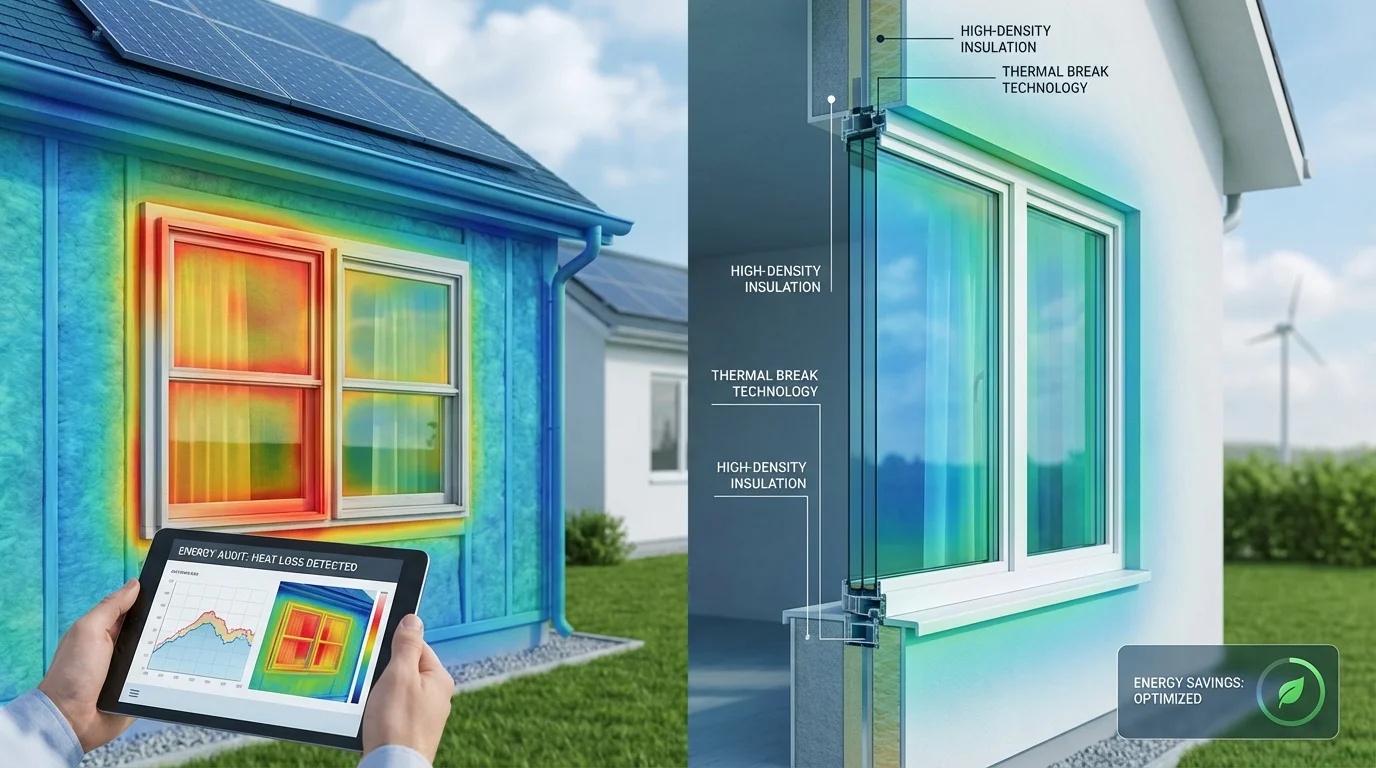
Up to 30% of a home's heating and cooling energy is lost through inefficient windows and doors. This leakage directly translates into hundreds of dollars added to utility bills each year, forcing homeowners to pay for energy that simply escapes outside. And with energy costs rising, stopping that thermal drain is more critical than ever for managing household expenses.
What's the Core Difference Between Storm Windows and Replacement Windows, and Why Does It Matter for Your Home?
Storm windows are secondary glazing units installed over existing windows, creating an insulating air gap. Replacement windows are entirely new units that replace the old sash and frame. This core difference dictates cost, installation complexity, and potential energy savings for homeowners in 2026.
So why does this distinction matter? Leaky windows are a primary source of energy waste in American homes. According to the U.S. Department of Energy, heat gain and loss through windows are responsible for 25%–30% of residential heating and cooling energy use. Choosing between an additive solution like storm windows and a full replacement directly impacts your home's thermal envelope, your monthly utility bills, and your eligibility for valuable home improvement rebates. The decision rests on whether the existing windows are structurally sound or require a complete overhaul to stop this energy drain.
How Do the Typical Costs, Installation Expenses, and ROI Payback Periods Compare for Storm vs. Replacement Windows?
Replacement windows have an installed cost of $600 to $2,100 per unit, with a return on investment (ROI) payback period of 10-15 years. Storm windows cost $200 to $500 per unit installed, offering a much faster payback period of 3-5 years due to lower upfront costs.
The financial calculation between these two options is stark. Storm windows represent a low-cost, high-impact upgrade, reducing air leakage for a fraction of the price of full replacements. But their savings ceiling is lower. Replacement windows, while carrying a 3x-4x higher initial cost, deliver superior long-term performance and unlock access to more lucrative 2026 rebates. The federal Energy Efficient Home Improvement Credit (Section 25C) ended for property placed in service after December 31, 2025 (IRS FS-2025-05). So homeowners can use our free rebate calculator to see how available rebates shorten the payback period for full replacements, often making them a better long-term financial choice despite the initial expense.
Which Window Option Offers Better Energy Efficiency Ratings and Qualifies for Rebates, and What Brands Should You Look For?
Replacement windows offer superior energy efficiency ratings, with U-factors as low as 0.20. Storm windows improve efficiency but rarely meet the strict ENERGY STAR criteria required for many rebates. Brands like Pella and Andersen offer qualifying replacement models.
Modern replacement windows are engineered for peak performance, measured by U-factor (heat loss) and Solar Heat Gain Coefficient (SHGC). ENERGY STAR specifications for windows are demanding.
And top brands like Marvin, Pella, and Andersen consistently produce models that meet these standards. But storm windows, like those from Larson or ProVia, function as an enhancement. While they can reduce a home's energy use by 15-30%, they don't carry their own NFRC rating and thus fall outside the eligibility for most high-value rebates, including many state and utility programs that mirror federal guidelines.
What Can You Expect for Lifespan and Maintenance Requirements from Storm Windows vs. Replacement Windows?
Modern replacement windows (vinyl, fiberglass) offer a 20-25 year lifespan with minimal maintenance. Storm windows typically last 10-20 years but demand seasonal installation, removal, and regular cleaning of the frames and glass, creating a higher annual labor requirement for homeowners.
The long-term ownership experience differs dramatically. A full replacement window is a "set it and forget it" solution. Once installed, vinyl and fiberglass frames don't require painting and are designed for decades of durability with only occasional cleaning. But storm windows add a recurring task to the homeowner's calendar. They must be installed each fall and removed each spring to allow for ventilation. And this process provides opportunities for frames to be damaged or seals to wear out, requiring more frequent inspection and repair. For homeowners prioritizing low-maintenance living, the higher upfront cost of replacement windows often outweighs the recurring labor of managing storm units. A thorough home energy audit can help determine if the existing window's condition justifies a full replacement.
Comparison of Window Upgrade Options
| Feature | Storm Windows | Replacement Windows |
|---|---|---|
| Avg. Installed Cost | $200 - $500 per window | $600 - $2,100 per window |
| Typical Energy Savings | 15% - 30% reduction | 25% - 40% reduction |
| 2026 Rebate Eligibility | Limited (some local utilities) | High (State, Utility) |
| Lifespan | 10 - 20 years | 20 - 25+ years |
| Maintenance | High (seasonal removal/install) | Low (periodic cleaning) |
Which Window Type is Best Suited for Your Climate Zone, and What Are Key Comparison Alternatives to Consider?
High-performance replacement windows are necessary for extreme climates (Zones 5-7 cold, 1-2 hot) to meet specific U-factor and SHGC targets. Storm windows are a cost-effective solution for moderate climates (Zones 3-4) or as a supplement where full replacement is not feasible.
Your home's location dictates the optimal window strategy. In cold northern climates, a low U-factor (≤0.27) is critical to prevent heat loss, a standard most replacement windows are built to meet. In hot southern climates, a low SHGC (≤0.25) is needed to block solar heat gain.
"The Database of State Incentives for Renewables & Efficiency® (DSIRE) is the most comprehensive source of information on incentives and policies that support renewables and energy efficiency in the United States." — DSIRE USA
And these performance metrics directly tie into local rebate eligibility, which homeowners can find on platforms like DSIRE. Storm windows provide a generic insulating layer but lack this climate-specific tuning. Alternatives like low-e window films or insulated cellular shades offer a lower-cost efficiency boost, but neither provides the comprehensive performance or rebate potential of a full window replacement, which is often paired with other upgrades like heat pump rebates.
How Do I Choose Between Storm Windows and Replacement Windows Based on My Specific Needs and Budget?
The decision hinges on three factors: budget, condition of existing windows, and long-term goals. Storm windows are a low-cost, short-term solution for structurally sound windows. Replacement windows are a long-term capital investment for maximum energy savings, comfort, and home value, especially when existing windows are failing.
To make the right choice, first assess your current windows. If the frames are rotted, the seals are broken, or they are difficult to operate, a full replacement is the only viable path. Investing in storm windows for failing primary windows is a waste of money. But if you have historic single-pane wood windows that are in good condition, storm windows are an excellent way to preserve character while improving efficiency by up to 50%. For homeowners focused on maximizing long-term energy savings and qualifying for the most 2026 rebates, ENERGY STAR-certified replacement windows are the clear choice.
Official Sources
- ENERGY STAR Windows, Doors, and Skylights — Official federal specifications and guidance for energy-efficient window products.
- DSIRE - Database of State Incentives for Renewables & Efficiency — A comprehensive database of state, local, and utility rebates for home energy improvements.
Frequently Asked Questions
What is the cost difference between storm windows and full replacement windows, factoring in available rebates?
Factoring in 2026 rebates, the net cost difference narrows. Replacement windows cost $400-$1,600 more per unit upfront. But utility rebates of $50-$200 per window reduce this gap, while storm windows rarely qualify for these incentives.
Do storm windows qualify for the same energy efficiency rebates as complete replacement window installations?
No. The federal Energy Efficient Home Improvement Credit (Section 25C) ended for property placed in service after December 31, 2025 (IRS FS-2025-05). Replacement windows that meet specific performance criteria for your climate zone are eligible. Storm windows may qualify for smaller, local utility rebates of $25-$75.
Which offers better long-term energy savings and higher rebate potential: storm windows or new replacement windows?
New replacement windows offer superior long-term savings, reducing heating and cooling costs by 25%-40%. They also have a much higher rebate potential, often exceeding $400 in combined state and utility incentives for a whole-home project in 2026, compared to minimal or zero rebates for storm windows.
Last updated: April 14, 2026. Reviewed by the DuloCore Editorial Team. About our authors.
Check your California insulation rebate eligibility — see the programs you qualify for and the dollar amounts on our California insulation rebate finder.