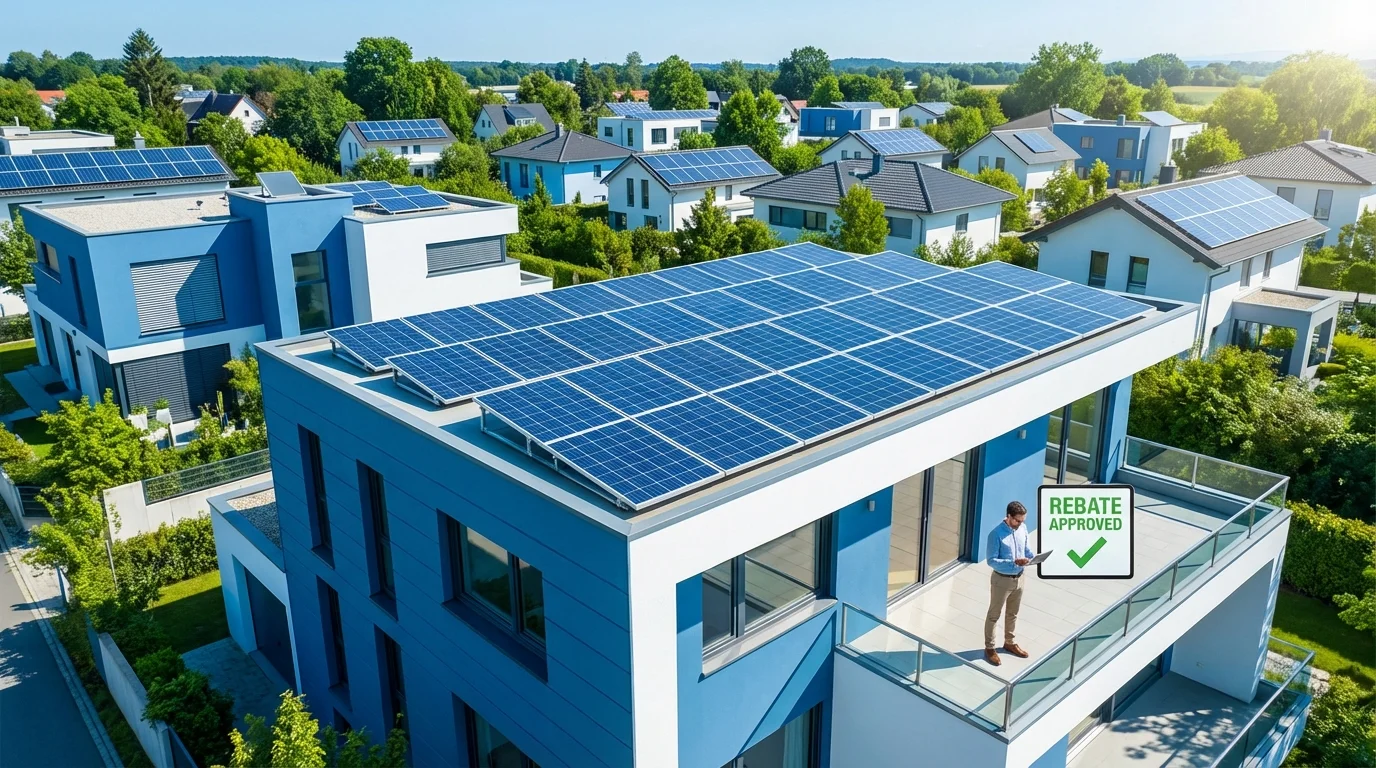
Going solar no longer requires owning a rooftop or facing a $25,000 installation bill. With community-based solar initiatives growing by over 110% in the last five years, millions of Americans now access clean energy savings without installing a single panel on their property. This shift democratizes solar power, making immediate bill reductions accessible to renters, condo owners, and homeowners with shaded roofs for the first time.
What are Solarize Programs and Community Solar, and how do they benefit my home or business?
Solarize programs are limited-time, community-based group-purchasing campaigns that lower solar installation costs for participants by 15-20%. Community solar projects are large, off-site solar farms that allow multiple customers to subscribe and receive credits on their utility bills, requiring zero upfront investment as of 2026.
So, the core challenge for homeowners has always been the high initial cost of solar, which averages $19,500 for a typical 6kW system. But this barrier prevents millions from accessing renewable energy. Solarize and community solar programs directly address this by either lowering the entry cost through bulk purchasing or eliminating it entirely through a subscription model. This opens solar benefits to a wider demographic, including the 50% of U.S. households that cannot host a rooftop system. For businesses, these programs offer a path to meeting sustainability goals and reducing operating expenses without a capital-intensive project. Both models simplify the process, removing the burden of vetting installers or managing system maintenance, which streamlines the transition to clean energy. Explore all available solar panel rebates in your area.
How much does it typically cost to participate in Solarize Programs or Community Solar, and what rebates are available?
A Solarize program reduces the typical $19,500 installation cost to between $15,600 and $17,550 through group discounts. Community solar has a $0 upfront cost, instead requiring a monthly subscription that provides a 5-15% net credit on your electricity bill. Both options are eligible for federal tax credits.
The financial structures differ completely. The federal Residential Clean Energy Credit (Section 25D) ended for expenditures made after December 31, 2025, and the IRS treats an expenditure as made when installation is completed (IRS FS-2025-05). Federal tax credits for this work have ended, but state, local and utility rebates may still apply; check what is available at your address with the DuloCore rebate calculator. For a $16,000 system, this credit amounts to $4,800, bringing the net cost down to $11,200. But community solar subscribers pay nothing upfront. So they pay a monthly fee to the solar farm developer and receive a credit on their utility bill that is 5-15% greater than the fee, resulting in immediate savings.
And while community solar subscribers don't claim the federal credit directly, the project developers do, which helps lower the subscription costs for everyone. Many states also offer additional incentives.
What solar panel brands and efficiency ratings are used, and what are their lifespan and maintenance requirements?
Solarize and community solar projects typically use Tier 1 solar panel brands like Qcells, Canadian Solar, and Trina Solar, with efficiency ratings between 19% and 22%. These panels have a warrantied lifespan of 25-30 years, and maintenance for community solar projects is handled entirely by the developer.
The equipment used in these programs is identical to that of private installations. Developers select panels with high efficiency ratings to maximize energy production from a given area. So a 22% efficient panel from a brand like REC will generate more electricity than a 19% efficient panel of the same size. And this directly impacts the savings passed on to subscribers. The panels are built to last, with performance warranties guaranteeing at least 80-85% of their original output after 25 years. For Solarize participants, maintenance involves an occasional cleaning and annual inspection, costing around $150. But for community solar subscribers, there are zero maintenance responsibilities or costs, as the project owner manages all upkeep and repairs for the system's entire 30-year lifespan.
What is the Return on Investment (ROI) and payback period for community solar across different climate zones?
The return on investment (ROI) for community solar is immediate, providing 5-15% savings on monthly electricity bills with a $0 payback period due to no upfront cost. Savings are greater in high-sunshine climate zones like Arizona (Zone 2) compared to lower-sunshine areas like Vermont (Zone 6).
For Solarize programs, the payback period is shortened to 6-9 years from the typical 8-12 years for individual installations, with a 25-year ROI often exceeding 200%. But community solar's financial model is based on immediate, consistent savings. A household in Phoenix (Climate Zone 2) with a $200 monthly bill may save 15%, or $30 per month ($360 annually). So that same household in a less sunny climate like Boston (Climate Zone 5) may see a 7% savings, or $14 per month ($168 annually).
"Community solar allows members of a community the opportunity to share the benefits of solar power even if they cannot or prefer not to install solar panels on their property." — Energy.gov
The investment is zero, so the concept of a "payback period" doesn't apply; subscribers simply start saving money from the first month.
| Feature | Solarize Program | Community Solar | Individual Rooftop Solar |
|---|---|---|---|
| Upfront Cost | $15,000 - $18,000 (discounted) | $0 | $18,000 - $25,000 |
| Ownership | Homeowner owns the system | Subscription-based (no ownership) | Homeowner owns the system |
| Maintenance | Homeowner responsibility | Managed by developer | Homeowner responsibility |
| Best For | Homeowners wanting ownership at a lower cost | Renters, condo owners, unsuitable roofs | Homeowners wanting full control and customization |
How do Solarize Programs compare to other solar options, and what's the process to sign up for a project?
Solarize programs offer a 15-20% cost reduction on system ownership compared to individual rooftop solar. Community solar provides bill savings with no ownership, making it the primary option for renters or those with shaded roofs. The sign-up process involves attending a local workshop or subscribing online.
Choosing the right solar option depends on property ownership and financial goals. Individual rooftop solar provides the most control but requires a $20,000+ investment. A Solarize campaign lowers that barrier to around $16,000, making ownership more accessible. But community solar removes the cost barrier entirely, offering a flexible, subscription-based model. The enrollment process for a Solarize program typically starts with attending a town-sponsored informational meeting, followed by a site assessment from the pre-vetted installer. For community solar, the process is simpler: find a local project online, choose a subscription size based on your electricity usage, and sign an agreement digitally. You can find local programs and estimate your potential savings with our free rebate calculator. Many programs offer similar savings as those found with heat pump rebates.
Official Sources
- Database of State Incentives for Renewables & Efficiency (DSIRE) — The most comprehensive source of information on incentives and policies that support renewables and energy efficiency in the United States.
- Homeowner's Guide to the Federal Tax Credit for Solar Photovoltaics — Official guidance from the Department of Energy on the 30% Residential Clean Energy Credit.
Frequently Asked Questions
What are the eligibility requirements for participating in community solar programs?
Eligibility typically requires being a customer of the utility service area where the community solar project is located. You don't need to own your home, making it ideal for renters and condo owners. Most programs don't have credit score requirements, but you must have an active utility account in good standing. Some projects may have a minimum 12-month residency history.
How much can I save on my electricity bill by joining a community solar project?
Subscribers typically save between 5% and 15% on their annual electricity costs. For a household with a monthly bill of $150, this translates to annual savings of $90 to $270. The exact percentage depends on the project's energy production, the subscription rate offered by the developer, and your local utility's credit value.
What is the main difference between a solarize program and community solar?
The primary difference is ownership. A Solarize program helps you purchase and own solar panels on your property at a group-discounted price, typically 15-20% lower than market rate. Community solar is a subscription service where you pay for a share of a large, off-site solar farm and receive credits on your bill, with no ownership or installation on your property.
Find and Apply for Solar Rebates in Minutes
Don't leave money on the table. Use DuloCore's rebate calculator to instantly discover how much you can save on solar panels and other home energy upgrades.
Calculate Your Savings Now
Last reviewed: April 14, 2026. Reviewed by DuloCore Energy Specialists. About the team.
Check your California solar rebate eligibility — see the programs you qualify for and the dollar amounts on our California solar rebate finder.