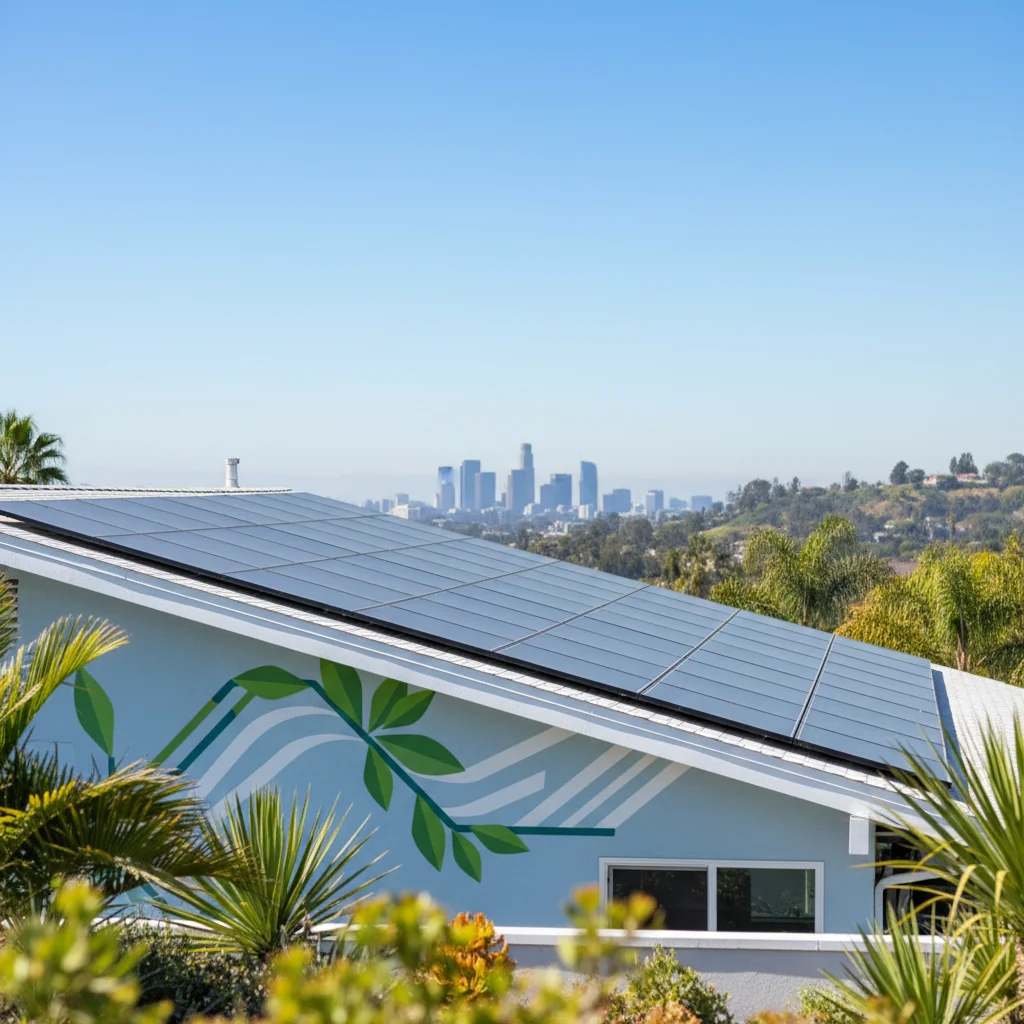
Los Angeles homeowners installed 67,000 new solar systems in 2025, saving an average of $1,847 per year on electricity bills. And the cost of going solar dropped 23% since 2023, driven by federal tax credits, state rebates, and utility incentives that stack together. But funding for Los Angeles Department of Water and Power's Solar Incentive Program ran out in October 2025, leaving thousands of applications in limbo. So the landscape of solar panel rebates in Los Angeles changed dramatically heading into 2026.
The core tension: Los Angeles offers some of the highest solar rebates in California, with combined federal and local incentives reaching $18,000 for typical residential installations. But programs expire, funding depletes, and eligibility requirements tightened after the Southern California Edison Solar on Multifamily Affordable Housing program closed early in December 2025. Homeowners who miss application deadlines forfeit thousands in potential savings.
What Solar Panel Rebates Are Available in Los Angeles Right Now?
Los Angeles homeowners in 2026 access federal IRA solar tax credits at 30% of installation costs, California's Single-family Affordable Solar Homes program offering $3 per watt for income-qualified households, and LADWP's Solar Incentive Program providing $0.20 per watt when funding replenishes. Southern California Edison territory residents access the Self-Generation Incentive Program for battery storage paired with solar.
The federal IRA framework replaced the expired Section 25C and 25D credits. And the new structure extends through 2032 with consistent 30% credit rates for residential solar installations. LADWP's program historically offered $0.35 per watt but reduced rates to $0.20 in 2025 due to budget constraints. So typical 7-kilowatt systems now receive $1,400 from LADWP when funding restarts, down from $2,450 in prior years.
California's SASH program targets households at 80% or below area median income. And the rebate covers $3 per watt up to 5 kilowatts, delivering $15,000 maximum per installation. But the program requires installation by GRID Alternatives or approved nonprofit installers, not private solar companies. The Self-Generation Incentive Program provides $200 per kilowatt-hour for battery storage systems paired with solar arrays, adding $2,600 to typical 13 kWh battery installations.
Southern California Edison customers qualify for different incentives than LADWP customers. And the distinction matters because rebate amounts vary by utility territory within Los Angeles city limits. Check your rebate calculator to determine exact incentive amounts based on your utility provider and system size.
How Much Money Can You Save with LA Solar Rebates in 2026?
A typical 7-kilowatt solar installation in Los Angeles costs $21,000 before incentives in 2026. Federal IRA tax credits reduce that by $6,300 (30% of installation costs). LADWP rebates add $1,400 when funding replenishes. So the net cost drops to $13,300 for systems installed with both incentives, a 36.7% reduction from sticker price.
Income-qualified households accessing California SASH program receive $15,000 additional rebates. And combined with federal credits, total incentives reach $21,300, exceeding installation costs for standard 5-kilowatt systems priced at $15,000. But SASH program slots fill within weeks of funding announcements, creating waitlists of 4-6 months for approved installations.
Battery storage adds $10,400 to installation costs for typical 13 kWh Tesla Powerwall or equivalent systems. And the Self-Generation Incentive Program rebate of $2,600 reduces net battery cost to $7,800. Federal IRA credits don't directly cover standalone batteries installed without solar, but batteries paired with solar panels qualify for the 30% residential credit, adding $3,120 additional savings. So combined battery incentives total $5,720, cutting net storage costs to $4,680.
Electricity bill savings compound over time. And Los Angeles Edison territory customers pay $0.34 per kWh during peak summer rates. A 7-kilowatt system generating 10,500 kWh annually eliminates $3,570 in electricity costs. But LADWP customers pay lower rates of $0.25 per kWh, reducing annual savings to $2,625 for equivalent generation. Payback periods range from 5.1 years in SCE territory to 6.8 years for LADWP customers based on 2026 rate structures.
Learn more about broader solar panel rebates programs across California to compare Los Angeles incentives against statewide options.
What Are the Eligibility Requirements and Contractor Qualifications?
Federal IRA solar tax credits require homeowners to own the residence where solar panels install, have sufficient tax liability to claim credits, and complete installation by December 31, 2032. And the system must meet Fire and Electrical Code standards verified through local building permits. Leased systems or power purchase agreements don't qualify homeowners for federal credits—only purchased systems generate tax credits for the property owner.
LADWP Solar Incentive Program mandates pre-qualified installer certification through the utility's approved contractor list. And installers must carry California Contractors State License Board C-10 or C-46 classification with active workers' compensation coverage. Systems must use equipment listed on the California Energy Commission's eligible equipment list, updated quarterly at energy.ca.gov. But installations completed before LADWP pre-approval don't qualify for rebates even if equipment meets specifications.
California SASH program restricts installation to GRID Alternatives or approved nonprofit partners. And income verification requires documentation of 80% or below area median income through tax returns, pay stubs, or public assistance program enrollment. Los Angeles area median income in 2026 equals $86,400 for single-person households and $123,400 for four-person households. So a family of four earning $98,700 qualifies for SASH rebates.
"The solar investment tax credit is available for systems placed in service through December 31, 2032, at 30% of qualified expenditures for residential installations." — U.S. Department of Energy
Self-Generation Incentive Program battery storage requires pairing with renewable generation systems installed after January 1, 2020. And systems must include 10-year warranty coverage with guaranteed 70% capacity retention. Budget authorization for SGIP in 2026 totals $180 million statewide, but Los Angeles territory allocation depletes within 90-120 days of annual funding releases based on historical patterns.
Explore how heat pump rebates compare to solar incentives for maximizing home energy efficiency investments.
What Documentation Do You Need to Qualify for Solar Rebates?
Federal IRA tax credit claims require IRS Form 5695 filed with annual tax returns. And homeowners must provide manufacturer certification statements proving equipment meets fire and electrical code standards. Installation invoices itemizing equipment costs, labor charges, and permit fees substantiate claimed credit amounts. But the IRS doesn't require pre-submission of documentation—homeowners file Form 5695 when completing tax returns, and the IRS audits claims randomly.
LADWP applications demand completed reservation forms submitted within 30 days of building permit issuance. And required attachments include signed contractor agreements, system design specifications showing panel placement and electrical diagrams, and proof of property ownership through title documents or mortgage statements. Installed system inspections occur 60-90 days after final building department signoff, verifying equipment matches approved specifications before rebate payment issues.
California SASH program applications start with income verification documents. And acceptable proof includes prior-year federal tax returns showing adjusted gross income, three consecutive months of pay stubs for all household earners, or enrollment verification letters from CalFresh, Medi-Cal, or Section 8 housing programs. Additional requirements include proof of homeownership and utility account statements demonstrating 12-month payment history at the installation address.
Self-Generation Incentive Program claims require completed incentive claim forms within 18 months of reservation confirmation. And supporting documentation includes final building permits with inspection signoffs, interconnection agreements from the utility showing permission to operate, and manufacturer warranty certificates for battery systems. Payment processing takes 120-180 days after complete documentation submission based on 2025 program timelines.
"California's Self-Generation Incentive Program provides rebates for installing energy storage paired with eligible renewable generation systems to promote grid resilience and reduce peak demand." — California Public Utilities Commission
Photograph documentation of installed equipment showing serial numbers and nameplate data prevents processing delays. And utilities reject applications missing clear equipment identification, extending approval timelines by 30-45 days for resubmission.
Do You Need Pre-Approval Before Installing Solar Panels?
LADWP Solar Incentive Program mandates reservation applications before installation begins. And contractors must submit applications within 30 days of building permit issuance to secure rebate amounts at prevailing rates. Installations starting before reservation approval forfeit eligibility even if completed systems meet technical requirements. Reservation confirmations lock incentive rates for 12 months, protecting homeowners from rate reductions during construction delays.
Federal IRA tax credits don't require pre-approval. And homeowners claim credits when filing annual tax returns after installation completion. But the IRS warns that systems must meet code requirements verified through local building permits to qualify for credits. So installations bypassing permit processes risk credit disqualification during audits.
California SASH program requires application approval before selecting installation dates. And waitlists range from 4-6 months for approved installer scheduling after income verification completes. GRID Alternatives coordinates installation timelines directly with approved homeowners, removing contractor selection from homeowner control. But the program covers 100% of installation costs for qualified households, eliminating out-of-pocket expenses.
Self-Generation Incentive Program battery storage requires reservation applications before purchasing equipment. And the program operates on first-come allocation, depleting annual budgets within 90-120 days of funding releases. So homeowners delaying applications until installation readiness often find funding exhausted, forfeiting $2,600 per system in available rebates.
Building permit applications trigger property tax reassessment reviews in Los Angeles County. And California's Proposition 13 protections exclude solar installations from reassessment calculations, preventing property tax increases from solar improvements. But homeowners must file Welfare and Exemption Form BOE-62-AH within 30 days of installation completion to claim the exclusion, or face tax increases based on added property value.
What Are the Deadlines for Filing Solar Rebate Claims in Los Angeles?
Federal IRA tax credits allow claims within the tax year when systems achieve substantial completion and interconnect with utility grids. And substantial completion means panels mount, inverters connect, and systems pass final building inspections with permission to operate from the utility. Systems installed in December 2026 qualify for credits claimed on 2026 tax returns filed by April 15, 2027, or extended deadline of October 15, 2027.
LADWP reservations expire 12 months after confirmation unless homeowners request extensions. And extension approvals require demonstrated progress through submitted building permits and installation contracts. Final incentive claims must submit within 90 days of permission to operate from LADWP's interconnection department. So the complete timeline spans 15 months from reservation to final payment for installations without delays.
California SASH program applications remain active for 18 months after income verification approval. And GRID Alternatives schedules installations based on volunteer availability and equipment procurement timelines. Homeowners declining scheduled installation dates without rescheduling within 30 days forfeit program eligibility, requiring new applications and income verification.
Self-Generation Incentive Program claims deadline at 18 months after reservation confirmation. And the program doesn't extend deadlines for equipment supply delays or contractor scheduling conflicts. So homeowners must plan installation timelines accounting for 120-180 day equipment lead times common for battery storage systems in 2026. Missing the 18-month deadline forfeits reserved incentive amounts averaging $2,600 per residential system.
Los Angeles Department of Building and Safety requires permit final inspections within 180 days of permit issuance. And expired permits require reapplication with updated fees, delaying utility interconnection approvals by 45-60 days. Interconnection delays cascade into rebate processing delays, extending total project timelines to 8-10 months from permit application to final rebate payment.
Review comprehensive energy tax credits to understand how solar incentives compare with other home efficiency improvements.
Official Sources
- U.S. Department of Energy Solar Tax Credit Guide — Federal solar tax credit eligibility, amounts, and claiming procedures
- DSIRE Solar Policy Database — Comprehensive database of state and local solar incentives updated quarterly
- California Energy Commission Eligible Equipment List — Approved solar equipment for state rebate programs
Related Reading: Learn more about Solar Panel Installation Rebates and Solar Panel Payback Period With Rebates.
Frequently Asked Questions
What solar panel rebates are available in Los Angeles?
Los Angeles homeowners in 2026 access 30% federal IRA tax credits, LADWP rebates of $0.20 per watt when funding replenishes, and California SASH program rebates of $3 per watt for income-qualified households. Southern California Edison customers qualify for Self-Generation Incentive Program battery rebates of $200 per kilowatt-hour. And combined incentives reduce typical 7-kilowatt installation costs from $21,000 to $13,300 after federal and utility rebates.
How much money can you get from solar rebates in Los Angeles?
Federal IRA credits provide $6,300 for typical $21,000 installations (30% of costs). LADWP rebates add $1,400 for 7-kilowatt systems at current $0.20 per watt rates. Income-qualified SASH program participants receive $15,000 for 5-kilowatt systems. And battery storage rebates through SGIP add $2,600 for 13 kWh systems. So maximum combined incentives reach $21,300 for income-qualified households installing solar with battery storage.
Are you eligible for solar panel rebates in Los Angeles?
Federal IRA credits require homeowners to own their residence, have tax liability to claim credits, and install systems by December 31, 2032. LADWP rebates require using pre-qualified installers from the utility's approved contractor list and submitting reservations within 30 days of building permits. And California SASH program restricts eligibility to households earning 80% or below area median income ($98,700 for four-person households in Los Angeles in 2026).
What is the deadline for solar panel rebates in Los Angeles?
Federal IRA credits claim within the tax year when systems achieve substantial completion, with returns filed by April 15 or October 15 extended deadlines. LADWP reservations expire 12 months after confirmation, with final claims due 90 days after utility interconnection approval. And Self-Generation Incentive Program claims deadline at 18 months after reservation confirmation, with no extensions for equipment delays or contractor scheduling conflicts.
How do federal and state solar rebates compare in Los Angeles?
Federal IRA credits provide 30% of installation costs with no income restrictions, averaging $6,300 for typical systems. California SASH program delivers $15,000 for income-qualified households but limits installations to nonprofit contractors. And LADWP rebates add $1,400 for 7-kilowatt systems but deplete funding within months of budget releases. So federal credits offer broadest eligibility while state programs provide higher amounts for targeted populations.
Ready to calculate your exact solar rebate amount? Use our free rebate calculator to estimate federal credits, LADWP incentives, and potential battery storage rebates based on your utility provider and system size. Get your personalized savings report in under 2 minutes.
Last updated: April 14, 2026. Reviewed by the DuloCore Editorial Team. About our authors.
Check your California solar rebate eligibility — see the programs you qualify for and the dollar amounts on our California solar rebate finder.