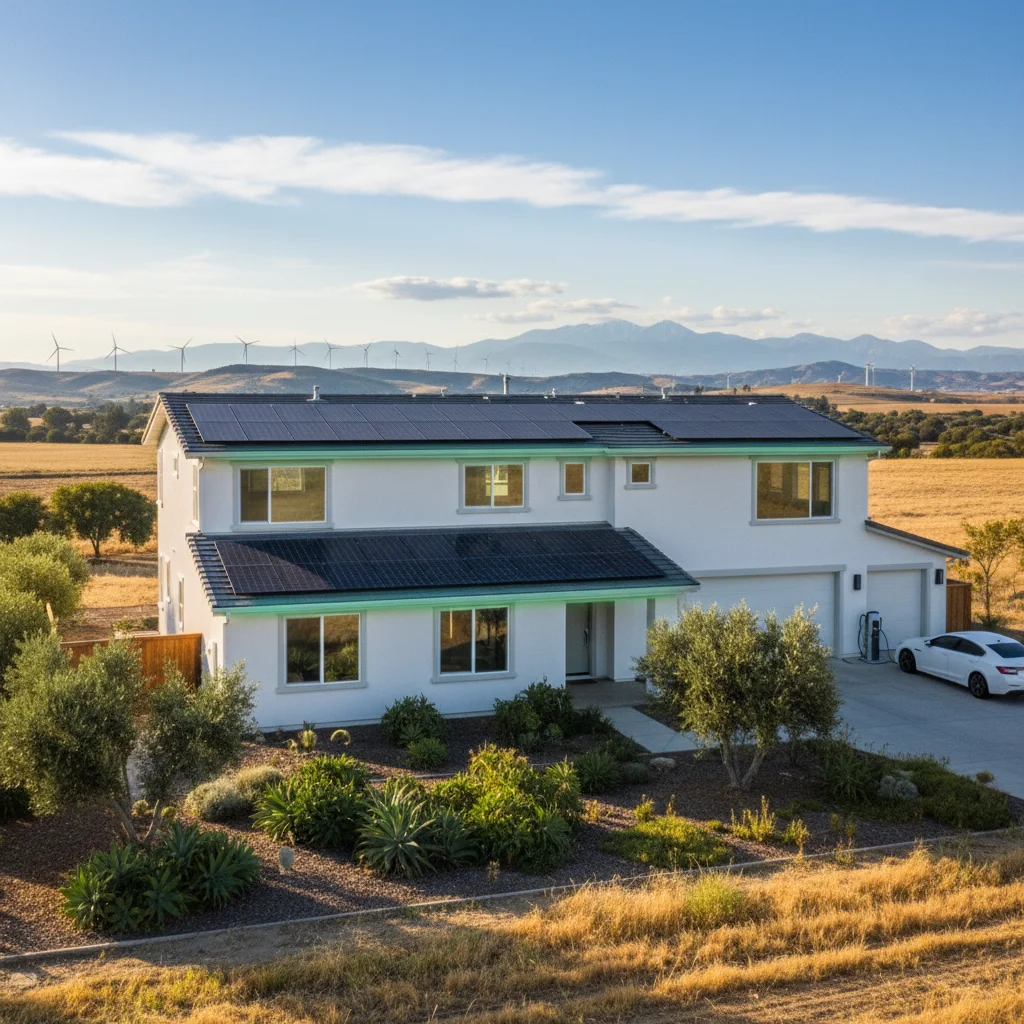
California's Central Valley sees 300+ days of sunshine annually, yet most homeowners still overpay by $3,000-$8,000 on solar installations due to outdated pricing models and missed rebates. In 2026, the average 6kW residential solar system in Fresno, Modesto, and Stockton costs $15,000-$22,000 before incentives—but drops to $9,500-$14,000 after federal tax credits and utility rebates.
How Much Does Solar Panel Installation Cost in the Central Valley?
Central Valley solar panel installations cost $2.50-$3.67 per watt in 2026, totaling $15,000-$22,000 for a standard 6kW system. The federal Residential Clean Energy Credit (Section 25D) ended for expenditures made after December 31, 2025, and the IRS treats an expenditure as made when installation is completed (IRS FS-2025-05). Check current state, local and utility incentives for your address with the DuloCore rebate calculator. But utility rebates from PG&E and local programs can drop final costs another $1,000-$3,500.
System size determines total investment. A 6kW system generates 9,000-10,500 kWh annually in Fresno's Climate Zone 13, covering 85-100% of average household consumption. So homeowners with higher energy use install 8-10kW systems costing $20,000-$36,700 before incentives. Equipment quality affects pricing—premium tier-1 panels from manufacturers like SunPower or LG cost $0.40-$0.70 more per watt than economy options, but carry 25-year performance warranties versus 10-15 years for budget panels.
Labor accounts for 15-25% of total installation costs in the Central Valley. Fresno County permits cost $250-$800 depending on system size, while Stanislaus and San Joaquin counties charge $300-$1,200. And interconnection fees to PG&E run $75-$300. But most installers bundle these administrative costs into total project quotes.
Use our free rebate calculator to estimate your net costs after all available incentives.
What Climate Zone is the Central Valley and How Does It Affect Your Solar Installation?
The Central Valley spans California Climate Zones 12-16, with Fresno, Modesto, and Stockton primarily in Zone 13. And this designation delivers 5.5-6.5 peak sun hours daily—28% more than coastal Zone 3 regions. So solar panels in Fresno generate 1,500-1,750 kWh per installed kW annually, versus 1,200-1,400 kWh in San Francisco.
Zone 13's hot-dry summers create optimal conditions for solar production from April through October. But ambient temperatures exceeding 110°F in July and August reduce panel efficiency by 10-15% during peak heat hours. Premium panels with temperature coefficients of -0.26%/°C lose less output than economy panels rated at -0.40%/°C or higher. And inverter placement matters—ground-mounted units in shaded areas maintain better efficiency than roof-mounted systems exposed to direct 140°F+ surface temperatures.
Winter fog and tule fog events from November through February reduce production by 20-35% for 30-60 days annually in northern Central Valley locations like Stockton and Modesto. So systems in these areas require 10-15% larger capacity to offset seasonal fog impacts compared to southern Valley cities like Bakersfield.
Climate zone also determines rebate eligibility. Solar panel rebates from utilities like PG&E prioritize disadvantaged communities within Zone 13, offering $500-$2,000 higher incentives for installations in Fresno and Merced compared to affluent suburban areas.
How Long Will Your Solar Panels Last in Central Valley's Climate?
Solar panels installed in the Central Valley carry 25-30 year warranties but deliver productive output for 35-40 years in Zone 13's conditions. And tier-1 manufacturers guarantee 90% of rated capacity after 10 years and 80% after 25 years. But real-world degradation rates for premium panels average 0.3-0.5% annually in hot-dry climates, meaning a 6kW system produces 5.4-5.7kW after 25 years.
Central Valley's low humidity and minimal freeze-thaw cycles extend panel lifespan compared to coastal or mountain regions. So microcracking from temperature fluctuations affects <2% of panels versus 8-12% in Climate Zone 1 (mountain) installations. And dust accumulation from agricultural operations reduces output by 3-7% annually without cleaning, but seasonal rains in November-March provide natural maintenance for most systems.
Inverters represent the weakest link in system longevity. String inverters last 10-15 years in 100°F+ ambient conditions common to Zone 13 summers, requiring one replacement over a 30-year system life at $1,200-$2,800. Microinverters carry 25-year warranties but cost $0.30-$0.50 more per watt upfront. And battery systems integrated with solar installations degrade faster—lithium-ion batteries lose 20-30% capacity after 10 years in the Central Valley's temperature extremes.
Warranty coverage determines long-term value. Premium manufacturers like SunPower and Panasonic cover labor costs for panel replacement, while economy brands require homeowners to pay $150-$300 per panel for removal and reinstallation if defects occur after year 10.
Are You Eligible for Solar Rebates and Tax Credits in the Central Valley?
The federal Residential Clean Energy Credit (Section 25D) ended for expenditures made after December 31, 2025, and the IRS treats an expenditure as made when installation is completed (IRS FS-2025-05). And California's Self-Generation Incentive Program (SGIP) offers $200-$350 per kWh for battery storage paired with solar, totaling $2,000-$4,200 for a 12kWh system. But SGIP funds deplete throughout the year—applications submitted after September face 4-6 month waitlists.
Income-based incentives amplify savings for qualified households. The California Solar on Multifamily Affordable Housing (SOMAH) program covers 100% of installation costs for properties with 50%+ low-income tenants. And single-family homeowners earning <80% of area median income ($68,000 for Fresno County in 2026) receive $3,000-$7,000 additional upfront rebates through DAC-SASH (Disadvantaged Communities - Single-family Affordable Solar Homes).
PG&E's Net Energy Metering 3.0 (NEM 3.0) reduces credit rates for excess generation by 75% compared to legacy NEM 2.0 customers, but installations completed before April 15, 2026 still qualify for grandfathered NEM 2.0 rates lasting 20 years. So systems installed in March 2026 earn $0.28-$0.32 per kWh for exports versus $0.06-$0.09 under NEM 3.0.
Property owners see increased home values and tax benefits. The federal tax credit applies to second homes and investment properties, though energy tax credits for rental properties require different documentation than primary residences. And California's property tax exclusion for solar installations means assessed values don't increase despite adding $15,000-$22,000 in equipment.
"DSIRE is the most comprehensive source of information on incentives and policies that support renewables and energy efficiency in the United States." — DSIRE USA
What's the Step-by-Step Process for Installing Solar Panels?
Solar installation in the Central Valley follows a 45-90 day timeline from contract signing to system activation. And the process begins with site assessment and energy audits analyzing 12 months of utility bills to right-size system capacity. But roof inspections determine structural requirements—homes built before 1990 often need $800-$2,500 in reinforcement to support 300-500 lbs per solar array.
Permitting consumes 15-30 days depending on jurisdiction. Fresno County's building department approves residential solar permits within 10 business days for standard roof-mounted systems. But Stanislaus and San Joaquin counties require electrical, structural, and fire safety reviews extending timelines to 20-25 days. And HOA approvals in planned communities add 10-45 days despite California's Solar Rights Act limiting rejections.
Physical installation takes 1-3 days for standard residential systems. Crews mount racking on south-facing roof sections angled at 30-35 degrees for optimal production in Zone 13. And electricians run conduit from panels through attic spaces to inverters and main service panels, upgrading 100-amp panels to 200-amp capacity when necessary at $1,800-$3,500 additional cost.
Inspection and interconnection complete the process. Municipal building inspectors verify electrical and structural compliance within 3-7 days of installation. PG&E's interconnection team reviews applications and installs bidirectional meters within 15-30 days, though current backlogs extend timelines to 45-60 days in Fresno and Modesto service territories. So systems installed in February 2026 typically activate by April-May.
Calculate your timeline and costs with our rebate calculator that factors in local permit processing times.
How Do Central Valley Solar Costs Compare to Other California Regions?
Central Valley installations cost $0.15-$0.40 per watt less than coastal California markets in 2026. And San Francisco Bay Area pricing averages $3.10-$4.20 per watt versus $2.50-$3.67 in Fresno and Modesto. But higher production from Zone 13's superior sun hours delivers faster payback periods of 6-9 years compared to 9-13 years in coastal Zone 3.
Regional labor costs drive price variations. Licensed electricians in San Mateo and Santa Clara counties charge $85-$125 per hour versus $55-$75 in Stanislaus and Merced counties. And permit fees in Los Angeles run $1,200-$2,800 for residential solar compared to $250-$800 in most Central Valley jurisdictions. So total soft costs (permits, labor, administrative) account for 35-40% of coastal installations versus 25-30% in the Valley.
Energy rates determine ROI timelines. PG&E's E-TOU-C residential rate schedule charges $0.33-$0.52 per kWh during peak hours (4-9pm) in 2026, while baseline rates run $0.28-$0.35. And Central Valley homeowners consume 35-45% more electricity than coastal residents due to air conditioning loads from June through September, creating larger offset opportunities. So a 6kW system saving $1,800-$2,400 annually in Fresno matches the dollar savings of an 8kW system in temperate Berkeley.
Incentive stacking varies by region. Disadvantaged communities in Fresno, Merced, and Tulare counties access $5,000-$10,000 more in combined state and utility rebates than comparable installations in affluent Marin or Orange County. And heat pump rebates pair with solar incentives for homeowners upgrading both systems simultaneously, creating combined savings of $12,000-$18,000.
Official Sources
- U.S. Department of Energy Solar Tax Credit Guide — Federal solar investment tax credit details and eligibility requirements (note: the federal 25C and 25D credits ended for projects completed after December 31, 2025)
- DSIRE USA — Comprehensive database of state and utility solar incentives and policies
- Energy.gov Save Energy, Save Money — Federal guidance on residential energy efficiency and renewable energy programs
Frequently Asked Questions
How much does solar panel installation cost in the Central Valley?
Solar panel installation in the Central Valley costs $15,000-$22,000 for a 6kW system before incentives in 2026, or $2.50-$3.67 per watt. And the federal IRA tax credit reduces net costs by 30% to $10,500-$15,400. But utility rebates and state programs drop final costs another $1,000-$3,500 for qualified homeowners. So total out-of-pocket expenses range from $9,500-$14,000 after all incentives.
What rebates are available for solar panels in California?
California's SGIP program offers $200-$350 per kWh for battery storage paired with solar, totaling $2,000-$4,200 for standard systems. And DAC-SASH provides $3,000-$7,000 upfront rebates for low-income homeowners in disadvantaged communities like parts of Fresno and Merced. But PG&E's NEM 3.0 rate structure reduces export credits by 75% for systems installed after April 15, 2026 compared to grandfathered NEM 2.0 rates.
Are you eligible for federal solar tax credits in 2026?
The federal Residential Clean Energy Credit (Section 25D) ended for expenditures made after December 31, 2025, and the IRS treats an expenditure as made when installation is completed (IRS FS-2025-05). And the credit applies to primary residences, second homes, and rental properties. But the credit only reduces tax liability—it doesn't generate refunds for taxpayers with zero federal tax owed. So homeowners must have sufficient tax liability to claim the full credit, though unused amounts roll forward to future tax years.
How long does it take to install solar panels and get rebates?
Solar installation timelines run 45-90 days from contract signing to system activation in the Central Valley. And physical installation takes 1-3 days, but permitting consumes 15-30 days and PG&E interconnection adds 15-60 days depending on backlog. Federal tax credits apply when filing annual returns 3-15 months after installation. But California SGIP rebates process within 30-60 days of system activation for applications submitted before September.
What is the difference between solar rebates and tax credits?
Solar rebates reduce upfront installation costs through direct payments from utilities or state programs, typically $1,000-$7,000 depending on income and location. The federal Residential Clean Energy Credit (Section 25D) ended for expenditures made after December 31, 2025, and the IRS treats an expenditure as made when installation is completed (IRS FS-2025-05). But rebates provide immediate cash savings at purchase, while tax credits deliver value 3-15 months later when filing returns. So combining both maximizes total savings—the federal credit applies to pre-rebate costs, creating larger dollar benefits.
Ready to see your exact solar savings? Use our rebate calculator to get a personalized estimate based on your location, energy use, and available incentives in the Central Valley. Get your free analysis in under 2 minutes.
Last updated April 14, 2026 — reviewed by DuloCore Editorial. About our authors.
Check your California solar rebate eligibility — see the programs you qualify for and the dollar amounts on our California solar rebate finder.