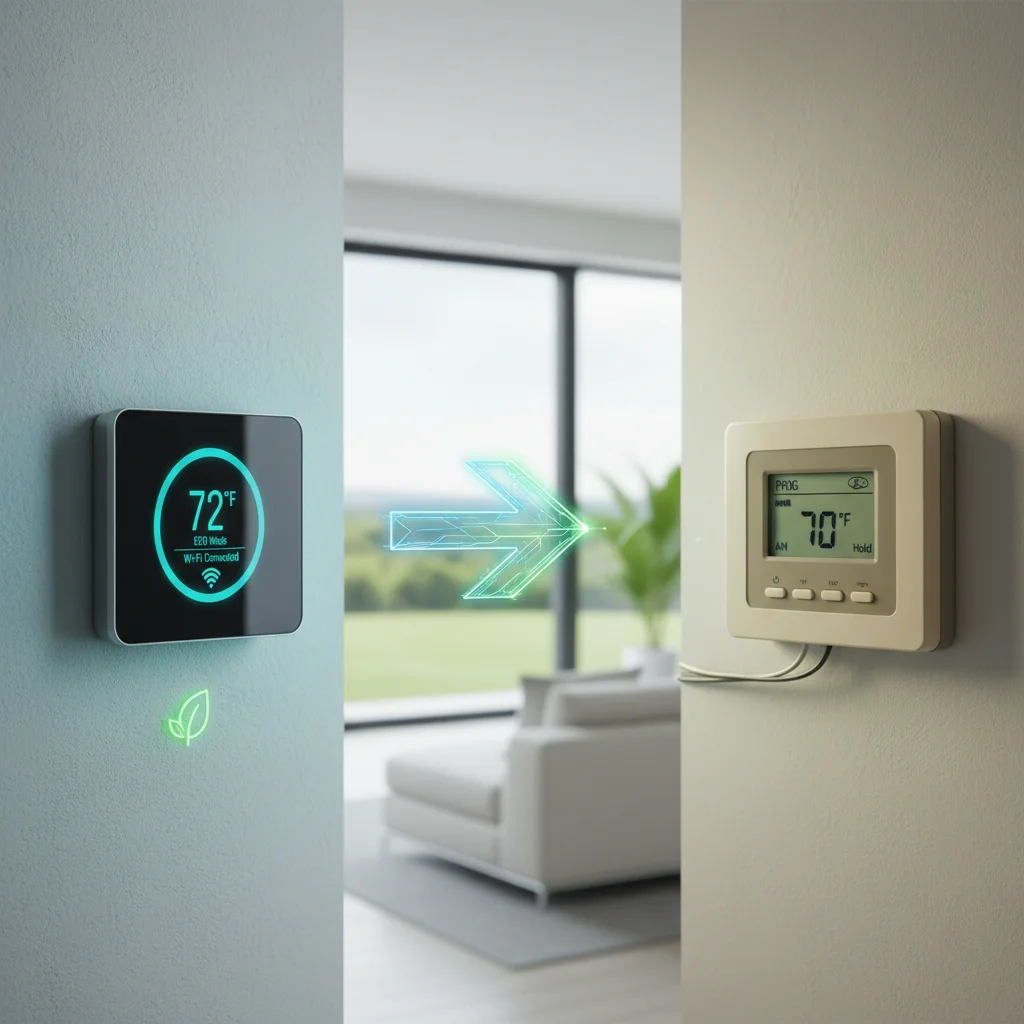
American households waste $11 billion annually on heating and cooling costs that could be avoided with better thermostat technology. The federal Energy Efficient Home Improvement Credit (Section 25C) ended for property placed in service after December 31, 2025 (IRS FS-2025-05). Federal tax credits for this work have ended, but state, local and utility rebates may still apply; check what is available at your address with the DuloCore rebate calculator.
What's the Deadline to Claim Smart Thermostat Rebates and Tax Credits?
Smart thermostats installed and placed in service by December 31, 2026 qualify for federal IRA energy efficiency tax credits up to $150 per device. Programmable thermostats lost federal eligibility when Section 25C expired January 1, 2026. California utility rebates for smart thermostats run through December 31, 2026, but funding depletes on a first-come basis—SCE's 2026 smart thermostat program exhausted 73% of allocated funds by March. And PG&E's Smart Energy program warns of funding exhaustion by Q3 2026. So homeowners planning installations should submit applications by June 30, 2026 to secure rebate payments before funds disappear.
"Qualified energy property costs for 2026 include Energy Star certified smart thermostats with occupancy sensing, learning capabilities, or remote access features that optimize HVAC runtime based on occupancy patterns." — IRS Energy Efficient Home Improvement Credit Guidelines
But the clock matters more than the calendar. Utility rebate programs operate on annual budgets that exhaust mid-year when application volume exceeds projections. California's Self-Generation Incentive Program (SGIP) historically depletes 80-90% of funding by August in high-demand service territories.
How Much Can You Actually Save With Smart Thermostats vs Programmable Models?
Smart thermostats reduce HVAC energy consumption by 10-23% compared to manual thermostats, saving California homeowners $131-$145 annually. Programmable thermostats save 5-15% when programmed correctly—but EPA studies show 47% of programmable thermostat owners never program schedules, eliminating savings potential. And smart models with occupancy sensing and geofencing automatically adjust when homes sit empty, capturing savings without user intervention. Over a 10-year equipment lifespan, smart thermostats save $1,310-$1,450 while programmable models save $655-$986 under optimal programming conditions.
Smart thermostats with remote access prevent energy waste during unexpected schedule changes—canceling vacation days, working from home, or arriving late. Programmable models run preset schedules regardless of occupancy, wasting energy during empty hours. So the behavioral flexibility of smart controls converts directly to dollar savings that programmable schedules can't capture.
Installation costs for both device types range from $120-$250 for professional HVAC technician service. DIY installation takes 30-60 minutes for standard systems with C-wire connections. But homes lacking C-wire power require adapter installation or transformer upgrades adding $50-$150 to project costs.
Are You Eligible for 25C Tax Credits on Smart Thermostats in 2026?
Section 25C expired December 31, 2025. The federal Energy Efficient Home Improvement Credit (Section 25C) ended for property placed in service after December 31, 2025 (IRS FS-2025-05). Smart thermostats qualify for the 2026 IRA credit if they carry Energy Star certification and include at least one advanced feature: occupancy sensing, learning algorithms, geofencing, or remote access control. The credit covers 30% of equipment and installation costs up to $150 per device. And homeowners can claim the credit for up to one smart thermostat per tax year when the device controls a primary heating or cooling system.
The credit applies to primary residences only—vacation homes, rental properties, and investment real estate don't qualify. Homeowners must own and occupy the property where installation occurs. So landlords installing smart thermostats in rental units can't claim the credit, but tenants who purchase and install devices in leased homes qualify if they meet ownership requirements for the equipment itself.
Income limits don't apply to the IRA energy efficiency credit in 2026. All taxpayers qualify regardless of adjusted gross income, unlike some renewable energy credits that phase out above $200,000 AGI. But the credit is non-refundable—it reduces tax liability to zero but doesn't generate refund payments for taxpayers with zero or negative liability.
What's the Funding Status of Current Rebate Programs for Smart Thermostat Upgrades?
California's three major investor-owned utilities allocated $23.4 million for smart thermostat rebates in 2026. PG&E's Smart Energy Program holds $9.8 million (current funding at 61% as of April 2026), SCE's Smart Thermostat Program maintains $8.1 million (27% remaining), and SDG&E's Residential Energy Efficiency Program reserves $5.5 million (78% available). Municipal utilities including SMUD, LADWP, and Silicon Valley Power operate independent programs with separate funding pools ranging from $400,000 to $2.1 million per utility.
"Utility rebate programs funded through public goods charges operate on annual budget cycles. When program budgets exhaust before fiscal year-end, utilities place applications on waitlists for next budget cycle funding." — California Public Utilities Commission Energy Efficiency Programs
And the depletion rate accelerates quarterly. SCE's program disbursed 42% of annual funds in Q1 2026 alone—projecting full exhaustion by late July. PG&E's slower uptake suggests availability through September, but historically high application volumes in cooling season months (June-August) compress timelines. So April and May represent the safest application window before summer demand surge.
SGIP's battery storage incentives for homes with smart thermostats add complexity. Pairing smart thermostat installations with battery systems unlocks $200-$250 per kWh in additional incentives, but SGIP equity budget categories exhaed 94% of 2026 allocations by March. General market category funding remains at 71% availability as of April 8, 2026.
Can You Stack Multiple Rebates and Tax Credits for the Same Smart Thermostat Installation?
A homeowner installing a $250 Ecobee or Nest smart thermostat qualifies for the $150 federal credit plus utility rebates ranging from $50-$125 depending on service territory. Total incentive value reaches $200-$275, exceeding equipment costs and generating net-positive returns before counting energy savings. And this stacking applies to both new construction and retrofit installations in existing homes.
But California doesn't allow stacking multiple utility rebates for the same device. Homeowners served by multiple utilities—such as those with PG&E electric service and municipal water heating—must choose one program per equipment installation. The CPUC prohibits double-dipping within utility-administered programs to prevent incentive abuse.
Manufacturer rebates from thermostat makers like Ecobee, Nest, and Honeywell stack with both federal credits and utility rebates. Seasonal promotions offering $25-$75 instant rebates at purchase combine with government incentives, though manufacturer offers fluctuate and don't guarantee availability. And retail promotions from Home Depot, Lowe's, or Amazon add another stacking layer when coordinated with purchase timing.
PACE financing programs including CaliforniaFIRST and Renew Financial accept projects bundled with smart thermostats. Homeowners financing heat pump installations, insulation upgrades, or window replacements through PACE loans can include smart thermostat costs in financed amounts while still claiming separate federal tax credits and utility rebates for the device itself. So PACE doesn't conflict with incentive stacking—it simply finances the upfront costs that incentives later offset.
Smart Thermostat vs Programmable: Cost Breakdown Including Incentives and Long-Term Savings
Smart thermostats retail for $120-$250 for mid-tier models (Ecobee3 Lite, Google Nest Thermostat) and $180-$300 for premium versions (Ecobee SmartThermostat, Nest Learning Thermostat). Programmable thermostats cost $25-$80 for basic 7-day models and $60-$120 for advanced multi-stage systems. Installation adds $80-$150 for both device types when hiring licensed HVAC technicians. And C-wire adapter requirements add $50-$150 to smart thermostat projects in homes lacking 24V common wire connections.
After federal tax credits and utility rebates, net costs for smart thermostats drop to $0-$100 in most California territories. A $200 Nest Thermostat receives $150 federal credit plus $75 PG&E rebate, reducing net cost to -$25 before counting manufacturer promotions. Programmable thermostats lost federal eligibility in 2026, leaving full retail costs of $25-$120 without incentive offsets.
Annual energy savings favor smart thermostats by $66-$464 compared to programmable models. California homes averaging 1,800 square feet with gas furnaces and central AC pay $1,200-$1,450 annually for HVAC energy. Smart thermostats saving 18% reduce costs by $216-$261 per year. Programmable thermostats saving 10% (accounting for 47% of users who never program schedules) save $120-$145 annually. So the incremental savings of smart versus programmable equals $96-$116 per year.
Over a 10-year device lifespan, smart thermostats deliver $1,960-$2,610 in energy savings minus $0-$100 net equipment costs equals $1,860-$2,510 in net benefit. Programmable thermostats generate $1,200-$1,450 in savings minus $25-$120 costs equals $1,080-$1,425 net benefit. The smart thermostat advantage totals $435-$1,430 over a decade—and this calculation excludes utility rebate and tax credit values from the equation, focusing solely on net-of-incentive costs versus energy savings.
Consider linking your smart thermostat upgrade to heat pump installation for maximum incentive value. The heat pump rebates available in 2026 reach $8,000 for qualifying systems, and pairing heat pump installation with smart thermostat controls optimizes system performance while capturing separate incentives for each component. Use our free rebate calculator to model your specific project costs and available incentives across all equipment types.
Official Sources
- Energy.gov Save Energy, Save Money — Federal guidance on residential energy efficiency upgrades, tax credits, and utility rebate programs (note: the federal 25C and 25D credits ended for projects completed after December 31, 2025)
- ENERGY STAR Certified Smart Thermostats — Searchable database of qualifying smart thermostat models meeting federal efficiency and connectivity standards
- Database of State Incentives for Renewables & Efficiency — Comprehensive directory of federal, state, and utility energy incentive programs updated quarterly
Related Reading: Learn more about Home Energy Assessment Vs Audit and Programmable Thermostat Energy Savings.
Frequently Asked Questions
What is the difference between a smart thermostat and a programmable thermostat?
Smart thermostats connect to WiFi networks and allow remote control via smartphone apps, while programmable thermostats require manual schedule programming at the device itself. Smart models include occupancy sensors, learning algorithms, and geofencing that automatically adjust temperatures based on whether anyone's home. Programmable thermostats run fixed schedules regardless of occupancy changes. And smart thermostats integrate with voice assistants like Alexa, Google Assistant, and Siri for hands-free control that programmable models can't support.
Can a smart thermostat save me money compared to a programmable thermostat?
Smart thermostats save California homeowners an additional $66-$116 annually compared to programmable models by automatically adjusting for occupancy changes and schedule disruptions. EPA studies show 47% of programmable thermostat owners never program schedules, eliminating potential savings. Smart thermostats capture savings automatically without requiring user programming or schedule updates. Over 10 years, smart thermostats deliver $435-$1,430 more in net savings than programmable models after accounting for equipment costs and energy reductions.
Are smart thermostats eligible for energy tax credits?
The federal Energy Efficient Home Improvement Credit (Section 25C) ended for property placed in service after December 31, 2025 (IRS FS-2025-05). Programmable thermostats lost federal eligibility when Section 25C expired January 1, 2026. California utility companies offer additional rebates of $50-$125 for smart thermostat installations that stack with federal credits. And homeowners can claim one smart thermostat credit per tax year for devices controlling primary HVAC systems.
Do I need professional installation for a smart thermostat?
DIY installation takes 30-60 minutes for homes with existing C-wire (24V common wire) connections and standard HVAC systems. Homes lacking C-wire require adapter installation or transformer upgrades adding 60-90 minutes to project time. Professional HVAC technician installation costs $80-$150 and ensures correct wiring for multi-stage heating, dual-fuel systems, or heat pump configurations. And licensed installations meet warranty requirements for some manufacturers while DIY installations void coverage under certain thermostat brands' policies.
What temperature schedule features do smart thermostats offer that programmable ones don't?
Smart thermostats use geofencing to detect when residents leave home and automatically switch to away mode, while programmable models run fixed schedules regardless of actual occupancy. Occupancy sensors in smart devices detect motion and adjust temperatures room-by-room in compatible zoned systems. Learning algorithms analyze usage patterns over 1-2 weeks and auto-generate optimized schedules without manual programming. And remote access via smartphone apps lets homeowners adjust temperatures from anywhere, preventing energy waste during schedule changes that programmable thermostats can't accommodate.
Ready to calculate your smart thermostat savings? Use our free rebate calculator to find federal tax credits, California utility rebates, and 10-year energy savings for your specific home and HVAC system. Get your personalized incentive breakdown in under 60 seconds.
Last updated April 14, 2026 — reviewed by DuloCore Editorial. About our authors.
Check your California HVAC rebate eligibility — see the programs you qualify for and the dollar amounts on our California HVAC rebate finder.