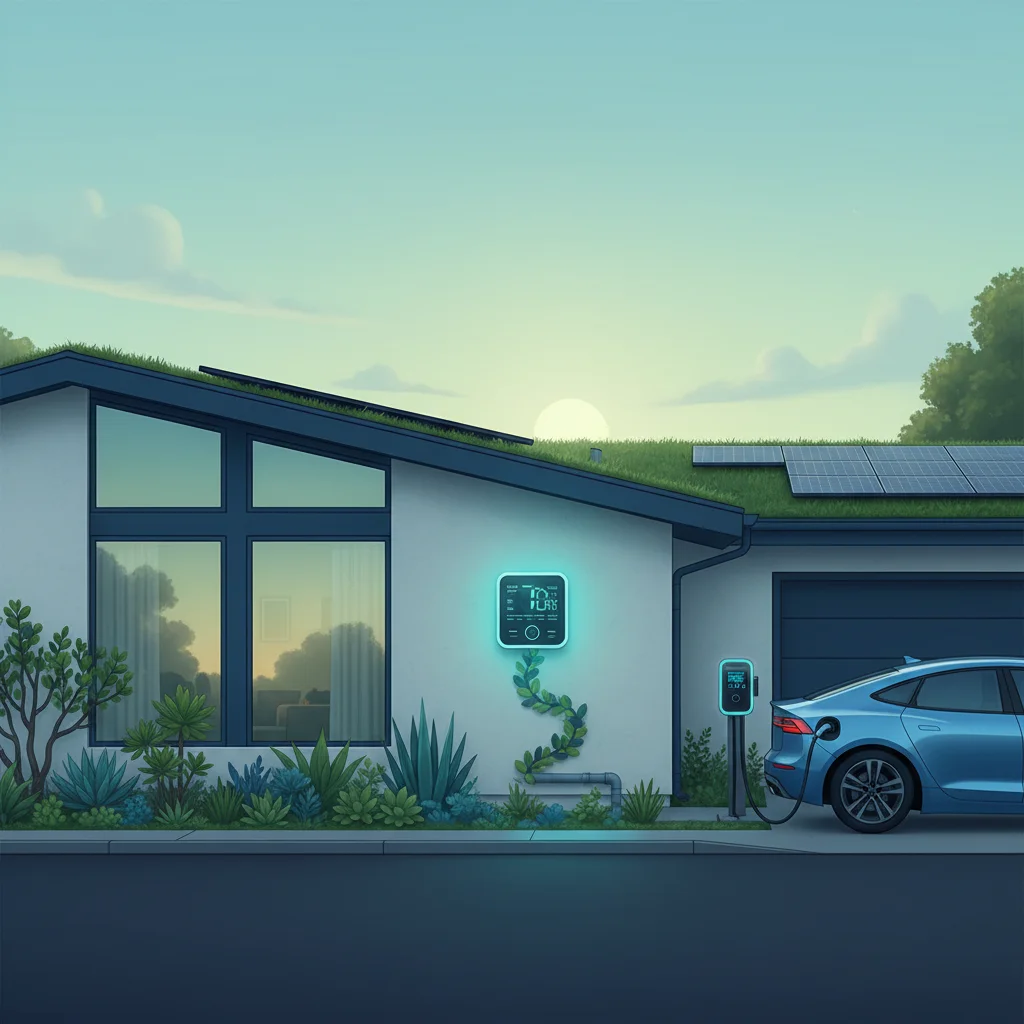
California homeowners left $47 million in smart thermostat rebates unclaimed in 2025, mostly because they didn't know the programs existed or missed application deadlines. And 2026 brings even more money to the table through expanded utility rebates, federal tax credits, and new statewide efficiency programs that stack together for total savings of $200 to $800 per installation.
What Smart Thermostat Rebates Are Available in California for 2026?
California smart thermostat rebates for 2026 include utility-specific programs ranging from $50 to $125, a federal energy efficiency tax credit worth up to 30% of equipment costs (capped at $150 for thermostats), and regional TECH Clean California incentives offering $85 to $200 based on income qualification and climate zone.
California operates the most fragmented smart thermostat rebate landscape in the country with 52 different investor-owned utility programs, 46 municipal utility districts, and 3 statewide incentive layers. So a homeowner in Sacramento faces different rebate amounts than someone in San Diego, even though both qualify for the same federal credit.
But the core tension here is simple: most California households overpay for cooling by 20-35% annually because manual thermostats can't optimize runtime schedules around time-of-use electricity rates. Smart thermostats cut summer cooling costs by an average of $180 per year in California's hot inland valleys and $95 per year in coastal zones, which means the device pays for itself in 12 to 18 months even without rebates.
Major Utility Programs
Pacific Gas & Electric (PG&E) offers $75 for ENERGY STAR certified smart thermostats and $125 for models with demand response capability. Southern California Edison (SCE) provides $85 base rebate plus $35 bonus for low-income qualified households. San Diego Gas & Electric (SDG&E) pays $50 for standard models and $100 for thermostats that integrate with their Smart Energy program.
And municipal utilities operate separate programs: Sacramento Municipal Utility District (SMUD) pays $120, Los Angeles Department of Water & Power (LADWP) offers $75, and Silicon Valley Power provides $100. Heat pump rebates often stack with thermostat incentives when both are installed as part of an HVAC upgrade.
"Smart thermostats eligible for utility rebates must meet ENERGY STAR certification standards and support demand response communication protocols." — ENERGY STAR Program Requirements
Federal Tax Credits
The federal Energy Efficient Home Improvement Credit (Section 25C) ended for property placed in service after December 31, 2025 (IRS FS-2025-05). Federal tax credits for this work have ended, but state, local and utility rebates may still apply; check what is available at your address with the DuloCore rebate calculator. So a $250 thermostat generates a $75 federal tax credit when filed with Form 5695 on your 2026 tax return. The credit applies to purchase price and installation labor combined, not just the device.
But the federal credit caps total annual home efficiency improvements at $1,200, which includes insulation, windows, doors, and HVAC equipment. Homeowners planning multiple upgrades should prioritize higher-value credits like energy tax credits for heat pumps or solar panels first, then apply remaining capacity to thermostats.
State and Regional Programs
TECH Clean California offers income-qualified rebates of $85 to $200 depending on county and climate zone. Bay Area residents in cooling-dominated zones qualify for higher amounts because smart thermostats deliver greater energy savings. And the program pre-approves specific thermostat models, so homeowners must check the qualified product list before purchasing.
Or homeowners can access local air quality management district incentives that pay $50 to $100 for thermostats installed alongside major HVAC replacements. These programs prioritize pollution reduction in disadvantaged communities and require professional installation by a licensed contractor.
How Much Money Can You Save With California Smart Thermostat Rebates?
Total savings from California smart thermostat rebates in 2026 range from $200 to $825 per household when combining utility rebates ($50-$125), federal tax credits (up to $150), state programs ($85-$200), and first-year energy cost reductions ($95-$350), with the highest totals available to income-qualified residents in hot inland climate zones.
The math breaks down into three buckets: upfront incentive payments you receive within 6 to 12 weeks of application, federal tax credits claimed on your next return, and ongoing utility bill reductions that compound annually. So a typical installation scenario in Fresno generates $125 PG&E rebate + $75 federal credit + $200 TECH Clean California payment + $280 first-year cooling savings = $680 total value.
But coastal households see lower energy savings because milder temperatures reduce cooling demand. A San Francisco homeowner might receive the same $200 in rebates but only save $95 annually on bills, pushing payback period to 24 months instead of 12.
Maximum Stacking Scenario
Income-qualified households in California's Central Valley access the highest total rebate value by combining SMUD's $120 utility rebate + $200 TECH Clean California enhanced tier + $75 federal tax credit + $350 annual energy savings = $745 total benefit. And Sacramento County offers an additional $80 through its Home Energy Savings Program for installations completed by December 31, 2026.
So a family earning below 80% area median income installing a Nest Learning Thermostat or Ecobee SmartThermostat captures $825 in combined value within the first year. Or homeowners can use the free rebate calculator to model exact savings based on zip code, utility provider, and household income.
"California households that combine utility rebates with federal tax credits and state programs receive an average of $380 in total smart thermostat incentives, reducing net installation costs by 65%." — California Energy Commission
Annual Energy Savings by Region
Inland Empire residents save an average of $310 per year on cooling costs with smart thermostat optimization, while Bay Area households save $105 annually. Central Valley homes see $280 average savings, and San Diego County averages $190. These numbers assume 2,400 square foot homes with central air conditioning running on time-of-use rate schedules.
And smart thermostats deliver additional value through automated demand response participation, which pays $25 to $75 annually when utilities remotely adjust temperature setpoints during peak grid events. SCE's Summer Discount Plan adds $50 per year for customers who enroll compatible thermostats in the program.
What Are the Eligibility Requirements for California Thermostat Rebates?
California smart thermostat rebate eligibility requires active utility service with a participating provider, installation of an ENERGY STAR certified model from the pre-approved product list, replacement of an existing non-programmable or basic programmable thermostat (new construction excluded), and completion of installation between January 1 and December 31, 2026, with some programs adding income qualification thresholds at 60% to 80% area median income.
So you can't claim rebates for thermostats installed in newly built homes or for upgrading one smart thermostat to a newer model. And rental properties qualify only if the tenant pays electricity bills directly, not when utilities are included in rent.
But each utility operates slightly different rules: PG&E requires thermostats to connect to WiFi and participate in demand response events at least twice annually. SCE mandates professional installation for rebates over $85. SDG&E restricts rebates to one per dwelling unit per calendar year.
Income Qualification Programs
TECH Clean California enhanced rebates require household income documentation showing earnings below 80% area median income, which equals $84,000 for a family of four in Los Angeles County or $112,000 in San Francisco. And applicants must provide 2025 tax returns or three recent pay stubs to verify income eligibility.
Or participants in California Alternate Rates for Energy (CARE) or Family Electric Rate Assistance (FERA) programs automatically qualify for enhanced rebates without submitting additional income documentation. These customers already proved income eligibility through their utility rate discount applications.
Product Certification Requirements
All rebate-eligible thermostats must carry ENERGYSTAR certification and appear on the utility's pre-approved model list, which includes Nest Learning Thermostat, Ecobee SmartThermostat, Honeywell T9, Emerson Sensi Touch, and Lux Kono. And devices must support OpenADR 2.0 demand response communication protocol for utility programs requiring grid integration.
So homeowners should verify model eligibility before purchasing by checking their utility's online qualified product database. Installing a non-approved model voids rebate eligibility even if the device carries ENERGY STAR certification.
What Documentation Do You Need to Claim Your Smart Thermostat Rebate?
Required documentation for California smart thermostat rebates includes itemized purchase receipt showing thermostat model number and purchase date, proof of installation with contractor license number (if professional installation required), utility account number, before-installation photo of old thermostat on wall, after-installation photo of new thermostat showing model label, and completed rebate application form submitted within 60 to 180 days of installation depending on program.
And income-qualified programs require 2025 tax return (Form 1040 page 1) or three consecutive pay stubs dated within 90 days of application. CARE/FERA participants submit utility bill showing discount rate enrollment instead of income documentation.
But documentation requirements escalate for stacked rebates: claiming both utility and TECH Clean California incentives requires submitting separate applications to each program with duplicated paperwork. So homeowners file once with PG&E using installation invoice and account number, then file again with TECH Clean California using the same invoice plus income verification and climate zone confirmation.
Receipt and Invoice Requirements
Purchase receipts must display retailer name, purchase date, thermostat manufacturer and model number, itemized price, and payment proof. And contractor invoices for professional installation must include California contractor license number (C-20 Warm Air Heating, Ventilation, and Air Conditioning classification), installation date, labor and materials breakdown, and property address.
Or DIY installations qualify for base rebates from most utilities but disqualify homeowners from enhanced tiers requiring professional installation. SCE pays $85 for self-installed thermostats but $120 for contractor-installed units, creating a $35 incentive to hire licensed installers who charge $75 to $150 for thermostat installation labor.
Photo Documentation Standards
Before-photos must clearly show the old thermostat mounted on the wall with visible wiring and model information. After-photos must display the new smart thermostat with manufacturer label and model number legible in the image. And some programs require photos showing the thermostat connected to WiFi with confirmation screen visible.
So applicants should take 3 to 5 photos during installation: old thermostat on wall, old thermostat removed showing wires, new thermostat mounting base, completed installation, and WiFi connection confirmation screen. Blurry or unclear photos delay rebate processing by 4 to 8 weeks while utilities request replacement documentation.
Do You Need Pre-Approval Before Installing Your Smart Thermostat?
Pre-approval is not required for standard California utility smart thermostat rebates under $125, federal tax credits, or TECH Clean California base tier incentives, but income-qualified enhanced rebates over $200 from regional programs often require pre-approval applications submitted 2 to 6 weeks before installation, and some municipal utility districts mandate reservation of rebate funds before purchase to avoid budget exhaustion.
So most homeowners install first, then apply for rebates within 60 to 180 days using post-installation documentation. But SMUD requires online pre-approval for rebates over $100, locking in incentive amounts before purchase and guaranteeing payment even if program budgets run dry mid-year.
And TECH Clean California enhanced tier applicants must pre-register through the online portal, receive income qualification approval, select from the approved contractor list, then proceed with installation. Pre-approval expires after 90 days, requiring reapplication if installation doesn't occur within the window.
Programs Requiring Pre-Approval
Sacramento Municipal Utility District, Silicon Valley Power, and Pasadena Water & Power require online pre-approval reservations before thermostat purchase. And these programs allocate rebate budgets on a first-come, first-served basis, with funding typically exhausted by September or October each year.
So homeowners planning installations in the second half of 2026 should submit pre-approval applications in January or February to secure rebate reservations before budgets deplete. Late applicants face waitlists or denial notices directing them to reapply when new fiscal year budgets activate on July 1.
Standard Post-Installation Programs
PG&E, SCE, SDG&E, and most municipal utilities operate post-installation rebate models requiring applications within 60 to 180 days of installation completion. And these programs maintain year-round funding without pre-approval requirements, though rebate amounts may decrease if statewide budgets face mid-year adjustments.
Or homeowners can verify their utility's specific requirements by calling customer service or checking the rebate program webpage before purchasing thermostats. Geothermal tax credit programs operate similarly with post-installation claim processes through federal tax returns rather than upfront approvals.
Can You Stack Multiple Rebates and What Are the Stacking Rules?
California allows stacking of utility rebates, federal tax credits, and state programs for smart thermostats without penalty, enabling homeowners to combine PG&E's $125 utility rebate + $75 federal tax credit + $200 TECH Clean California payment = $400 total incentives, but prohibits claiming multiple utility rebates for the same device (one SCE rebate or one PG&E rebate, not both) and restricts federal credits to one thermostat per tax year per household.
So the maximum legal stack combines one utility rebate + one federal credit + one state or regional program incentive. And homeowners with multiple HVAC zones can install and claim rebates for one thermostat per zone, with some utilities capping total payments at 2 to 3 thermostats per property.
But stacking requires separate applications to each program: utility rebate applications submit through the utility portal, federal credits file with IRS Form 5695, and TECH Clean California applications process through the state program website. Or homeowners use the rebate calculator to model exact stacking scenarios based on location and income qualification.
Federal and State Stacking
The IRS allows combining federal tax credits with state and utility rebates without reducing credit amounts. So a homeowner receiving $125 PG&E rebate still claims the full 30% federal credit (this federal credit ended for property placed in service after December 31, 2025) (up to $150 maximum) on the original purchase price, not the net cost after utility rebate.
And California state law prohibits utilities from reducing rebate amounts when homeowners claim federal credits, eliminating the double-dipping penalties some states enforce. This creates the most favorable stacking environment in the country for home energy upgrades.
Prohibited Stacking Scenarios
Homeowners cannot claim rebates from multiple utilities for the same thermostat installation, even if the property sits on a utility boundary or switches providers mid-year. And vacation homes or investment properties qualify for only one set of rebates regardless of how many thermostats are installed across multiple properties.
Or attempting to claim duplicate rebates through different household members triggers fraud investigations and rebate clawbacks with penalties. Utilities cross-reference applications by property address and installation date, automatically flagging duplicate submissions.
What Are the Deadlines for Claiming Smart Thermostat Rebates in California?
California smart thermostat rebate deadlines require installations completed between January 1 and December 31, 2026, with utility rebate applications due 60 to 180 days after installation (PG&E allows 180 days, SCE requires 90 days, SDG&E mandates 60 days), TECH Clean California applications due within 120 days of installation, and federal tax credits claimed on 2026 returns filed by April 15, 2027, though some municipal utilities operate fiscal year budgets ending June 30, 2026, creating mid-year application cutoffs.
So a thermostat installed on March 15, 2026, must file PG&E rebate by September 11, 2026, TECH Clean California by July 13, 2026, and federal tax credit by April 15, 2027. And missing any deadline forfeits that specific rebate while leaving other stacked incentives intact.
But municipal utility programs face budget constraints that create effective deadlines earlier than official cutoffs: SMUD's $120 rebate typically exhausts funding by August, and Silicon Valley Power's $100 incentive runs out by October. Late applicants join waitlists for next fiscal year funding starting July 1.
Utility-Specific Deadlines
Pacific Gas & Electric accepts applications up to 180 days post-installation with no fiscal year restrictions, maintaining continuous funding through December 31, 2026. Southern California Edison requires applications within 90 days and processes payments in 6 to 8 weeks. San Diego Gas & Electric mandates 60-day application windows and pays rebates in 4 to 6 weeks.
And municipal utilities operate varied schedules: Los Angeles Department of Water & Power allows 120 days for applications, Sacramento Municipal Utility District requires 90 days, and Pasadena Water & Power mandates 60 days. So homeowners should verify specific utility deadlines before installation to avoid missing application windows.
Federal Tax Credit Filing Deadlines
The federal smart thermostat tax credit claims on 2026 tax returns filed by April 15, 2027, with extensions available through October 15, 2027. And homeowners can carry forward unused credit capacity to future tax years if total 2026 tax liability is less than the calculated credit amount.
Or taxpayers filing amended returns can claim missed credits for installations completed in prior years, subject to the standard 3-year amendment window. So a 2026 installation could still claim federal credits through an amended return filed by April 15, 2030, though late filing eliminates eligibility for time-sensitive utility rebates.
Official Sources
- ENERGY STAR Smart Thermostats — Federal certification standards and qualified product list for rebate-eligible thermostats
- DSIRE California Programs — Comprehensive database of state, utility, and federal incentive programs for California energy upgrades
- DOE Save Energy Save Money — Federal guidance on home energy efficiency improvements, tax credits, and rebate eligibility (note: the federal 25C and 25D credits ended for projects completed after December 31, 2025)
Related Reading: Learn more about What Is the Best Smart Thermostat for a Heat Pump in 2026? and Best Smart Thermostat Under 200 Dollars 2026.
Related Reading: Learn more about How Much Do Smart Thermostats Actually Save? 2026 Data and Studies.
Frequently Asked Questions
What smart thermostats qualify for California rebates in 2026?
ENERGY STAR certified models from approved manufacturers including Nest Learning Thermostat, Ecobee SmartThermostat, Honeywell T9, Emerson Sensi Touch, and Lux Kono qualify for California utility rebates. Devices must support WiFi connectivity and OpenADR 2.0 demand response protocol. Homeowners should verify specific model eligibility on their utility's pre-approved product list before purchasing, as not all ENERGY STAR thermostats meet utility-specific technical requirements. Models purchased outside California or through unauthorized retailers may not qualify.
How much can you save with a California smart thermostat rebate?
Total savings range from $200 to $825 in the first year when combining utility rebates ($50-$125), federal tax credits (up to $150), state programs ($85-$200), and energy cost reductions ($95-$350). Income-qualified households in hot climate zones access the highest incentive tiers. Bay Area coastal residents see lower energy savings due to milder temperatures. And rebate amounts vary by utility provider, with Sacramento Municipal Utility District offering the highest single-utility payment at $120. Annual energy savings compound over the thermostat's 10-year lifespan.
Do you need a professional installation for California smart thermostat rebates?
Most California utility rebates allow DIY installation, but enhanced tiers from Southern California Edison and some municipal utilities require professional installation by a California-licensed contractor with C-20 Warm Air Heating, Ventilation, and Air Conditioning classification. TECH Clean California income-qualified rebates over $150 mandate contractor installation from pre-approved provider lists. Federal tax credits accept both DIY and professional installations. Contractor costs range from $75 to $150, creating trade-offs between higher rebate tiers and installation labor expenses.
What's the deadline for applying for California smart thermostat rebates in 2026?
Application deadlines range from 60 to 180 days after installation depending on the utility provider: PG&E allows 180 days, SCE requires 90 days, and SDG&E mandates 60 days. TECH Clean California applications are due within 120 days of installation. Federal tax credits claim on 2026 returns filed by April 15, 2027. Municipal utilities often exhaust budgets by August or September despite accepting applications through December 31, creating effective deadlines earlier than official cutoffs. Late applications join waitlists for next fiscal year funding.
Are smart thermostat rebates available in all California counties?
All 58 California counties have access to federal tax credits, but utility rebate availability depends on electricity provider service territory. Investor-owned utility customers (PG&E, SCE, SDG&E) covering 68% of California households qualify for robust programs. Municipal utility customers access separate programs with varied incentive amounts. And TECH Clean California operates statewide but offers higher payments in cooling-dominated inland counties compared to coastal zones. Rural electric cooperatives operate independent rebate programs with different eligibility requirements and payment schedules.
Ready to claim your smart thermostat rebates? Use our free rebate calculator to find every incentive you qualify for based on your zip code, utility provider, and household income. Get your personalized rebate estimate in under 60 seconds and start saving on cooling costs today.
Last updated April 14, 2026 — reviewed by DuloCore Editorial. About our authors.
Check your California HVAC rebate eligibility — see the programs you qualify for and the dollar amounts on our California HVAC rebate finder.