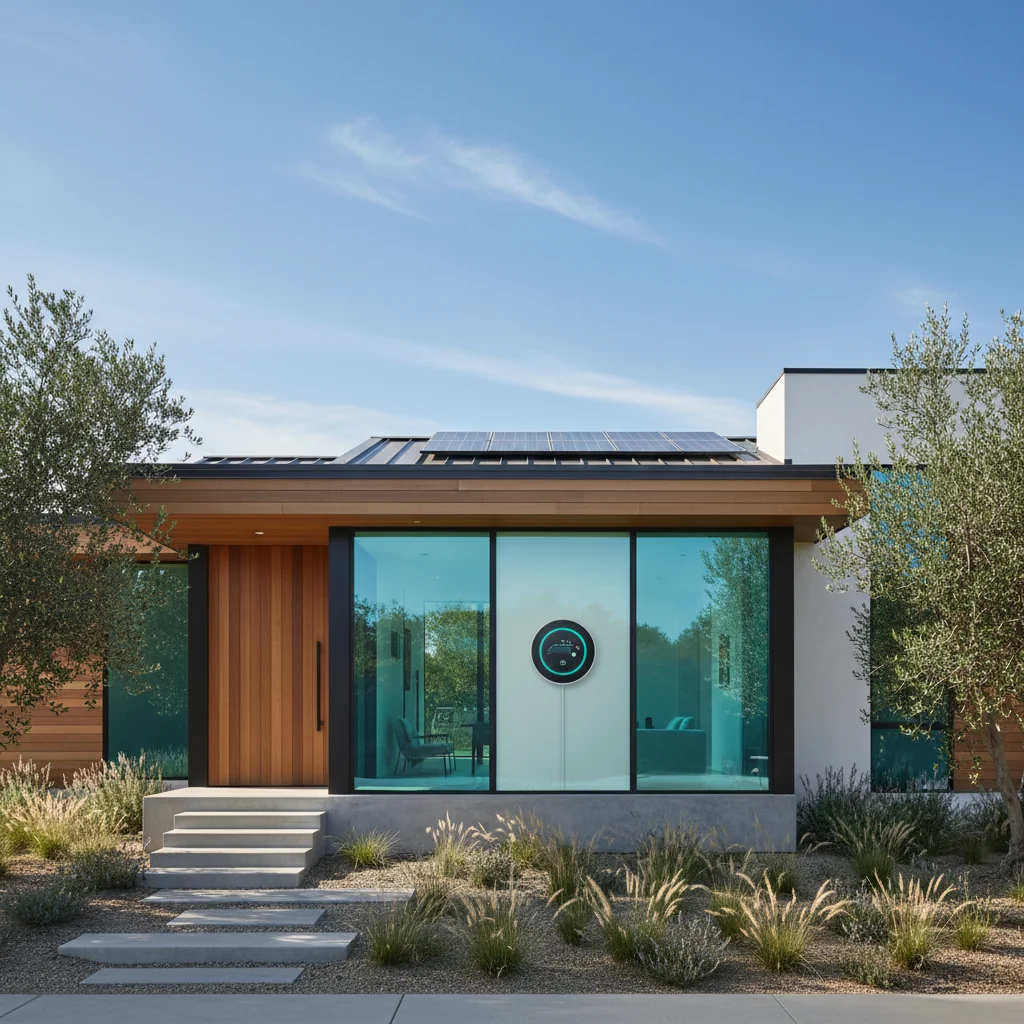
California's electricity grid came within minutes of blackouts during the 2020 August heat storm — and smart thermostats prevented 300 megawatts of demand, enough to power 225,000 homes. Demand response programs pay homeowners to let utilities remotely adjust thermostats during grid emergencies, and enrollment has tripled since 2021 as extreme weather becomes the norm.
What is smart thermostat demand response and which California agency administers it?
Smart thermostat demand response programs in California allow electric utilities to remotely adjust home temperatures by 2-4 degrees during peak demand events, typically 1-15 times per year between June and September. The California Public Utilities Commission (CPUC) oversees these programs, which utilities like Pacific Gas & Electric (PG&E), Southern California Edison (SCE), and San Diego Gas & Electric (SDG&E) administer directly. And the programs run alongside California's Self-Generation Incentive Program (SGIP) but operate independently.
Participating thermostats receive automatic signals when grid operators at the California Independent System Operator (CAISO) declare flex alerts or emergency conditions. So homeowners don't manually adjust settings — the utility's demand response management system communicates with enrolled devices through Wi-Fi. But participants retain override control at all times and can opt out of individual events without penalty.
Most California demand response programs accept Google Nest, ecobee, Honeywell Home, and Emerson Sensi devices manufactured after 2018. Or newer models with CTA-2045 ports qualify for commercial-grade programs offering higher incentives. The energy efficiency credentials of each device determine eligibility across utility territories.
What are the eligibility requirements and financial incentives for smart thermostat demand response programs?
California homeowners qualify for demand response enrollment if they own a compatible smart thermostat, maintain an active residential electricity account, and reside within participating utility service territories covering 29 million residents. PG&E's SmartRate program pays $50 signup bonuses plus $0.75 per kilowatt-hour saved during SmartDays, typically generating $125-$300 annually. SCE's Summer Discount Plan offers $200 upfront payments for central air conditioning control with $0.50/kWh event credits. And SDG&E's Reduce Your Use Rewards provides $75 annual payments plus performance bonuses up to $2 per kilowatt-hour reduced.
Income-qualified households in California Alternative Rates for Energy (CARE) or Family Electric Rate Assistance (FERA) programs receive enhanced incentives ranging from $150-$250 signup bonuses and 50% higher per-event credits. But enrollment requires proof of CARE/FERA status through utility account verification. So households earning below 200% of federal poverty guidelines automatically qualify for premium tier pricing.
Renters can enroll with landlord permission, and multi-family buildings with individual metering qualify for residential rates. The programs don't require new thermostat purchases — existing compatible devices installed within the past 5 years meet technical specifications. And participation doesn't affect heat pump rebates or federal tax credits available through 2032 under the Inflation Reduction Act.
How much can California homeowners save through smart thermostat demand response participation?
California demand response participants save $125-$400 annually through direct payments, bill credits, and avoided peak-rate charges during the 50-100 highest-cost hours per year. PG&E customers enrolled in SmartRate saved an average of $276 in summer 2025, with top performers earning $580 by maintaining 4-degree setpoint increases during 12-18 annual events. SCE's Summer Discount Plan delivered $315 average annual value combining $200 upfront payments with $115 average event credits across 15 control days.
So the math favors homes with central air conditioning systems rated above 14 SEER that consume 2,500+ kilowatt-hours during May-October cooling seasons. But smaller homes or those with mini-split heat pumps typically earn $90-$175 annually due to lower baseline consumption. And participation stacks with time-of-use (TOU) rate plans that shift 30-40% of consumption to off-peak periods priced at $0.25/kWh versus $0.52/kWh peak rates.
The combination of demand response credits, TOU optimization, and smart thermostat automation reduces annual electricity costs by 18-27% for median California households using 6,000 kWh yearly. Or households pairing demand response enrollment with solar panels and battery storage incentives achieve net-zero summer bills by exporting peak-hour generation at $0.45-$0.52/kWh while importing overnight at $0.25/kWh. Use our free rebate calculator to model combined savings across utility programs, federal tax credits, and demand response participation.
What is the application deadline for California's smart thermostat demand response programs?
California's three major investor-owned utilities operate rolling enrollment with no annual application deadlines, accepting new demand response participants year-round through online portals and mobile apps. PG&E processes enrollments within 3-5 business days during off-peak months (October-April) and 7-10 days during summer enrollment surges. But SCE and SDG&E offer instant activation for pre-verified thermostat models through automated API connections requiring 24-48 hours for billing system integration.
Some municipal utilities and community choice aggregators (CCAs) limit enrollment windows to March-May periods preceding summer peak seasons. And Silicon Valley Clean Energy restricts new sign-ups to 10,000 annual slots distributed first-come-first-served starting March 1 each year. So residents served by CCAs should verify seasonal restrictions through utility account dashboards or customer service lines.
Incentive structures change annually on January 1 when the CPUC approves updated demand response budgets and per-event payment rates. The 2026 program year increased average payouts by 12% compared to 2025 levels, reflecting higher grid stress projections and 300 megawatts of additional capacity targets. Or early enrollments before May 15 qualify for $25-$50 bonus payments under PG&E's Peak Day Pricing referral campaigns.
How do I enroll in a demand response program and what is the step-by-step process?
Enrollment begins at utility websites — PG&E customers visit pge.com/smartrate, SCE customers access sce.com/summerdiscount, and SDG&E customers navigate to sdge.com/ryu-rewards to access registration portals. And the process requires utility account numbers, thermostat manufacturer details, and Wi-Fi network credentials for device integration.
Step 1: Verify thermostat compatibility using utility lookup tools that check model numbers against CTA-2045 and OpenADR 2.0b protocol requirements. So homeowners enter device serial numbers or select from dropdown menus listing 47 qualified models across 12 manufacturers. Or users download manufacturer apps (Google Home, ecobee app, Honeywell Home) to confirm firmware versions meet utility API specifications.
Step 2: Link thermostat to utility account through OAuth authentication flows that grant read/write permissions for temperature setpoints during declared events. PG&E's portal redirects to Google's authorization page for Nest devices, requiring password confirmation and two-factor authentication. But ecobee users generate 4-digit PIN codes displayed on thermostat screens to complete pairing within 10-minute windows.
Step 3: Select program tier and event parameters — PG&E offers SmartRate (12-18 events, 4-degree setback, $0.75/kWh credits) or Peak Day Pricing (9-15 events, 2-degree setback, $0.50/kWh credits). SCE provides full cycling (100% compressor shutdown, $250 upfront) or 50% cycling ($175 upfront) with identical per-event credits. And SDG&E's three-tier structure scales payments by controllable load: Tier 1 (<2 kW, $75 annual), Tier 2 (2-4 kW, $125 annual), Tier 3 (>4 kW, $200 annual).
Step 4: Confirm enrollment via email notifications containing event schedules, override instructions, and mobile app download links for real-time alerts. So participants receive 24-hour advance notice before control events through SMS, push notifications, and email by default, with opt-in 4-hour advance warnings available. The entire process completes in 8-12 minutes for pre-qualified devices with existing utility online accounts.
How does California's smart thermostat demand response compare to other energy efficiency programs?
California demand response programs deliver immediate cash payments averaging $125-$400 annually with zero upfront investment, contrasting with HVAC rebates requiring $3,000-$8,000 equipment purchases that pay back over 5-10 years. And the enrollment process takes 10 minutes versus 45-90 days for rebate application reviews, equipment installations, and incentive processing under California's Tech Clean California program.
But demand response savings represent 3-8% of annual electricity costs for median households, while comprehensive retrofits combining heat pump upgrades, insulation improvements, and solar installations reduce energy consumption by 40-60%. So the programs serve complementary roles — demand response optimizes existing equipment operation, while weatherization rebates and federal tax credits fund permanent efficiency improvements.
The stacking potential maximizes financial returns: homeowners installing ENERGY STAR certified heat pumps qualify for $3,000 federal tax credits under the Inflation Reduction Act, $3,000-$4,000 California Tech Clean California rebates, and $200-$400 annual demand response payments. Or pairing smart thermostats with solar tax credits covering 30% of photovoltaic system costs creates 15-20% faster payback periods through combined generation credits and demand response enrollment.
California's Self-Generation Incentive Program (SGIP) offers $150-$250 per kilowatt-hour for battery storage paired with demand response-capable inverters, enabling automated discharge during peak events. And participants earn dual compensation — utilities pay demand response credits for load reduction while households simultaneously export stored solar generation at $0.45-$0.52/kWh time-of-use rates during 4-9 PM peak windows.
What should I know before calling my utility company about demand response enrollment?
Gather utility account numbers, thermostat model and serial numbers, and Wi-Fi network names before contacting customer service representatives to streamline enrollment verification. PG&E's SmartRate support line (1-866-743-4112) operates Monday-Friday 7 AM-7 PM Pacific, while SCE's demand response team (1-800-655-4555) provides 24/7 automated enrollment with live support weekdays 8 AM-6 PM. And SDG&E's customer service (1-800-411-7343) routes demand response inquiries to specialized enrollment agents during business hours.
Representatives verify address eligibility within specific distribution circuits designated for demand response capacity — approximately 85% of California residential meters qualify, excluding remote areas with limited grid interconnection. So customers should confirm rate schedules since demand response enrollment requires time-of-use billing, which 72% of California households already use as default pricing since 2020.
Ask about override policies and opt-out procedures — all California demand response programs allow unlimited event cancellations without financial penalties or program removal. But excessive opt-outs (>50% of annual events) trigger case-by-case reviews and potential tier downgrades affecting per-event payment rates. And clarify thermostat control parameters: utilities adjust cooling setpoints by 2-4 degrees for 2-6 hour windows but never disable systems entirely or affect heating modes during winter months.
"Demand response programs saved California ratepayers $2.8 billion between 2018-2025 by avoiding 15 peaker plant constructions and reducing wholesale electricity prices during 847 grid emergency events." — California Public Utilities Commission Annual Report
Request documentation about program modifications, exit procedures, and annual incentive adjustments implemented each January following CPUC budget approvals. And confirm billing credit timelines — PG&E applies SmartRate credits within 2-3 billing cycles following events, while SCE deposits Summer Discount Plan upfront payments within 6-8 weeks of enrollment confirmation.
Official Sources
- U.S. Department of Energy - Save Energy, Save Money — Federal energy efficiency programs, rebates, and tax credit guidance for homeowners (note: the federal 25C and 25D credits ended for projects completed after December 31, 2025)
- Database of State Incentives for Renewables & Efficiency (DSIRE) — Comprehensive database of California utility programs, rebates, and demand response incentives
Frequently Asked Questions
What is a smart thermostat demand response program in California?
Smart thermostat demand response programs compensate California homeowners $125-$400 annually for allowing utilities to remotely adjust air conditioning temperatures by 2-4 degrees during 9-18 peak demand events per year, typically occurring June-September between 4-9 PM. The California Public Utilities Commission oversees programs administered by PG&E, SCE, and SDG&E serving 29 million residents. And participation requires compatible Wi-Fi thermostats from manufacturers like Google Nest, ecobee, or Honeywell with enrollment processed through utility online portals in 10-15 minutes.
How much can you save with a smart thermostat demand response program?
California demand response participants save $125-$400 annually through direct payments, event credits, and avoided peak electricity charges during the 50-100 highest-cost hours yearly. PG&E SmartRate customers averaged $276 in 2025 with top performers earning $580, while SCE Summer Discount Plan delivered $315 average value combining $200 upfront payments with event credits. And households pairing demand response enrollment with time-of-use rates and solar incentives reduce total electricity costs by 18-27% compared to standard rate schedules.
Are you eligible for California smart thermostat demand response rebates?
Homeowners qualify if they own compatible smart thermostats, maintain active residential electricity accounts, and reside in PG&E, SCE, or SDG&E service territories covering 85% of California's population. Income-qualified CARE or FERA participants receive enhanced $150-$250 signup bonuses and 50% higher per-event credits compared to standard tier rates. And renters can enroll with landlord permission while multi-family buildings with individual metering qualify for residential program rates identical to single-family homes.
What is the difference between demand response and regular smart thermostats?
Demand response-enrolled thermostats receive utility signals to automatically adjust temperatures by 2-4 degrees during 9-18 annual peak demand events, generating $125-$400 yearly payments through grid service participation. Regular smart thermostats provide scheduling, remote control, and energy reports but don't communicate with utility demand response management systems or earn event-based credits. And enrollment requires specific models supporting OpenADR 2.0b or CTA-2045 protocols — approximately 60% of thermostats sold since 2019 meet technical specifications for California utility programs.
How do you enroll in a California utility demand response program?
Visit utility websites (pge.com/smartrate, sce.com/summerdiscount, or sdge.com/ryu-rewards), verify thermostat compatibility using model lookup tools, and link devices to utility accounts through OAuth authentication requiring manufacturer app credentials. The process takes 8-12 minutes for pre-qualified devices, with instant activation for Google Nest and ecobee models or 24-48 hours for manual verification of other manufacturers. And participants receive email confirmations containing event schedules, override instructions, and mobile app links for real-time alerts before temperature adjustments occur during grid emergencies.
Ready to maximize your home energy savings? Use our rebate calculator to discover how much you can save by combining smart thermostat demand response programs with federal tax credits, state rebates, and utility incentives — get your personalized savings estimate in under 60 seconds.
Last reviewed: April 14, 2026. Reviewed by DuloCore Energy Specialists. About the team.
Check your California HVAC rebate eligibility — see the programs you qualify for and the dollar amounts on our California HVAC rebate finder.