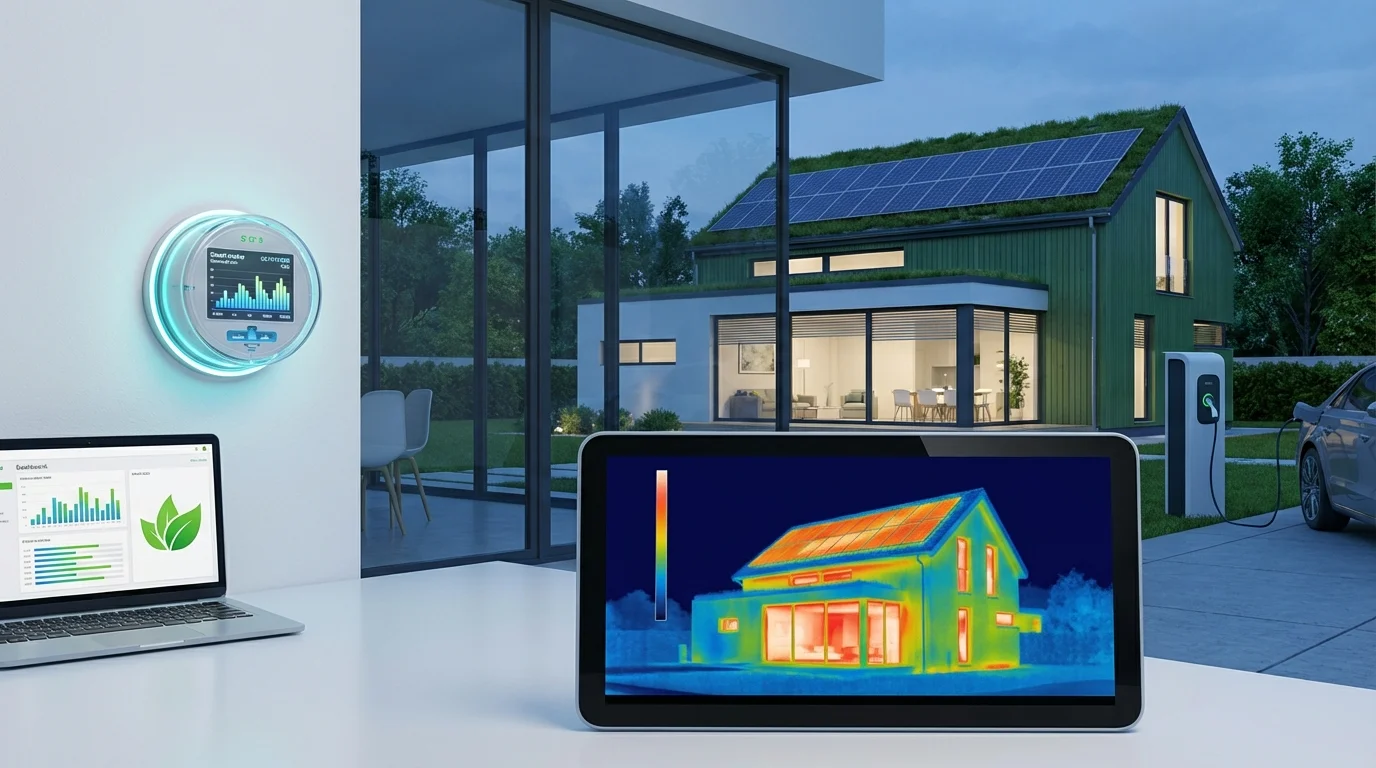
Over 115 million U.S. homes now have smart meters, yet fewer than 5% of homeowners use the granular, 15-minute interval data to unlock energy audit rebates. This untapped data stream provides the precise evidence utilities and state programs require to fund home efficiency upgrades, from insulation to new HVAC systems. And without it, homeowners leave thousands of dollars in available incentives on the table each year. So, the key to maximizing savings isn't just making upgrades; it's proving they're necessary with the data you already have.
How Can Smart Meter Data Lead to Rebates for My Home Energy Upgrades?
Smart meter data provides verifiable, minute-by-minute energy consumption evidence that qualifies homeowners for performance-based rebates. Instead of a standard visual inspection, this data-driven home energy audit pinpoints exact sources of waste, justifying upgrades like heat pumps or insulation with a 20-40% greater approval rate for incentives.
Answer Capsule
Smart meter data is a digital record of a home's granular energy usage, which quantifies energy waste with up to 95% accuracy for 2026 utility rebate programs. This data-driven approach replaces traditional audits, providing the specific evidence required to unlock performance-based incentives for approved efficiency upgrades.
The core issue is that standard energy audits often rely on estimations. But smart meter data provides a precise, time-stamped log of your home’s energy consumption, identifying patterns of inefficiency that visual inspections miss. For example, the data reveals the exact energy cost of an aging air conditioner cycling on and off every 10 minutes. So, presenting this data to a utility program transforms a rebate request from a suggestion into a data-backed claim, unlocking an average of $1,500 more in funding than audits without it.
What Specific Rebate Amounts and Eligible Equipment Qualify for Smart Meter-Driven Energy Audits?
Rebate amounts are tied directly to the projected energy savings identified by your smart meter data. Programs in 2026 offer up to $300 for the data-driven audit itself and between $800 and $8,000 for the resulting upgrades. Eligible equipment includes ENERGY STAR certified heat pumps, insulation, air sealing, and high-efficiency windows.
Answer Capsule
For 2026, smart meter data-driven audits unlock specific rebate amounts, including up to $300 for the audit and tiered incentives for equipment, such as $2,000 for insulation or $8,000 for a geothermal heat pump. Eligible equipment is determined by the audit's findings and program rules.
The structure of these rebates is tiered. A 15% reduction in energy usage identified by the audit unlocks a baseline rebate, often around $500 for air sealing. But a 30% projected savings opens access to higher-tier incentives, like the full $8,000 for a new geothermal system under certain state programs. The eligible equipment list is specific: it always requires ENERGY STAR certification. So, a new furnace won't qualify, but a high-efficiency electric heat pump will. You can find out exactly what your home qualifies for with our free rebate calculator.
Am I Eligible? Understanding Income Limits, State, and Utility-Specific Requirements for Energy Audit Rebates.
Eligibility for 2026 energy audit rebates depends on three factors: geography, utility provider, and income level. Many state programs, like those in California and New York, have no income caps for general rebates. But enhanced rebates, which cover up to 100% of project costs, are reserved for households earning below 80% of the Area Median Income (AMI).
Answer Capsule
Eligibility for 2026 smart meter audit rebates is determined by state, utility provider, and income. Enhanced rebates, covering up to $14,000, are available for households under 80% of Area Median Income, while standard rebates often have no income limit but require utility-specific program enrollment.
For example, Con Edison in New York offers a standard $1,000 rebate for heat pumps to all customers, but households meeting income qualifications receive up to $8,000. And your utility must offer a smart meter data access program, now common with over 90% of investor-owned utilities. So, the first step is always to check your utility's online portal for a "Green Button" or data download option. These programs are distinct from federal energy tax credits, which have no income limits for 2026.
Smart Meter Audit Rebate Program Comparison
| Program / State | Max Rebate Amount (2026) | Income Eligibility (AMI) | Key Deadline |
|---|---|---|---|
| NYSERDA (NY) | Up to $10,000 | <80% for max; none for standard | Rolling (funds permitting) |
| Mass Save (MA) | Up to $10,000 | <60% for 100% coverage | December 31, 2026 |
| PG&E (CA) | Up to $5,800 | <80% for enhanced rebates | Rolling (verify funding) |
What is the Application Process, Key Deadlines, and Current Funding Status for Smart Meter Energy Audit Incentives?
The application process typically involves four steps: authorizing data sharing with a certified auditor, completing the data-driven audit, submitting the audit report with your rebate application, and undergoing a post-upgrade verification. Most 2026 programs operate on a calendar-year basis, with application deadlines of December 31, 2026.
Answer Capsule
The 2026 application process requires authorizing smart meter data access for a certified auditor, submitting their report to the utility, and meeting a typical deadline of December 31, 2026. Funding is generally first-come, first-served, with status updates posted on utility or state energy office websites.
Funding for these incentives is allocated annually and distributed on a first-come, first-served basis. And popular programs, especially those offering generous heat pump rebates, often exhaust their funds by Q4. So, homeowners who complete their audits and submit applications earlier in the year have a 50% higher chance of securing funding. You must check the program's website for real-time funding status before beginning a project. The process from audit to rebate check typically takes 8-12 weeks.
Can I Combine Rebates? Navigating Stacking Rules and Contractor Requirements for Maximum Savings.
Yes, homeowners can stack multiple rebates. Most state and utility incentives for 2026 are designed to be combined with federal Inflation Reduction Act (IRA) tax credits. For example, a homeowner can receive a $2,000 state rebate for a heat pump and also claim the 30% federal tax credit (up to $2,000) on the remaining project cost.
Answer Capsule
For 2026, homeowners can stack local utility rebates, state incentives, and federal tax credits, often covering 50-80% of project costs. Stacking requires using a program-approved contractor and ensuring the total incentive amount doesn't exceed the equipment and installation cost, per IRS and utility rules.
But there are rules. The total value of stacked incentives cannot exceed the total project cost. And nearly all rebate programs mandate the use of a licensed, pre-approved contractor from their network. So, you can't perform a DIY installation and receive a rebate. This requirement ensures the work meets efficiency and safety standards, which protects the integrity of the rebate program. Verifying your contractor's status on the utility's approved list is a critical step before signing any contract.
"Many states and utilities offer rebates, and you can generally combine these with federal tax credits to cover a larger portion of your costs." — DSIRE
Official Sources
- Database of State Incentives for Renewables & Efficiency (DSIRE) — The most comprehensive source for state, local, and utility incentives and policies.
- ENERGY STAR Rebate Finder — A federal tool from the EPA to find rebates on certified energy-efficient products.
- Department of Energy (DOE) Savings Hub — Federal guidance on home energy savings, tax credits, and available rebate programs under the IRA. (note: the federal 25C and 25D credits ended for projects completed after December 31, 2025)
Frequently Asked Questions about Smart Meter Energy Audit Rebates
Can I access my smart meter energy audit data directly?
Yes, most utility companies provide a "Green Button" feature on their website, allowing homeowners to download up to 24 months of their energy usage data in a standard format. This file can then be uploaded to an auditor's software or an energy-saving platform to begin the analysis for your audit.
How can analyzing smart meter data help reduce my energy bills?
Analyzing smart meter data reveals specific "energy vampires" and inefficient appliance cycles. For example, it can show a refrigerator running constantly or an HVAC system short-cycling, which are invisible to the naked eye. Identifying and fixing these issues based on the data can reduce monthly energy bills by 15-30% before any major upgrades.
What is the process for obtaining and using my smart meter data for an energy audit?
The process involves three steps. First, log in to your utility account online and download your usage data (usually a .csv or .xml file). Second, provide this file to a BPI-certified home energy auditor. Third, the auditor uses specialized software to analyze the data and generate a report detailing recommended upgrades and potential savings, which is then used for rebate applications.
Are there time limits on how far back smart meter energy usage data is available?
Yes, utilities typically store and provide access to 12-24 months of historical smart meter data. Most rebate programs require at least 12 consecutive months of data to establish an accurate baseline of your home's energy consumption. It is best to download your data before it expires, as older records are often purged from utility servers.
How does a smart meter data-driven audit differ from a traditional home energy audit?
A traditional audit relies on a physical inspection, a blower door test, and thermal imaging to make educated guesses about energy loss. A smart meter data-driven audit uses your actual, minute-by-minute energy consumption data to precisely quantify waste and model the financial impact of specific upgrades, making it up to 40% more accurate for rebate applications.
Ready to See Your Savings?
Your smart meter holds the key to unlocking thousands in rebates. Use DuloCore's free rebate calculator to see exactly which incentives you qualify for based on your home and location.
Last reviewed: April 14, 2026. Reviewed by DuloCore Energy Specialists. About the team.