Update (2026): The federal Energy Efficient Home Improvement Credit (Section 25C) expired December 31, 2025, following the passage of the OBBBA. Check state and local programs for current incentives.
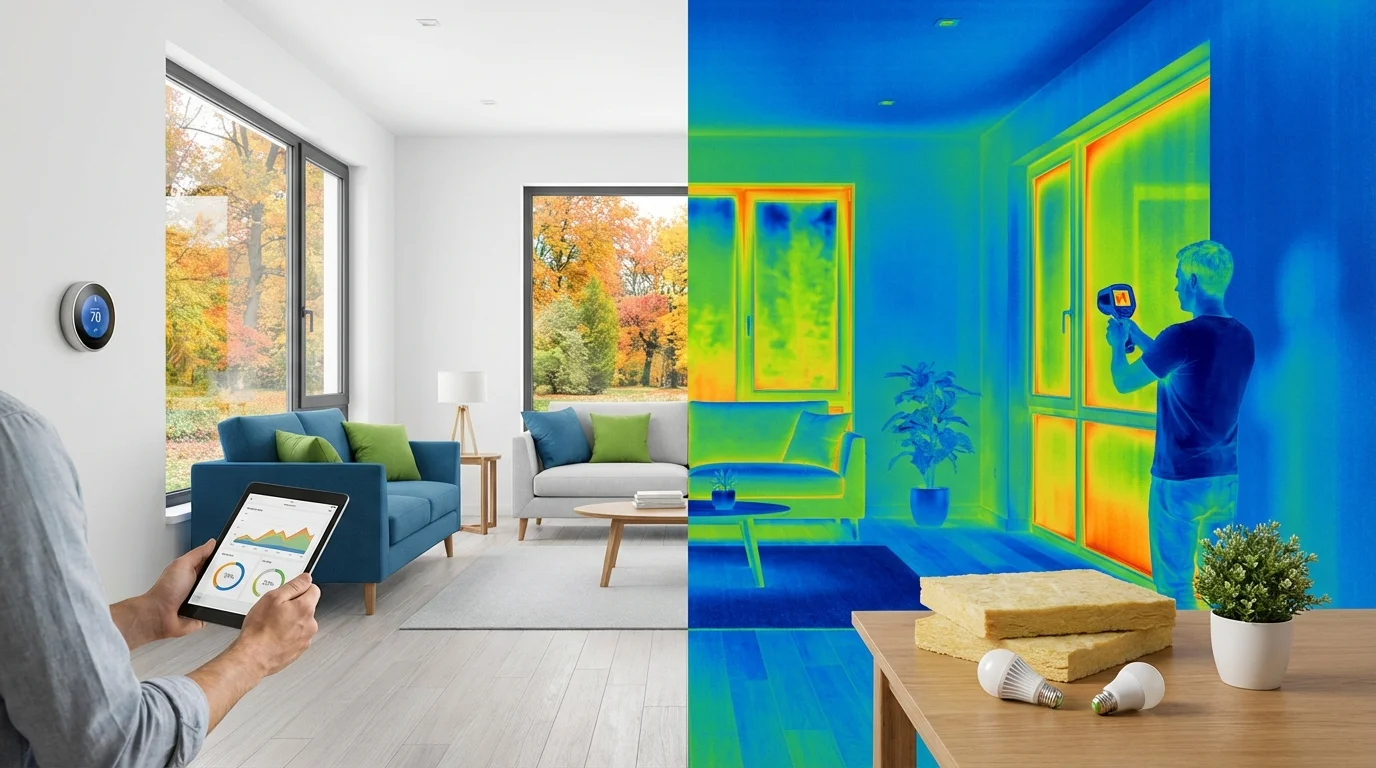
Heating and cooling account for nearly 50% of energy use in a typical U.S. home, with costs fluctuating by as much as 40% between peak summer and winter months. As seasons change, so does the strain on your HVAC system and your wallet. So preparing your home for extreme temperatures isn't just about comfort; it's a direct defense against predictable, recurring spikes in utility bills.
What Government or Utility Rebates Can Fund My Seasonal Energy Upgrades?
Government and utility rebates are financial incentives that fund seasonal upgrades like heat pumps, insulation, and windows. These 2026 programs offer up to $8,000 for qualifying equipment, directly reducing the upfront installation cost for homeowners who meet specific income and efficiency criteria through federal, state, and local offerings.
The primary funding sources for 2026 are federal Inflation Reduction Act (IRA) tax credits, state-level energy office grants, and local utility company rebate programs. Federal energy tax credits provide a credit of up to 30% for high-efficiency equipment like geothermal systems. And state programs often target specific technologies, offering point-of-sale discounts of $1,000 or more on items like heat pump water heaters. But utility rebates are the most localized, providing direct cash back, often between $50 and $500, for ENERGY STAR certified appliances or a smart thermostat installation. So a homeowner's total potential savings is a layered combination of these three incentive types. The key is identifying which programs apply to your specific location and planned upgrade, as a project qualifying for a federal credit won't automatically qualify for a local one.
The core tension for homeowners is the gap between knowing an upgrade is needed and affording the initial cost. Overlooking available rebates means leaving thousands of dollars on the table. For example, the average cost to install a high-efficiency heat pump is $14,000, but stacking a federal credit with a state rebate can reduce that out-of-pocket expense by over 50% for eligible households. So the real challenge isn't just weathering the seasons; it's navigating the financial programs designed to make these crucial home improvements accessible and affordable before the next heatwave or cold snap hits.
Am I Eligible for Seasonal Energy Saving Programs and How Do I Apply?
Program eligibility for seasonal energy savings is determined by household income, location, and the technical specifications of the new equipment. For 2026, many state-level IRA rebates are reserved for households earning below 150% of the Area Median Income (AMI).
Eligibility criteria vary widely. Federal tax credits, for instance, depend on the home being your primary residence and the equipment meeting specific efficiency tiers set by the Department of Energy. But state and utility programs are more granular. They often require a pre-installation home energy audit to identify priorities. And income verification is standard for enhanced rebates, typically requiring recent tax returns or pay stubs during the application process. The application itself is usually submitted online through a state energy office portal or a utility's website. So homeowners must first confirm their AMI, then gather documentation for their chosen equipment and contractor, and finally submit the application within the program's specified timeframe, which is often post-installation.
What Are the Deadlines and Current Funding Status for These Energy Saving Incentives?
Incentive deadlines and funding status for 2026 are dynamic, with federal tax credits running through December 31, 2025 while state and utility programs operate on annual budgets that can be depleted before year-end. Homeowners must verify program availability and application windows, as popular rebates are often first-come, first-served.
Federal IRA tax credits have a clear expiration date of December 31, 2025, offering long-term planning stability. But state and local programs are different. Their funding is allocated annually, and once the pot of money for a specific incentive, like heat pump rebates, is exhausted, the program closes to new applicants until the next fiscal year. So checking the program's official website for its "funding status" is a critical step before purchase. Deadlines are strict; many utility rebates require applications to be submitted within 30 or 60 days of installation. Missing this window results in a forfeited rebate, regardless of eligibility. Therefore, timely action is as important as meeting the technical requirements for the equipment.
Can I Stack Multiple Rebates and Incentives for Greater Seasonal Savings?
Homeowners can stack multiple incentives from federal, state, and utility sources for the same seasonal upgrade, provided the combined rebate amount does not exceed the total project cost. Program rules explicitly state which incentives can be combined, maximizing total savings on high-efficiency installations in 2026.
Stacking is a powerful strategy for reducing project costs by 50% or more. For example, a homeowner can claim the 30% federal tax credit for a new geothermal (this federal credit ended for expenditures made after December 31, 2025) system and combine it with a $3,000 state-level rebate. So, on a $25,000 project, this combination reduces the net cost to $14,500. It's essential to read the terms for each program, as some utility rebates cannot be combined with manufacturer rebates. The order of operations matters, too; some programs calculate their incentive based on the post-rebate cost from another program. Use our free rebate calculator to see which incentives stack in your area. And always confirm stacking rules on the official program websites before committing to a purchase. (Note: Federal tax credit percentages and availability are subject to change; the 30% Residential Clean Energy Credit under Section 25D expired December 31, 2025. Verify current incentives at energy.gov.)
Do I Need a Specific Contractor to Qualify for Seasonal Energy Efficiency Rebates?
Most 2026 energy efficiency rebates require installation by a licensed, insured, and program-approved contractor to ensure the work meets quality and safety standards. Using an uncertified contractor is a common reason for a rebate application to be denied, as programs need to verify proper installation.
Program administrators maintain a list of approved or "participating" contractors who are familiar with the rebate application process and technical requirements. For specialized installations like geothermal heat pumps or comprehensive home insulation, certification from organizations like the Building Performance Institute (BPI) is often mandatory. And the contractor's license number is almost always a required field on the rebate application form. So homeowners don't just select equipment; they select a contractor who is qualified to make that equipment eligible for thousands of dollars in savings. Before signing a contract, verify the installer's status on your local utility or state energy program's online portal to prevent disqualification.
Seasonal Energy Rebate Program Comparison (2026)
| Program Name | Max Incentive | Key Eligibility | 2026 Deadline |
|---|---|---|---|
| Federal IRA Tax Credits | Ended Dec 31, 2025 | — | Dec 31, 2025 |
| State HEARTH Rebates | Up to $8,000 | Income-based (under 150% AMI), eligible equipment | Varies by state |
| Local Utility Rebates | $50 - $1,000 | Must be a customer, ENERGY STAR equipment | Varies by utility |
Official Sources
- Database of State Incentives for Renewables & Efficiency (DSIRE) — A comprehensive database of state, local, utility, and federal incentives that promote renewable energy and energy efficiency.
- ENERGY STAR Rebate Finder — An official U.S. government tool to find local rebates on certified energy-efficient products.
"DSIRE is the most comprehensive source of information on incentives and policies that support renewables and energy efficiency in the United States." — DSIREUSA.org
Frequently Asked Questions
What types of seasonal home improvements are eligible for energy efficiency rebates?
Eligible improvements for 2026 rebates typically include high-efficiency heating and cooling systems like heat pumps, insulation (attic, wall, crawlspace), air sealing, ENERGY STAR certified windows and doors, and heat pump water heaters. Many programs also cover a geothermal tax credit for advanced systems. So upgrades that directly reduce heating and cooling loads are the primary focus of most federal, state, and utility incentives.
How much can I expect to receive in rebates for making seasonal energy-saving upgrades?
The total rebate amount varies from a few hundred to over $10,000. The federal home energy tax credits (Sections 25C and 25D) ended for projects completed after December 31, 2025 (IRS FS-2025-05). But state programs for low-to-moderate income households can offer up to $8,000 for a single heat pump installation. So a homeowner can realistically expect to cover between 30% and 80% of their project cost by stacking available incentives.
What is the typical process for applying for rebates on seasonal energy efficiency measures?
The process generally involves four steps. First, confirm eligibility and pre-approval if required. Second, have a certified contractor install qualifying equipment. Third, gather all documentation, including the final paid invoice and equipment model numbers. Finally, submit the application online through the program's portal within the specified deadline, typically 30-90 days post-installation. The rebate is then issued as a check or bill credit within 8-12 weeks.
Are there specific deadlines for applying to seasonal energy-saving rebate programs?
Yes, deadlines are strict. Federal tax credits are claimed on your tax return for the year the equipment was placed in service, with the current IRA program running through December 31, 2025. However, state and utility programs operate on annual budgets. So their deadlines are often tied to the fiscal year or when funds run out, whichever comes first. Many require applications within 60 days of project completion.
Do seasonal energy-saving rebates vary by region or utility company?
Yes, rebates vary significantly. A homeowner in California served by PG&E will have access to different programs and rebate amounts than a homeowner in Massachusetts served by National Grid. State climate goals, local energy costs, and utility provider mandates all influence program design. So it's essential to check for incentives specific to your zip code, as funding levels and eligible equipment can change from one county to the next.
Updated: April 14, 2026 — fact-checked by DuloCore Research. About our editorial process.