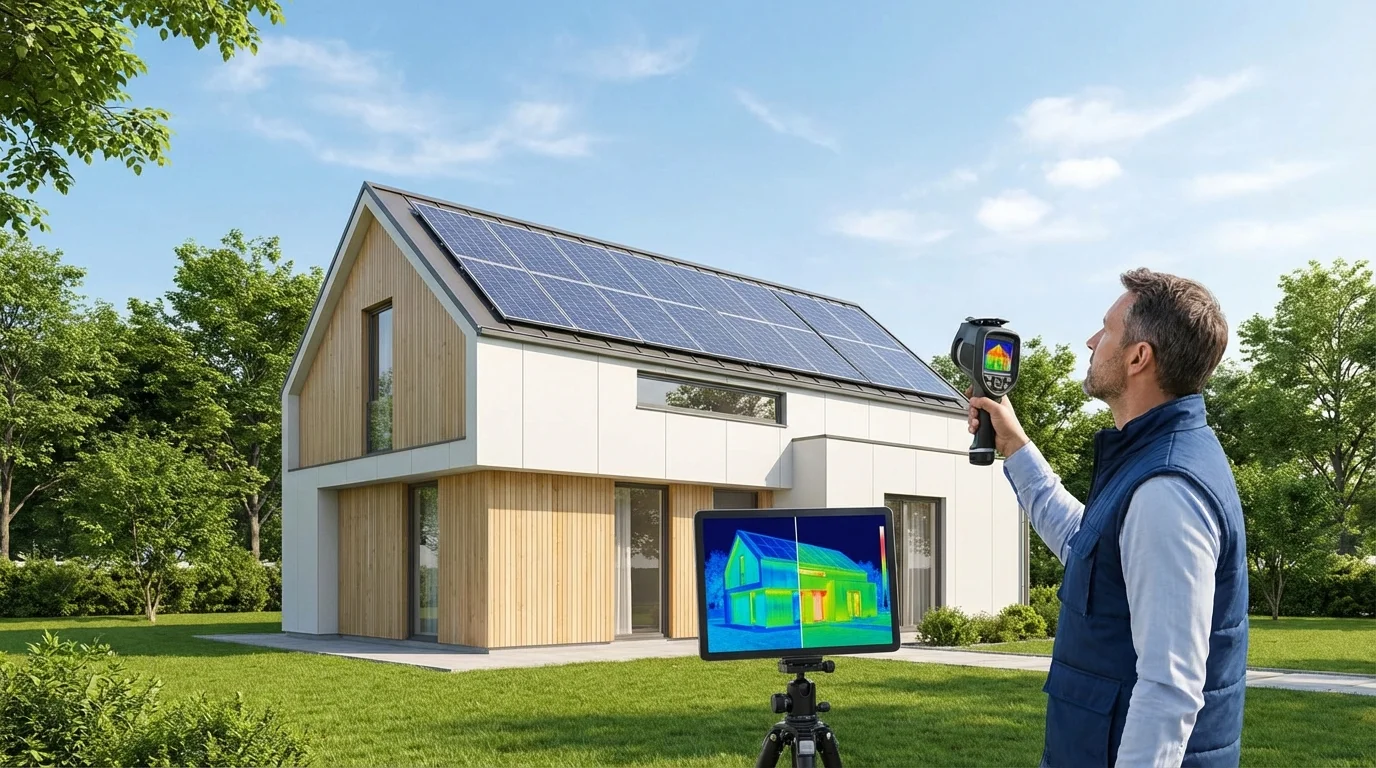
As much as 25% of a typical home's heat escapes directly through the roof, turning your attic into an uninsulated chimney for your energy dollars. Every winter and summer, this silent loss forces your HVAC system to work overtime, inflating utility bills month after month. So addressing this single area of your home's thermal envelope presents one of the most direct paths to lowering energy consumption and costs.
What Financial Benefits Can a Roof Energy Efficiency Assessment Uncover for My Home?
A roof energy efficiency assessment identifies specific areas of energy loss, unlocking access to 2026 federal tax credits up to $1,200 and state rebates averaging $500-$2,000 for qualified upgrades. It provides a data-driven roadmap for reducing annual energy bills by up to 20%.
An assessment acts as a diagnostic tool, pinpointing thermal bridges, insufficient insulation, and air leaks that drive up energy costs. So the primary benefit is a clear, prioritized action plan. But it also serves as required documentation for many rebate programs. For example, a certified report unlocks eligibility for the Inflation Reduction Act's energy tax credits, which cover 30% of project costs up to $1,200 for insulation and air sealing improvements identified during the assessment. And many state and utility programs won't issue rebates without this foundational report. The assessment transforms a guessing game into a strategic investment, ensuring every dollar spent on upgrades delivers a measurable return through direct incentives and a 15-20% reduction in heating and cooling bills.
What Roof Upgrades and Equipment are Eligible for Rebates, and Are There Income Limits?
Eligible 2026 roof upgrades include ENERGY STAR® certified metal and asphalt roofing, rigid foam insulation, and radiant barriers. Many state programs have income limits, with enhanced rebates for households earning below 80% of the Area Median Income (AMI), often doubling the standard incentive amount.
The most common rebate-eligible upgrades focus on improving the roof's thermal barrier. This includes adding blown-in fiberglass or cellulose insulation to reach an R-value of R-49 or higher, installing rigid foam board insulation, and air sealing attic bypasses. So homeowners can often get incentives for these foundational improvements. And another popular category is "cool roofs," which involves installing roofing materials with high solar reflectance, like specially coated metal or asphalt shingles that meet ENERGY STAR® criteria. Many state programs, particularly in warmer climates, offer specific rebates for these materials. But income qualifications are a critical factor. For instance, a standard state rebate for attic insulation is $500, but a household under 80% AMI receives up to $1,000 for the same project. A comprehensive home energy audit will outline which upgrades offer the best ROI.
How Do I Apply for Roof Energy Efficiency Rebates, and What Contractor Requirements Should I Know?
Homeowners apply for 2026 roof rebates through their state energy office or utility portal, typically requiring an assessment report, paid invoices, and ENERGY STAR® product details. Many programs mandate installation by a licensed, insured contractor, and some require specific certifications like BPI or RESNET.
The application process is standardized across most programs. First, you must obtain a pre-upgrade assessment to establish a baseline. After the work is completed by a qualified professional, you submit a digital application package. This package always includes the final paid invoice, product specification sheets proving ENERGY STAR® certification, and post-installation photos. But contractor choice is not flexible. Rebate programs won't pay for DIY work. So you must use a contractor who is licensed and insured in your state. And some high-value rebate programs, like those tied to federal funding, require the contractor to hold a Building Performance Institute (BPI) or RESNET certification to ensure the work meets stringent energy-saving standards.
"Many state and local utilities offer rebates or other incentives for energy-efficient products and improvements." — U.S. Department of Energy
What Are the Deadlines and Current Funding Status for Roof Energy Efficiency Programs?
Most 2026 state and utility roof rebate programs operate on a first-come, first-served basis with funding depleting by Q3 or Q4. Application deadlines often fall on December 31, 2026, but homeowners must check program dashboards for real-time funding status to avoid rejection.
Program funding is finite and typically allocated on an annual basis. So waiting until the end of the year to apply is a risky strategy, as the most popular programs often run out of money by October. For example, a state program with a $5 million budget for insulation rebates may exhaust its funds well before the official December 31 deadline. And homeowners must check the program’s website for a "funding status" indicator before starting a project. But the deadline itself is also rigid. Most applications for work completed in 2026 must be submitted by December 31, 2026, or within 30-60 days of project completion, whichever comes first. Missing this window results in automatic disqualification, regardless of project eligibility.
How Do Rebate Stacking Rules Vary by State and Utility, and How Can I Maximize My Savings?
Rebate stacking rules for 2026 permit combining federal IRA tax credits with one state or utility rebate for the same roofing project. However, stacking two state-level incentives is typically prohibited. Maximizing savings involves prioritizing the highest-value utility rebate first, then applying the federal credit.
Understanding stacking is key to getting the most money back. The federal government allows its tax credits to be combined with other incentives. So a homeowner can claim a $1,000 utility rebate for attic insulation and also claim the 30% federal tax credit (up to $1,200) on the remaining project cost. But state and utility rules are more restrictive. Most states don't allow you to claim a state rebate and a separate utility rebate for the exact same upgrade. The best strategy is to identify all available incentives and apply for the one with the highest dollar value. After receiving that rebate, the federal tax credit is then applied to the out-of-pocket cost. Use our free rebate calculator to find your savings and see which programs you qualify for.
| Program Name | Max Incentive Amount (2026) | Key Eligibility Requirement |
|---|---|---|
| Federal IRA Tax Credit | Ended Dec 31, 2025 | — |
| State Clean Energy Fund | $750 - $1,500 | Must follow a certified energy assessment |
| Utility Insulation Program | Up to $1.50 per sq. ft. | Customer of the participating utility |
Official Sources
- Database of State Incentives for Renewables & Efficiency (DSIRE) — A comprehensive database of state, local, utility, and federal incentives for energy efficiency.
- ENERGY STAR — Federal program providing information on energy-efficient products, including roofing materials and insulation.
Frequently Asked Questions
What makes my roof eligible for an energy efficiency assessment?
A roof is typically eligible for an assessment if the home is over 10 years old, has its original roof, or shows visible signs of aging like curled shingles or attic leaks. Other key factors include having no or insufficient attic insulation (below an R-value of 38) and experiencing high heating or cooling bills, which often points to thermal performance issues that an assessment can diagnose.
How much does a roof energy efficiency assessment typically cost?
A professional roof energy efficiency assessment, which often includes thermal imaging and an attic inspection, typically costs between $350 and $600 in 2026. The final price depends on the size and complexity of the roof. However, some utility companies offer subsidized or even free assessments as part of their energy-saving programs, so it's always worth checking with your local provider first.
What steps are involved in a professional roof energy efficiency assessment?
A professional assessment involves three key steps. First, an exterior visual inspection checks for damage to shingles, flashing, and vents. Second, an interior attic inspection measures insulation depth (calculating the R-value) and identifies air leaks. Finally, the assessor often uses an infrared camera to detect areas of heat loss that are invisible to the naked eye, providing a complete thermal map of your roof's performance.
Unlock Your Home's Rebate Potential
An inefficient roof costs you money every month. Use DuloCore's free tools to find out how much you can save with a roof upgrade.
Calculate Your Savings NowUpdated on April 14, 2026. Fact-checked by DuloCore Editors. About our research team.