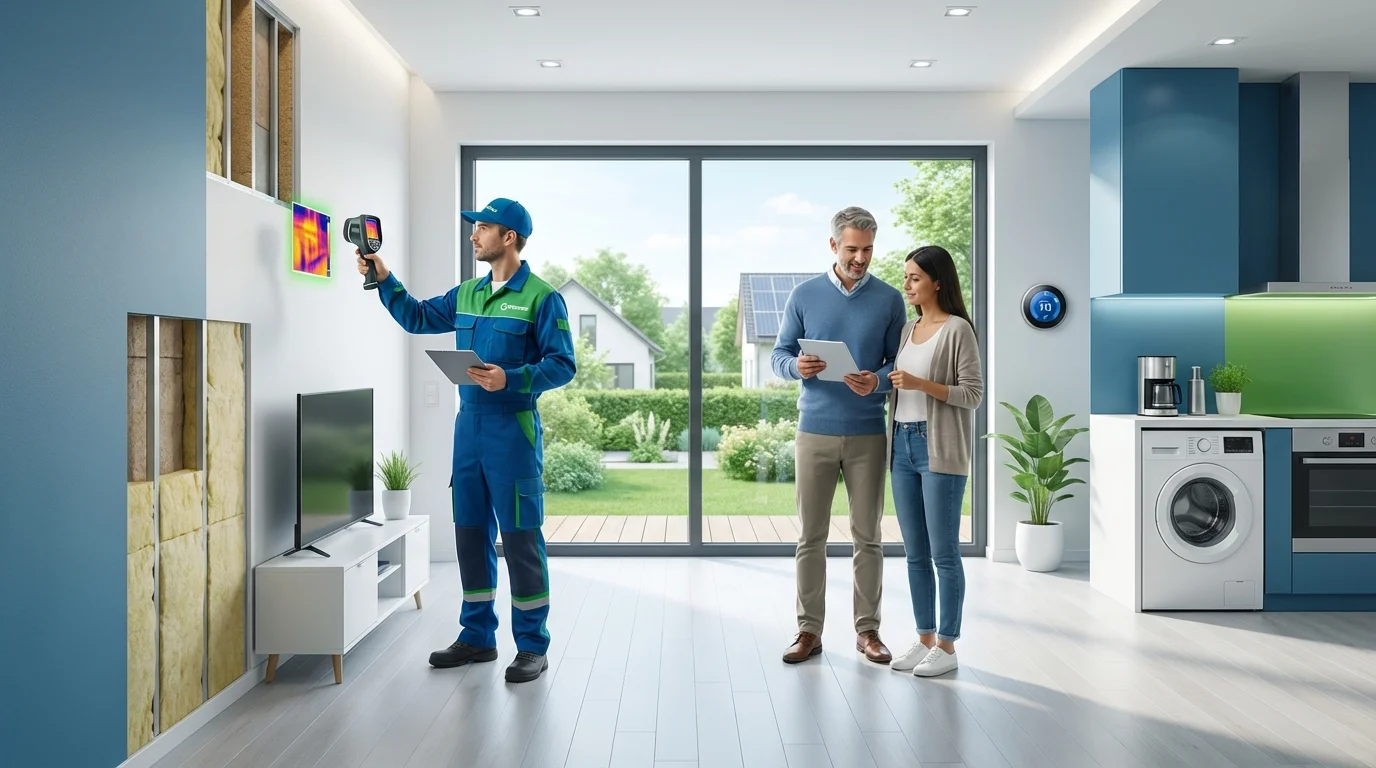
Over 20% of the energy used in the average home is wasted through air leaks, outdated equipment, and poor insulation. For rental properties, this translates directly into higher utility bills for tenants and decreased asset value for landlords. But addressing this energy waste isn't just about saving money; it's about creating more durable, comfortable, and competitive rental units in a market that increasingly values efficiency.
What Rebate Amounts and Eligible Equipment are Available for Rental Property Energy Audits?
A rental property energy audit is a professional assessment identifying energy inefficiencies and recommending cost-effective improvements. Rebates for these audits in 2026 often cover 50-100% of the cost, up to $500, with additional funds available for implementing recommended upgrades like insulation, air sealing, or high-efficiency HVAC systems.
The core challenge for landlords is the "split incentive" problem: property owners pay for efficiency upgrades, but tenants reap the benefits of lower utility bills. So this creates a disincentive for investment. But new programs directly address this. For example, the Inflation Reduction Act (IRA) provides federal energy tax credits and rebates that make these upgrades financially viable for landlords. So by leveraging these incentives, a landlord transforms a $5,000 insulation project into one with a net cost of just $2,000, accelerating the return on investment from over 10 years to under 4.
"Many states and utilities offer rebates or other incentives for home energy audits. Some programs may even offer free energy audits to eligible homeowners." — U.S. Department of Energy
And these programs often cover the audit itself, sometimes for as little as a $50 co-pay. Eligible equipment for subsequent rebates includes everything from ENERGY STAR certified windows to advanced heat pump rebates. So landlords can bundle a subsidized audit with rebates for insulation (up to $1,600), air sealing ($800), and electrical panel upgrades ($4,000), drastically reducing project costs. But the exact amounts and eligible equipment vary by state and utility provider, requiring careful verification. Use our free rebate calculator to find your specific savings.
Who Qualifies? Understanding Income Limits, State, and Utility Eligibility for Rental Property Energy Programs
Landlord eligibility for rental property energy audit programs is a multi-layered qualification process based on property location, utility provider, and tenant income levels. In 2026, many state-level programs, like those in California and New York, require that at least 50% of tenants meet low-to-moderate income (LMI) thresholds.
So qualification isn't just about the property owner. And many programs funded by the IRA specifically target rental properties serving LMI households, defined as those earning less than 80% of the Area Median Income (AMI). But some utility-run programs don't have income restrictions and are available to any landlord within their service territory. For instance, a landlord in a Con Edison service area in New York qualifies for certain programs regardless of tenant income, while a landlord participating in a statewide weatherization program must document tenant income eligibility. So verifying requirements with both the state energy office and the local utility is a critical first step. A comprehensive home energy audit is the gateway to accessing these funds.
How Do I Apply for Rental Property Energy Audit Rebates and Find Approved Contractors?
The application process for a rental property energy audit rebate is a structured, multi-step procedure requiring specific documentation and the use of certified professionals. Landlords in 2026 typically start by finding an approved contractor through their state energy office or utility provider’s online portal, as uncertified work is ineligible for rebates.
First, the landlord confirms program eligibility. Next, they schedule the audit with a BPI (Building Performance Institute) certified contractor from the approved list. And after the audit, the contractor provides a detailed report with recommended upgrades and estimated costs. The landlord then submits the rebate application, which includes the audit report, contractor invoice, and proof of property ownership, through the program’s online portal. But some programs use a point-of-sale model where the rebate is deducted directly from the contractor's invoice, simplifying the process. So the key is to ensure the chosen contractor is on the pre-approved list before any work begins, as retroactive applications are almost always denied.
What Are the Deadlines, Funding Status, and Stacking Rules for Rental Property Energy Efficiency Programs?
Program deadlines, funding levels, and stacking rules are critical financial variables for rental property energy upgrades in 2026. Most state and utility programs operate on an annual cycle with funds allocated on a first-come, first-served basis, often depleting by Q3, so application timing is crucial.
Deadlines are typically set for the end of the calendar year, but funding status is the more important metric. For example, a state's $10 million fund for rental efficiency rebates can be exhausted by September, closing the program to new applicants. And stacking rules determine which incentives can be combined. But two separate state rebates for the same insulation project often can't be combined. So a landlord can stack the federal 30% credit for insulation with a $1,500 utility rebate, but not with an additional $1,000 state weatherization grant for that same insulation. Checking program guidelines for "stackability" prevents application rejection and financial miscalculation.
How Do Rental Property Energy Programs Differ Across States and Utility Providers?
Rental property energy programs exhibit 100% variability across states and utility providers, with differences in rebate amounts, eligibility criteria, and covered upgrades. A program in a cold-weather state like Massachusetts prioritizes heating system and insulation rebates, while a program in Arizona focuses on cooling systems and solar shading.
For example, California's Low-Income Weatherization Program (LIWP) for Multi-Family Properties offers up to $7,500 per unit for deep energy retrofits. But a similar program in Texas may offer a maximum of $3,000 and focus more on HVAC replacements. Utility providers add another layer of complexity. Pacific Gas & Electric (PG&E) in California offers specific rebates to its customers that differ from those offered by Southern California Edison. So a landlord with properties in both service areas must navigate two distinct sets of rules and application processes.
"DSIRE is the most comprehensive source of information on incentives and policies that support renewables and energy efficiency in the United States." — DSIRE
This regional specificity makes a national one-size-fits-all approach impossible. And landlords must consult local resources like the DSIRE database or their state energy office to identify the exact incentives available for their specific property locations.
Rental Property Energy Program Comparison (2026)
| Program / State | Max Rebate Amount (Per Unit) | Key Eligibility Requirement | Typical Deadline |
|---|---|---|---|
| NYSERDA (New York) | $5,000 | 50%+ tenants at or below 80% AMI | Rolling, funds deplete Q4 |
| Mass Save (MA) | $3,500 | Property served by participating utility | December 31, 2026 |
| SoCalREN (CA) | $4,000 | Property in SoCal Edison/Gas territory | Rolling, funds deplete Q3 |
Official Sources
- ENERGY STAR — A U.S. Environmental Protection Agency (EPA) program providing credible, objective information on energy-efficient products and practices.
- DSIRE - Database of State Incentives for Renewables & Efficiency — The most comprehensive source of information on federal, state, and utility incentives that support energy efficiency.
- U.S. Department of Energy (DOE) — Federal guidance on energy savings, rebates, and tax credits available to homeowners and renters. (note: the federal 25C and 25D credits ended for projects completed after December 31, 2025)
Related Reading: Learn more about Ice Dam Prevention Energy Audit and Indoor Air Quality Energy Audit.
Frequently Asked Questions
What types of rental properties are eligible for an energy audit?
Most residential rental properties, including single-family homes, duplexes, and multi-family apartment buildings (typically 2-4 units or more), are eligible. Eligibility often depends on the specific state or utility program. For instance, many 2026 programs require the building to have been constructed before a certain year, like 2005, and some programs are exclusively for buildings with 5 or more units.
How much does a rental property energy audit typically cost?
A professional energy audit for a rental property typically costs between $300 and $700. The final price depends on the size and complexity of the property. However, many utility and state rebate programs in 2026 cover 50-100% of this cost, with some offering the service for a co-pay as low as $50 for qualifying low-income properties.
What is the process for scheduling and conducting an energy audit on a rental property?
The process involves four main steps. First, find a certified auditor through your utility or state's approved list. Second, schedule the audit, which takes 2-4 hours and includes a blower door test and thermal imaging. Third, receive the detailed report outlining energy-saving recommendations. Finally, use this report to apply for rebates on eligible upgrades like insulation or new windows.
Are there specific rebate programs or incentives for rental property energy audits?
Yes, numerous programs target rental properties. Many state energy offices and local utilities offer subsidized or free energy audits specifically for landlords, especially for properties housing low-to-moderate-income tenants. For example, the federal Weatherization Assistance Program (WAP) allocates funds to states, which then implement programs offering audits and upgrades at no cost to eligible landlords and their tenants.
How do energy audits benefit both landlords and tenants in a rental property?
Energy audits provide a direct financial benefit to both parties. Tenants benefit immediately from lower monthly utility bills, often seeing a 15-25% reduction in energy costs. Landlords benefit from increased property value, improved tenant retention, and the ability to market their units as energy-efficient. An audit also identifies potential health and safety issues, like poor ventilation or carbon monoxide risks, protecting both the asset and the occupants.
Unlock Your Property's Savings Potential
Don't guess how much you can save on energy upgrades. Use DuloCore's free rebate calculator to see the exact incentives available for your rental property based on your location.
Calculate Your Rebates NowLast updated: April 14, 2026. Reviewed by the DuloCore Editorial Team. About our authors.