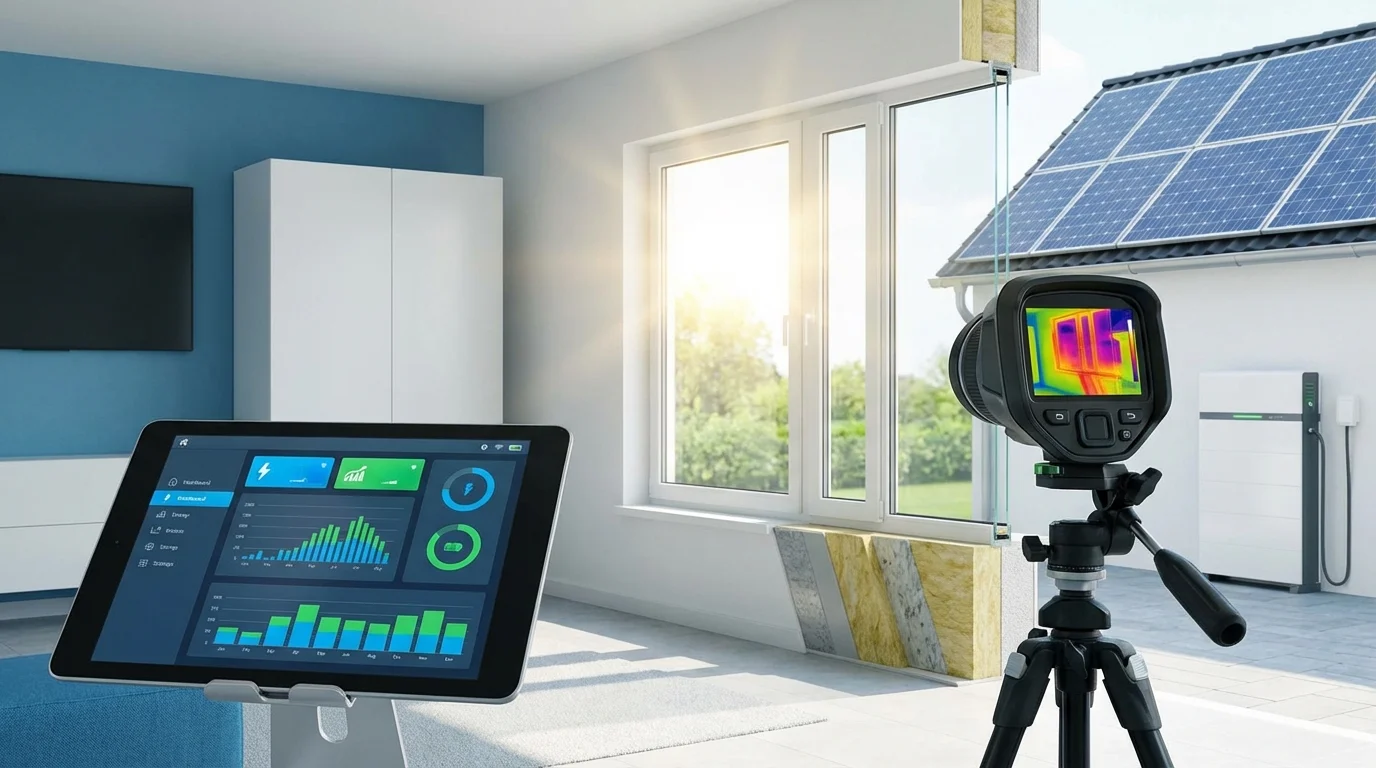
Up to 10% of your home's electricity bill is consumed by devices you aren't even using. This "phantom load" from electronics in standby mode costs the average U.S. household over $100 every year, silently draining power 24/7. So without a clear view of where every kilowatt-hour goes, homeowners are paying for energy they never consciously use, directly impacting their monthly budget in an era of rising utility costs.
What Specific Rebate Amounts Are Available for Real-Time Energy Monitors in My State and From My Utility?
Real-time home energy monitors qualify for 2026 utility rebates ranging from $50 to $250, depending on the state and provider. These incentives are structured as direct point-of-sale discounts or post-purchase mail-in rebates for qualifying smart monitoring systems connected to the home's electrical panel.
Rebate values are not uniform across the country. And they often depend on the specific capabilities of the device being installed. For instance, a basic plug-in monitor receives a smaller incentive than a whole-home system that provides circuit-level data. So utility companies like Con Edison in New York offer up to $75, while California's PG&E program provides rebates reaching $150 for advanced models. But these programs are funded with annual budgets and often operate on a first-come, first-served basis. Homeowners must verify the current funding status directly with their local utility provider before making a purchase. Finding the exact amount available requires checking the Database of State Incentives for Renewables & Efficiency (DSIRE) or your utility's dedicated rebate portal for 2026. The availability of these funds directly impacts the final cost of a home energy audit and monitoring setup.
Am I Eligible? Understanding Income Limits and Eligible Equipment for Energy Monitoring Rebates
A homeowner's eligibility for a 2026 real-time energy monitor rebate is determined by their utility provider, location, and sometimes household income, with certain programs reserved for those earning less than 80% of the Area Median Income (AMI). Eligible equipment must meet specific technical standards.
Most utility rebate programs require the purchased energy monitor to be new and listed on their pre-approved equipment list. So this ensures the device meets accuracy and safety standards, such as being ENERGY STAR® certified. For income-qualified programs, applicants must provide documentation to verify their household income falls below the specified threshold, which unlocks enhanced rebate amounts. For example, a standard rebate may be $75, but an income-qualified household receives $150 for the same device.
"A home energy assessment, also known as a home energy audit, can help you understand the whole picture of your home’s energy use, comfort, and safety." — U.S. Department of Energy
But eligibility isn't just about income; it's also about your home. So applicants must be residential customers of the sponsoring utility with an active account in good standing.
What is the Application Process and What Are the Deadlines for Real-Time Energy Monitoring Incentives?
The application process for a 2026 real-time energy monitoring incentive involves purchasing qualifying equipment, submitting a completed application form with proof of purchase, and meeting a program-specific deadline, typically December 31, 2026. Processing times average between six and eight weeks before payment.
To apply, homeowners first purchase an eligible monitor from the utility's approved list. And after installation, they must complete the utility’s rebate application form, which is usually available online. This form requires the homeowner's account number, the monitor's model and serial numbers, and a copy of the dated sales receipt or invoice. So it's critical to keep all paperwork. Some utilities offer an online portal for instant submission, while others require mail-in applications. The deadline is strict; applications for 2026 purchases must be postmarked or submitted online by the final day of the program, which is often year-end or when funds are depleted. Use our free rebate calculator to estimate your potential savings before you apply and ensure you don't miss any deadlines.
| Program/Utility Example | Rebate Amount (2026) | Key Eligibility | 2026 Application Deadline |
|---|---|---|---|
| PG&E (California) | Up to $150 | Must be a PG&E residential electric customer. | December 31, 2026 |
| Con Edison (New York) | $75 | Must be a Con Edison residential customer. | October 31, 2026 |
| Duke Energy (Florida) | $50 | Must own the home; equipment must be new. | When funds are exhausted |
Can I Stack Rebates? Navigating Funding Status and Stacking Rules for Home Energy Monitoring
Homeowners can often stack a local utility rebate for a real-time energy monitor with other incentives, but program rules explicitly state whether incentives from different sources are combinable; federal energy tax credits no longer apply (IRS FS-2025-05). Funding status for 2026 programs is finite and awarded chronologically.
Stacking allows you to combine a rebate from your utility with a state-level incentive, reducing the net cost of your energy monitoring system even further. For example, a $100 utility rebate can be combined with a state clean energy grant if program rules permit. But you must read the fine print for each program. Some utility rebates explicitly prohibit stacking with other offers for the same piece of equipment.
"DSIRE is the most comprehensive source of information on incentives and policies that support renewables and energy efficiency in the United States." — DSIRE
The federal Energy Efficient Home Improvement Credit (Section 25C), which covered home energy audits, ended for property placed in service after December 31, 2025 (IRS FS-2025-05). Always check program guidelines to confirm stacking rules before assuming you qualify for multiple incentives.
What Are the Contractor Requirements for Installing Rebate-Eligible Energy Monitoring Systems?
Many 2026 utility rebate programs for whole-home energy monitors require installation by a licensed electrician to ensure safety and code compliance. However, simpler plug-in style monitors are typically exempt from this requirement and allow for DIY installation by the homeowner.
For monitors that connect directly to your home’s electrical panel, professional installation is non-negotiable for rebate eligibility. And utilities mandate this to prevent improper installation, which creates a fire hazard and compromises data accuracy. So the electrician must be licensed and insured in your state, and you'll need to submit their invoice as part of your rebate application. This requirement is similar to incentives for larger projects like heat pump rebates, where professional work is essential. But for simpler, non-invasive monitors that plug into a standard wall outlet or attach to the outside of your main breaker, homeowners can typically perform the installation themselves without voiding their eligibility for a smaller rebate. Always confirm the specific installation requirements of your local utility's program.
Official Sources
- ENERGY STAR — A U.S. Environmental Protection Agency (EPA) program providing credible, unbiased information on energy-efficient products and practices.
- Database of State Incentives for Renewables & Efficiency (DSIRE) — The most comprehensive U.S. database for state, local, utility, and federal incentives that promote renewable energy and energy efficiency.
- U.S. Department of Energy (DOE) — Federal resource for information on energy-saving technologies, tax credits, and financial incentives available to homeowners. (note: the federal 25C and 25D credits ended for projects completed after December 31, 2025)
Related Reading: Learn more about Iot Energy Monitoring Devices.
Frequently Asked Questions
Who is eligible for real-time energy monitoring rebates?
Eligibility for 2026 rebates primarily depends on your utility provider and location. Generally, you must be a residential customer of the sponsoring utility. Some programs also have income requirements, offering larger rebates to households earning below 80% of the Area Median Income (AMI). The monitoring device itself must also be on an approved product list to qualify.
What is the average cost to install a real-time home energy monitor?
The total cost ranges from $150 to $400. The hardware for a whole-home monitor typically costs between $100 and $300. If the rebate program requires professional installation for a panel-connected device, expect to pay a licensed electrician an additional $100 to $200 for about one hour of labor. Plug-in models don't have this installation cost.
How do I apply for a rebate on a real-time energy monitoring system?
To apply, first purchase a qualifying monitor from your utility's approved list. After installation, complete the rebate application form found on your utility's website. You will need to submit a copy of your dated sales receipt and, if required, the invoice from your licensed electrician. Most 2026 applications must be submitted online or postmarked before December 31, 2026.
How much can real-time energy monitoring save on my monthly utility bills?
Data shows that households with real-time energy monitors reduce their electricity consumption by 5% to 15%. For a home with an average monthly bill of $150, this translates to direct savings of $7.50 to $22.50 per month, or between $90 and $270 annually. These savings come from identifying and eliminating phantom loads and modifying energy-intensive habits.
Are there deadlines for applying to real-time energy monitoring rebate programs?
Yes, all rebate programs have strict deadlines. Most 2026 utility programs require applications to be submitted by December 31, 2026. However, many programs operate on a limited budget and will close once funds are exhausted, which can happen months before the official deadline. It is critical to apply as soon as possible after your purchase and installation.
Last updated: April 14, 2026. Reviewed by the DuloCore Editorial Team. About our authors.