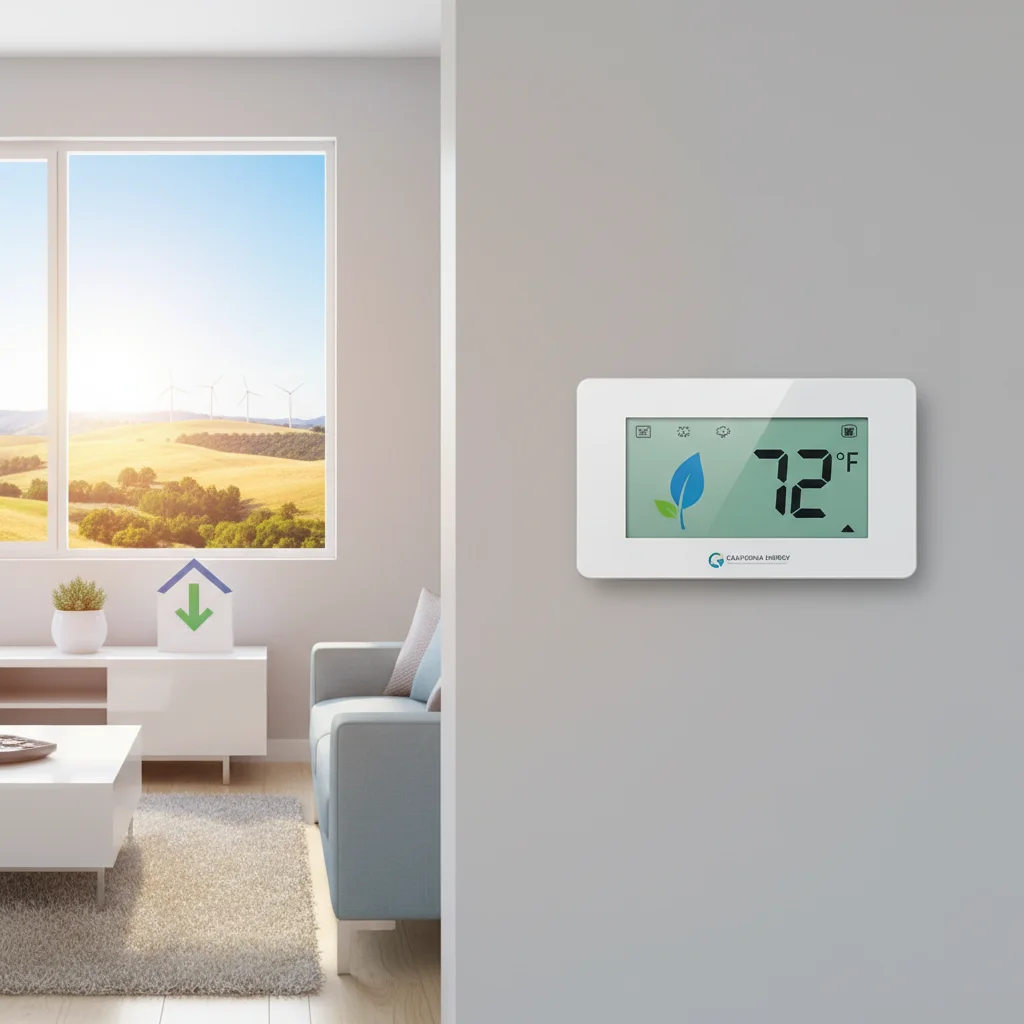
California homeowners wasted $2.3 billion on heating and cooling bills in 2025 because their thermostats ran at fixed schedules. And that figure doesn't account for the 47% of households still using manual thermostats from the 1990s. Programmable thermostats cut energy use by 10-23% annually, but only 18% of eligible California residents claimed the $75-$150 rebates available through utility companies last year.
What Programmable Thermostat Rebates Are Available in California Right Now?
California utility companies offer programmable thermostat rebates ranging from $75 to $150 in 2026 through individual utility programs, while federal IRA tax credits no longer cover standalone thermostat installations unless paired with qualifying HVAC system upgrades worth at least $2,000.
Pacific Gas & Electric (PG&E) provides $75 rebates for ENERGY STAR certified programmable thermostats and $120 for smart thermostats with Wi-Fi connectivity. Southern California Edison (SCE) offers tiered rebates: $50 for basic programmable models, $85 for Wi-Fi enabled units, and $125 for thermostats with demand response capability. San Diego Gas & Electric (SDG&E) pays $100 flat for any ENERGY STAR certified programmable or smart thermostat installed between January 1 and December 31, 2026.
But not every utility participates. Sacramento Municipal Utility District (SMUD) discontinued standalone thermostat rebates in 2024, redirecting funds to whole-home efficiency packages. Los Angeles Department of Water and Power (LADWP) maintains a $85 rebate for programmable thermostats but requires pre-approval and limits claims to one per address every 5 years.
The core tension: California aims to reduce residential energy consumption by 15% before 2030, yet thermostat rebate participation rates hover at 22% despite payback periods of 6-14 months. So most homeowners leave $75-$150 on the table while paying $180-$340 extra per year in avoidable energy costs.
And utility-specific income qualifications can boost rebates by 25-50% for households earning below 80% of area median income. PG&E's Energy Savings Assistance Program increases the standard $75 rebate to $125 for qualifying participants. SCE's Moderate Income Direct Install program covers 100% of thermostat costs up to $200 for households earning 80-120% of AMI.
How Much Money Can You Get Back on a Smart Thermostat in California?
Standard programmable thermostat rebates in California range from $50 to $150 per unit in 2026, with income-qualified residents receiving $125 to $200, and demand-response enabled models earning an additional $25-$50 annual incentive through grid participation programs.
The financial breakdown varies by utility territory and model type. Basic 7-day programmable thermostats (the kind with separate weekday and weekend schedules) qualify for the lowest tier: $50 from SCE, $75 from PG&E, $100 from SDG&E. Wi-Fi enabled smart thermostats that allow remote control via smartphone apps jump to the middle tier: $85 from SCE, $120 from PG&E. And thermostats certified for demand response programs—which let utilities adjust your temperature by 2-4 degrees during peak demand events—hit the top tier at $125-$150.
But the real money comes from stacking utility rebates with ongoing demand response payments. SCE's Summer Discount Plan pays participants $40-$80 annually for allowing automated temperature adjustments on 12-15 summer days. PG&E's SmartRate program offers bill credits averaging $65 per year. So a $250 Ecobee SmartThermostat eligible for SCE's $85 rebate plus $60 annual demand response payments reaches payback in 18 months.
Installation costs typically run $125-$200 for professional work, though many rebate programs require licensed contractor installation to qualify. DIY installation voids most rebates and creates liability issues if HVAC damage occurs. Use our free rebate calculator to model your total net cost including rebates and energy savings over 5 years.
Out-of-pocket costs after rebates average $50-$125 for standard programmable models and $80-$170 for smart thermostats. And annual energy savings range from $180 for basic programmable units to $340 for learning thermostats that optimize schedules based on occupancy patterns and weather forecasts.
"Smart thermostats can save about $180 annually on heating and cooling bills, paying for themselves in less than two years." — ENERGY STAR
What Are the Eligibility Requirements and Documentation You'll Need?
California programmable thermostat rebates in 2026 require ENERGY STAR certification, professional installation by a licensed contractor (HVAC-C20 or C36 license), proof of purchase dated within the current program year, and occupancy in the utility's service territory for residential customers only.
ENERGY STAR certification is non-negotiable for all programs. The thermostat must appear on the current ENERGY STAR qualified products list at energystar.gov. Models from previous years don't automatically maintain certification, so verify current status before purchase. And thermostats marketed as "programmable" but lacking ENERGY STAR certification get rejected in 100% of applications reviewed by utility rebate departments.
Installation documentation requirements vary by utility but follow similar patterns. PG&E requires a completed installation certificate signed by a California-licensed C20 (Warm-Air Heating, Ventilation, and Air-Conditioning) or C36 (Plumbing) contractor. SCE accepts either professional installation receipts or a signed self-certification form for DIY installation—but the self-certification option caps rebates at $50 regardless of thermostat type. SDG&E mandates professional installation for all smart thermostat rebates over $75.
Purchase documentation needs specific details: retailer name, purchase date, model number, and itemized price. Credit card statements alone won't suffice. Online order confirmations work if they display all required fields. And rebate applications submitted more than 90 days after purchase date face automatic rejection at most utilities.
Property eligibility rules are straightforward. The address must fall within the utility's service territory, the account must be residential (not commercial), and the applicant must be the account holder or property owner. Renters need written landlord approval on utility-provided forms. Multi-unit properties qualify for one rebate per unit, not per building.
But income-qualified programs add layers. PG&E's ESA program requires annual income verification through tax returns or pay stubs showing household income below 80% AMI. SCE's CARE discount must be active on the account for at least 30 days before rebate application. And re-verification happens every 12-24 months to maintain enhanced rebate tiers.
Check out our guide on energy tax credits for additional federal incentives that might pair with your thermostat upgrade.
Do You Need Pre-Approval Before Installing Your Programmable Thermostat?
PG&E, SCE, and SDG&E allow post-installation rebate applications with 90-day submission windows in 2026, while LADWP requires pre-approval application and written confirmation before purchase, making it the only major California utility with mandatory pre-approval for programmable thermostats.
Most California utilities operate on a post-installation model. Buy the thermostat, install it, gather your documentation, submit the application within 90 days. PG&E processes applications within 6-8 weeks and issues rebates as bill credits or mailed checks based on applicant preference. SCE takes 8-10 weeks but defaults to bill credits unless you explicitly request a check. SDG&E runs 4-6 weeks with automatic bill credits.
But LADWP breaks the pattern. Pre-approval applications open January 15 each year and close when annual program funding runs out—typically mid-May for 2026 based on historical data. The application requires detailed thermostat specifications, contractor quotes, and property information. LADWP issues approval letters within 3-4 weeks, and installation must occur within 120 days of approval. Post-installation documentation gets submitted within 30 days after the work is done, then rebate payments arrive 6-8 weeks later.
So LADWP customers face a 14-18 week total timeline from application to payment versus 8-12 weeks for post-installation programs. And the funding cliff creates urgency: 2025 LADWP thermostat rebates reached capacity on May 8, leaving late applicants with nothing.
Municipal utility districts follow mixed patterns. SMUD eliminated standalone thermostat rebates entirely. Sacramento pays through whole-home packages only. Modesto Irrigation District runs quarterly pre-approval cycles with application deadlines on the 15th of March, June, September, and December. Imperial Irrigation District operates post-installation with 60-day submission windows instead of 90.
The strategic play: If you're in PG&E, SCE, or SDG&E territory, buy and install first, apply second. If you're in LADWP or MID territory, apply for pre-approval in January to beat the funding rush. And if you're in SMUD territory, explore heat pump rebates instead since they bundle thermostat costs into larger system incentives.
Can You Stack Thermostat Rebates with Other Energy Efficiency Programs?
California allows stacking of utility thermostat rebates with separate whole-home weatherization programs, HVAC replacement incentives, and demand response payments in 2026, but prohibits combining multiple utility rebates for the same thermostat unit or double-dipping within a single program category.
The stacking rules create a hierarchy. One thermostat rebate from one utility program is the base layer. On top of that, you can add demand response program payments (a separate ongoing incentive, not a rebate), whole-home energy audit incentives (because they cover assessment costs, not equipment), and HVAC system replacement rebates when the thermostat is an add-on to a qualifying heat pump or furnace installation.
PG&E's Home Upgrade program offers $4,000-$5,200 for comprehensive weatherization projects that include air sealing, insulation, duct testing, and HVAC optimization. The thermostat rebate stacks with this because Home Upgrade pays for labor and building envelope improvements while the thermostat rebate covers the control device. But you can't claim both PG&E's standard $75 programmable thermostat rebate and the $120 smart thermostat rebate for the same unit—that's double-dipping within equipment categories.
Federal IRA tax credits complicate the picture. The old Section 25C credit that covered individual energy efficiency items (including thermostats) expired December 31, 2025. And the current IRA framework doesn't provide standalone credits for thermostats unless they're installed as part of a qualifying HVAC system costing at least $2,000. So a $250 thermostat installed with a $6,000 heat pump can capture part of the 30% federal credit ($1,875 total credit for the combined system), but a thermostat installed alone gets zero federal tax benefit in 2026.
State-level programs add another layer. California's TECH Clean California initiative offers $3,000-$6,500 for heat pump installations in single-family homes. The thermostat rebate stacks with TECH because TECH pays for the heat pump equipment and installation while the utility rebate covers the control system. And TECH itself can stack with utility HVAC rebates up to 75% of total project cost.
But the 75% rule creates a ceiling. Total combined rebates and incentives can't exceed 75% of total project cost for most California programs. So a $300 thermostat with a $125 rebate (41.7% coverage) still has room to stack with other incentives. A $250 thermostat with a $150 rebate (60% coverage) has a narrower stacking margin.
Income-qualified programs maintain separate stacks. PG&E ESA participants get enhanced thermostat rebates AND qualify for separate zero-cost whole-home retrofits through the same program. The ESA whole-home track installs programmable thermostats at no cost, which technically makes the rebate irrelevant—but participants can opt out of free installation and claim the enhanced $125 rebate instead to choose their preferred thermostat model.
Learn more about stacking strategies in our comprehensive guide to geothermal heat pump tax credits which follow similar federal-state-utility coordination rules.
What's the Deadline for California Programmable Thermostat Rebates in 2026?
Most California utility thermostat rebate programs in 2026 operate on calendar-year cycles ending December 31 with 90-day post-installation submission windows, while LADWP's pre-approval program typically exhausts funding by mid-May, and SCE's income-qualified track runs until June 30 before requiring budget reauthorization.
PG&E, SDG&E, and most municipal utilities run January 1 through December 31 program years. But the operative constraint is the 90-day submission window after installation. Install a thermostat on October 15, and you have until January 13, 2027 to submit the rebate application under 2026 program rules. And applications submitted after December 31 get processed under the following year's program terms, which might have different rebate amounts or eligibility rules.
SCE splits its calendar. The standard residential thermostat rebate runs all year, but the Moderate Income Direct Install program operates on a fiscal year basis: July 1, 2026 through June 30, 2027. So income-qualified SCE customers face a June 30 application deadline for current-year enhanced rebates, then wait until July 1 for the next cycle to open.
LADWP's funding cliff changes the game. The 2026 program allocated $2.1 million for residential thermostat rebates, which funds approximately 16,000 units at average rebate values. Applications opened January 15, and historical data shows funding exhaustion by May 8-15 in typical years. Once funding runs out, the program closes regardless of calendar date. And LADWP doesn't maintain a waitlist—late applications get rejected, full stop.
Municipal districts vary wildly. Modesto Irrigation District runs quarterly cycles with hard cutoffs on March 15, June 15, September 15, and December 15. Miss the deadline by one day, and your application moves to the next quarter. Turlock Irrigation District operates a continuous program with no deadline but caps total annual rebates at 500 units—first come, first served until the counter hits 500.
So the strategic timing depends on your utility. PG&E and SDG&E customers can install anytime before October and still make the year-end deadline. LADWP customers should apply for pre-approval in January and install by March to avoid the funding cliff. And SCE income-qualified participants need to submit by June 30 to capture current-year enhanced rates.
The federal Energy Efficient Home Improvement Credit (Section 25C) ended for property placed in service after December 31, 2025 (IRS FS-2025-05). Federal tax credits for this work have ended, but state, local and utility rebates may still apply; check what is available at your address with the DuloCore rebate calculator. Federal funding mechanisms supporting California's clean energy programs sunset after 2032 unless Congress extends them. State utility programs might continue past that date using ratepayer funds, but federal co-funding ends.
Official Sources
- ENERGY STAR Smart Thermostats — Federal certification standards and qualified product lists for programmable thermostats
- DSIRE California — Comprehensive database of state and utility energy efficiency incentives and rebate programs
- U.S. Department of Energy Save — Federal guidance on energy efficiency upgrades and IRA tax credit eligibility (note: the federal 25C and 25D credits ended for projects completed after December 31, 2025)
Related Reading: Learn more about Programmable Thermostat Energy Savings.
Related Reading: Learn more about Ecobee Rebates California.
Frequently Asked Questions
What are the eligibility requirements for programmable thermostat rebates in California?
California thermostat rebates in 2026 require ENERGY STAR certification, installation at a residential address within the utility's service territory, professional installation by a licensed HVAC contractor for rebates over $75, and rebate application submission within 90 days of installation. LADWP additionally requires pre-approval before purchase. And income-qualified enhanced rebates need documented household income below 80% of area median income with annual re-verification.
How much can you save with a programmable thermostat rebate in California?
California programmable thermostat rebates range from $50 to $150 in 2026, with income-qualified residents receiving $125-$200. Annual energy savings average $180-$340 depending on thermostat type and home characteristics. So total 5-year savings (rebate plus energy bill reductions) reach $1,050-$1,850. And demand response program participation adds $40-$80 annually. Payback periods run 6-18 months for most installations.
What is the process for applying for a programmable thermostat rebate?
Most California utilities follow a post-installation application process: purchase an ENERGY STAR certified thermostat, hire a licensed contractor for installation, gather receipts and installation certificates, submit the rebate application online or by mail within 90 days, and receive payment via bill credit or check in 6-10 weeks. LADWP requires pre-approval application before purchase with 3-4 week approval times and 120-day installation windows.
When is the deadline to claim programmable thermostat rebates in California?
PG&E, SCE, and SDG&E accept 2026 thermostat rebate applications through December 31 with 90-day post-installation grace periods extending into early 2027. LADWP's 2026 program funding typically exhausts by mid-May despite a December 31 official end date. And SCE's income-qualified program runs on fiscal year cycles ending June 30. So effective deadlines range from May 15 (LADWP) to December 31 (most utilities) depending on program type.
What is the difference between a programmable thermostat rebate and a smart thermostat rebate?
California utilities offer tiered rebates based on thermostat capability in 2026. Programmable thermostats with 7-day scheduling but no connectivity receive $50-$100. Smart thermostats with Wi-Fi, smartphone app control, and remote access receive $85-$150. And demand-response certified smart thermostats that allow utility control during peak events receive the highest tier plus ongoing annual payments of $40-$80. So smart thermostat rebates run 40-70% higher than basic programmable models.
Ready to find every rebate you qualify for? Use our free rebate calculator to estimate your total savings from programmable thermostat installation, utility rebates, and annual energy bill reductions. Enter your ZIP code, utility provider, and thermostat model to get a personalized breakdown in 60 seconds.
Last updated: April 14, 2026. Reviewed by the DuloCore Editorial Team. About our authors.
Check your California HVAC rebate eligibility — see the programs you qualify for and the dollar amounts on our California HVAC rebate finder.