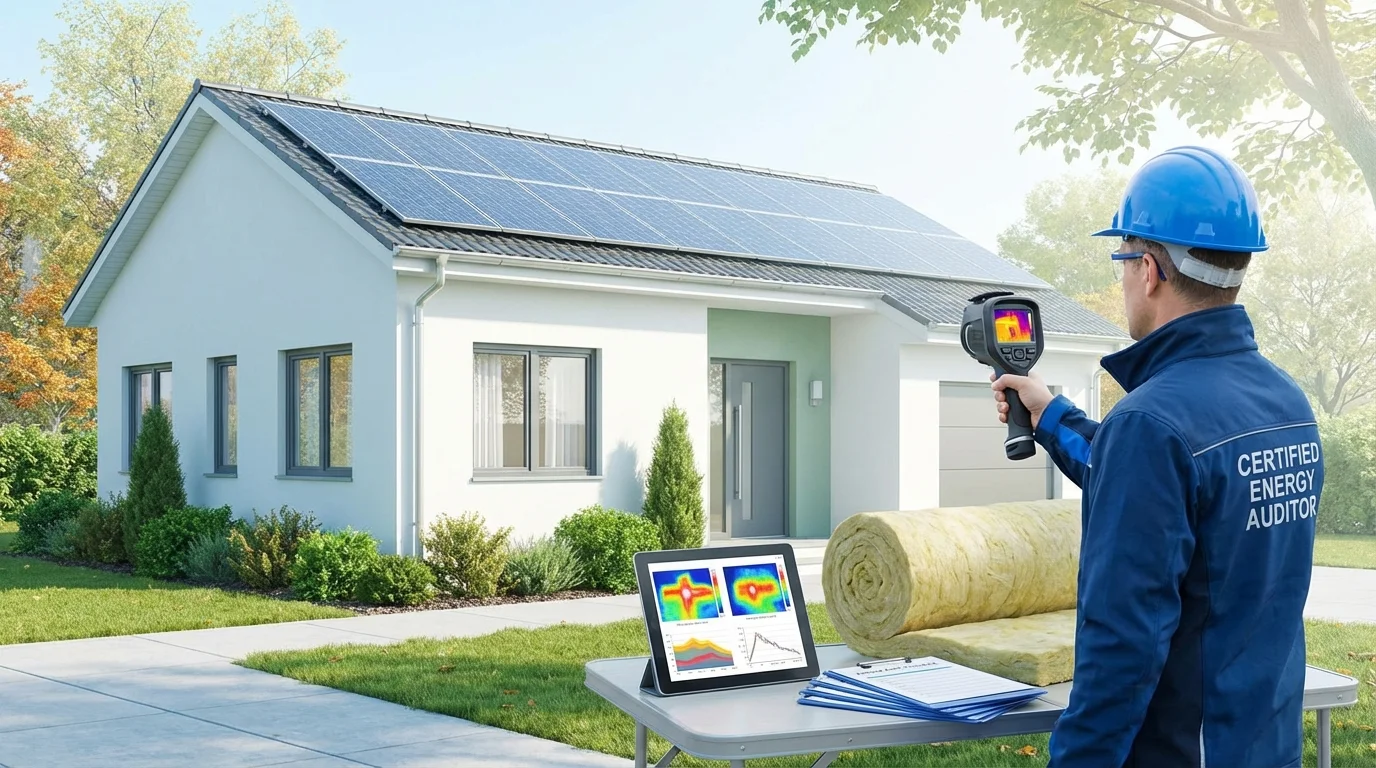
Unaddressed air leaks in a home waste up to 30% of its heating energy each winter. As temperatures drop, this invisible drain on your wallet accelerates, turning small gaps in your home’s envelope into major sources of heat loss and high utility bills. So preparing for a professional energy audit now, before the first frost, is the most direct path to identifying and fixing these issues, unlocking hundreds of dollars in annual savings.
How Much Can I Save on Pre-Winter Energy Audits, and What Equipment Qualifies for Rebates?
A pre-winter energy audit rebate is a financial incentive offered by utilities and states that covers a portion of the audit's cost, typically ranging from $150 to $500 for 2026 programs. The audit itself qualifies, along with subsequent upgrades like insulation, air sealing, and high-efficiency HVAC systems.
The savings from a pre-winter energy audit are twofold. First, state and utility rebates often cover 50-100% of the audit cost itself, up to a $500 cap. So the initial investment is minimal. And after the audit, the real savings begin. The upgrades identified, such as air sealing or adding attic insulation, often qualify for additional incentives. For instance, installing new insulation based on an audit recommendation unlocks federal energy tax credits of up to $1,200 annually. But the biggest return comes from lower utility bills, with homeowners reducing heating costs by an average of 15-25% each winter. Equipment that qualifies for post-audit rebates includes ENERGY STAR certified windows, doors, insulation, and high-efficiency heating systems. So preparing for a home energy audit is the first step toward these deeper savings.
Pre-Winter Energy Audit Rebate Comparison (2026)
| Program Type | Typical Rebate Amount | Key Eligibility Requirement |
|---|---|---|
| Federal IRA Credit | Ended Dec 31, 2025 | — |
| State Energy Office | $250-$500 direct rebate | Homeowner must use a state-certified auditor. |
| Local Utility Program | 100% of cost up to $400 | Must be a customer in good standing; program funds available. |
Am I Eligible for Pre-Winter Energy Audit Incentives Based on Income, and What's the Application Process?
Income eligibility for 2026 pre-winter energy audit incentives is often tiered. Low-to-moderate income households earning below 80% of the Area Median Income (AMI) frequently qualify for enhanced, no-cost audits. The application process typically involves an online form, proof of income, and a recent utility bill.
Many state and utility programs reserve their best incentives for those who need them most. Households earning less than 80% of the AMI often receive a completely free energy audit, while those between 80% and 150% of AMI receive a partial rebate of around $250. And households above that threshold typically qualify for a standard rebate of $150. The application process is streamlined for 2026. It starts with completing an online form on your utility's or state energy office's website. You will then upload a recent utility bill and proof of income (like a pay stub or tax return). Approval usually takes 5-10 business days. So after approval, you receive a list of certified auditors to schedule the service. The rebate is then applied either instantly or as a bill credit.
"Many states and utilities offer incentives for home energy audits. These audits, also known as home energy assessments, help consumers identify where their home is losing energy and money..." — U.S. Department of Energy
What Are the Deadlines for Pre-Winter Energy Audit Programs, and What Is Their Current Funding Status?
Most 2026 pre-winter energy audit programs have a firm application deadline of December 31, 2026, or when funds are exhausted, whichever comes first. Their funding status is typically high at the start of the year and depletes by Q4, making early autumn the optimal application window.
Timing is critical for securing these rebates. Utility and state energy programs operate on an annual budget, and for 2026, most funds are allocated on a first-come, first-served basis. And while the official deadline is often year-end, popular programs in colder states run out of money as early as October. So waiting until the first cold snap is a financial mistake. The current funding status for most programs is publicly available on the program's website, often displayed as a percentage of remaining funds. Applying between August and September ensures both fund availability and gives you enough time to complete the recommended upgrades, such as improving air sealing and insulation, before peak winter heating season. This preparation maximizes your potential savings for the entire winter.
Can I Stack Pre-Winter Energy Audit Rebates, and What Are the Contractor Requirements?
Stacking pre-winter energy audit rebates is generally permitted, allowing homeowners to combine a $150 federal tax credit with a state or utility rebate of up to $500 in 2026. However, all programs mandate the use of a certified contractor, often requiring BPI (Building Performance Institute) certification.
Combining incentives is a key strategy for maximizing value. For 2026, a homeowner can claim the $150 federal tax credit for a home energy audit on their federal return. And they can simultaneously apply for a direct rebate from their local utility, which often covers the remaining cost up to $400 or $500. The primary rule is that the total combined rebate cannot exceed the actual cost of the audit. So if an audit costs $500, you can't receive $650 in rebates. Contractor requirements are strict and non-negotiable. Utilities and state programs maintain a list of approved, certified energy auditors. These professionals must carry specific credentials, such as BPI Analyst or RESNET HERS Rater certifications, ensuring they follow standardized procedures to produce a reliable report.
How Do Pre-Winter Energy Audit Programs Vary by State and Local Utility?
Pre-winter energy audit programs vary by location, with state-level rebates in colder climates like Massachusetts offering up to $500, while programs in warmer states like Florida offer around $150. Local utilities further customize incentives based on their specific energy-saving goals and regulatory environment for 2026.
Geography dictates incentive generosity. States with aggressive decarbonization goals and cold winters provide the most robust programs. For example, the Mass Save® program in Massachusetts often covers 100% of the audit cost. But in contrast, a utility in a southern state focuses more on cooling efficiency and provides a smaller, $150 rebate for a general assessment. Local utilities also tailor their programs. A rural electric co-op may offer a basic audit, while a large investor-owned utility provides a comprehensive assessment including blower door tests and infrared thermography, with tiered rebates for implementing upgrades like heat pump rebates. Always check the DSIRE database or use our free rebate calculator to find the specific incentives available for your address.
"DSIRE is the most comprehensive source of information on incentives and policies that support renewables and energy efficiency in the United States." — DSIRE
Official Sources
- ENERGY STAR Rebate Finder — A federal tool from the EPA to find local rebates on ENERGY STAR certified products.
- Database of State Incentives for Renewables & Efficiency (DSIRE) — The most comprehensive national database of energy-related incentives and policies.
- IRS Credits and Deductions — Official Internal Revenue Service information on federal energy tax credits available to homeowners. (note: the federal 25C and 25D credits ended for projects completed after December 31, 2025)
Frequently Asked Questions
What steps are involved in preparing my home for a pre-winter energy audit?
Preparing your home involves simple steps to ensure accurate results. First, make a list of known issues like drafty windows or cold rooms. Next, gather 12 months of past utility bills for the auditor to analyze your energy usage patterns. Finally, on the day of the audit, ensure clear access to the attic, crawlspace, and furnace. Don't make any changes like sealing cracks beforehand, as the auditor needs to identify these leaks.
Who is eligible for rebates on pre-winter energy audit preparation services?
Eligibility for 2026 rebates typically depends on being a residential customer of a participating utility or living within a state that offers a statewide program. Many programs include income-based tiers, offering higher rebates or free audits to households earning below 80% or 150% of the Area Median Income. All homeowners are eligible for the $150 federal tax credit for a professional home energy audit, regardless of income.
What financial incentives are available for homeowners preparing for a pre-winter energy audit?
Homeowners have access to several 2026 financial incentives. These include direct rebates from local utilities covering up to 100% of the audit cost (capped at around $400), state-level rebates of $150-$500, and a federal tax credit of up to $150. The federal Energy Efficient Home Improvement Credit (Section 25C) ended for property placed in service after December 31, 2025 (IRS FS-2025-05).
Is there a deadline to complete pre-winter energy audit preparation to qualify for specific rebates?
Yes, deadlines are crucial. Most state and utility rebate programs for 2026 operate on a calendar year and require applications to be submitted by December 31, 2026, or until program funds are depleted. Because funding is limited and first-come, first-served, it's best to schedule your audit and apply for rebates between September and November to ensure you don't miss out. The federal tax credit is available for any audit performed during the 2026 tax year.
How
Last reviewed: April 14, 2026. Reviewed by DuloCore Energy Specialists. About the team.