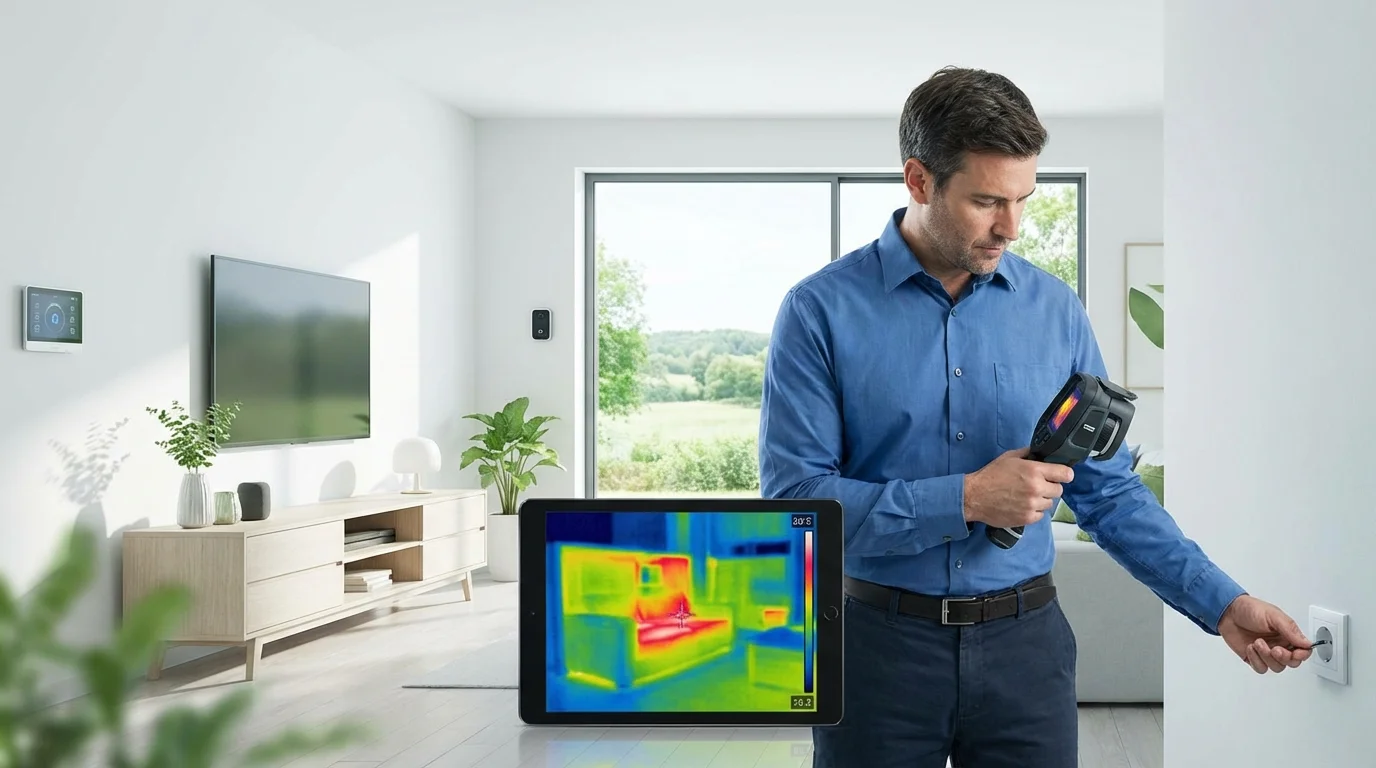
Even when your electronics are turned off, they continue to draw power, costing the average U.S. household over $100 every single year. This silent energy consumption, known as phantom load or standby power, accounts for up to 10% of residential electricity use. So, these "energy vampires" are actively draining your bank account while you sleep, work, or go on vacation, contributing to unnecessarily high utility bills and grid strain.
What is a Phantom Load Energy Audit and Why Should I Care About Potential Savings?
A phantom load energy audit is a specialized assessment that identifies and quantifies the electricity consumed by devices when they are turned off or in standby mode. The audit uses a watt meter to measure the energy draw of individual electronics, revealing which appliances are the biggest offenders. And this process empowers homeowners to reduce waste by 15-30% through targeted solutions like smart power strips.
So, the core issue is that homeowners pay for electricity they aren't actively using. This wasted energy represents a direct financial loss, with the U.S. Department of Energy estimating that standby power costs the nation over $19 billion annually. But by performing a simple audit, a household identifies exactly where this money is going. And targeting these phantom loads offers one of the fastest and lowest-cost ways to reduce a home's overall energy consumption, often with a payback period of less than one year. A comprehensive home energy audit will often include this as a component.
How Much Can I Save? Uncovering Rebate Amounts and Current Funding Status for Phantom Load Solutions.
A phantom load energy audit uncovers savings opportunities that typically reduce a household's annual electricity bill by $100 to $200. Rebates for solutions like advanced power strips (APS) are offered by local utilities and range from $15 to $50 per device. And funding for these 2026 programs is generally available on a first-come, first-served basis until the annual budget is depleted, which often occurs in Q4. So, while the individual rebate amounts are modest, they accelerate the return on investment for equipment that provides ongoing savings. Use our free rebate calculator to find your exact savings.
"Many appliances continue to draw a small amount of power when they are switched off. These “phantom loads” occur in most appliances that use electricity, such as televisions, stereos, computers, and kitchen appliances." — U.S. Department of Energy
Am I Eligible? Understanding Income Limits, Qualifying Equipment, and Stacking Rules for Phantom Load Rebates.
Eligibility for phantom load solution rebates primarily depends on being a customer of a participating utility company. Unlike larger federal energy tax credits, these programs rarely have income limits for standard rebates. But some utilities offer enhanced rebates, up to 100% of the equipment cost, for households with incomes below 80% of the Area Median Income (AMI). Qualifying equipment is specific, usually limited to Tier 1 or Tier 2 advanced power strips listed on the utility's approved product list. And these rebates can typically be stacked with other efficiency incentives, like those for a new HVAC system or heat pump rebates.
How Do Rebate Programs Vary by State and Utility, and What Are the Contractor Requirements?
Rebate programs for phantom load solutions are almost exclusively managed by local utility companies, not state energy offices. This means that a homeowner's eligibility and the available incentives in 2026 depend entirely on their electricity provider. For example, Con Edison in New York offers a $25 rebate for a qualifying advanced power strip, while Pacific Gas & Electric in California provides a similar $30 incentive. So, program rules differ significantly between service territories. And because the primary solution involves purchasing and installing a smart power strip, there are no contractor requirements. The process is designed for DIY implementation, requiring only proof of purchase for the qualifying device.
What is the Application Process and What Are the Key Deadlines for Securing Phantom Load Rebates?
The application process for phantom load rebates is streamlined for consumer convenience. First, a homeowner must confirm their utility offers a 2026 program and review the list of qualifying advanced power strips. And after purchasing an approved model, the applicant submits an online form through the utility's portal, uploading a copy of the receipt or invoice. So, the entire process takes less than 15 minutes. The key deadline is typically December 31, 2026, or whenever the program's allocated funds are exhausted for the year. But it's critical to submit the application within 30-60 days of purchase, as specified by the utility's terms and conditions.
2026 Phantom Load Solution Rebate Comparison
| Utility Provider | Rebate Amount (per APS) | Qualifying Equipment | Application Deadline |
|---|---|---|---|
| Con Edison (NY) | $25 | Tier 1 & Tier 2 APS | Dec 31, 2026 |
| PG&E (CA) | $30 | Tier 2 APS Only | Until Funds Exhausted |
| Duke Energy (NC) | $15 | Tier 1 APS Only | Dec 31, 2026 |
Official Sources
- ENERGY STAR — Federal resource for identifying energy-efficient products, including electronics and appliances that reduce standby power consumption.
- DSIRE — A comprehensive database of state, local, utility, and federal incentives and policies that promote renewable energy and energy efficiency.
Frequently Asked Questions
What makes my home eligible for a phantom load energy audit?
Eligibility for a formal audit or rebates on phantom load solutions typically requires you to be a residential customer of a participating utility company. Most programs don't have specific home-type requirements. So, if your utility offers a 2026 program for advanced power strips, your account's active status is the primary qualifier. Some income-based programs require household income to be below 80% of the Area Median Income for enhanced incentives.
How much money can I save by addressing phantom loads identified in an audit?
Addressing phantom loads saves the average U.S. household between $100 and $200 on electricity bills annually. Identifying and unplugging a single DVR box saves up to $40 per year. And by using advanced power strips for entertainment centers and home offices, a typical family reduces its phantom load electricity consumption by 25% to 50%, directly translating to a lower monthly utility payment.
What's the difference between a phantom load energy audit and a comprehensive home energy audit?
A phantom load energy audit focuses exclusively on identifying and measuring standby power from electronics and appliances. It's a narrow, targeted assessment. But a comprehensive home energy audit is a whole-house analysis that includes a blower door test for air leaks, insulation inspection, and HVAC efficiency testing. So, the comprehensive audit provides a complete picture of energy use, while the phantom load audit zeroes in on one specific source of waste.
Stop Wasting Money on Phantom Power
Discover how much you can save by eliminating energy vampires. Use the DuloCore Rebate Calculator to find 2026 rebates on smart power strips and other energy-saving devices in your area.
Calculate Your Savings NowLast reviewed: April 14, 2026. Reviewed by DuloCore Energy Specialists. About the team.