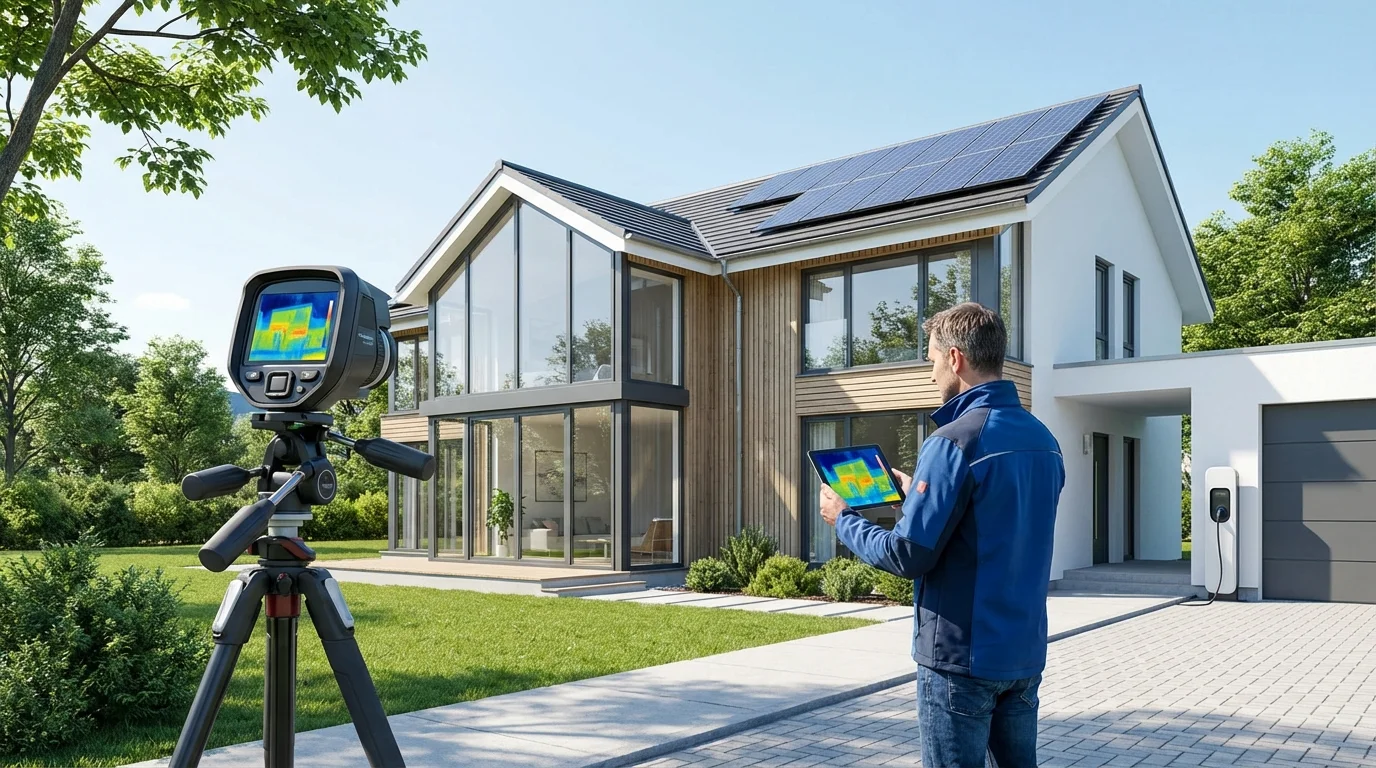
Homes built to the Passive House standard use up to 90% less energy for heating and cooling than conventional buildings. So achieving this level of efficiency isn't a simple weekend project. It requires a specialized, data-driven approach that begins with a comprehensive audit to pinpoint exactly where a home is losing energy and how to stop it. And this targeted analysis is the first step toward unlocking thousands in state and federal rebates designed to fund these deep energy retrofits.
What Financial Incentives and Rebates Are Available for Passive House Energy Audits and Upgrades by State and Utility?
A Passive House energy audit is a diagnostic service that qualifies for state, utility, and federal rebates in 2026. These incentives offset the initial cost, with some programs offering up to a 75% reimbursement for the audit itself. And subsequent upgrades often receive point-of-sale discounts and tax credits.
State energy offices and local utilities administer most 2026 rebate programs for high-performance retrofits. For instance, the NYSERDA program in New York offers homeowners thousands for improvements identified in a comprehensive energy assessment. But programs vary widely; California's TECH Clean California initiative provides direct contractor incentives for electrification, while Massachusetts' Mass Save program offers rebates covering up to 75% of insulation project costs. And many utilities, like PG&E or Con Edison, provide additional rebates that stack with state offers. So homeowners often combine a state grant for air sealing with a utility rebate for a new cold-climate heat pump. These funds directly reduce the project cost, making a Passive House retrofit financially attainable. Find all available incentives with a rebate calculator.
What is the Application Process and Deadline for Passive House Energy Audit Grants and Rebates?
The application process for 2026 Passive House audit rebates involves pre-approval, contractor selection, and post-project verification. Homeowners typically submit an online application to their state or utility program before any work begins. And most programs maintain a list of certified auditors required for eligibility.
The process for securing these funds is time-sensitive and follows a strict sequence. First, a homeowner applies for the program, often receiving a pre-approval number. So with this approval, they schedule an audit with a qualified contractor. The audit report then becomes the roadmap for eligible upgrades, which must be completed by a licensed installer. But the final rebate isn't issued until after a post-installation inspection confirms the work meets program standards. Deadlines are critical; most state programs operate on a fiscal year, with application windows closing as early as September 30 or as late as December 31, 2026. So missing a deadline means forfeiting the rebate for that year.
"Many states and utilities offer rebates or other incentives for home energy audits. Some programs may even offer audits at no cost." — U.S. Department ofEnergy
How Do Income Limits and Stacking Rules Affect Eligibility for Passive House Energy Audit Funding?
Income limits for 2026 Passive House rebates are typically tied to the Area Median Income (AMI), with higher rebates reserved for low-to-moderate income households. And stacking rules define how homeowners can combine federal, state, and utility incentives, capping the total rebate amount at a specific project cost percentage.
Eligibility for the most valuable rebates often depends on household income. For example, the Inflation Reduction Act's HOMES Rebate Program offers double the rebate amount for households earning less than 80% of the AMI. So a family qualifying for a $4,000 rebate receives $8,000 instead. Stacking is also a key factor. A homeowner can’t combine incentives to cover more than 100% of the project cost. For example, a homeowner can combine a 30% federal energy tax credit with a $2,000 state rebate for insulation, but the total incentive won't exceed the project's total expense. And some utility programs have rules preventing stacking with specific state-level grants, requiring homeowners to choose the more favorable option.
What Are the Required Contractor Qualifications and Eligible Equipment for Passive House Energy Audit Programs?
Passive House audit rebate programs in 2026 require auditors with specific credentials, such as PHIUS Certified Consultant (CPHC) or BPI certifications. And eligible equipment must meet high-efficiency standards, like ENERGY STAR Most Efficient ratings for windows, doors, and heat pumps, to qualify for funding.
You can't just hire any contractor for a rebate-eligible Passive House audit. State and utility programs maintain lists of approved professionals to ensure quality control. So auditors must hold certifications from organizations like the Passive House Institute US (PHIUS) or the Building Performance Institute (BPI). This requirement guarantees the audit includes essential diagnostics like a blower door test for air leakage and infrared thermography. And the upgrades recommended in the audit must also meet strict criteria. For example, insulation must achieve a specific R-value, windows must have a low U-factor, and ventilation systems must be high-efficiency Energy Recovery Ventilators (ERVs). Using non-certified contractors or installing non-compliant heat pump rebates will result in a denied rebate application.
How Do the Costs and Benefits of a Passive House Energy Audit Compare to Standard Energy Audits?
A Passive House energy audit costs between $1,000 and $2,500 and provides a detailed roadmap for deep energy retrofits with 75-90% savings. But a standard audit costs $300-$700 and focuses on simpler fixes like sealing drafts, offering a 5-30% energy reduction.
A standard home energy audit is a great starting point, but a Passive House audit is a far more intensive diagnostic tool. The standard audit identifies "low-hanging fruit"—air leaks, inadequate insulation, and inefficient appliances. So it's perfect for a homeowner looking for immediate, smaller-scale savings. But a Passive House audit goes deeper. It uses advanced modeling software to create a whole-house energy plan, detailing the precise specifications for insulation, windows, and mechanical systems needed to meet the rigorous Passive House standard. The upfront cost is 3-4 times higher, but the potential energy savings are also exponentially greater, targeting a 90% reduction in heating and cooling demand.
"DSIRE is the most comprehensive source of information on incentives and policies that support renewables and energy efficiency in the United States." — DSIRE
What is the Current Funding Status for Passive House Energy Audit Programs?
Funding for 2026 Passive House energy audit programs is available through state and utility budgets, supplemented by federal grants from the Inflation Reduction Act. But these funds are finite and allocated annually. So programs often close once the allocated budget of several million dollars is exhausted for the year.
The availability of rebates is not guaranteed throughout the year. Most state energy programs and utilities receive a fixed budget for efficiency incentives each fiscal year. So these programs operate on a first-come, first-served basis. Once the allocated funds—often ranging from $10 million to over $100 million per state—are claimed, the program closes to new applicants until the next funding cycle. For 2026, the Inflation Reduction Act provides a consistent source of federal support, but state-level participation and funding levels still vary. Homeowners should check the program's website frequently for updates on funding status, as popular rebates for audits and upgrades can be depleted by the third or fourth quarter.
Passive House Incentive Program Comparison (2026)
| Program / State | Rebate Amount (Audit) | Eligibility Highlights | Application Deadline |
|---|---|---|---|
| NYSERDA (NY) | Up to $500 | Must use a BPI GoldStar Contractor | Rolling, check funding status |
| Mass Save (MA) | 75% of cost, up to $300 | Available to customers of participating utilities | December 31, 2026 |
| IRA HOMES Rebate | Up to $4,000 (for upgrades) | Income-based; audit is an eligible expense | Varies by state adoption |
Official Sources
- Database of State Incentives for Renewables & Efficiency (DSIRE) — A comprehensive database of state, local, utility, and federal incentives for energy efficiency.
- ENERGY STAR Rebate Finder — A federal tool to find rebates on ENERGY STAR certified products in your zip code.
Related Reading: Learn more about Ice Dam Prevention Energy Audit and Indoor Air Quality Energy Audit.
Frequently Asked Questions
What are the eligibility requirements for a passive house energy audit?
Eligibility typically requires you to be a customer of a participating utility or a resident of the state offering the program. And for enhanced, income-based rebates, your household income must fall below a certain threshold, often 80% or 150% of the Area Median Income (AMI). The home must also be an existing single-family or small multi-family building.
How much does a passive house energy audit cost, and are there rebates available?
A Passive House energy audit typically costs between $1,000 and $2,500, depending on the home's size and complexity. Rebates are widely available through state and utility programs in 2026, often covering 50-75% of the cost, up to a cap of around $500. Some programs offer higher amounts for income-qualified households.
What is the typical process for a passive house energy audit?
The process begins with a homeowner interview and visual inspection. Next, the auditor performs diagnostic tests, including a blower door test to measure air leakage and infrared scanning to find insulation gaps. The data is then used in energy modeling software to create a detailed report with a prioritized list of recommended upgrades.
Are there deadlines for applying for passive house energy audit incentives?
Yes, deadlines are strict. Most state and utility programs operate on an annual or fiscal year budget. So applications for 2026 incentives often close on December 31, 2026, or when program funds are exhausted, which can happen earlier in the year. It's critical to check the specific program's deadline and apply early.
How does a passive house energy audit compare to a standard home energy audit?
A Passive House audit is more comprehensive. While a standard audit ($300-$700) identifies basic issues like drafts, a Passive House audit ($1,000-$2,500) uses advanced energy modeling to create a specific plan to reduce heating and cooling energy use by up to 90%, providing precise specifications for insulation, windows, and ventilation systems.
Unlock Your Home's Efficiency Potential
Find out exactly how much you can save on a Passive House audit and upgrades. Our free tool instantly finds all available 2026 rebates and tax credits in your area.
Calculate Your Savings NowUpdated on April 14, 2026. Fact-checked by DuloCore Editors. About our research team.