Editorial disclosure: DuloCore operates as an independent resource. Brand names appear for identification only. We do not receive paid compensation, commission, or affiliate revenue from any manufacturer mentioned in this article. Product recommendations reflect independent research against public specifications and energy-efficiency ratings. This disclosure is provided in accordance with FTC Endorsement Guides (16 CFR Part 255).
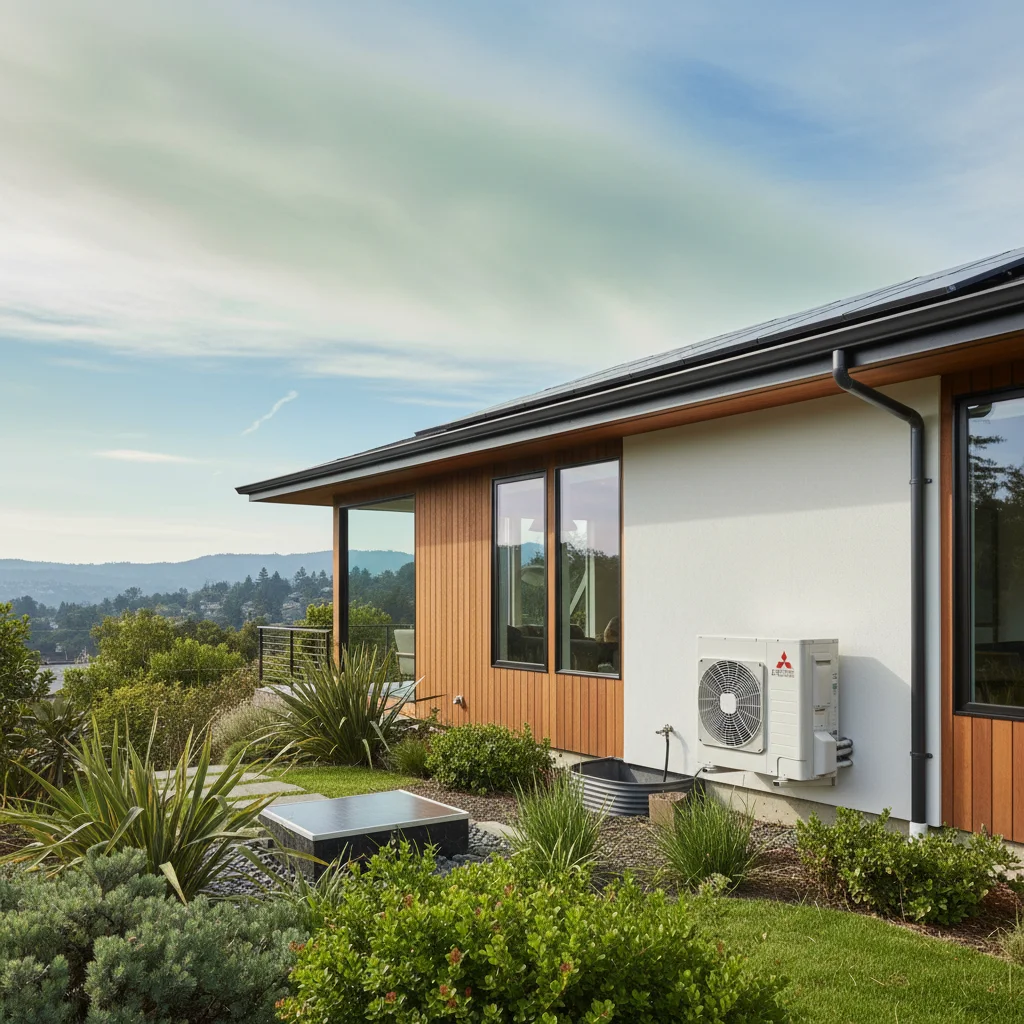
Oakland homeowners replacing gas furnaces with Mitsubishi heat pumps in 2026 save an average of $1,200 annually on heating and cooling costs while qualifying for up to $14,000 in combined federal tax credits and local utility rebates. The upfront equipment and installation cost ranges from $8,000 to $18,000 depending on home size and system complexity, but incentives reduce net costs by 50-70% in most cases.
How much does a Mitsubishi heat pump cost in Oakland?
Mitsubishi heat pump systems in Oakland cost $8,000-$18,000 installed in 2026, with single-zone units starting at $8,000-$12,000 and multi-zone systems reaching $14,000-$18,000 for whole-home coverage. Equipment accounts for 40-50% of total project cost, with labor, electrical upgrades, and permits comprising the remainder. Installation complexity drives final pricing more than equipment selection alone.
Oakland's mild climate reduces system sizing requirements compared to extreme-weather regions. A typical 1,500-square-foot home requires a 2-3 ton heat pump, while 2,500-square-foot properties need 3-4 ton systems. Mitsubishi's inverter-driven compressors maintain efficiency across Oakland's 45°F-85°F temperature range without supplemental heating.
The federal Energy Efficient Home Improvement Credit (Section 25C) ended for property placed in service after December 31, 2025 (IRS FS-2025-05). Federal tax credits for this work have ended, but state, local and utility rebates may still apply; check what is available at your address with the DuloCore rebate calculator. But Bay Area Air Quality Management District (BAAQMD) adds $3,000-$5,000 in direct rebates for fuel-switching projects. So Oakland homeowners replacing gas furnaces access $5,000-$7,000 in immediate incentives before utility programs.
PG&E's Energy Upgrade California program contributes an additional $2,000-$4,000 for comprehensive HVAC replacements meeting efficiency thresholds. Combined incentives reduce effective heat pump costs to $3,000-$11,000 for most Oakland installations. Local contractors report 60-80% of customers qualify for at least $6,000 in total rebates and credits when bundling programs strategically.
Check current incentive amounts using a rebate calculator before selecting equipment.
The federal Energy Efficient Home Improvement Credit (Section 25C) ended for property placed in service after December 31, 2025 (IRS FS-2025-05).
What's the payback period for a Mitsubishi heat pump investment?
Mitsubishi heat pump payback periods in Oakland average 5-8 years based on 2026 energy prices and available incentives. Homeowners replacing gas furnaces and central AC units see faster returns of 4-6 years, while installations replacing gas heat alone extend to 6-8 years as cooling savings provide smaller offsets. Net costs after rebates and annual utility savings determine actual payback timelines more than equipment selection.
Oakland's PG&E electricity rates of $0.32-$0.42 per kWh create favorable economics for high-efficiency heat pumps. And Mitsubishi's SEER2 ratings of 20-30 deliver operating costs of $600-$900 annually for heating and cooling combined. Gas furnace systems cost $1,200-$1,800 annually at 2026 natural gas prices of $2.40-$2.80 per therm.
Annual savings of $600-$1,200 offset net system costs of $3,000-$11,000 within documented payback windows. But proper sizing and installation quality affect long-term performance more than brand selection. Systems undersized by 20% lose 30-40% efficiency, extending payback periods by 2-4 years.
So qualified HVAC contractors using Manual J load calculations ensure accurate equipment matching. Oakland's marine layer climate requires humidity management capabilities beyond basic heating and cooling. Mitsubishi's hyper-heating models maintain full capacity down to 5°F, though Oakland rarely experiences temperatures below 35°F.
Review heat pump rebates to understand program stacking strategies that minimize payback periods.
How long do Mitsubishi heat pumps last?
Mitsubishi heat pumps last 15-20 years with regular maintenance in Oakland's moderate climate, outlasting traditional HVAC systems by 3-5 years. Inverter-driven compressors reduce mechanical stress through variable-speed operation rather than constant on-off cycling. Annual maintenance extends lifespan to the upper range, while neglected systems fail at 12-15 years.
Oakland's mild temperature range of 45°F-85°F reduces compressor wear compared to extreme climates. Systems operating in Phoenix or Minneapolis experience 40-60% more heating and cooling degree days annually, shortening equipment life by 2-4 years. And coastal salt air requires annual coil cleaning to prevent corrosion that reduces heat transfer efficiency by 15-25%.
Mitsubishi's warranty coverage includes 12 years on compressors and 7 years on parts when installed by certified contractors. Extended warranties add 3-5 years for $800-$1,400 depending on coverage levels. But proper installation affects reliability more than extended warranty purchases.
Refrigerant leaks account for 40% of premature heat pump failures. So nitrogen pressure testing during installation identifies connection defects before system charging. Oakland installers certified through Mitsubishi's Diamond Contractor program complete additional training on refrigerant management and system commissioning.
Annual maintenance costs $150-$250 and includes filter replacement, coil cleaning, refrigerant pressure checks, and electrical connection inspection. Systems receiving annual service reach 18-20 year lifespans at rates 60% higher than unmaintained equipment.
Are there rebates or incentives for Mitsubishi heat pumps in Oakland?
Oakland homeowners access $6,000-$14,000 in combined federal tax credits, state rebates, and utility incentives for Mitsubishi heat pump installations in 2026. The federal Energy Efficient Home Improvement Credit (Section 25C) ended for property placed in service after December 31, 2025 (IRS FS-2025-05). BAAQMD contributes $3,000-$5,000 for gas-to-electric conversions. PG&E's Energy Upgrade California program adds $2,000-$4,000 for comprehensive HVAC replacements meeting efficiency standards.
Income-qualified households access enhanced incentives through California's TECH Clean California program. And incentives reach $10,000-$14,000 for households earning below 80% area median income (AMI), which equals $92,000 for a family of four in Alameda County. Standard income households qualify for $6,000-$9,000 when combining all available programs.
But program funding fluctuates throughout the year. BAAQMD allocates $15 million annually for building electrification, supporting approximately 3,000-5,000 projects. Applications receive processing within 60-90 days, though high-demand periods extend timelines to 120 days. So contractors recommend applying immediately after project completion to secure funding before annual budgets deplete.
Mitsubishi systems qualify for all major incentive programs when meeting Energy Star Most Efficient criteria. Models with SEER2 ratings above 18 and HSPF2 ratings above 9 meet federal tax credit requirements. Or contractors verify equipment eligibility before purchase to avoid disqualification issues during rebate processing.
Calculate your specific incentive amounts using the rebate calculator with your home's details.
The federal Energy Efficient Home Improvement Credit (Section 25C) ended for property placed in service after December 31, 2025 (IRS FS-2025-05).
How do Mitsubishi heat pumps compare to other brands in Oakland?
Mitsubishi heat pumps cost 10-20% more than Carrier, Lennox, or Trane models but deliver 15-25% higher efficiency ratings and quieter operation at 19-25 decibels versus 30-40 decibels for competitor units. Oakland installations favor Mitsubishi's mini-split systems for retrofit applications where ductwork doesn't exist or requires expensive modifications. Ducted systems from traditional brands cost $2,000-$4,000 less upfront but require duct sealing that adds $1,500-$3,000 to total project costs.
And Mitsubishi's warranty coverage exceeds industry standards by 3-5 years on compressors. But installation quality affects performance more than brand selection. Systems installed with refrigerant line sets exceeding 50 feet lose 10-20% capacity regardless of manufacturer. Oakland's Victorian and Craftsman-era homes often require line sets of 60-80 feet for attic or basement equipment placement.
So qualified installers minimize line set distances through strategic outdoor unit placement. Mitsubishi's outdoor units tolerate side yard installations that competitor warranties exclude. But local Oakland building codes require 3-foot clearances from property lines, limiting placement options on narrow urban lots.
Energy efficiency differences create $150-$400 annual operating cost gaps. Mitsubishi's 25-30 SEER2 ratings consume 20-30% less electricity than 18-22 SEER2 competitor models. Over a 15-year lifespan, efficiency gains offset higher upfront costs by $2,250-$6,000.
Review available energy tax credits to understand how efficiency ratings affect federal incentive amounts.
What factors affect the total installation cost?
Oakland heat pump installation costs vary by $4,000-$10,000 based on electrical service upgrades, structural modifications, and permit requirements. Homes with 100-amp electrical panels require $2,000-$3,500 upgrades to 200-amp service before heat pump installation. And permits cost $400-$800 depending on project scope and municipal fee structures.
Electrical work accounts for 15-25% of total project costs. Heat pumps draw 15-30 amps during peak operation, requiring dedicated 240-volt circuits. Oakland's older housing stock often needs panel upgrades and circuit additions totaling $1,500-$4,000. So electrical assessments before equipment selection prevent budget overruns during installation.
Structural modifications add $1,000-$5,000 for outdoor unit pad installation, refrigerant line penetrations, and condensate drainage. Multi-story homes require outdoor units on ground-level pads or roof platforms, with roof installations adding $1,500-$2,500 for structural reinforcement and weatherproofing. But ground-level installations in side yards create noise transmission issues requiring acoustic barriers that cost $500-$1,200.
Ductwork modifications range from $0 for ductless mini-splits to $3,000-$8,000 for whole-home ducted systems. Oakland's older homes often have undersized ducts designed for gravity furnaces. Or duct sealing and insulation improvements cost $1,500-$3,000 and improve system efficiency by 20-30%.
Labor costs in Oakland run $85-$125 per hour, with typical installations requiring 16-32 hours depending on system complexity. Permitting and inspection add 2-4 days to project timelines. So total installation periods span 3-7 days from equipment delivery to final system commissioning.
Official Sources
- ENERGY STAR Heat Pumps — Federal efficiency standards and qualified product database
- Energy.gov Energy Saver — IRA tax credit details and application guidance (note: the federal 25C and 25D credits ended for projects completed after December 31, 2025)
- DSIRE USA — State and local incentive program directory with Oakland-specific listings
Frequently Asked Questions
How much does a Mitsubishi heat pump cost in Oakland?
Mitsubishi heat pump systems cost $8,000-$18,000 installed in Oakland in 2026, with single-zone units at $8,000-$12,000 and multi-zone systems at $14,000-$18,000. Federal tax credits and local rebates reduce net costs by $5,000-$14,000 depending on household income and program eligibility. Equipment accounts for 40-50% of total costs, with labor, electrical upgrades, and permits comprising the remainder.
What rebates are available for Mitsubishi heat pumps in Oakland?
Oakland homeowners qualify for federal IRA tax credits covering 30% of costs up to $2,000, BAAQMD rebates of $3,000-$5,000 for fuel switching, and PG&E incentives of $2,000-$4,000 for comprehensive HVAC upgrades in 2026. Income-qualified households access enhanced TECH Clean California incentives reaching $10,000-$14,000. Combined programs deliver $6,000-$14,000 in total savings when stacked strategically.
Am I eligible for heat pump rebates in Oakland?
Oakland homeowners installing Energy Star certified heat pumps in primary residences qualify for federal tax credits and most local rebates in 2026. BAAQMD fuel-switching incentives require replacing gas furnaces or boilers with electric heat pumps. Income-qualified programs use 80% area median income thresholds of $92,000 for four-person households. Or existing electrical service must support heat pump loads, potentially requiring panel upgrades that add $2,000-$3,500 to project costs.
How long does it take to get a heat pump rebate in Oakland?
BAAQMD processes rebate applications within 60-90 days of project completion in 2026, with high-demand periods extending to 120 days. PG&E incentives process within 30-60 days through participating contractors who handle applications directly. So total incentive receipt spans 1-16 months depending on program mix and filing timelines.
What's the difference between a Mitsubishi heat pump and other brands for rebates?
Mitsubishi heat pumps qualify for identical rebate amounts as competitor brands when meeting Energy Star Most Efficient criteria in 2026. Systems require SEER2 ratings above 18 and HSPF2 ratings above 9 for federal tax credits. And efficiency ratings affect long-term savings more than rebate eligibility. Mitsubishi's 25-30 SEER2 models save $150-$400 annually versus 18-22 SEER2 competitors, offsetting higher upfront costs by $2,250-$6,000 over 15 years.
Ready to calculate your Oakland heat pump savings? Use our free rebate calculator to find your exact incentive amounts and payback period based on your home's details and current 2026 program availability. Get personalized results in under 2 minutes.
Updated: April 14, 2026 — fact-checked by DuloCore Research. About our editorial process.
Check your California heat pump rebate eligibility — see the programs you qualify for and the dollar amounts on our California heat pump rebate finder.