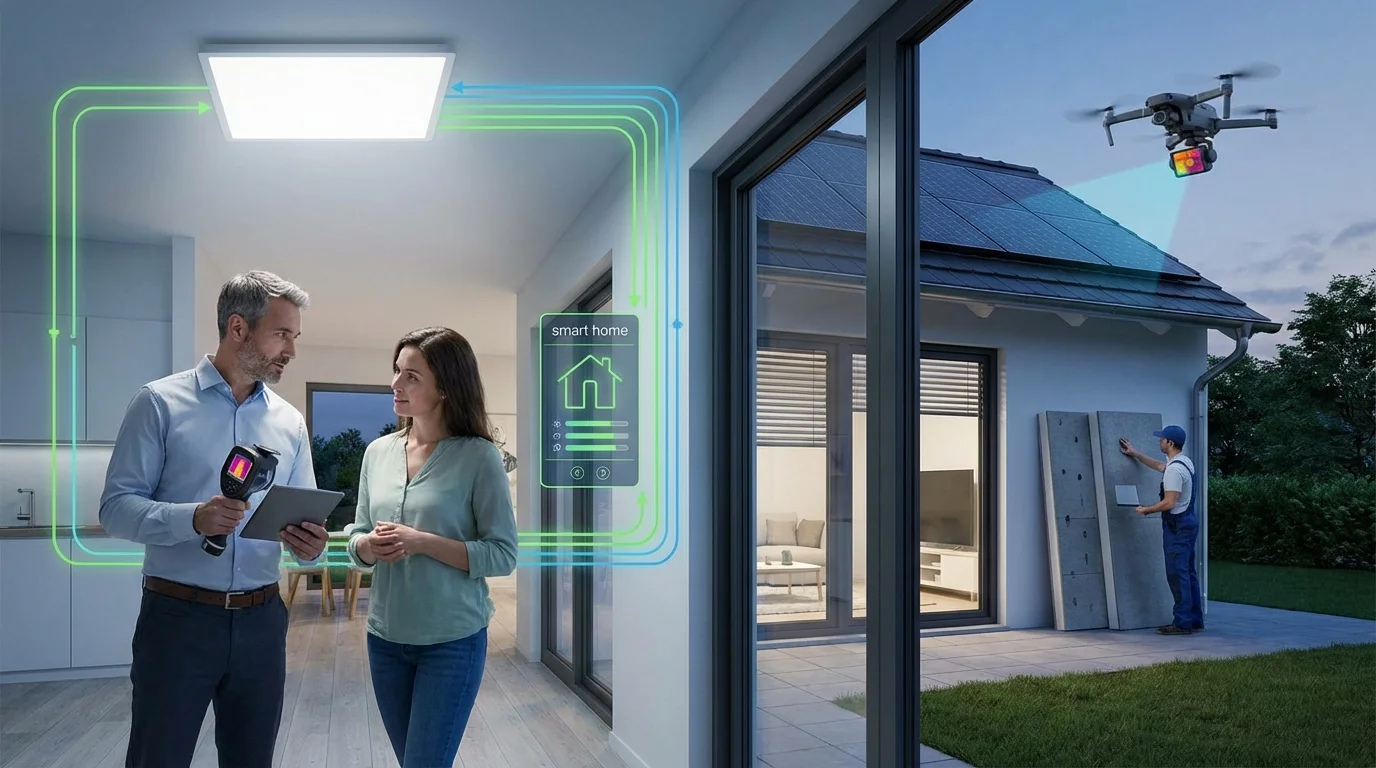
Lighting accounts for nearly 15% of the average U.S. household's electricity use, a cost that inefficient bulbs multiply every single day. So replacing just five of your home's most frequently used light fixtures with ENERGY STAR certified models saves homeowners around $75 per year. But without a professional assessment, you're just guessing where the biggest energy drains are.
How Much Can You Save? Unpacking Rebate Amounts for Home Lighting Upgrades by State and Utility.
A home lighting energy audit identifies inefficient fixtures, offering a clear path to savings through targeted upgrades. So utility rebates for ENERGY STAR certified LED bulbs range from $2 to $10 per bulb, while smart lighting controls qualify for incentives between $25 and $100 per device in 2026.
A professional lighting energy audit pinpoints exactly where your home wastes the most electricity. So this isn't just about swapping a few bulbs; it's a systematic evaluation of every fixture, switch, and control system. The core issue is that homeowners often underestimate the cumulative cost of outdated lighting technology, which can add up to over $200 per year in unnecessary energy expenses according to the U.S. Department of Energy. But by identifying these specific points of inefficiency, an audit provides a data-driven roadmap for upgrades that qualify for local and state rebates, turning a hidden expense into a calculated saving. You can see your potential savings by using a rebate calculator.
Am I Eligible? Understanding Income Limits, Equipment Standards, and Contractor Requirements.
Eligibility for lighting upgrade rebates in 2026 depends on location, utility provider, and sometimes household income. And most programs require the installation of ENERGY STAR or DesignLights Consortium (DLC) listed products. So income-qualified programs offer enhanced rebates, often covering up to 100% of equipment costs.
To qualify for most 2026 lighting rebates, homeowners must be customers of the sponsoring utility company. And some programs, like California's LIHEAP, have specific income limits, typically set at or below 80% of the area median income. But equipment standards are non-negotiable; all installed LEDs and fixtures must appear on the ENERGY STAR or DLC Qualified Products List. So while some utilities allow for DIY installation of simple screw-in bulbs, rebates for hardwired fixtures or smart controls often require installation by a licensed electrician. Completing a full home energy audit is often a prerequisite for larger incentive packages.
How Do I Apply? Navigating the Application Process for Lighting Energy Audit Programs.
The application process for lighting rebates typically involves a pre-approval step before purchasing equipment. So homeowners submit an application online through their utility's portal, including details from their audit. And after installation, they provide proof of purchase and installation photos to receive the rebate check or bill credit.
First, homeowners schedule a lighting energy audit, either as a standalone service or part of a comprehensive home assessment. And the auditor provides a report detailing recommended upgrades. So with this report, you complete the utility's online rebate application form, which often requires account information and project details. But don't purchase equipment before receiving pre-approval, as this can disqualify the project. After the approved upgrades are installed, you submit final invoices and any required contractor forms. The utility then processes the claim, typically issuing a rebate within 6-8 weeks.
"Many utilities offer rebates for ENERGY STAR certified lighting products. Rebates can range from a few dollars for a light bulb to much more for a fixture." — ENERGY STAR
What's the Catch? Deadlines, Funding Status, and Stacking Rules for Maximizing Your Benefits.
Rebate programs operate with annual budgets and strict deadlines, often closing once funds are exhausted for the year. And 2026 programs typically have application deadlines in Q4. So stacking rules determine if you can combine utility rebates with state incentives or federal energy tax credits for the same project.
Most utility rebate programs are funded on a first-come, first-served basis. So when the annual budget is depleted, the program closes to new applicants, regardless of the official deadline. For 2026, many programs have a final submission deadline of December 31st. But it's critical to check the program's funding status online before starting a project. And stacking is a key strategy; for example, a homeowner in Massachusetts can combine a Mass Save rebate for LED fixtures with state-level clean energy incentives. However, you can't claim a rebate and a tax credit for the exact same dollar amount of an expense.
How Do State and Utility Programs Compare for Home Lighting Audits and Incentives?
State and utility lighting programs vary in scope, with some offering free audits and others providing rebates on specific products. And states like California and New York offer robust, state-wide initiatives, while others rely on individual utility companies like Duke Energy or Con Edison to administer local programs.
The main difference lies in administration and funding. So state-level programs, often managed by an energy commission, provide a consistent set of rules and incentives across their territory. But utility programs are more localized and can change more frequently based on regional energy-saving goals. For instance, Pacific Gas and Electric (PG&E) in California offers tiered rebates based on energy efficiency levels, whereas a smaller municipal utility may offer a flat $5 rebate per ENERGY STAR bulb. And some programs, like those for heat pump rebates, are integrated into a whole-home approach, requiring a comprehensive audit first.
Home Lighting Rebate Program Comparison (2026)
| Program/Utility | Rebate Amount | Key Eligibility | Application Deadline |
|---|---|---|---|
| Mass Save (MA) | Up to $15/bulb; 75% off fixtures | Must be a customer of a partner utility | Rolling; check funding |
| Con Edison (NY) | $2-$7 per ENERGY STAR bulb | Con Edison residential electric customer | December 31, 2026 |
| PG&E (CA) | Tiered rebates, $3-$10 per fixture | PG&E residential electric customer | Varies; check online portal |
Official Sources
- ENERGY STAR — Official U.S. government resource for identifying certified energy-efficient lighting products and available rebates.
- DSIRE — A comprehensive database of state, local, utility, and federal incentives and policies that promote renewable energy and energy efficiency.
"Saving money on your utility bills is a big incentive for many homeowners to make energy-efficient home improvements." — U.S. Department of Energy
Frequently Asked Questions
Who is eligible for a home lighting energy audit?
Eligibility typically depends on your utility provider and location. Most residential customers of major utility companies are eligible for either a free or subsidized lighting audit as part of a broader home energy assessment. And some programs are reserved for income-qualified households, often defined as those earning at or below 80% of the area median income.
What does a home lighting energy audit involve?
An audit involves a certified technician inspecting every light fixture in your home. They identify bulb types (incandescent, CFL, LED), check fixture wattage, and assess lighting controls like dimmers and sensors. The auditor then provides a detailed report recommending specific ENERGY STAR-certified upgrades, estimating potential energy savings of 15-25%, and listing applicable rebates.
How much can I save on my energy bill after a lighting audit?
Switching to ENERGY STAR certified LED lighting saves the average household about $75 per year. A home that fully replaces its top 10 most-used incandescent bulbs with LEDs will save over $1,000 over the 10-year lifespan of the bulbs. So savings are directly proportional to the number of inefficient bulbs replaced and their daily usage.
Are there deadlines to apply for lighting upgrade rebates after an audit?
Yes, all rebate programs have deadlines. Most 2026 utility programs require applications to be submitted by December 31, 2026, or whenever program funds are exhausted, whichever comes first. So it's critical to check the program's website for funding status and specific deadlines before purchasing any equipment based on your audit's recommendations.
Is a dedicated lighting energy audit worth it compared to a general home energy audit?
A dedicated lighting audit is most beneficial for homes with extensive or specialized lighting systems. But for most homeowners, a general home energy audit offers better value. It covers lighting in addition to insulation, HVAC, and air sealing, providing a more holistic view of energy waste and unlocking a wider range of rebates, often bundling lighting incentives with larger projects for savings up to 30%.
Find Your Lighting Rebates in Seconds
Don't leave money on the table. A lighting energy audit is the first step, but finding the right rebates is next. Use our free tool to instantly see which state and utility incentives you qualify for.
Calculate Your Savings NowLast updated April 14, 2026 — reviewed by DuloCore Editorial. About our authors.