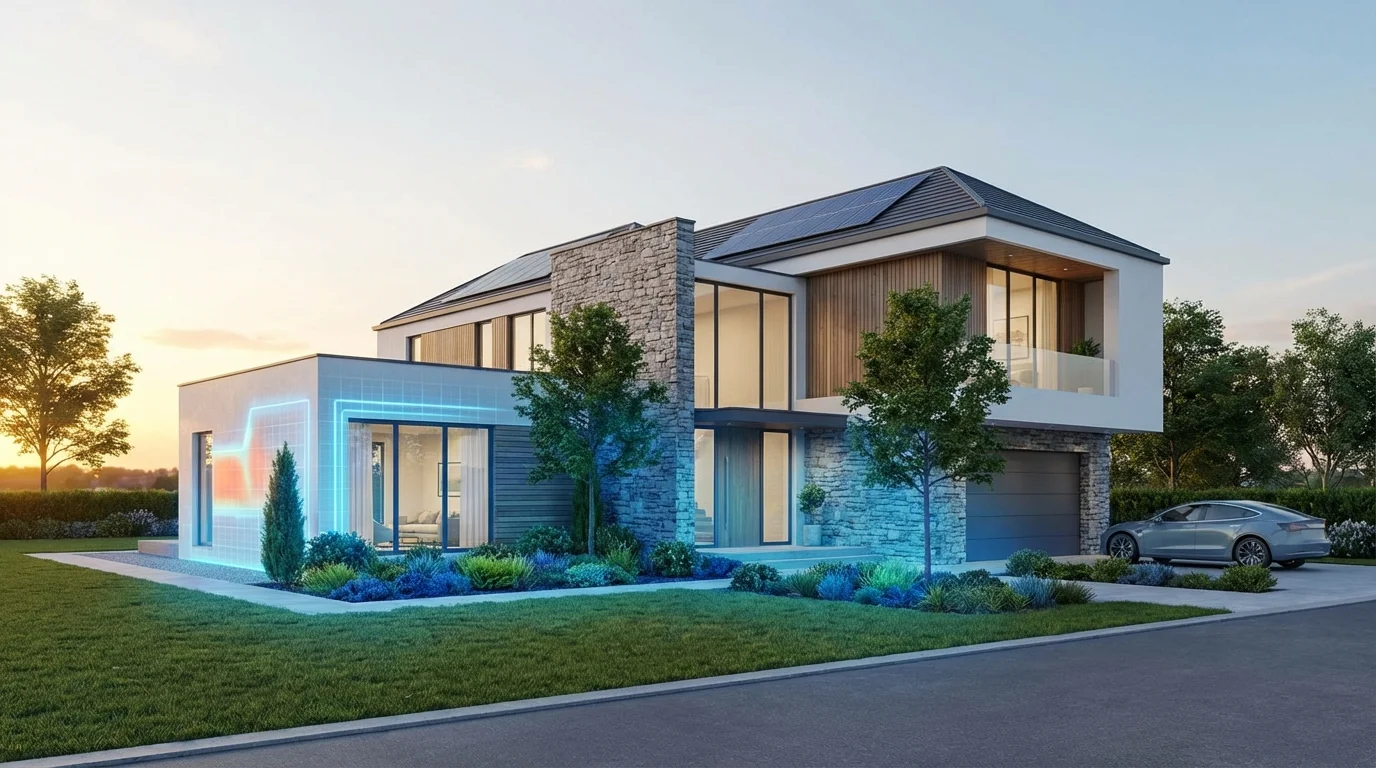
A single, well-placed tree can save a homeowner up to 25% on their annual cooling costs. This isn't just about curb appeal; it's a direct strategy for cutting utility bills as summer temperatures continue to set records. So homeowners are now turning to their yards to create natural, energy-saving shields against extreme weather.
How Can Energy-Efficient Landscaping Reduce My Utility Bills and What Rebate Amounts Are Available?
Energy-efficient landscaping reduces utility bills by providing natural shade and windbreaks. So deciduous trees planted on the south and west sides of a home block summer sun, cutting air conditioning costs by 15-50%. And evergreen trees planted as windbreaks reduce winter heating fuel consumption by 10-40%.
Strategically planting trees and shrubs creates microclimates that lower ambient temperatures around your home. So this reduces the workload on your HVAC system, directly translating to lower energy consumption. Rebates for these projects, often called "treebates," are typically offered by local utilities or municipalities and range from $50 to $150 per qualifying tree planted. And these programs aim to increase the local tree canopy, which provides community-wide benefits. But homeowners must follow specific placement guidelines to qualify. A thorough home energy audit often identifies the best locations for planting to maximize these savings and qualify for local incentives. The goal is to create a more resilient and less energy-dependent home.
What Types of Landscaping Projects, Equipment, and Utilities Qualify for State and Local Rebates?
State and local landscaping rebates for 2026 target specific projects that verifiably reduce energy use. So qualifying projects include planting shade trees within 40 feet of a home's south or west exposure, installing windbreaks, and replacing turf grass with low-water-use, native plants (xeriscaping) to reduce water heating and pumping energy.
Eligible equipment often extends beyond plants. So some programs offer rebates for purchasing ENERGY STAR certified electric lawn equipment, like mowers or leaf blowers, which can provide a $25-$75 credit. And utilities like Pacific Gas & Electric (PG&E) or Austin Energy historically offer these types of local incentives. But the specific qualifying species of trees and shrubs are always dictated by the local climate zone to ensure survival and maximum benefit. Homeowners must check their utility's 2026 program list for approved plant types and equipment models before making a purchase.
Are There Income Limits or Specific Contractor Requirements for Energy-Efficient Landscaping Programs?
Most 2026 landscaping rebate programs offered by utilities don't have income limits for standard participants. And these are generally available to all residential customers in the service area. But some state-funded or low-income-focused programs do have eligibility caps, often set at 80% of the Area Median Income (AMI).
While many "treebate" programs allow for DIY planting, some larger-scale projects like xeriscaping or installing smart irrigation systems require installation by a licensed contractor. So the contractor often needs to be certified by a water conservation or arborist organization. For example, a program may require the work to be done by an International Society of Arboriculture (ISA) Certified Arborist. And homeowners must verify these requirements beforehand, as using a non-approved contractor results in an automatic denial of the rebate application. These rules ensure the project meets efficiency and safety standards.
"Carefully landscaping your home can reduce your heating and cooling costs and also reduce the amount of water your home consumes." — U.S. Department of Energy
What's the Application Process and What Key Deadlines Should I Know for Landscaping Rebates?
The 2026 application process for landscaping rebates typically involves a pre-approval step before purchasing plants or equipment. So homeowners submit a site plan showing proposed planting locations relative to the house. And once approved, they purchase the materials and complete the work, submitting receipts and photos as proof.
Deadlines are critical and often tied to fiscal years or seasons. For instance, many programs have a spring application window from March 1 to May 31 and a fall window from September 1 to November 15. And funding is limited, so programs close once the allocated $500,000 or other set amount is exhausted. But some utilities use a rolling application system with no fixed deadline until funds run out. Always check the program website for the current year's exact dates and funding status before starting your project. Missing a deadline by even one day means forfeiting the rebate.
Can I Stack Multiple Rebates, and How Do I Check the Current Funding Status of Landscaping Incentive Programs?
Homeowners can often stack landscaping rebates with other incentives. So a municipal tree-planting rebate of $100 per tree can be combined with a separate utility rebate for a high-efficiency irrigation system. But you can't claim the same tree for two different tree-planting programs.
Checking the current funding status is essential, as these programs operate on a first-come, first-served basis with budgets often under $1 million. The most reliable method is to visit the specific utility or city program's website, which usually features a funding status bar or a notice on the main rebate page. And DSIRE, the Database of State Incentives for Renewables & Efficiency, also tracks many of these programs. So combining a landscaping rebate with federal energy tax credits for other upgrades, like new windows or insulation, maximizes total savings on a whole-home efficiency project.
Landscaping Rebate Program Comparison (2026)
| Program / Utility | Rebate Type | Typical Amount | Key Eligibility |
|---|---|---|---|
| Austin Energy (TX) | Shade Tree Rebate | $50-$150 per tree | Must be on approved list; planted in specific locations |
| Sacramento Shade (CA) | Free Shade Trees | Up to 10 free trees | Homeowner attends workshop; plants within 30 days |
| LADWP (CA) | Turf Replacement | $3.00 per sq. ft. | Replaces grass with drought-tolerant landscape |
Official Sources
- Database of State Incentives for Renewables & Efficiency (DSIRE) — A comprehensive database of state, local, utility, and federal incentives that promote renewable energy and energy efficiency.
- ENERGY STAR Rebate Finder — An official U.S. government tool to find rebates on ENERGY STAR certified products, including some related to outdoor equipment.
Related Reading: Learn more about Deep Energy Retrofit Planning and Hvac Efficiency Rating Seer Explained.
Frequently Asked Questions
Who is eligible for rebates on landscaping designed for energy efficiency?
Eligibility for 2026 landscaping rebates is typically determined by your utility provider and location. And most programs are open to residential homeowners, and sometimes renters with owner permission, within a specific utility's service territory. So you must have an active utility account in good standing. But some programs have additional requirements, such as property type or planting location verification.
What is the typical rebate amount for energy-efficient landscaping projects?
Rebate amounts for 2026 vary by program but generally fall into specific ranges. So for tree planting, homeowners receive between $50 and $150 per qualifying tree, with a typical household limit of 3-5 trees. And for turf replacement or xeriscaping projects, rebates are often calculated per square foot, ranging from $1.00 to $3.00, which can result in a total rebate of $500 to $2,000.
How do I apply for a rebate on energy-efficient landscaping improvements?
The application process usually starts on your local utility's website. And you'll need to fill out an online or mail-in form, often including a site plan showing where you'll plant the trees or modify the landscape. So after receiving pre-approval, you purchase the materials, complete the project, and submit final documentation, including dated receipts and photos, by the program's 2026 deadline.
What types of landscaping offer the best energy efficiency for rebate programs?
The most effective landscaping for energy efficiency involves strategic tree placement. So planting deciduous trees on the south and west sides of a home provides summer shade, reducing A/C costs by up to 30%. And planting evergreen trees and shrubs as a windbreak on the north side can lower winter heating costs by 10-40%. Many 2026 rebate programs specifically target these two high-impact strategies.
Ready to see how much you can save?
Landscaping is just one piece of the puzzle. Your home may qualify for thousands of dollars in rebates for heat pumps, insulation, and other efficiency upgrades. Use our free rebate calculator to see all available incentives in your area.
Last updated: April 14, 2026. Reviewed by the DuloCore Editorial Team. About our authors.