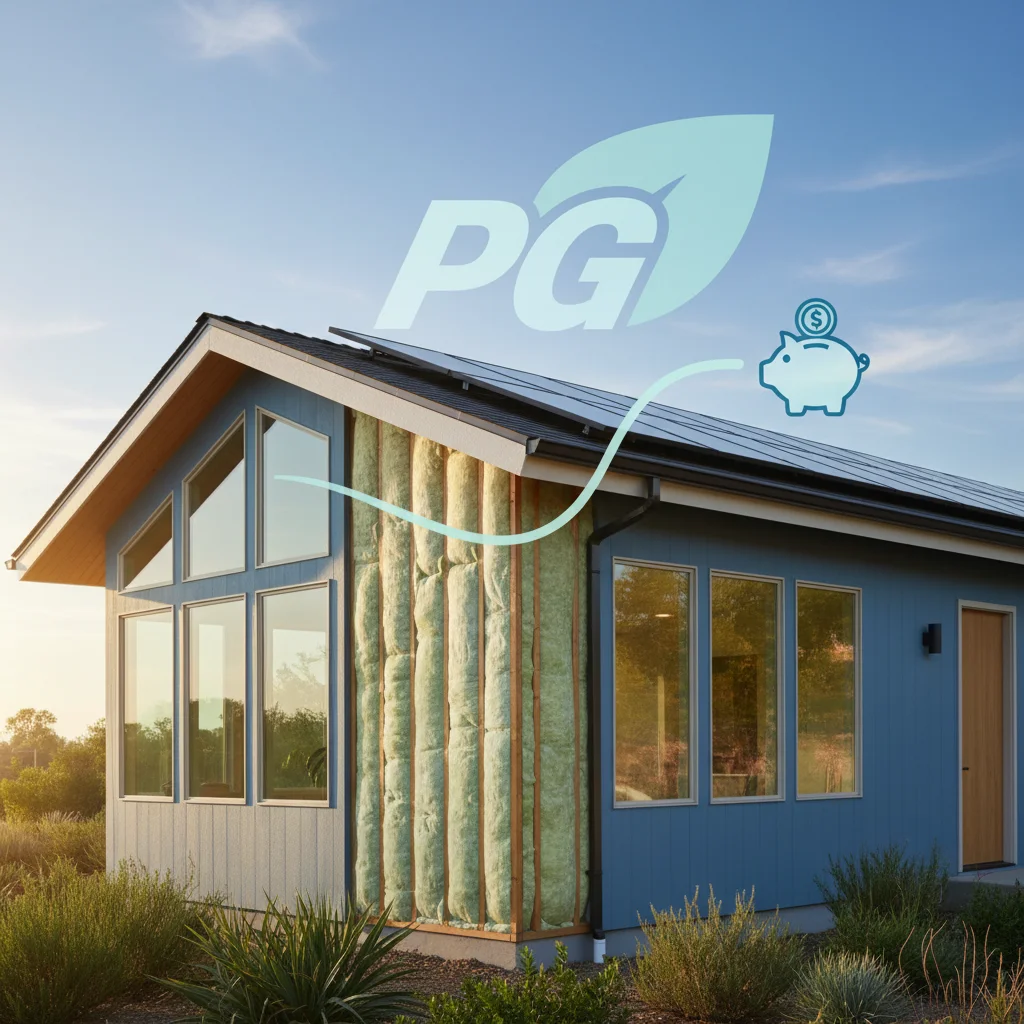
Insulation rebates for PG&E customers do not come from PG&E's own rebates page. DuloCore checked the official pages on October 13, 2026. Insulation help is stated by a Bay Area regional program for PG&E customers, by MCE's Home Energy Savings program and by the state's weatherization pages. PG&E's income-qualified program offers free home upgrades. Its web page does not name insulation, but its flyer says common improvements may include insulation and weatherproofing services.
Does PG&E Offer an Insulation Rebate in 2026?
No. On October 13, 2026, PG&E's Rebates & Incentives page listed no insulation rebate. It named a generator and battery rebate and two EV rebates, and the words insulation and weatherization do not appear on it.
The Rebates & Incentives page also points to clean energy incentives, business rebates and demand response programs.
| Program | Who it is for | What its official page states (October 13, 2026) |
|---|---|---|
| PG&E Rebates & Incentives | Homes and businesses | No insulation rebate listed |
| PG&E Energy Savings Assistance | Income-qualified renters and owners | Free home upgrades; web page does not name insulation, flyer says improvements may include insulation and weatherproofing services |
| BayREN EASE Home | PG&E customers in nine Bay Area counties, income at or under 120% of area median | BayREN covers 80% of the cost of insulation and duct sealing |
| MCE Home Energy Savings | Income-qualified single-family households in MCE's service area | Free upgrades valued at up to $7,000, such as attic insulation |
| State weatherization (CSD) | Low-income owners and renters | Weatherization measures through local providers |
Can PG&E's Energy Savings Assistance Program Help With Weatherization?
It may. PG&E's web page never names insulation, but its flyer says common improvements may include insulation and weatherproofing services. A home assessment decides.
The Energy Savings Assistance page names heat pump water heaters, furnaces, lighting and refrigerators. It says Weatherization Specialists are among the crews who may work in the home, and that an energy specialist decides at a home assessment which improvements will be made.
The page links a large-print Energy Savings Assistance flyer as a PDF. The flyer says common improvements may include insulation and weatherproofing services. That wording is not a promise of insulation for every home. What the web page states:
- Home. A house, mobile home or apartment that is at least five years old.
- Income. $39,900 or less for one person and $82,500 or less for four, before taxes. The table is valid through May 31, 2027.
- Proof. Income proof is not required with documents showing participation in programs such as CalFresh, LIHEAP or WIC.
- How to apply. Apply online from that page, or call 1-800-933-9555.
What Does the Bay Area Regional Energy Network Pay Toward Insulation?
BayREN says it covers 80% of the cost of weatherization upgrades such as insulation and duct sealing. The household's share is capped at 20%.
The EASE Home page carried an Apply Now link on October 13, 2026. It says a household can take part if it:
- Lives in a single-family home of four or fewer units built before 2010.
- Is a PG&E customer.
- Has a household income at or under 120% of area median income. For a rented home, the tenant's income counts, and the tenant needs the owner's permission.
- Includes at least one weatherization measure, such as insulation, duct sealing, or duct repair or replacement.
The page's income tool lists nine counties: Alameda, Contra Costa, Marin, Napa, San Francisco, San Mateo, Santa Clara, Solano and Sonoma. Covered work includes insulation, duct sealing or replacement, whole-home air sealing and weatherstripping. The site visit is free, and a BayREN partner contractor must do the work. Average project scopes range from $5,000 to $7,000.
What Does the Home Energy Savings Program Offer for Insulation?
MCE's Home Energy Savings program gives qualifying single-family homeowners and renters free home energy upgrades valued at up to $7,000, such as attic insulation.
MCE's Home Energy Savings page says the home must be in MCE's service area. The income limit is up to $63,840 for one person and up to $132,000 for four. The program starts with a free in-home energy assessment, which determines whether the home qualifies for the free upgrades. For programs in other parts of the state, see DuloCore's California insulation rebates guide.
Does California Run Weatherization Programs for Low-Income Households?
Yes. The Department of Community Services and Development works with local providers that install weatherization and energy efficiency measures for low-income homeowners and renters.
The department's weatherization page lists three programs: the federal Weatherization Assistance Program, the Low Income Home Energy Assistance Program, and the Low-Income Weatherization Program, which currently serves farmworker housing and multi-family affordable housing. Improvements include sealing holes and cracks around doors, windows and pipes, and checking that the home is properly insulated.
Eligibility depends on income, household size, energy use and other factors, and the page says to contact your county's local service provider. See the weatherization income guidelines page or the eligibility check.
Frequently Asked Questions
Can I finance insulation with GoGreen Home?
The State Treasurer's GoGreen Home page lists insulation among upgrades that owners and renters can finance through participating lenders, in eligible home types where PG&E provides energy.
Is PG&E on-bill financing available for homes?
PG&E's On-Bill Financing page describes a program available to all PG&E business and government agency customers with a qualifying payment history.
Did the federal tax credit for insulation end?
Yes. The federal credit that covered insulation ended for property placed in service after December 31, 2025, as the federal credits page explains.
Planning an insulation project? Estimate rebates for your ZIP code with the free rebate calculator.