The U.S. Environmental Protection Agency reports that indoor air pollutant levels are often 2 to 5 times higher than outdoor concentrations. And with Americans spending approximately 90% of their time indoors, poor air quality directly impacts health while undetected air leaks simultaneously inflate energy bills. An indoor air quality energy audit identifies these hidden problems, pinpointing sources of pollutants and energy waste that cost homeowners thousands each year in heating, cooling, and healthcare expenses.
What Financial Incentives and Rebates Are Available for Indoor Air Quality Energy Audits?
An indoor air quality energy audit rebate is a financial incentive offered by governments or utilities to reduce the upfront cost of a professional home assessment. These 2026 programs provide direct rebates, bill credits, or tax credits up to $500 to diagnose issues like poor ventilation, air leakage, and pollutant sources.
Financial incentives for these audits aim to lower the initial homeowner investment, which typically ranges from $300 to $700. And many state and utility programs offer point-of-sale rebates that reduce the cost immediately. For example, some utility providers offer a direct $150 rebate for a comprehensive audit that includes a blower door test and infrared scanning. So the federal government also provides energy tax credits for subsequent efficiency upgrades identified in the audit, such as air sealing or insulation, covering 30% of the project cost up to $1,200 annually. But these incentives are geographically specific and depend on local program funding. It's essential to verify available rebates in your area before scheduling an assessment. Many homeowners find that the audit cost is offset by the combination of a direct rebate and the first year of energy savings.
Do I Qualify for Indoor Air Quality Energy Audit Rebates, and What Equipment is Eligible?
Homeowner qualification for an indoor air quality energy audit rebate primarily depends on location, income level, and utility provider. These 2026 incentives often require the property to be a primary residence, with specific programs targeting households at or below 80% of the area median income (AMI).
Qualification criteria are set by the program administrator, which is usually a state energy office or a local utility. So homeowners must often use a certified auditor, such as one with a Building Performance Institute (BPI) certification. And eligible equipment upgrades resulting from the audit often include Energy Star-certified ventilation fans, heat recovery ventilators (HRVs), air purifiers, and dehumidifiers. But not all equipment is covered; decorative items or non-certified appliances are typically excluded. For instance, a program may offer a $250 rebate for a new HRV installation but won't cover a portable air cleaner. Verifying specific income and equipment requirements through your utility's online portal or our rebate calculator is a critical first step.
How Do I Apply for Indoor Air Quality Energy Audit Incentives, and What Are the Key Deadlines?
The application process for an indoor air quality energy audit incentive involves submitting documentation to the program administrator after the audit is complete. Homeowners typically need to provide a dated invoice, the auditor's certification number, and a completed rebate form by the program's 2026 deadline, often December 31.
Applying for these incentives requires careful documentation. And the first step is to confirm program eligibility and find a participating contractor through your utility or state energy office website. So after the home energy audit is finished, you will receive a detailed report and an itemized invoice. You then submit these documents through an online portal or via mail. But processing times vary, ranging from 4 to 8 weeks before a check or bill credit is issued. Deadlines are strict; for most 2026 programs, all paperwork must be postmarked by December 31, 2026. Missing this deadline results in forfeiture of the rebate, even if the audit was completed within the calendar year. Always check the specific submission requirements for your local program.
Can I Combine Indoor Air Quality Incentives, and Are There Specific Contractor Requirements?
Homeowners can often combine, or "stack," multiple incentives for indoor air quality and energy efficiency improvements. Many 2026 programs require using certified professionals, such as BPI-certified auditors, to ensure the work meets established energy-saving standards and qualifies for rebates totaling up to $2,000 or more.
Stacking incentives is a common strategy to reduce project costs. For example, a homeowner can combine a $150 utility rebate for the audit itself with a state-level rebate for air sealing work identified in the audit, plus a federal tax credit for new insulation. But programs often have rules preventing "double-dipping" from the same funding source. And a crucial requirement is the use of a qualified contractor.
"A home energy assessment, also known as a home energy audit, is the first step to assess how much energy your home consumes and to evaluate what measures you can take to make your home more energy efficient." — U.S. Department of Energy
So utilities and state programs maintain lists of approved, certified professionals to ensure quality control. Hiring an uncertified contractor will disqualify you from receiving rebates, even if the work is completed correctly.
| Program / Incentive (2026) | Maximum Amount | Key Eligibility Requirement | Application Deadline |
|---|---|---|---|
| IRA Energy Efficiency Tax Credit | Ended Dec 31, 2025 | — | Ended Dec 31, 2025 |
| State Clean Energy Fund (Example) | $150 for audit, up to $1,000 for upgrades | Must use a state-certified auditor | December 31, 2026 |
| Utility Rebate Program (Example) | $100 instant rebate for audit | Must be a customer of the utility | Varies; often when funds are depleted |
How Can I Check the Funding Status of Indoor Air Quality Energy Audit Programs in My State or Utility Area?
Homeowners can check the funding status of 2026 indoor air quality and energy audit programs by visiting their state energy office website or their specific utility provider's online rebate portal. These sources provide real-time updates on available funds, application deadlines, and program changes for the current year.
State and utility rebate programs operate with annual budgets, and funding is typically available on a first-come, first-served basis. So it's common for popular programs to run out of money before the end of the calendar year. The Database of State Incentives for Renewables & Efficiency (DSIRE) is a comprehensive national resource that tracks these programs. And checking these official sources regularly is critical, as a program listed as active in January may be fully subscribed by October. Some utilities offer email notification services that alert customers to changes in rebate availability. For example, after an audit identifies the need for better ventilation, checking program funding before purchasing equipment for heat pump rebates ensures the incentive is still available.
Official Sources
- ENERGY STAR — A U.S. Environmental Protection Agency program providing guidance on energy-efficient products and home performance improvements.
- DSIRE - Database of State Incentives for Renewables & Efficiency — A comprehensive source of information on state, local, utility, and federal incentives and policies that promote renewable energy and energy efficiency.
- IRS.gov Energy Credits Page — Official guidance from the Internal Revenue Service on federal tax credits for energy-efficient home improvements made under the Inflation Reduction Act. (note: the federal 25C and 25D credits ended for projects completed after December 31, 2025)
Frequently Asked Questions About Indoor Air Quality Energy Audits and Incentives
Who qualifies for indoor air quality energy audit rebates?
Qualification for 2026 rebates typically depends on homeownership, location, and sometimes income. Most programs require the property to be a primary residence. And many state or utility incentives are targeted toward households with incomes at or below 80% to 120% of the area median income (AMI). However, some utility rebates are available to all customers regardless of income. Always check the specific terms of your local program.
What does an indoor air quality energy audit typically involve?
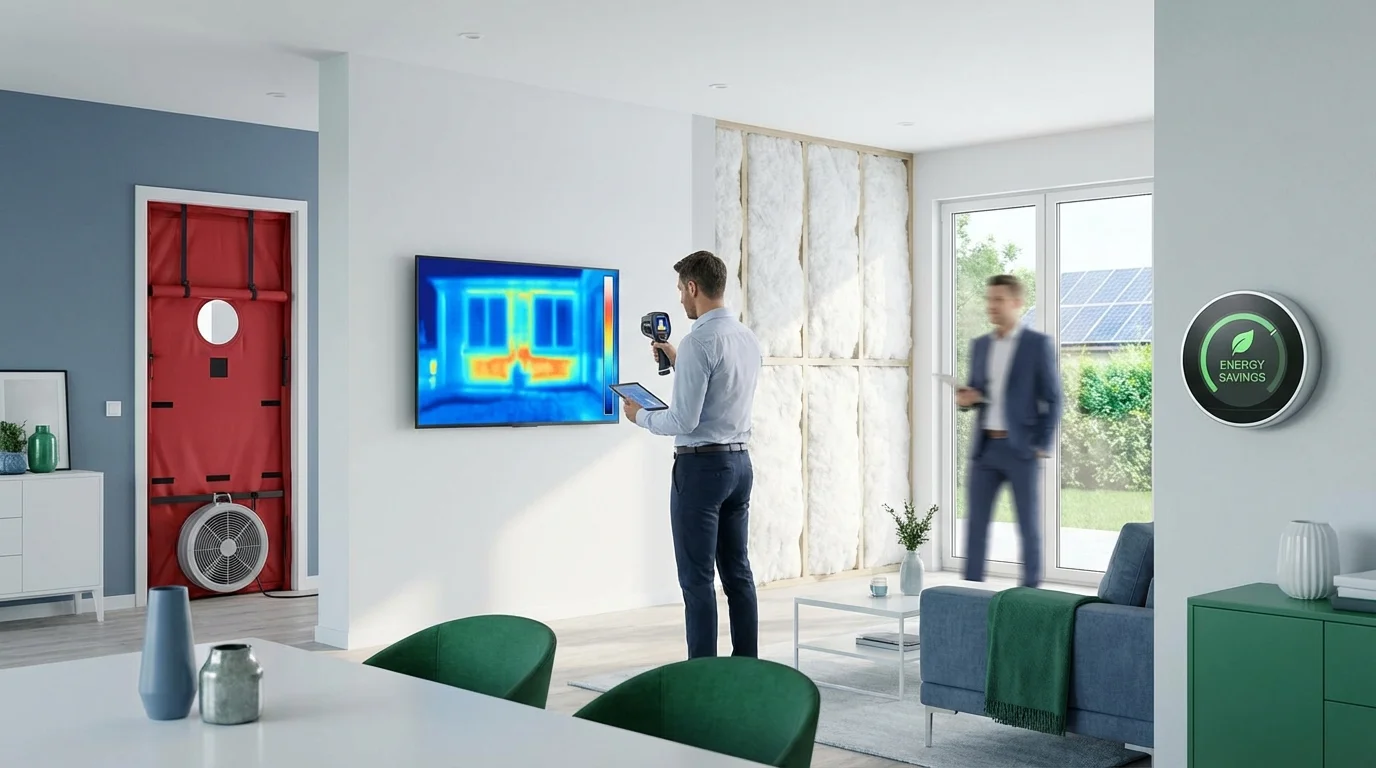
An indoor air quality energy audit involves a comprehensive inspection by a certified professional. The process includes a visual assessment for mold and moisture, a blower door test to measure air leakage, and thermographic imaging to find insulation gaps. So the auditor also tests for pollutants like carbon monoxide and volatile organic compounds (VOCs). The final report provides a prioritized list of recommended improvements, with estimated costs and energy savings of 15-30%.
How much can I expect to save on energy bills after an indoor air quality audit?
Homeowners can expect to save between 10% and 30% on their annual heating and cooling bills after implementing the recommendations from an indoor air quality energy audit. For an average U.S. home, this translates to savings of $200 to $600 per year. The exact amount depends on the home's initial condition, the specific upgrades performed (e.g., air sealing, insulation), and local climate conditions.
Find Your Rebates in Seconds
Don't leave money on the table. An indoor air quality energy audit can uncover thousands in potential savings. Use our free, up-to-date rebate calculator to see exactly which 2026 incentives you qualify for in your area.
Calculate Your Savings NowUpdated on April 14, 2026. Fact-checked by DuloCore Editors. About our research team.