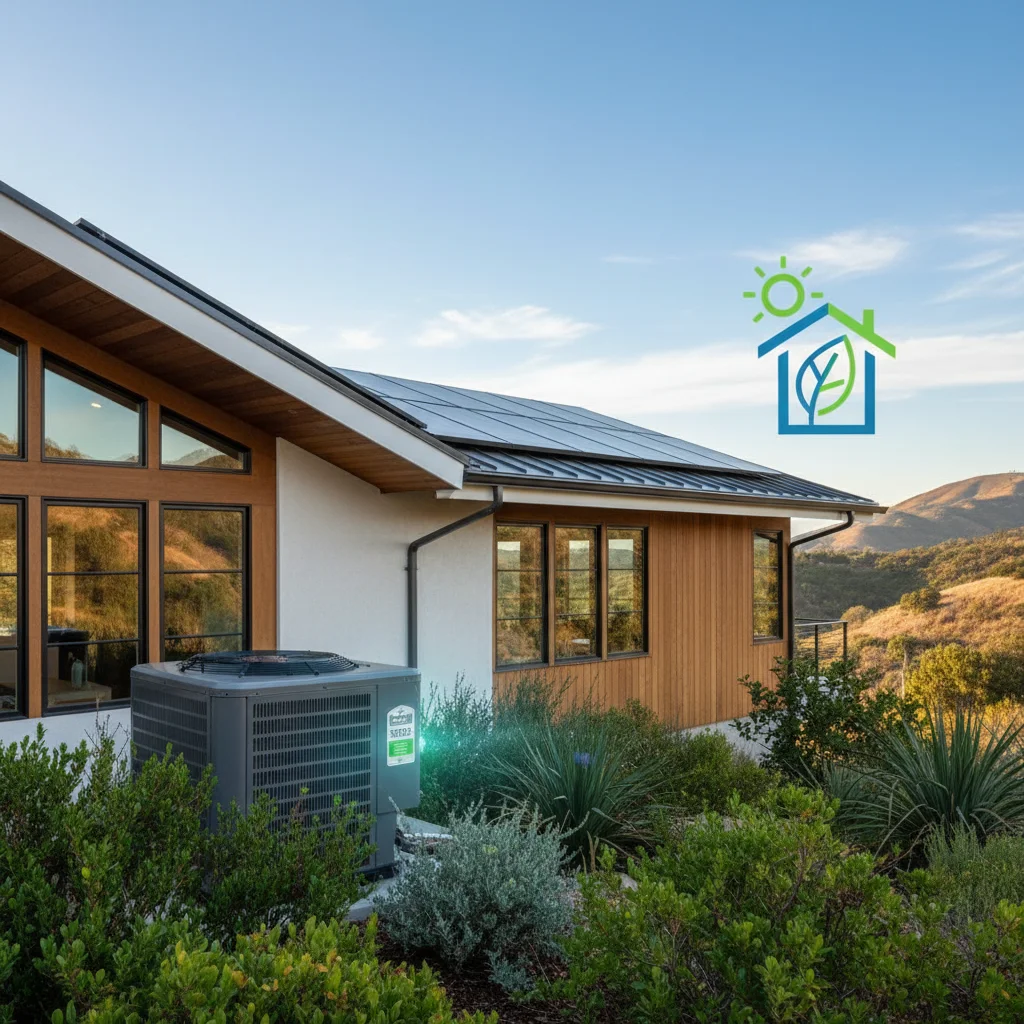
Starting January 1, 2026, California mandated SEER2 ratings for all new central air conditioners and heat pumps under Title 24 building standards, replacing the old SEER metric with a testing protocol that reflects real-world conditions 5-7% more accurately. And homeowners who ignore this shift risk installing systems that fail inspection, can't secure rebates, or underperform in California's 16 climate zones where summer cooling demand drives $1,200+ annual energy bills.
What Are California Title 24 SEER2 Requirements and Why Do They Matter for Your HVAC System?
California Title 24 2023 standards require central air conditioners to meet 14.3 SEER2 minimum (14 SEER2 in Climate Zones 2 and 16) and heat pumps to reach 7.5 HSPF2 for heating mode, effective January 1, 2026. SEER2 uses updated Department of Energy test procedures measuring performance at 95°F outdoor temperature versus SEER's 82°F, producing ratings 4-5% lower than equivalent SEER scores but reflecting actual California summer conditions where Sacramento hits 100°F+ for 73 days annually.
So what changed? The old SEER rating measured efficiency under lab conditions that underestimated real-world energy use. But SEER2 adds external static pressure testing that accounts for ductwork resistance, air handler performance, and blower motor draw—factors that reduce cooling output by 8-12% in typical installations. A system rated 16 SEER under the old standard now tests around 15.3 SEER2, meaning contractors can't legally install older inventory after the compliance deadline.
And the stakes are measurable. California Building Standards Commission data shows HVAC accounts for 32% of residential electricity consumption statewide. Upgrading from a 10-year-old 13 SEER unit to a 16 SEER2 system cuts cooling costs $340 annually for a 2,000 sq ft home in Fresno, delivering payback in 7-9 years when combined with $2,000-$3,000 in rebates from utilities like PG&E and SCE.
Or homeowners can exceed minimum standards. Systems rated 18-20 SEER2 qualify for enhanced rebates—SCE offers $850 for 18+ SEER2 installations versus $250 for baseline compliant units. But higher-efficiency equipment costs $1,800-$2,400 more upfront, extending payback to 10-12 years unless cooling demand exceeds 2,000 hours annually in Climate Zones 10-15 covering inland valleys.
How Much Will a Title 24 Compliant HVAC System Cost and What's Your ROI Payback Period?
A 3-ton 16 SEER2 central air conditioner costs $5,800-$7,200 installed in California markets, while 18 SEER2 models run $7,400-$9,600 and variable-speed 20 SEER2 systems reach $9,200-$12,000 with advanced controls. Heat pump installations add $1,200-$2,000 for cold-climate models meeting 10 HSPF2 standards required in Climate Zones 1 and 16.
Payback periods depend on climate zone and current system age. Replacing a 20-year-old 10 SEER unit with 16 SEER2 in Riverside (Climate Zone 10) saves $420 annually at $0.28/kWh electricity rates, delivering 8-year payback after $2,500 in combined utility rebates. But upgrading from a 12-year-old 13 SEER system to 18 SEER2 saves only $180 annually in Oakland (Climate Zone 3), extending payback to 18 years—poor economics unless the existing unit requires $1,500+ in repairs.
So homeowners should calculate their rebate calculator savings before committing to high-efficiency equipment. And inverter-driven variable-speed compressors that maintain SEER2 ratings across partial loads deliver 12-18% better performance than single-stage units in moderate climates, but cost $2,400-$3,200 more with breakeven at 2,400+ cooling hours annually.
Financing options matter. PACE programs like CaliforniaFIRST offer 20-year property-assessed loans at 6.9-8.5% APR with no upfront cost, but interest adds $3,200-$5,400 to total project expense. Or zero-interest contractor financing for 12-24 months keeps payback math favorable if homeowners can repay within the promotional period.
Which Climate Zone Is Your Home In, and How Does It Affect Your SEER2 Requirements?
California divides the state into 16 climate zones with distinct Title 24 requirements—coastal Climate Zones 3, 5, and 7 see 300-800 cooling degree days annually versus 2,500-3,200 in Zones 13-15 spanning Central Valley cities. And minimum SEER2 thresholds drop to 14.0 in temperate Zones 2 and 16 where cooling loads rarely exceed 1,200 hours per year.
Climate Zone 10 (Riverside, San Bernardino) and Zone 14 (Fresno, Bakersfield) deliver the fastest ROI for high-efficiency systems—homeowners see 6-8 year payback on 18 SEER2 equipment with summer peaks hitting 105°F+ for 90-110 days. But Zone 3 (San Francisco, Oakland) and Zone 5 (Santa Maria) rarely justify SEER2 ratings above 16 unless homeowners prioritize comfort over economics, as cooling demand stays under 400 hours annually.
Or consider duct location. Title 24 applies stricter leakage standards when ducts run in unconditioned attics—systems must test ≤6% total leakage to conditioned space or ≤25 CFM per 100 sq ft of conditioned floor area. Homes with ducts in vented attics in Zone 13 (Redding) lose 18-24% of cooling capacity to leakage and heat gain, making duct sealing a $1,800-$2,400 prerequisite that affects payback math.
So verify your climate zone using the California Energy Commission building standards map before selecting equipment. And coastal homeowners in Zones 1-6 should evaluate ductless mini-splits rated 20-23 SEER2 as alternatives to central systems, especially in homes under 1,600 sq ft where $6,500-$8,200 installed cost beats $7,200-$9,800 for ducted equipment.
| Climate Zone | Cities | Cooling Hours/Year | Recommended Minimum SEER2 | Payback Period (16 vs 18 SEER2) |
|---|---|---|---|---|
| Zone 3 | San Francisco, Oakland | 200-400 | 14.3 | 18+ years |
| Zone 10 | Riverside, San Bernardino | 2,000-2,400 | 16-18 | 7-9 years |
| Zone 13 | Redding, Red Bluff | 2,200-2,600 | 18+ | 6-8 years |
| Zone 14 | Fresno, Bakersfield | 2,400-3,200 | 18-20 | 6-7 years |
How Does a Title 24 Compliant HVAC System Compare to Older Models and Alternative Cooling Solutions?
A 16 SEER2 system uses 28-32% less electricity than a 15-year-old 12 SEER air conditioner—translating to $340-$480 annual savings in Climate Zone 13 at $0.32/kWh rates. But upgrading from a 5-year-old 14 SEER unit saves only $120-$160 annually, making replacement hard to justify unless repair costs exceed $2,000 or refrigerant conversion from R-410A to R-454B adds $1,800+ service expense.
And ductless mini-splits outperform central systems in moderate climates. A 20 SEER2 multi-zone mini-split serving three bedrooms and a living room costs $9,200-$11,400 installed versus $8,800-$10,600 for 16 SEER2 ducted equipment, but delivers 22-28% better efficiency and zone control that cuts runtime 30-40% when cooling only occupied spaces.
Or consider packaged heat pumps for mild winters. Cold-climate heat pumps rated 10 HSPF2 maintain full capacity at 5°F outdoor temperature, eliminating auxiliary resistance heat that costs $0.12-$0.18 per kWh versus $0.03-$0.04 for heat pump operation. Homes in Climate Zone 16 (Blue Canyon, Truckee) save $620-$840 annually switching from electric resistance baseboard to heat pump heating.
So compare lifecycle costs, not just installed price. A $12,000 variable-speed 20 SEER2 system with communicating thermostat saves $560 annually versus a $7,200 single-stage 14.3 SEER2 unit in Zone 14, delivering breakeven at 12 years and $3,200 net savings over 18-year lifespan. But the same upgrade in Zone 5 saves only $140 annually with 28-year payback—economically irrational unless comfort or noise reduction justify the premium.
How Long Will a SEER2-Compliant HVAC System Last and What's the Long-Term Value?
Title 24 compliant systems last 15-18 years with annual maintenance, matching lifespan of pre-SEER2 equipment—compressor failure rates average 0.8-1.2% annually across major brands regardless of efficiency rating. But variable-speed inverter compressors in 18+ SEER2 systems experience 15-22% fewer hard starts than single-stage units, reducing mechanical stress that extends service life 2-3 years in high-use climates.
And maintenance costs stay comparable. Annual tune-ups run $140-$180 whether servicing 14 SEER2 or 20 SEER2 equipment, covering refrigerant charge verification, coil cleaning, and blower motor inspection. But communicating systems with onboard diagnostics reduce service calls 18-25% by alerting homeowners to clogged filters or low airflow before performance degrades.
So factor replacement timing into ROI calculations. Homeowners with 8-10 year old equipment should delay upgrades until mechanical failure unless current EER (Energy Efficiency Ratio) drops below 9.5, indicating 20%+ efficiency loss from refrigerant leaks or compressor wear. Or use a heat pump rebates program to accelerate replacement when combined utility and local incentives exceed $4,000.
Long-term value includes resale impact. California Energy Commission studies show HERS-verified high-efficiency HVAC adds $1.20-$1.80 per annual dollar of energy savings to home value—a system saving $400/year increases resale price $480-$720. And Title 24 compliance certificates prevent buyer financing issues, as non-compliant systems installed after January 1, 2026 require costly retrofit before closing.
What's the Timeline for Compliance and Are There Any Deadlines I Need to Know About?
California Title 24 2023 standards took effect January 1, 2026 for all new installations and full system replacements—contractors can't legally install non-compliant inventory after that date regardless of purchase timing. And building departments require HERS verification for systems serving conditioned space exceeding 10,000 BTU/hour, adding $250-$400 inspection cost and 3-5 day approval delay.
But partial replacements follow different rules. Replacing only the outdoor condensing unit while retaining the existing indoor air handler doesn't trigger full Title 24 compliance if the air handler predates 2026 standards. Or replacing the air handler alone requires matching to outdoor unit SEER2 ratings, verified through AHRI certification that confirms system pairing meets minimum 14.3 SEER2 threshold.
So permit timelines matter for project planning. Building departments in Los Angeles, San Diego, and San Jose process mechanical permits in 7-10 business days with online submission, while smaller jurisdictions take 14-21 days with paper applications. And HERS raters schedule field inspections 3-7 days after contractor notification, pushing total project duration to 4-6 weeks from permit to final approval.
Or consider pre-compliance upgrades. Homeowners who installed non-compliant systems in December 2025 aren't required to retrofit, but lose access to rebate programs—PG&E, SCE, and SDG&E require 2026 Title 24 compliance for all incentive applications submitted after January 1, 2026. The federal Energy Efficient Home Improvement Credit (Section 25C) ended for property placed in service after December 31, 2025 (IRS FS-2025-05).
Official Sources
- California Energy Commission Building Standards — Title 24 requirements, climate zone maps, and compliance documentation
- ENERGY STAR HVAC Requirements — Federal certification standards and SEER2 rating explanations
- Database of State Incentives for Renewables & Efficiency — California utility rebate programs and eligibility requirements
Frequently Asked Questions
What is SEER2 and why does California require it?
SEER2 (Seasonal Energy Efficiency Ratio 2) measures air conditioner and heat pump efficiency using updated Department of Energy test procedures that account for external static pressure and real-world operating conditions at 95°F outdoor temperature. California adopted SEER2 under Title 24 2023 standards effective January 1, 2026 because the metric reflects actual performance 5-7% more accurately than the old SEER rating, helping homeowners compare equipment efficiency and reduce the 32% of residential electricity consumption HVAC systems represent statewide.
How do I know if my HVAC system meets California's SEER2 requirements?
Check the yellow EnergyGuide label on the outdoor condensing unit—systems manufactured after January 1, 2023 display SEER2 ratings, while older equipment shows only SEER. California Title 24 requires 14.3 SEER2 minimum (14.0 in Climate Zones 2 and 16) for new installations, so divide old SEER ratings by 1.04-1.05 to estimate equivalent SEER2 performance. Or verify through AHRI's online directory at ahridirectory.org by entering model numbers for both outdoor and indoor units, confirming system pairing meets current standards.
What rebates are available for upgrading to a SEER2 compliant HVAC system in California?
PG&E offers $250-$850 for qualifying central air conditioners and heat pumps depending on SEER2 rating and Climate Zone, while SCE provides $250-$1,000 and SDG&E pays $200-$600 for systems exceeding 16 SEER2. And Bay Area Air Quality Management District adds $3,000-$4,000 for heat pump installations replacing gas furnaces in its nine-county jurisdiction. Calculate combined utility and air district incentives using our rebate calculator to find total available savings for high-efficiency replacements.
When does California's SEER2 requirement take effect for HVAC installations?
SEER2 requirements under California Title 24 2023 standards became mandatory January 1, 2026 for all new HVAC installations and complete system replacements in residential and commercial buildings. Contractors can't legally install equipment failing to meet 14.3 SEER2 minimum (14.0 in zones 2 and 16) after that date, and building departments require HERS verification confirming compliance before issuing final inspection approval. Partial replacements like outdoor unit swaps don't trigger full compliance if the remaining components predate 2026 standards.
What's the difference between SEER and SEER2 ratings for air conditioning?
SEER2 ratings run 4-5% lower than equivalent SEER scores because updated DOE test procedures measure performance at 95°F outdoor temperature versus SEER's 82°F, and add external static pressure testing that accounts for ductwork resistance reducing cooling output 8-12%. A system rated 16 SEER under old standards typically tests 15.3 SEER2, meaning contractors can't claim equivalent efficiency when comparing inventory manufactured before and after January 1, 2023. And SEER2 requires testing at three airflow rates versus SEER's single rate, capturing part-load performance that represents 80% of actual operating hours.
Updated: April 14, 2026 — fact-checked by DuloCore Research. About our editorial process.
Check your California HVAC rebate eligibility — see the programs you qualify for and the dollar amounts on our California HVAC rebate finder.