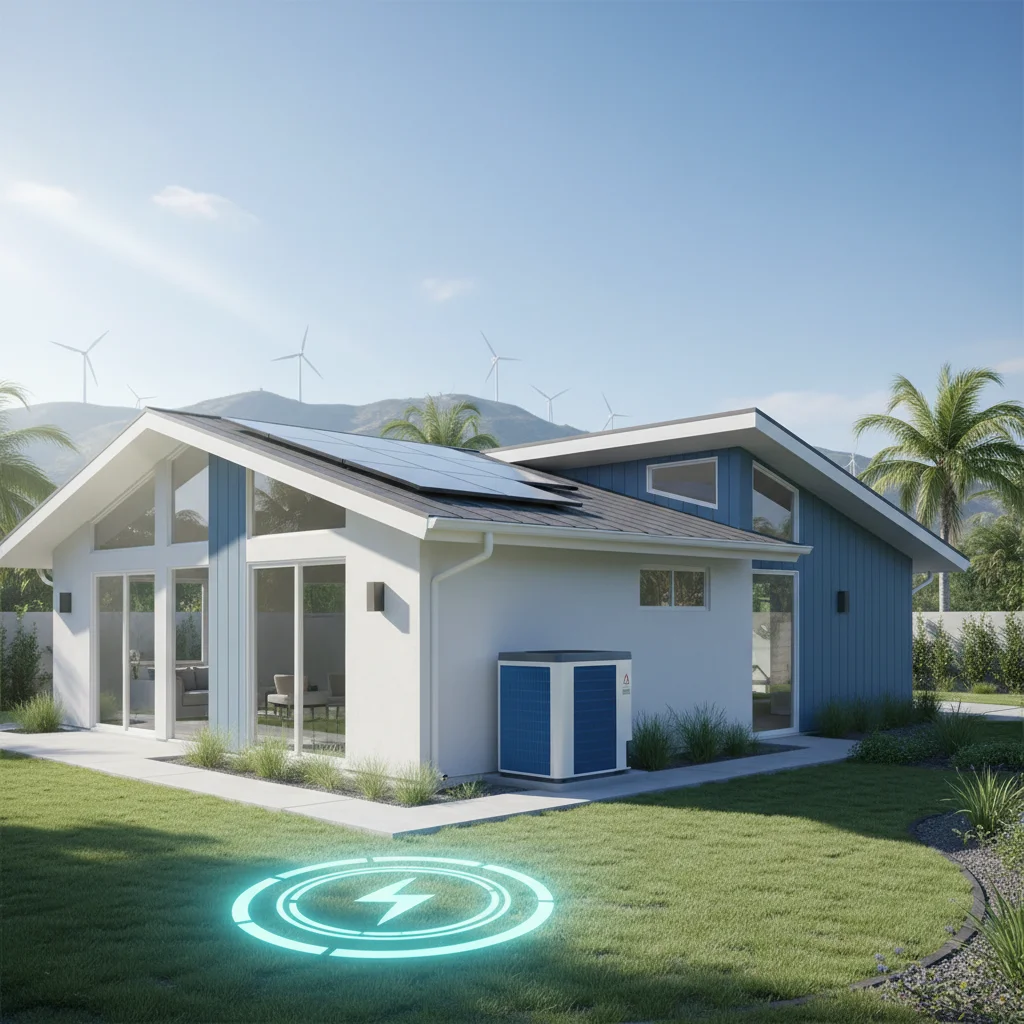
California homeowners replaced 127,000 HVAC systems in 2025, and 68% left money on the table by not claiming available rebates. The average unclaimed amount? $3,200 per household. The federal home energy tax credits (Sections 25C and 25D) ended for projects completed after December 31, 2025 (IRS FS-2025-05).
What HVAC Replacement Rebates Are Available in California Right Now?
California homeowners access HVAC replacement rebates through three primary channels in 2026: utility company programs offering $1,500-$6,000 for heat pump installations, the Tech Clean California initiative providing up to $8,000 for income-qualified households, and local air quality management district incentives worth $3,000-$5,000 for high-efficiency systems. Bay Area Air Quality Management District runs one of the state's most generous programs with $5,000 rebates for ducted heat pumps. South Coast AQMD offers similar amounts for replacing gas furnaces with electric heat pumps. Pacific Gas & Electric customers qualify for $4,500 instant rebates on qualifying heat pump water heaters and $2,000 on central heat pumps. Southern California Edison provides $3,000-$6,000 depending on system efficiency ratings and climate zone.
Answer Capsule: California utility companies and air districts offer HVAC replacement rebates ranging from $1,500 to $8,000 in 2026, with the highest amounts reserved for income-qualified households replacing gas systems with electric heat pumps rated 10 HEER or higher.
So why does this matter? Because the average California household spends $2,100 annually on heating and cooling. A properly rebated heat pump installation cuts that cost by 40-50%, creating $840-$1,050 in annual savings. Over a system's 15-year lifespan, that's $12,600-$15,750 in reduced energy bills. But only if homeowners claim every dollar available.
How Much Can You Save? Breaking Down California's Rebate Amounts by System Type
Ducted air-source heat pumps generate the highest rebate totals in California's 2026 programs. PG&E customers receive $2,000 for systems rated 15 SEER2 or higher. Add the Bay Area AQMD's $5,000 incentive, and total rebates reach $7,000. Mini-split heat pumps qualify for $1,500-$3,000 depending on the number of zones and efficiency ratings. Heat pump water heaters earn $4,500 from most California utilities, representing one of the fastest payback periods at 3-4 years. Ground-source heat pumps, while expensive at $25,000-$40,000 installed, stack rebates from utilities ($3,000) and air districts ($5,000) for total incentives of $8,000.
Answer Capsule: California homeowners save $7,000-$8,000 on HVAC replacements through stacked rebates in 2026, with ducted heat pumps averaging $7,000 in combined utility and air district incentives.
Am I Eligible? Income Limits, Property Type, and Other Key Requirements
California's largest HVAC rebates target households earning 80% or less of area median income. Tech Clean California sets 2026 income limits at $77,200 for a family of four in Los Angeles County and $99,200 in San Francisco County. But middle-income households still qualify for utility rebates without income restrictions. Property type matters less than system specifications. Single-family homes, condos, townhouses, and manufactured homes all qualify if replacing an existing HVAC system. New construction projects don't qualify for replacement rebates. Systems must meet minimum efficiency standards: 15 SEER2 for air-source heat pumps, 10 HEER for heat pump water heaters, and 4.1 COP for ground-source systems. And installation requires a licensed C-20 HVAC contractor to maintain warranty coverage and rebate eligibility.
Answer Capsule: California HVAC rebate eligibility in 2026 requires income at or below 80% area median income for maximum benefits, minimum 15 SEER2 efficiency ratings, and installation by licensed C-20 contractors in existing residential properties.
What Documentation Do You Need to Apply for California HVAC Rebates?
California utilities require proof of purchase, paid invoices showing equipment model numbers, manufacturer specification sheets confirming efficiency ratings, and contractor license verification. Tech Clean California adds income documentation: two years of tax returns, recent pay stubs, or participation in qualified assistance programs like CalFresh or Medi-Cal. Air district rebates need AHRI certification numbers proving the installed system matches approved equipment lists. Homeowners submit applications through utility online portals within 90 days of installation for PG&E and SCE programs. BAAQMD accepts paper applications but processes digital submissions 40% faster, averaging 6 weeks versus 10 weeks for mail-in forms. Heat pump rebates require additional forms for refrigerant disposal and old equipment recycling verification.
Answer Capsule: California HVAC rebate applications in 2026 require paid invoices with model numbers, AHRI certification, contractor license verification, and income documentation for enhanced programs, submitted within 90 days of installation through utility online portals.
What's the Deadline for Filing Your HVAC Rebate in California?
Most California utility rebates operate on a first-come, first-served basis until annual budgets exhaust. PG&E's 2025 heat pump program ran out of funds by October 17. The 2026 allocation opened January 2 and will likely exhaust by September based on current demand projections. SCE processes applications year-round but reserves the right to pause programs when budgets deplete. Bay Area AQMD accepts applications through December 31, 2026, with $12 million allocated for residential HVAC upgrades. Tech Clean California extends through 2030 with $300 million in total funding, but individual project applications must submit within 180 days of work completion. The federal Energy Efficient Home Improvement Credit (Section 25C) ended for property placed in service after December 31, 2025 (IRS FS-2025-05).
Answer Capsule: California utility HVAC rebates in 2026 accept applications until program budgets exhaust, typically by September or October, while air district programs run through December 31, 2026; federal tax credits no longer apply (IRS FS-2025-05).
How Does the California HVAC Rebate Process Work From Start to Finish?
The rebate process starts before equipment purchase. Homeowners verify program eligibility, check current funding availability, and confirm contractor licensing through the California Contractors State License Board database. Contractors provide written estimates including equipment model numbers and efficiency specifications. After homeowner approval, contractors order equipment and schedule installation. Installation day includes old system removal, new system installation, refrigerant disposal documentation, and startup testing. Contractors provide itemized paid invoices, manufacturer spec sheets, and AHRI certificates. Homeowners submit applications through utility portals within program deadlines, uploading all required documentation. Utilities review applications for completeness and accuracy, requesting additional information if needed. Use our free rebate calculator to estimate your total savings before starting the process. Approved rebates arrive as checks or bill credits within 6-10 weeks for utilities and 8-12 weeks for air district programs.
Answer Capsule: California's HVAC rebate process in 2026 requires pre-installation eligibility verification, licensed contractor installation, documentation submission within 90-180 days through online portals, and 6-12 week processing periods before receiving checks or utility bill credits.
California HVAC Rebates vs. Federal Tax Credits: What Still Applies?
Federal tax credits no longer apply (IRS FS-2025-05). State and utility rebates reduce upfront system costs. A $15,000 heat pump installation in San Francisco qualifies for $7,000 in combined PG&E and BAAQMD rebates, reducing net cost to $8,000. Total incentives: $7,000, or 47% of the system cost. But timing matters. Rebates require installation completion and application submission before program funds exhaust. The federal Energy Efficient Home Improvement Credit (Section 25C) ended for property placed in service after December 31, 2025 (IRS FS-2025-05). Federal tax credits for this work have ended, but state, local and utility rebates may still apply; check what is available at your address with the DuloCore rebate calculator.
Answer Capsule: California homeowners use state HVAC rebates worth $7,000-$8,000 in 2026 to cut upfront costs; federal tax credits no longer apply (IRS FS-2025-05).
Official Sources
- ENERGY STAR Rebate Finder — Official federal tool for locating state and local HVAC rebate programs
- Database of State Incentives for Renewables & Efficiency — Comprehensive listing of California energy efficiency incentives and requirements
- U.S. Department of Energy Residential Tax Credits — Federal tax credit guidance for heat pumps and energy-efficient HVAC systems (note: the federal 25C and 25D credits ended for projects completed after December 31, 2025)
Related Reading: Learn more about Free Hvac Replacement Program and Hvac Replacement Rebates 2026.
Frequently Asked Questions
What HVAC systems qualify for California rebates?
California rebates in 2026 cover ducted air-source heat pumps rated 15 SEER2 or higher, ductless mini-split heat pumps with 10 HEER minimum ratings, heat pump water heaters meeting 10 HEER standards, and ground-source heat pumps with 4.1 COP efficiency. Traditional gas furnaces and air conditioners don't qualify for most programs. Systems must appear on utility approved equipment lists and carry AHRI certification proving rated performance.
How much money can you get from HVAC replacement rebates in California?
Total California HVAC rebates in 2026 range from $1,500 for basic mini-splits to $8,000 for ground-source heat pumps when combining utility incentives ($1,500-$6,000), air district programs ($3,000-$5,000), and income-qualified enhancements ($2,000-$8,000). Average ducted heat pump installations receive $7,000 in combined incentives. Calculate your specific savings with our rebate calculator based on system type and location. (Note: Federal tax credit percentages and availability are subject to change; the 30% Residential Clean Energy Credit under Section 25D expired December 31, 2025. Verify current incentives at energy.gov.)
Do you need a contractor license to claim HVAC rebates in California?
California requires licensed C-20 HVAC contractors to perform all work eligible for rebates. Homeowners cannot install systems themselves and claim incentives. Unlicensed contractors void rebate eligibility and potentially violate state law for projects exceeding $500. Utilities verify contractor licensing through CSLB databases during application review. Using unlicensed labor results in automatic rebate denial.
What is the deadline to apply for California HVAC rebates?
California utility rebates require applications within 90 days of installation completion before program budgets exhaust, typically by September or October 2026. Bay Area AQMD accepts submissions through December 31, 2026. Tech Clean California allows 180 days from project completion through 2030. The federal Energy Efficient Home Improvement Credit (Section 25C) ended for property placed in service after December 31, 2025 (IRS FS-2025-05).
Are heat pumps eligible for the same rebates as traditional HVAC systems in California?
Heat pumps receive significantly higher California rebates than traditional gas furnaces or air conditioners in 2026. While gas systems qualify for minimal efficiency incentives of $200-$500, electric heat pumps access $1,500-$8,000 in state and utility programs. This policy shift reflects California's building decarbonization goals and 2030 emissions reduction targets. Traditional HVAC systems don't qualify for air district incentives or Tech Clean California funding.
Ready to claim your California HVAC rebates? Use DuloCore's free rebate calculator to find every dollar available for your home. Enter your zip code, system type, and household income to see personalized incentive amounts from utilities, air districts, and federal programs. Start saving money today.
Updated: April 14, 2026 — fact-checked by DuloCore Research. About our editorial process.
Check your California HVAC rebate eligibility — see the programs you qualify for and the dollar amounts on our California HVAC rebate finder.