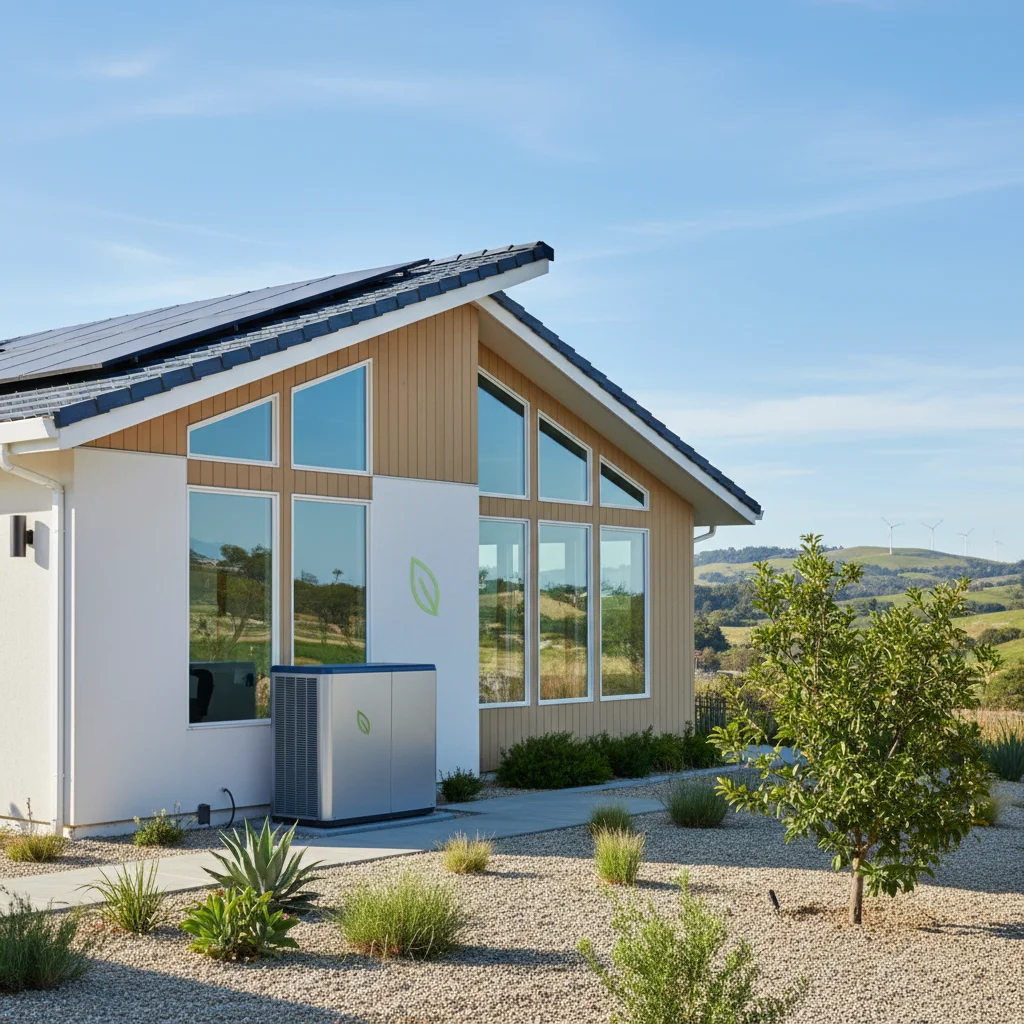
Stockton homeowners who upgraded to high-efficiency HVAC systems in 2026 claimed an average of $6,200 in combined federal and utility rebates—enough to cover 35-40% of total installation costs. And with California's grid modernization push accelerating, the California Energy Commission expanded rebate funding by $240 million this year, making 2026 the most lucrative window for HVAC upgrades in the state's history. But program caps and first-come funding mean early applicants secure the largest incentives while late filers scramble for dwindling allocations.
What HVAC rebates are currently available in Stockton, California?
Stockton residents in 2026 access three rebate layers: federal IRA tax credits covering 30% of heat pump costs up to $2,000, SMUD rebates ranging from $500 to $3,000 for qualifying systems, and California TECH Clean California initiative funding up to $3,000 for low-income households. SMUD administers rebates for Sacramento Municipal Utility District customers, including Stockton's service area, with the highest payouts reserved for ductless mini-splits and central heat pumps achieving 18+ SEER2 ratings. The federal credit operates as a tax reduction—homeowners claim the amount when filing 2026 returns—while SMUD rebates arrive as direct payments 6-8 weeks post-installation.
So the rebate stack creates a compounding effect: a $10,000 heat pump installation generates $3,000 from the federal credit, $2,000 from SMUD, and potentially $3,000 from TECH Clean California—totaling $8,000 in savings. But eligibility rules differ across programs, requiring homeowners to verify income thresholds, system specifications, and contractor certifications before purchasing equipment.
How much money can you save with Stockton HVAC rebates in 2026?
Average savings range from $3,500 to $8,000 depending on system type and household income. And households earning below 80% of San Joaquin County's area median income—$74,400 for a family of four in 2026—unlock the full TECH Clean California $3,000 rebate on top of federal and SMUD incentives. Central ducted heat pumps replacing gas furnaces generate the largest savings: $10,000 installation cost minus $3,000 federal credit, minus $2,500 SMUD rebate, minus $3,000 TECH rebate equals $1,500 out-of-pocket.
Ductless mini-split systems cost less upfront ($6,000-$8,000) but receive smaller SMUD rebates of $500-$1,500, bringing total savings to $4,000-$5,500. Gas furnace replacements qualify for $300-$800 SMUD rebates when systems meet 95%+ AFUE efficiency, though the federal credit excludes non-electric systems. So electric heat pumps deliver 3-4 times the rebate value compared to high-efficiency gas equipment.
Use our free rebate calculator to model your specific savings based on current equipment, home size, and income level—the tool pulls live rebate data from SMUD and California programs updated weekly.
What are the eligibility requirements for HVAC rebates in Stockton?
Federal IRA credits require systems meet ENERGY STAR Version 6.1 specifications—18 SEER2 for central heat pumps, 16 SEER2 for ductless mini-splits, and 95 AFUE for gas furnaces. SMUD rebates demand pre-approval before equipment purchase, verification of existing system age (10+ years for maximum rebates), and installation by SMUD-approved contractors carrying active C-20 licenses. And TECH Clean California restricts eligibility to households below 80% AMI with documentation of prior-year income through tax returns or paystubs.
Primary residences qualify for all programs—vacation homes and rental properties excluded. Homeowners must occupy the Stockton property as their main residence for the full tax year, though rentals qualify for commercial rebate programs with different structures. So investors replacing HVAC systems in rental units apply through SMUD's business rebate track instead of residential programs.
Equipment must replace existing systems, not supplement them. Installing a second heat pump in a home with a working furnace disqualifies the application, though replacing a 15-year-old air conditioner with a heat pump counts as a qualifying replacement.
What documentation do you need to apply for HVAC rebates in Stockton?
SMUD rebate applications require contractor invoices showing equipment model numbers, AHRI certification numbers proving SEER2/HSPF2 ratings, proof of payment, and photos of installed outdoor units with visible serial numbers. Form 5695 only covers qualifying work completed by December 31, 2025 and claimed on a 2025 return; the federal 25C and 25D credits ended after that date (IRS FS-2025-05). Federal tax credits for this work have ended, but state, local and utility rebates may still apply; check what is available at your address with the DuloCore rebate calculator. And TECH Clean California applicants submit prior-year tax returns, household income verification, utility bills proving service address, and contractor W-9 forms.
Pre-approval documentation for SMUD includes photos of existing equipment nameplates showing age and efficiency ratings, utility account numbers, and contractor license verification. Applications submitted without complete documentation face 4-6 week delays while SMUD requests missing items, pushing rebate checks into the next funding cycle or budget period.
"California's TECH Clean California initiative provides up to $3,000 for qualifying heat pump installations in low-to-moderate income households, stacking with federal tax credits and utility rebates." — California Energy Commission TECH Initiative
Homeowners retain copies of all receipts for 7 years in case of IRS audits—the agency spot-checks 2-3% of energy credit claims annually, requesting proof of purchase and certification documents.
What is the deadline to apply for HVAC rebates in Stockton?
SMUD rebates operate on annual budget cycles, with 2026 funding lasting until December 31, 2026, or until allocated funds deplete—historical data shows high-demand programs exhaust budgets by October. The federal Energy Efficient Home Improvement Credit (Section 25C) ended for property placed in service after December 31, 2025 (IRS FS-2025-05). And TECH Clean California applications close when the state's $310 million allocation runs out, projected for late 2026 or early 2027 based on current claim velocity.
So timing drives strategy: applications submitted in Q1 2026 secured guaranteed funding, while Q4 applicants compete for remaining dollars. SMUD processes rebates in 6-8 weeks when funding remains available, but applications exceeding budget allocations roll into the next fiscal year with no payment guarantee.
Installations completed before December 31, 2026, qualify for 2026 tax credits regardless of when homeowners file returns—April 2027 filers claim the same credit as October 2027 filers. But SMUD and TECH rebates require applications within 90 days of installation completion, disqualifying projects where homeowners delay paperwork beyond the submission window.
How does the HVAC rebate application process work in Stockton?
Homeowners start with SMUD pre-approval by logging into their utility account, selecting the HVAC rebate program, and uploading photos of existing equipment. SMUD reviews applications within 5-7 business days, issuing approval codes required for contractor installations. Contractors then install qualifying equipment, providing invoices and certification documents to homeowners within 3 business days.
Homeowners submit final rebate applications through SMUD's online portal, attaching contractor invoices, equipment photos, and manufacturer certifications. SMUD verifies installations through field inspections for systems claiming $2,000+ rebates, adding 2-3 weeks to processing timelines. And payments arrive as direct deposits to bank accounts on file or mailed checks within 6-8 weeks of approval.
Form 5695 only covers qualifying work completed by December 31, 2025 and claimed on a 2025 return; the federal 25C and 25D credits ended after that date (IRS FS-2025-05). The form calculates 30% of qualified expenses, reducing total tax liability dollar-for-dollar. So a $10,000 heat pump installation generates a $3,000 credit, lowering federal taxes owed from $8,000 to $5,000.
TECH Clean California applications flow through participating contractors who submit paperwork on behalf of homeowners, deducting rebate amounts from final invoices as instant point-of-sale discounts. This structure eliminates the reimbursement wait, delivering $3,000 savings at installation rather than months later.
For complete guidance on stacking multiple rebates, see our heat pump rebates breakdown and explore energy tax credits for broader federal incentive strategies.
Official Sources
- IRS Energy Incentives for Individuals — Federal tax credit details for residential energy improvements (note: the federal 25C and 25D credits ended for projects completed after December 31, 2025)
- ENERGY STAR Heat Pump Specifications — Efficiency requirements for qualifying equipment
- DSIRE California Incentives Database — Comprehensive state and utility rebate listings
Frequently Asked Questions
What HVAC rebates are available in Stockton California?
Stockton homeowners access three rebate sources in 2026: federal IRA tax credits covering 30% of heat pump costs up to $2,000, SMUD utility rebates from $500 to $3,000 for qualifying systems, and TECH Clean California grants up to $3,000 for income-qualified households. Combined savings range from $3,500 to $8,000 depending on system type and household income. Federal credits apply to tax returns while SMUD rebates arrive as direct payments.
How much can I save with HVAC rebates in Stockton?
Total savings reach $8,000 for income-qualified households installing central heat pumps: $3,000 federal credit + $2,500 SMUD rebate + $3,000 TECH Clean California grant. Standard installations without income qualification save $4,500-$5,500 through federal and SMUD programs alone. Ductless mini-splits generate $4,000-$5,500 in total rebates, while high-efficiency gas furnaces qualify for smaller $300-$800 SMUD rebates without federal credits.
Am I eligible for HVAC rebates in Stockton California?
Eligibility requires primary residence in SMUD's service area, replacement of existing 10+ year old equipment, and installation of ENERGY STAR certified systems meeting 18 SEER2 minimums for heat pumps. TECH Clean California restricts participation to households earning below 80% of San Joaquin County area median income—$74,400 for a family of four in 2026. SMUD-approved contractors must perform installations, and pre-approval applications precede equipment purchases.
What is the process for claiming HVAC rebates in Stockton?
Submit SMUD pre-approval applications before equipment purchase, install qualifying systems through approved contractors, then file final rebate applications within 90 days of completion. SMUD processes rebates in 6-8 weeks, delivering payments via direct deposit or check. Form 5695 only covers qualifying work completed by December 31, 2025 and claimed on a 2025 return; the federal 25C and 25D credits ended after that date (IRS FS-2025-05). TECH Clean California rebates apply as instant point-of-sale discounts through participating contractors.
When do HVAC rebates expire in California?
SMUD's 2026 rebate budget expires December 31, 2026, or when funds deplete—typically by October based on historical claim volumes. The federal Energy Efficient Home Improvement Credit (Section 25C) ended for property placed in service after December 31, 2025 (IRS FS-2025-05). TECH Clean California applications close when the state's $310 million allocation exhausts, projected for late 2026 or early 2027. Applications submitted after funding depletion receive no guarantees of payment.
Ready to calculate your exact savings? Our rebate calculator combines federal, state, and utility incentives to show your total out-of-pocket cost for HVAC upgrades. Enter your zip code, system type, and household income to see instant rebate estimates—updated weekly with current program availability. Start your application today and lock in 2026's peak rebate funding before allocations run out.
Last reviewed: April 14, 2026. Reviewed by DuloCore Energy Specialists. About the team.
Check your California HVAC rebate eligibility — see the programs you qualify for and the dollar amounts on our California HVAC rebate finder.