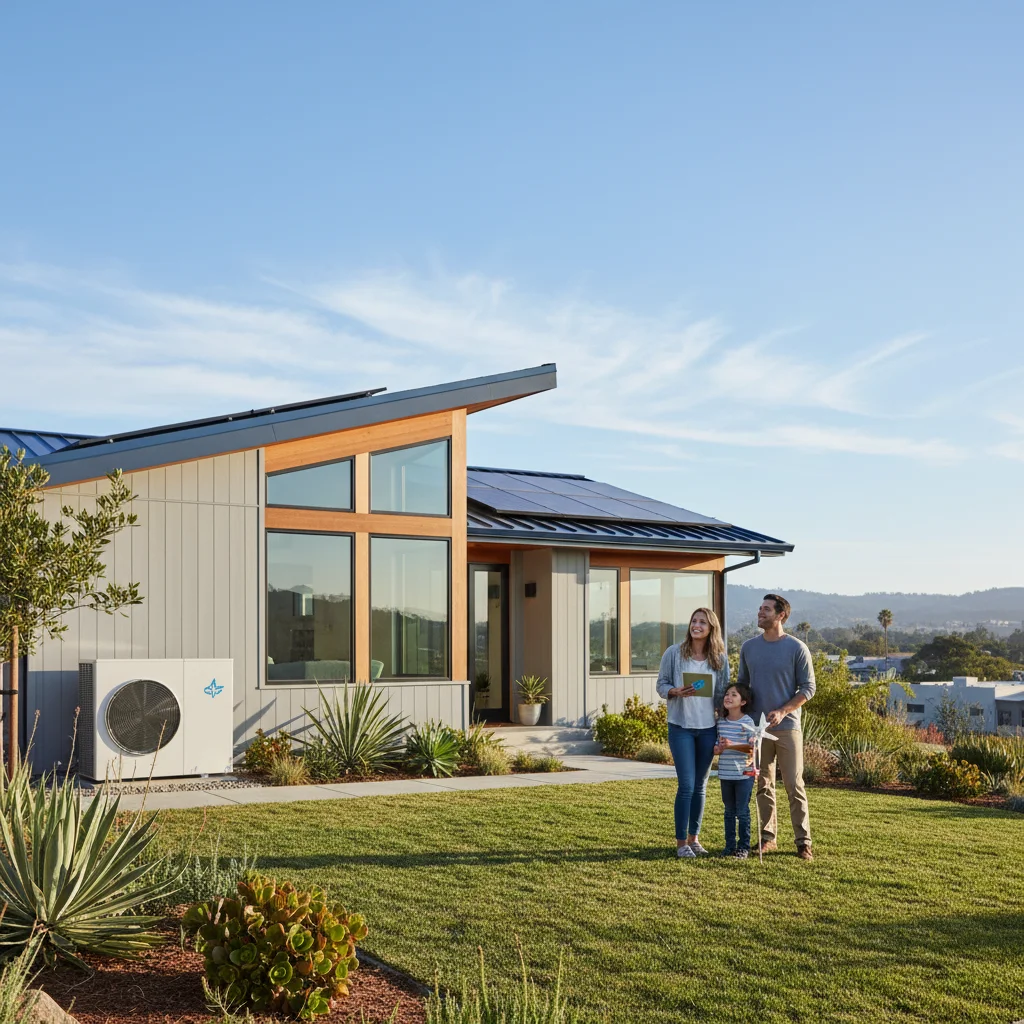
San Jose homeowners replaced over 4,200 HVAC systems in 2025 with rebate support totaling $11.3 million from local utilities and state programs. And 2026 brings expanded rebate tiers that stack federal, state, and utility incentives for total savings reaching $14,000 on high-efficiency heat pump installations. But program funding depletes fast—Pacific Gas & Electric's 2025 HVAC rebate pool ran dry by October, leaving hundreds of late applicants without the $3,500 utility rebate they'd counted on.
What HVAC Rebates Are Available in San Jose Right Now?
San Jose homeowners access three rebate layers in 2026: PG&E's Energy Efficiency Program offers $500-$3,500 for qualifying heat pumps and central AC systems, California's TECH Clean California program provides $1,000-$3,000 for heat pump installations, and federal IRA tax credits cover 30% of equipment and installation costs up to $2,000 annually. PG&E's Energy Efficiency Program operates on a tiered structure—$500 for 15 SEER2 systems, $1,500 for 16 SEER2, and $3,500 for cold-climate heat pumps rated 18 SEER2 or higher. TECH Clean California prioritizes income-qualified households with rebates up to $3,000 for all-electric conversions from gas furnaces. The federal credit applies to equipment placed in service during 2026, covering heat pumps, central air conditioners, and qualifying furnaces.
Stack all three layers and installation costs drop by 40-60%. But San Jose sits in PG&E territory where rebate funds operate on first-come allocation—once the annual budget exhausts, applications enter a waitlist. And heat pump rebates deliver the highest combined incentives because they qualify for all three programs simultaneously.
How Much Money Can You Actually Save With San Jose HVAC Rebates?
A standard 3-ton heat pump installation costs $12,000-$18,000 in San Jose before incentives. Combine PG&E's $3,500 rebate with TECH Clean California's $2,000 rebate and the federal 30% tax credit ($3,600-$5,400), and total savings reach $9,100-$10,900. So net out-of-pocket drops to $2,900-$8,900 depending on system specifications and household income tier. Income-qualified households earning below 80% Area Median Income unlock enhanced TECH Clean California rebates reaching $3,000, pushing total combined incentives past $12,000 on a $15,000 installation. But savings vary by equipment efficiency—standard 14 SEER2 systems qualify only for the federal credit, while 18 SEER2 cold-climate heat pumps unlock all three incentive layers.
PG&E's 2025 data shows average rebate payments of $2,680 per HVAC installation across 4,200+ projects. And systems replacing gas furnaces with electric heat pumps capture additional building electrification bonuses from state programs. Use the rebate calculator to model your specific savings based on current equipment, home size, and income level.
What Are the Eligibility Requirements and Documentation You'll Need?
PG&E HVAC rebates require active PG&E electric or gas service, equipment meeting minimum efficiency thresholds (15 SEER2 for AC, 8.5 HSPF2 for heat pumps), and installation by a BayREN or PG&E Trade Ally contractor. TECH Clean California adds income verification for enhanced tiers—households submit recent tax returns or pay stubs proving income below 80% AMI ($108,200 for a family of four in Santa Clara County). Form 5695 only covers qualifying work completed by December 31, 2025 and claimed on a 2025 return; the federal 25C and 25D credits ended after that date (IRS FS-2025-05). Federal tax credits for this work have ended, but state, local and utility rebates may still apply; check what is available at your address with the DuloCore rebate calculator. Contractors provide Manufacturer Certification Statements confirming efficiency ratings, and homeowners retain all invoices showing equipment model numbers, installation dates, and total project costs.
San Jose building permits aren't explicitly required for rebate eligibility, but most contractors pull permits automatically for HVAC changeouts. And PG&E conducts random post-installation inspections verifying equipment matches rebate applications—mismatched model numbers trigger rebate clawbacks. Store all documentation for seven years to satisfy IRS audit requirements on energy tax credits.
What's the Deadline for San Jose HVAC Rebate Applications?
PG&E accepts HVAC rebate applications within 180 days of installation completion or final inspection, whichever occurs last. TECH Clean California operates on a rolling basis with no hard deadline but suspends new applications once annual funding allocates—2025 funding exhausted by November 12. The federal tax credit operates on a tax year basis—equipment installed during 2026 gets claimed on 2026 tax returns filed by April 15, 2027. But rebate applications submitted after funding depletion enter waitlists that may extend 6-12 months until the next budget cycle. PG&E's 2026 HVAC rebate allocation opens January 1 with $47 million budgeted for residential efficiency upgrades—historically, this funding lasts 9-11 months based on application volume.
San Jose contractors report 40% faster rebate processing for applications submitted within 60 days of installation versus those approaching the 180-day limit. And late-year installations risk missing funding cutoffs—systems installed in October-December face higher rejection rates as annual budgets deplete. Plan installations for Q1 or Q2 2026 to maximize rebate availability.
Can You Stack Multiple Rebates, and Which Utilities Offer Them?
Yes—federal, state, and utility rebates stack without coordination requirements. A single HVAC installation qualifies simultaneously for the IRS tax credit (federal), TECH Clean California rebate (state), and PG&E Energy Efficiency Program rebate (utility). But stacking doesn't reduce individual rebate amounts—each program calculates independently based on its own eligibility criteria. San Jose homeowners receive service exclusively from Pacific Gas & Electric for both gas and electric utilities, so all utility-level rebates originate from PG&E programs. Municipal utilities like San Jose Clean Energy offer supplemental incentives through BayREN partnerships but don't operate separate HVAC rebate programs.
Stacking rules prohibit "double-dipping" on the same cost basis—the federal tax credit calculates on the full installation cost before subtracting state and utility rebates. So a $15,000 installation with $5,500 in combined PG&E and TECH rebates still qualifies for 30% federal credit (this federal credit ended for property placed in service after December 31, 2025) on the full $15,000 ($4,500), not the reduced $9,500 net cost. And HVAC efficiency improvements that lower electricity consumption below baseline usage trigger additional bill savings averaging $840 annually for San Jose households.
Do You Need Pre-Approval Before Installing Your HVAC System?
PG&E HVAC rebates don't require pre-approval—homeowners submit applications after installation completion with proof of purchase and equipment specifications. TECH Clean California operates differently: income-qualified rebates demand pre-approval through an application portal before installation begins. Contractors initiate pre-approval by submitting household income documentation and project details—approval timelines average 14-21 days. So installations starting before pre-approval confirmation risk rebate forfeiture if the application gets denied. Form 5695 only covers qualifying work completed by December 31, 2025 and claimed on a 2025 return; the federal 25C and 25D credits ended after that date (IRS FS-2025-05).
But pre-approval isn't mandatory for standard PG&E rebates, creating flexibility for emergency replacements. San Jose HVAC contractors report 30% of installations occur as emergency replacements when existing systems fail during extreme weather—these projects can't wait for multi-week pre-approval cycles. And post-installation rebate applications succeed at 94% approval rates when contractors verify equipment eligibility before purchase.
Official Sources
- ENERGY STAR HVAC Resources — Federal efficiency standards and product certification
- Database of State Incentives for Renewables & Efficiency — Comprehensive directory of state and utility rebate programs
- IRS Energy Efficient Home Improvement Credit — Federal tax credit guidance and filing requirements (note: the federal 25C and 25D credits ended for projects completed after December 31, 2025)
Frequently Asked Questions
What HVAC rebates are available in San Jose?
San Jose homeowners access three rebate sources in 2026: PG&E offers $500-$3,500 based on equipment efficiency, TECH Clean California provides $1,000-$3,000 for heat pump installations with enhanced amounts for income-qualified households, and the federal IRA tax credit covers 30% of equipment and installation costs up to $2,000 annually. All three programs stack without coordination requirements. Cold-climate heat pumps rated 18 SEER2 or higher qualify for maximum rebates across all three tiers.
How much can you save with HVAC rebates in San Jose?
Combined federal, state, and utility rebates reduce HVAC installation costs by $9,100-$12,000 depending on equipment specifications and household income. A typical $15,000 heat pump installation qualifies for $3,500 from PG&E, $2,000-$3,000 from TECH Clean California, and $4,500 from the federal tax credit. Income-qualified households earning below 80% Area Median Income ($108,200 for a family of four) unlock enhanced state rebates reaching $3,000, pushing total savings past $12,000.
Are you eligible for San Jose HVAC rebates?
Homeowners with active PG&E service qualify for utility rebates by installing equipment meeting minimum efficiency thresholds: 15 SEER2 for central AC and 8.5 HSPF2 for heat pumps. TECH Clean California rebates require income documentation for enhanced tiers—households earning below 80% Area Median Income qualify for maximum amounts. All rebates require installation by licensed contractors, and PG&E rebates specifically require Trade Ally certification.
What is the process to claim HVAC rebates in San Jose?
Submit PG&E rebate applications within 180 days of installation completion through the utility's online portal, attaching contractor invoices and equipment certification statements. TECH Clean California applications require pre-approval before installation—contractors initiate applications through the program website with income documentation and project details. Form 5695 only covers qualifying work completed by December 31, 2025 and claimed on a 2025 return; the federal 25C and 25D credits ended after that date (IRS FS-2025-05). Contractors provide all necessary documentation at project completion—retain copies for seven years to satisfy IRS audit requirements.
When is the deadline for San Jose HVAC rebates?
PG&E accepts applications within 180 days of installation completion, TECH Clean California operates on rolling funding that historically exhausts by November, and the federal tax credit operates on a tax year basis with returns filed by April 15, 2027 for 2026 installations. PG&E's 2026 funding allocation of $47 million opens January 1 and typically lasts 9-11 months. Applications submitted after funding depletion enter waitlists extending 6-12 months. Plan installations for Q1 or Q2 2026 to maximize rebate availability before annual budgets exhaust.
Ready to calculate your exact HVAC rebate savings? Use our free rebate calculator to see how much you'll save with federal, state, and utility incentives on your specific installation. Enter your ZIP code, system type, and household income to get personalized rebate estimates in under 60 seconds.
Last updated April 14, 2026 — reviewed by DuloCore Editorial. About our authors.
Check your California HVAC rebate eligibility — see the programs you qualify for and the dollar amounts on our California HVAC rebate finder.