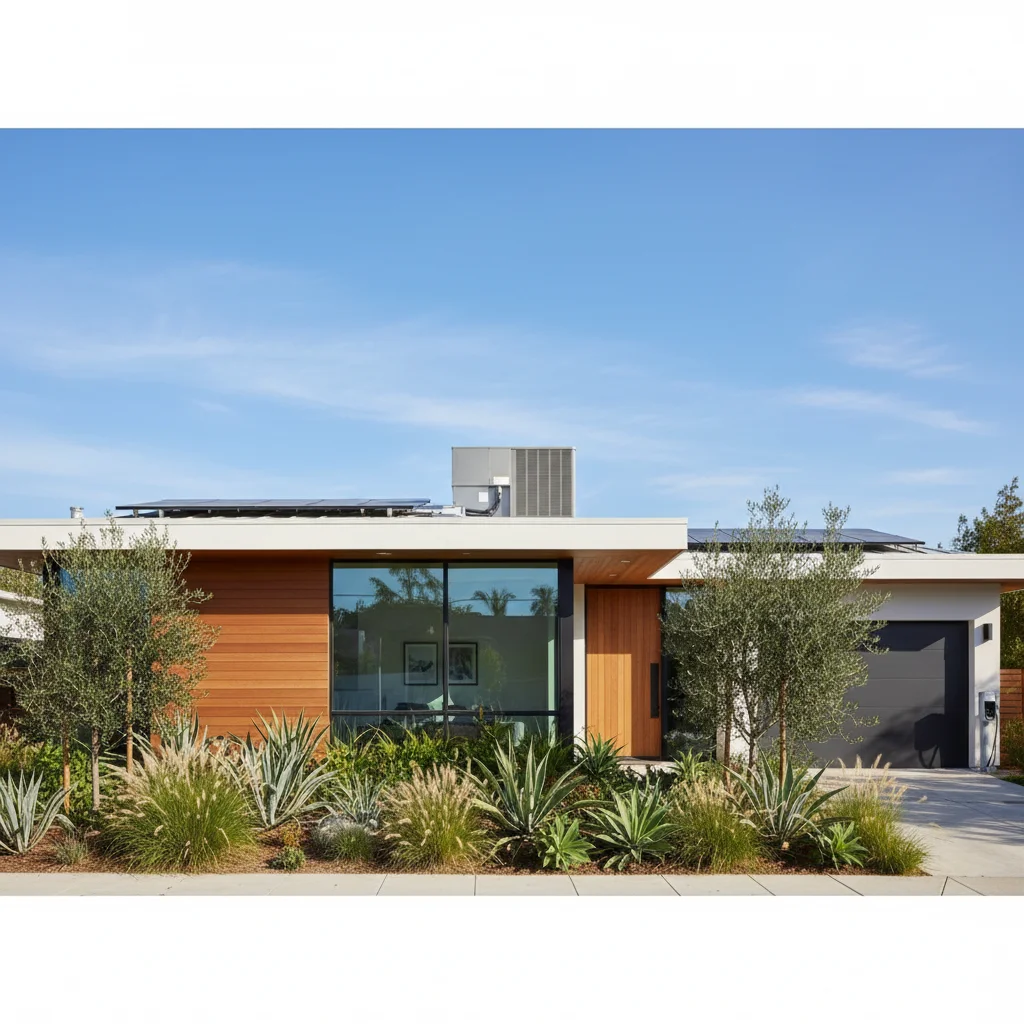
Los Angeles homeowners replaced 47,000 aging air conditioners and furnaces in 2025, but fewer than 8% claimed the available rebates and tax credits worth up to $14,000 per household. And that money doesn't roll over—most rebate programs reset each fiscal year, meaning unclaimed funds simply vanish. The 2026 HVAC rebate landscape in Los Angeles has shifted dramatically since federal programs expired and state incentives restructured, creating both new opportunities and confusing gaps for homeowners who don't know where to look.
What HVAC rebates are currently available in Los Angeles in 2026?
Los Angeles homeowners in 2026 qualify for HVAC rebates through three primary channels: California's TECH Clean California program, the Los Angeles Department of Water and Power (LADWP) Residential Efficiency Program, and Southern California Edison's Energy Efficiency Rebate program. TECH Clean California offers up to $8,000 for heat pump installations in moderate-income households. LADWP provides $1,500-$3,000 for high-efficiency air conditioning units and $500-$1,000 for smart thermostats. SCE delivers $500-$2,000 for qualifying HVAC upgrades depending on equipment efficiency ratings and home size.
But the federal landscape changed completely on January 1, 2026, when the old Section 25C and 25D tax credits expired. The federal Energy Efficient Home Improvement Credit (Section 25C) ended for property placed in service after December 31, 2025 (IRS FS-2025-05). Federal tax credits for this work have ended, but state, local and utility rebates may still apply; check what is available at your address with the DuloCore rebate calculator. So a $10,000 heat pump system generates a $3,000 federal credit, stackable with state and utility rebates. And geothermal heat pump systems qualify for the same 30% credit with no dollar limit, making them financially viable for homeowners with suitable property.
The federal Energy Efficient Home Improvement Credit (Section 25C) ended for property placed in service after December 31, 2025 (IRS FS-2025-05).
California's grid demands create additional incentive layers. LADWP customers who install qualifying HVAC systems with load-shifting capabilities receive bonus rebates of $300-$700 for participating in demand-response programs. SCE's Summer Discount Plan pays homeowners $50-$200 annually for allowing utility control during peak demand events. These programs stack with equipment rebates, creating multi-year savings beyond the initial installation incentive.
How much money can you save with Los Angeles HVAC rebates?
A typical Los Angeles homeowner installing a $12,000 heat pump system in 2026 captures $3,600 from the federal IRA tax credit, $2,500 from TECH Clean California, $1,500 from LADWP, and $800 from SCE, totaling $8,400 in combined incentives—a 70% cost reduction. And those numbers represent conservative mid-tier equipment, not premium installations. Households in disadvantaged communities qualify for enhanced TECH rebates reaching $14,000 for comprehensive electrification projects that bundle HVAC with water heating and cooking upgrades.
But savings extend beyond upfront rebates. ENERGY STAR-certified heat pumps reduce cooling costs by 30-40% compared to standard air conditioners, translating to $400-$800 annually for typical Los Angeles homes. Smart thermostats save an additional 10-23% on heating and cooling bills, adding $80-$200 per year. So the total five-year economic benefit—rebates plus energy savings—reaches $12,000-$16,000 for comprehensive HVAC upgrades.
Use our free rebate calculator to find your exact savings based on your current system and home characteristics. The calculator incorporates 2026 program rules, income qualifications, and equipment efficiency ratings to generate accurate rebate estimates.
Geothermal systems present a different equation. Installation costs run $20,000-$35,000, but the 30% federal credit (this federal credit ended for property placed in service after December 31, 2025) delivers $6,000-$10,500 in immediate savings. California's Self-Generation Incentive Program adds $1,000-$2,000 for geothermal installations paired with battery storage. And geothermal systems reduce HVAC operating costs by 50-70% compared to conventional systems, creating payback periods of 7-12 years despite higher upfront costs.
What are the eligibility requirements for HVAC rebates in Los Angeles?
TECH Clean California rebates require household income below 80% of Area Median Income ($73,000 for a family of four in Los Angeles County) and replacement of an existing fossil fuel heating system. LADWP rebates apply to all residential customers within the utility service area, with no income restrictions, but mandate retirement of functional equipment at least 10 years old. SCE rebates require installation by a licensed contractor enrolled in SCE's Quality Installation program and equipment meeting minimum 16 SEER2 cooling efficiency ratings.
Federal IRA tax credits require primary residence occupancy—investment properties and vacation homes don't qualify. Equipment must meet or exceed ENERGY STAR Most Efficient 2026 criteria, which sets minimum 18 SEER2 for air conditioners and 9 HSPF2 for heat pumps. The federal Energy Efficient Home Improvement Credit (Section 25C) ended for property placed in service after December 31, 2025 (IRS FS-2025-05). And homeowners must have sufficient tax liability to absorb the credit, though unused portions can roll forward to subsequent tax years.
But geographic boundaries matter. LADWP serves central and western Los Angeles, while SCE covers eastern neighborhoods including Eagle Rock, Highland Park, and portions of the San Fernando Valley. Pasadena Water and Power, Burbank Water and Power, and Glendale Water and Power operate separate rebate programs with different eligibility rules. Homeowners must verify their utility provider before applying.
Disadvantaged community status multiplies rebate amounts. Census tracts identified in California's CalEnviroScreen tool as scoring in the top 25% for pollution burden qualify for enhanced incentives. Los Angeles neighborhoods including Wilmington, South Los Angeles, East Los Angeles, and Pacoima meet this threshold, unlocking $4,000-$6,000 in additional rebate funding through TECH Clean California.
What is the application process for claiming HVAC rebates?
LADWP requires pre-approval before equipment purchase. Homeowners submit online applications through the LADWP rebate portal, receive conditional approval within 5-10 business days, complete installation within 180 days, and upload final invoices and Title-24 compliance certificates. Payment arrives via check or bill credit within 6-8 weeks of documentation submission.
SCE rebates follow a post-installation model. Homeowners or contractors submit applications through SCE's online portal within 90 days of installation completion, attaching invoices, equipment specifications, and contractor license verification. SCE processes claims within 4-6 weeks, issuing payment via check or direct deposit. And contractors enrolled in SCE's Midstream Program can apply instant rebates at point of sale, reducing customer out-of-pocket costs immediately.
TECH Clean California requires income verification and pre-inspection. Homeowners contact participating contractors who manage the entire application process, including income documentation, energy assessment, equipment selection, installation, and final inspection. The program pays contractors directly, reducing homeowner upfront costs. Processing timelines run 8-12 weeks from initial application to project completion, depending on contractor scheduling and inspection availability.
Federal IRA tax credits require no pre-approval. Form 5695 only covers qualifying work completed by December 31, 2025 and claimed on a 2025 return; the federal 25C and 25D credits ended after that date (IRS FS-2025-05). The credit reduces tax liability dollar-for-dollar. And tax preparation software like TurboTax and H&R Block includes guided workflows for claiming energy tax credits, simplifying the process for most filers.
When do HVAC rebate deadlines expire in Los Angeles?
LADWP's 2026 residential rebate budget of $28 million operates on a first-come, first-served basis until funds exhaust, typically occurring in October or November. The program resets each fiscal year on July 1, releasing new funding allocations. SCE's rebate programs run continuously with no fixed expiration date, but budgets replenish annually and can deplete during peak summer months when installation demand surges.
TECH Clean California received $180 million in 2026 state funding, sufficient to support approximately 22,000 household electrification projects. Current application volume suggests funds will last through Q3 2026, but high demand in Los Angeles County could accelerate depletion. The program provides 60-day advance notice before closing applications, posted on the TECH Clean California website.
But federal IRA tax credits operate on a different timeline. The federal home energy tax credits (Sections 25C and 25D) ended for projects completed after December 31, 2025 (IRS FS-2025-05). Equipment must be installed and placed in service by that date. The federal Energy Efficient Home Improvement Credit (Section 25C) ended for property placed in service after December 31, 2025 (IRS FS-2025-05).
Seasonal timing affects rebate availability. LADWP and SCE budgets deplete fastest during May-August when air conditioning failures spike and homeowners rush replacements. Applications submitted in January-March face shorter processing times and higher fund availability. So planning HVAC replacements during shoulder seasons maximizes rebate capture probability and reduces installation costs due to lower contractor demand.
How do Los Angeles HVAC rebates compare to federal tax credits?
Los Angeles utility rebates provide immediate point-of-sale discounts or bill credits within 6-8 weeks. A homeowner installing a $10,000 heat pump in June 2026 receives $1,500-$3,000 from LADWP or SCE within 8 weeks. The federal Energy Efficient Home Improvement Credit (Section 25C) ended for property placed in service after December 31, 2025 (IRS FS-2025-05).
State and utility rebates cap at fixed dollar amounts regardless of equipment cost. LADWP's maximum $3,000 rebate applies whether the system costs $8,000 or $15,000. The federal Energy Efficient Home Improvement Credit (Section 25C) ended for property placed in service after December 31, 2025 (IRS FS-2025-05). So premium $18,000 heat pump systems generate $5,400 in federal credits, exceeding typical utility rebate amounts.
Stacking creates optimization opportunities. California explicitly allows combining TECH Clean California rebates with utility incentives and federal tax credits. A moderate-income household replacing a gas furnace with a heat pump captures $8,000 from TECH, $2,000 from LADWP, and $3,600 from the IRA credit—$13,600 total for a $12,000 installation, resulting in net positive cash flow.
"Rebates and tax credits for residential energy efficiency improvements can be combined under most state and federal programs, maximizing homeowner savings." — Database of State Incentives for Renewables & Efficiency
But tax credit value depends on tax liability. Homeowners owing less than $3,000 in federal taxes can't fully utilize a $3,000 credit in the installation year, though carryforward provisions allow applying unused amounts to future years. LADWP and SCE rebates deliver full value regardless of income or tax status, making them more valuable for lower-income households with minimal tax liability.
Official Sources
- U.S. Department of Energy - Energy Saver — Federal guidance on energy efficiency rebates, tax credits, and HVAC efficiency standards (note: the federal 25C and 25D credits ended for projects completed after December 31, 2025)
- DSIRE - Database of State Incentives for Renewables & Efficiency — Comprehensive database of state and utility rebate programs across California
- IRS Energy Incentives — Official tax credit information for residential clean energy installations (note: the federal 25C and 25D credits ended for projects completed after December 31, 2025)
Related Reading: Learn more about Solar Rebates For Nonprofits and Solar Shingles Rebates And Incentives.
Frequently Asked Questions
What HVAC rebates are available in Los Angeles?
Los Angeles homeowners in 2026 access rebates through LADWP ($1,500-$3,000 for high-efficiency AC), SCE ($500-$2,000 for HVAC upgrades), TECH Clean California (up to $8,000 for heat pump rebates), and federal IRA tax credits (30% of equipment costs through 2032). Income-qualified households in disadvantaged communities qualify for enhanced TECH rebates reaching $14,000 for comprehensive electrification projects. Rebates stack, creating total incentive packages of $8,000-$16,000 for qualifying installations.
How much can I save with an HVAC rebate in Los Angeles?
A typical $12,000 heat pump installation captures $8,400 in combined rebates and tax credits ($3,600 federal + $2,500 TECH + $1,500 LADWP + $800 SCE), reducing net cost to $3,600. Annual energy savings of $400-$800 from increased efficiency create five-year total benefits of $12,000-$16,000. Geothermal systems cost $20,000-$35,000 but receive $7,000-$12,500 in incentives and reduce operating costs by 50-70%, achieving payback in 7-12 years.
Am I eligible for HVAC rebates in Los Angeles?
TECH Clean California requires household income below 80% Area Median Income ($73,000 for a family of four) and replacement of existing fossil fuel heating. LADWP rebates apply to all residential customers retiring equipment at least 10 years old. SCE rebates require installation by licensed contractors and equipment meeting 16 SEER2 minimum ratings. Federal IRA credits require primary residence occupancy and ENERGY STAR Most Efficient 2026 certification, with no income limits.
What is the deadline to apply for HVAC rebates in Los Angeles?
LADWP's $28 million 2026 budget operates first-come, first-served and typically exhausts by October-November, resetting July 1. TECH Clean California's $180 million allocation serves approximately 22,000 projects through Q3 2026, with 60-day advance closure notice. SCE rebates run continuously with annual budget refreshes. The federal Energy Efficient Home Improvement Credit (Section 25C) ended for property placed in service after December 31, 2025 (IRS FS-2025-05).
How long does it take to receive an HVAC rebate in Los Angeles?
LADWP processes rebate applications in 6-8 weeks after documentation submission. SCE delivers payments within 4-6 weeks of post-installation application. TECH Clean California projects span 8-12 weeks from initial application through contractor payment, including income verification and inspection. Federal IRA tax credits reduce tax liability when filing annual returns, materializing 4-16 months after installation depending on filing date.
Ready to maximize your HVAC rebate savings? Use our rebate calculator to find exact incentive amounts for your home, equipment type, and income level. Get your personalized rebate estimate in 60 seconds and connect with qualified contractors in your area.
Last updated: April 14, 2026. Reviewed by the DuloCore Editorial Team. About our authors.
Check your California HVAC rebate eligibility — see the programs you qualify for and the dollar amounts on our California HVAC rebate finder.