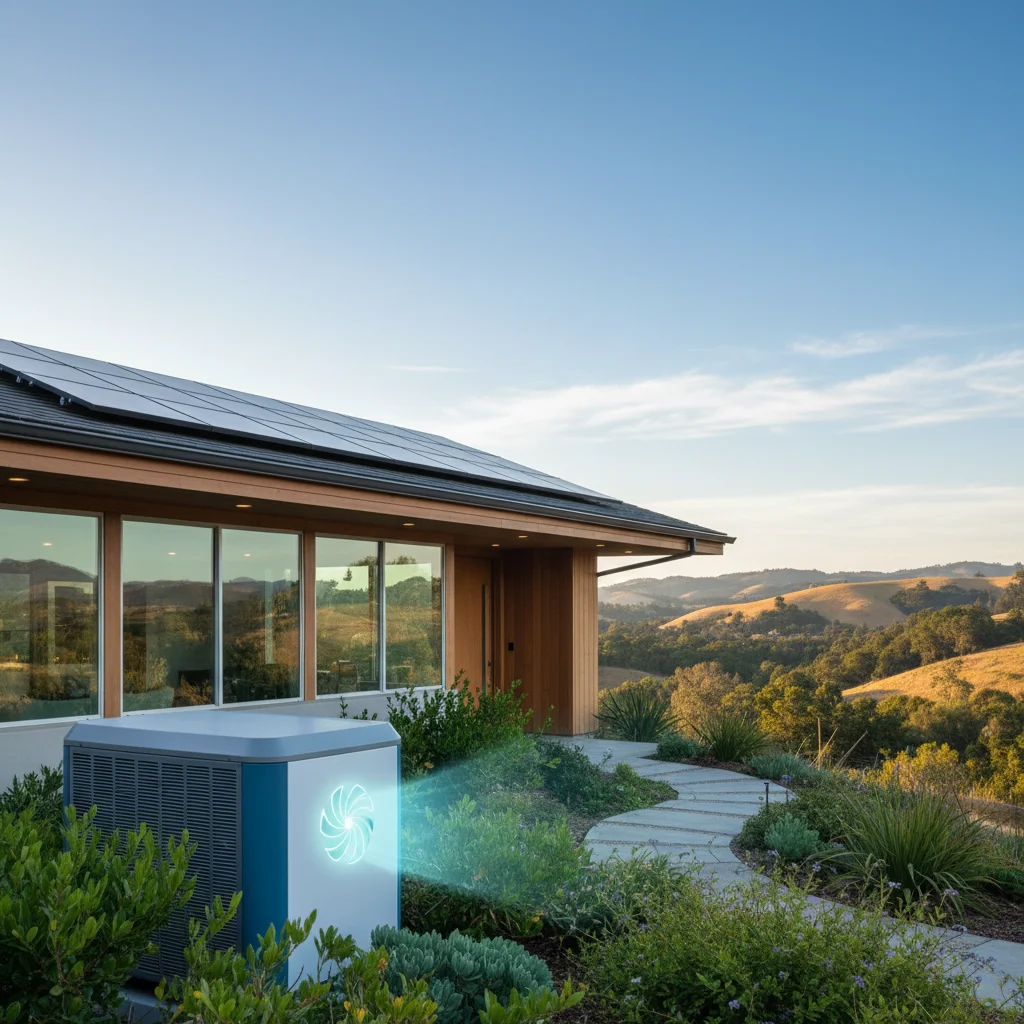
California homeowners can claim up to $14,000 in combined state and federal rebates for qualifying HVAC upgrades in 2026, with some utility districts offering an additional $3,000 for heat pump installations. And these programs aren't just about energy efficiency—they're designed to reduce grid strain during peak hours and accelerate the state's transition to all-electric homes.
What HVAC rebates are currently available in California in 2026?
California homeowners access HVAC rebates through three channels in 2026: the federal Inflation Reduction Act (IRA) energy efficiency rebate program providing up to $8,000 for qualifying heat pumps, the California Energy Commission's Building Initiative for Low-Emissions Development (BUILD) program offering $3,000 for ducted heat pumps, and utility-specific programs from providers like PG&E ($2,000-$3,500), SCE ($1,500-$3,000), and SDG&E ($1,800-$2,500) based on system efficiency ratings and installation type.
The IRA federal rebate program operates through California's allocated $534 million budget for home electrification rebates. So homeowners replacing gas furnaces with electric heat pumps qualify for the maximum $8,000 rebate if their household income falls below 80% of area median income (AMI). And households earning 80-150% of AMI receive $4,000 for the same upgrade.
But the BUILD program specifically targets new construction and major renovations, requiring participation in the Time-Dependent Valuation (TDV) compliance pathway. This program stacks with federal rebates, creating total potential savings of $11,000 for a qualifying heat pump installation when combined with IRA funding.
Utility rebates vary by territory and refresh annually. PG&E's 2026 Energy Upgrade California program provides $2,000 for ENERGY STAR certified central heat pumps and $3,500 for ductless mini-split systems with SEER2 ratings above 16. SCE offers $1,500 for ducted systems and $2,500 for high-efficiency ductless units. And SDG&E's residential HVAC program awards $1,800 for qualifying air-source heat pumps and $2,500 for ground-source geothermal systems.
"California's building electrification programs aim to install 6 million heat pumps by 2030, supported by $10 billion in combined state and federal funding." — California Energy Commission
How much can you save with California HVAC rebates?
A typical California homeowner installing a ducted heat pump system costing $18,000 saves $11,000 through combined federal and state rebates in 2026, reducing net installation cost to $7,000 before utility incentives. So the effective cost drops to $4,000-$5,500 after applying utility rebates from major providers, representing a 69-75% total reduction in upfront expense.
The IRA federal rebate covers 50% of project costs up to $8,000 for eligible households, while California's BUILD program adds $3,000 for heat pump installations. And utility rebates stack on top of these programs, creating the deepest savings for homeowners who maximize all three funding sources.
But savings extend beyond installation. Heat pumps reduce energy costs by 30-50% compared to gas furnace and central air conditioning combinations, according to DOE efficiency studies. And homeowners in California climate zones 3-10 see annual utility bill reductions of $600-$1,200 after switching to heat pump systems with SEER2 ratings above 16.
For low-income households, the California TECH Clean California program provides additional point-of-sale rebates of $500-$1,500 through participating contractors. This program operates separately from IRA and BUILD funding, allowing homeowners to combine four distinct rebate sources for maximum savings. Check current program availability with your rebate calculator to determine exact savings for your installation.
"Heat pump installations in California homes reduce greenhouse gas emissions by an average of 2.5 metric tons annually compared to natural gas heating systems." — California Air Resources Board
What are the eligibility requirements for HVAC rebates?
Federal IRA rebates require household income verification at or below 150% of area median income, with higher rebate amounts ($8,000) reserved for households earning less than 80% AMI. And applicants must install qualifying ENERGY STAR certified heat pumps to replace existing fossil fuel heating systems like gas furnaces or propane heaters—adding heat pumps to homes with electric resistance heating doesn't qualify.
California BUILD program eligibility restricts participation to new construction projects and major renovations obtaining building permits after January 1, 2026. So retrofit installations in existing homes without substantial structural modifications don't qualify for BUILD funding, though they remain eligible for federal IRA and utility rebates.
Utility rebates impose equipment-specific requirements. PG&E demands SEER2 ratings of 15.2 or higher for ducted systems and 16 or higher for ductless mini-splits. But SCE accepts systems with SEER2 as low as 14.3 for basic rebates, with higher amounts reserved for premium efficiency tiers. And all three major utilities require installation by licensed HVAC contractors with active C-20 licenses registered in their service territories.
Property requirements matter too. Homeowners must own and occupy single-family residences, townhomes, or individual condominium units to qualify for IRA rebates. And multifamily properties with 5+ units access separate rebate programs through California's Multifamily Affordable Housing Solar Roofs Program (MASH), which includes heat pump incentives for qualifying developments.
For detailed eligibility verification and personalized rebate estimates based on your home's specifications, explore available programs through resources like heat pump rebates and current federal incentive information at energy tax credits.
What documentation do you need to apply for California HVAC rebates?
IRA federal rebate applications require proof of household income through tax returns, W-2 forms, or pay stubs covering the past 12 months, plus signed contractor invoices showing equipment specifications including ENERGY STAR certification numbers, SEER2 ratings, and total project costs. And homeowners must submit before-and-after photos of the installation site showing the removed fossil fuel system and newly installed heat pump equipment.
California BUILD program applications demand building permit documentation, TDV compliance reports generated by HERS raters, and final inspection certificates from local building departments. So contractors typically compile these documents as part of their scope of work, but homeowners bear responsibility for ensuring complete submission within 90 days of project completion.
Utility rebate programs simplify documentation requirements. PG&E accepts online applications with contractor-provided equipment model numbers, installation dates, and property addresses—no income verification required. But SCE and SDG&E request copies of paid invoices and equipment specification sheets showing compliance with minimum efficiency thresholds.
For income-qualified programs like California TECH Clean California, applicants provide additional documentation including utility bills demonstrating prior energy usage, proof of residence (lease agreements or property tax bills), and participation confirmation from approved contractor networks. And some programs accept enrollment in other assistance programs (CalFresh, Medi-Cal) as automatic income qualification without separate verification.
Keep digital copies of all rebate applications and supporting documentation for at least 3 years. The IRS requires tax credit documentation retention for potential audits, and California's Franchise Tax Board may request verification for state-level tax benefits claimed on 540 returns. Check specific document retention policies with your HVAC efficiency upgrade contractor before finalizing installation agreements.
What are the deadlines for applying for HVAC rebates in California?
IRA federal rebate applications must be submitted within 12 months of project completion through California's designated rebate administrator, the California Community Services and Development (CSD) department. And the program operates on a first-come, first-served basis with funds allocated until the state's $534 million budget exhausts, expected to occur in late 2027 based on current application rates of $45 million per quarter.
California BUILD program applications require submission within 90 days of final building inspection approval. But projects must achieve building permits between January 1, 2026, and December 31, 2028, to qualify for the current funding cycle. And late applications forfeit rebate eligibility entirely—the program allows zero extensions for missed deadlines.
Utility rebate deadlines vary by provider and program year. PG&E's 2026 Energy Upgrade California program accepts applications through December 31, 2026, for installations completed during the calendar year. So homeowners completing installations in December 2026 have until January 31, 2027, to submit applications under the 60-day grace period. But SCE and SDG&E enforce stricter 45-day post-installation deadlines without grace periods.
The California TECH Clean California program operates on rolling deadlines tied to contractor participation agreements. Approved contractors must submit point-of-sale rebate applications within 30 days of installation completion to receive direct payment. And homeowners don't submit applications directly—contractors handle all paperwork as part of their service agreements.
For time-sensitive rebate planning, monitor fund availability through official program websites. The IRA rebate portal at California CSD displays real-time budget status, and utility programs post monthly fund depletion forecasts. Plan installations during spring or fall to avoid summer rush periods when contractor backlogs can delay completion by 8-12 weeks.
How does the rebate application process work?
Homeowners begin by selecting licensed HVAC contractors registered with their utility provider's rebate program and trained in IRA federal rebate documentation requirements. And contractors provide pre-installation assessments including equipment recommendations, total project cost estimates, and rebate qualification confirmations before homeowners commit to installations.
After installation completion, contractors submit equipment specification sheets, ENERGY STAR certification documents, and paid invoices to utility rebate portals within 45 days. But homeowners bear separate responsibility for IRA federal rebate applications through California CSD's online portal at www.csd.ca.gov, which requires creation of individual applicant accounts with income verification uploads.
The IRA application review process takes 60-90 days from submission to payment approval. And California CSD conducts random audits on 15% of applications, requesting additional documentation or site verification photos that extend processing to 120 days. So homeowners should expect payment 3-4 months after application submission for standard reviews.
Utility rebates process faster—PG&E issues payments within 30-45 days, while SCE and SDG&E average 21-30 days for straightforward applications. And payments arrive as checks mailed to property addresses or direct deposits to bank accounts specified during application setup.
For BUILD program rebates, contractors registered as program participants submit applications on behalf of homeowners through the California Energy Commission's online portal. And these applications require HERS rater verification before approval, adding 30-45 days to standard processing timelines. But approved BUILD rebates combine with IRA payments in single disbursements processed through California CSD.
Track application status through program-specific online portals. The IRA rebate system provides real-time updates on review stages, document requests, and payment processing. And utility programs send email notifications at each milestone—application received, under review, approved, payment issued. Set up account alerts to monitor progress without manual portal checks.
Official Sources
- U.S. Department of Energy - Save Energy, Save Money — Federal programs for home energy efficiency and heat pump rebates
- DSIRE USA - California Incentives — Comprehensive database of state and utility energy rebate programs
- California Energy Commission — State building electrification standards and BUILD program details
Related Reading: Learn more about High Efficiency Furnace Rebates California and Hvac Rebates Fresno.
Frequently Asked Questions
What HVAC systems qualify for California rebates?
Electric air-source heat pumps with SEER2 ratings of 15.2 or higher qualify for most California utility and federal rebates, including ducted central systems and ductless mini-split configurations. And ground-source geothermal heat pumps qualify for all programs without minimum efficiency thresholds due to inherent high performance. But gas furnaces, traditional air conditioners, and hybrid dual-fuel systems don't qualify for electrification rebates—only full electric heating replacements receive funding.
How much money can you get back from California HVAC rebates?
Combining IRA federal rebates ($4,000-$8,000), California BUILD program funding ($3,000), and major utility rebates ($1,500-$3,500), eligible homeowners receive $8,500-$14,500 in total rebates for qualifying heat pump installations in 2026. And low-income households accessing California TECH incentives add another $500-$1,500 to these amounts. But actual rebate totals depend on household income, equipment efficiency, and utility service territory—most installations receive $9,000-$12,000 when stacking all available programs.
What is the deadline to apply for California HVAC rebates?
IRA federal rebates require applications within 12 months of installation completion, while California BUILD program applications must be submitted within 90 days of final building inspection. And utility rebates have calendar-year deadlines—PG&E accepts applications through December 31, 2026, plus a 60-day grace period, but SCE and SDG&E enforce strict 45-day post-installation deadlines. So homeowners should submit all rebate applications within 30-45 days of project completion to meet the most restrictive deadlines across all programs.
Do you need a contractor to install HVAC for rebates in California?
All California rebate programs require installation by licensed HVAC contractors holding active C-20 warm-air heating, ventilation, and air-conditioning licenses. And IRA federal rebates specifically mandate contractor registration with California CSD's approved provider network before installation begins—work completed by non-registered contractors doesn't qualify regardless of license status. But homeowners can select any registered contractor; programs don't restrict competition or require use of specific service providers.
What is the difference between California rebates and federal tax credits for HVAC?
California state and utility rebates provide direct cash payments reducing upfront installation costs. And rebates have income limits restricting eligibility to households earning below 150% of area median income, but tax credits remain available to all taxpayers regardless of income. So high-income homeowners ineligible for rebates still claim federal tax credits worth 30% of equipment and installation costs up to $2,000 annually for heat pump systems.
Ready to see how much you can save on your HVAC upgrade? Use our free rebate calculator to get personalized estimates based on your home's location, current heating system, and household income. Get your custom rebate breakdown in under 60 seconds.
Last reviewed: April 14, 2026. Reviewed by DuloCore Energy Specialists. About the team.
Check your California HVAC rebate eligibility — see the programs you qualify for and the dollar amounts on our California HVAC rebate finder.