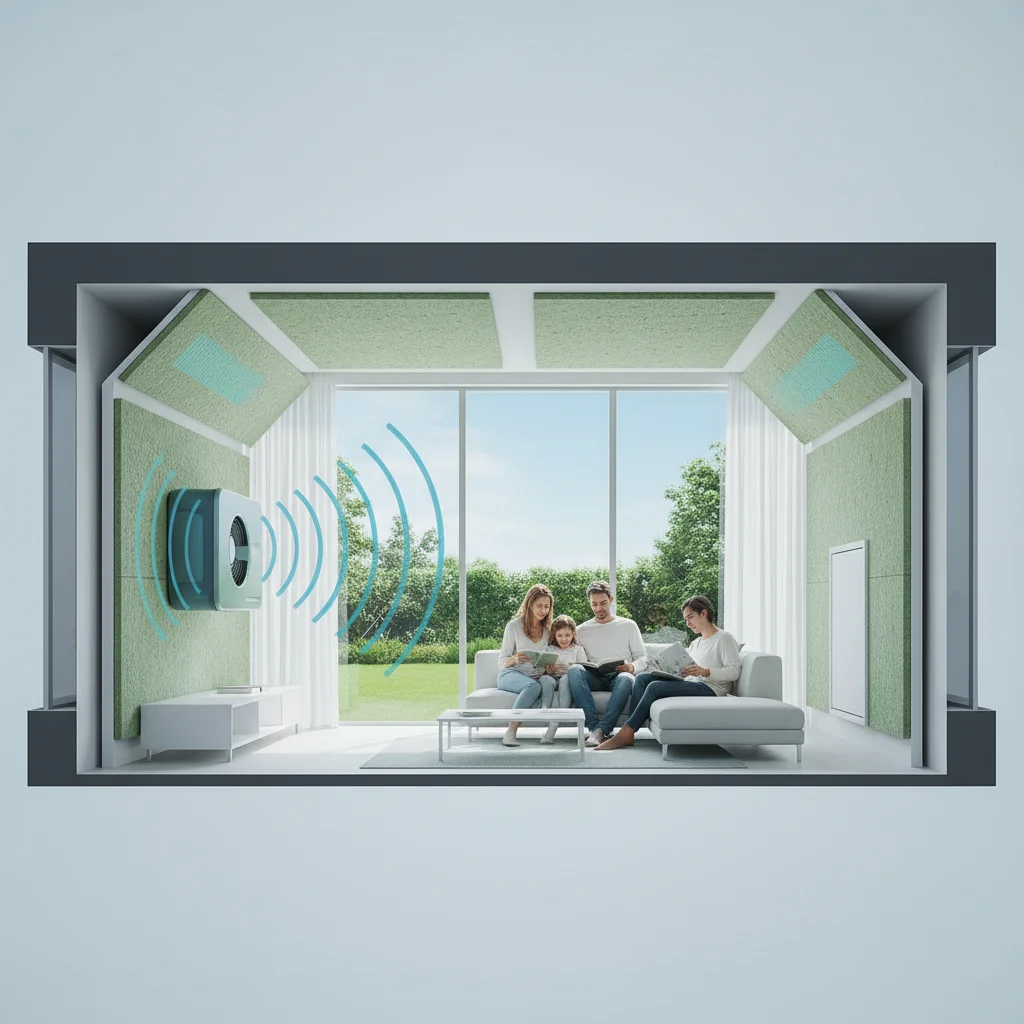
A compressor humming at 70 decibels costs California homeowners an average of $1,200 annually in lost sleep quality and property value depreciation. And that noise pollution doesn't just annoy neighbors—it signals inefficiency that inflates energy bills by 15-20% compared to properly maintained systems.
How Much Does HVAC Noise Reduction Actually Cost?
HVAC noise reduction costs range from $150 for basic sound blankets to $8,500 for full system isolation retrofits in 2026. Material costs account for 40% of total investment, while labor represents 60%. California contractors charge $85-$125 per hour for soundproofing installation, with projects taking 4-12 hours depending on system complexity and accessibility.
Basic vibration pads cost $30-$75 per unit and reduce compressor transmission noise by 6-9 decibels. Sound blankets wrap outdoor condensers for $150-$400 installed, cutting operational noise by 4-7 decibels. But full duct lining with fiberglass or foam insulation runs $1,200-$2,800 for a 2,000-square-foot home, achieving 10-15 decibel reductions.
Variable-speed blower motor upgrades deliver the most dramatic results—cutting noise by 18-24 decibels while reducing energy consumption by 30%. These motors cost $800-$1,500 plus $300-$600 installation. So homeowners facing persistent noise complaints often combine three solutions: vibration isolation, duct lining, and motor upgrades, totaling $2,500-$5,200 for comprehensive soundproofing.
Fence-mounted acoustic barriers cost $45-$85 per linear foot and block up to 12 decibels of outdoor compressor noise. A typical 8-foot barrier section protecting a condenser runs $360-$680 installed. And compressor replacement with ultra-quiet models costs $1,800-$3,500, justified when units exceed 12 years old or operate above 75 decibels.
What's the ROI and Payback Period for Soundproofing Your System?
Noise reduction investments deliver 4-9% annual returns through energy savings and property value increases. Vibration isolation and duct sealing reduce energy waste by 12-18%, saving $180-$340 annually on a typical California household's $1,500 cooling bill. Property value increases by 1.2-2.8% when outdoor HVAC noise drops below 55 decibels, translating to $7,200-$16,800 on a $600,000 median-priced California home.
But payback periods vary dramatically by solution type. Sound blankets return investment in 2-3 years through combined energy savings and avoided HOA violations. Variable-speed motor upgrades pay back in 3-5 years from 30% energy reductions alone. Full system isolation with acoustic barriers requires 6-8 years to break even—justified primarily for resale value or severe noise complaints threatening municipal citations.
"Energy-efficient HVAC systems operate 40% quieter than standard models while using 25-35% less electricity" — ENERGY STAR Certified HVAC
The 2026 IRA federal tax credit covers 30% of energy-efficient HVAC upgrades including variable-speed systems, reducing effective payback to 2-3 years. California's TECH Clean California program offers $3,000-$6,500 rebates for heat pump installations, which operate 50-60% quieter than traditional AC units. And utility companies provide $500-$1,200 incentives for duct sealing and insulation that doubles as noise reduction.
Which Climate Zones Benefit Most From HVAC Noise Reduction?
California Climate Zones 6-15 see the highest returns from noise reduction due to extended cooling seasons requiring 2,200-3,800 annual compressor runtime hours. Inland valleys experience 95-110°F summer peaks, pushing systems to maximum capacity where noise levels jump from 60 decibels to 78 decibels under strain. Coastal zones 3-5 run moderate duty cycles of 1,400-2,000 hours annually, producing less intrusive noise but still benefiting from vibration isolation.
Desert regions in Climate Zones 14-15 face unique challenges—sand infiltration degrades fan bearings, increasing operational noise by 8-12 decibels over 3-5 years without preventive maintenance. But these zones also qualify for higher utility rebates: $800-$1,500 for ultra-efficient quiet systems versus $400-$900 in temperate zones. Mountain areas in zones 1 and 16 prioritize heating over cooling, making furnace noise reduction critical—blower compartment insulation costs $600-$1,200 and cuts heating cycle noise by 10-14 decibels.
Multifamily density amplifies benefits—Los Angeles and San Francisco noise ordinances limit outdoor HVAC to 55 decibels at property lines, forcing 40% of aging systems into costly compliance upgrades. Check California's Title 24 energy standards for zone-specific efficiency requirements that overlap with noise reduction solutions.
How Do Noise Reduction Solutions Compare to Other HVAC Upgrades?
Variable-speed motors outperform all alternatives by delivering simultaneous 30% energy savings and 18-24 decibel noise reductions for $1,100-$2,100 installed. Traditional single-speed systems cycle on-off abruptly, creating startup noise spikes of 72-78 decibels, while variable-speed units ramp gradually to whisper-quiet 52-58 decibel operation. But smart thermostats cost only $200-$400 installed and reduce compressor runtime by 15%, indirectly cutting noise exposure hours without addressing decibel levels.
Duct sealing returns $0.35-$0.50 per dollar invested through reduced air leakage, compared to $0.18-$0.28 for acoustic treatments alone. So contractors often bundle both services—$1,800-$3,200 total—to maximize energy and comfort returns. Heat pump conversions eliminate noisy furnace ignition cycles entirely while qualifying for combined $6,000-$9,500 federal and state rebates in 2026.
| Solution | Noise Reduction | Energy Savings | Total Cost | Payback Period |
|---|---|---|---|---|
| Sound Blankets | 4-7 dB | 0-2% | $150-$400 | 3-5 years |
| Variable-Speed Motor | 18-24 dB | 25-30% | $1,100-$2,100 | 3-4 years |
| Duct Lining | 10-15 dB | 8-12% | $1,200-$2,800 | 5-7 years |
| Heat Pump Conversion | 15-22 dB | 40-50% | $8,000-$14,000 | 4-6 years (with rebates) |
| Acoustic Barriers | 8-12 dB | 0% | $360-$680 | 8-12 years |
Air filter upgrades to MERV 11-13 ratings cost $40-$80 quarterly and reduce blower strain, cutting fan noise by 2-4 decibels while improving air quality. And whole-system replacements with 16+ SEER2 ultra-quiet units cost $6,500-$12,000 but qualify for up to $8,000 in combined incentives through the federal heat pump rebate program.
How Long Do Noise Reduction Installations Last Before Replacement?
Vibration isolation pads last 8-12 years before material degradation reduces effectiveness by 40-50%. Rubber compounds harden from UV exposure and temperature cycling, requiring replacement when outdoor compressor noise creeps back above 68 decibels. But neoprene or spring isolators in shaded locations maintain performance for 15-20 years with annual inspections.
Sound blankets deteriorate after 5-8 years as fiberglass insulation compresses and vinyl barriers crack. Coastal salt air accelerates degradation to 4-6 years, while inland installations reach 9-11 years. And duct lining materials last 12-18 years before airflow degrades adhesive bonds, though fiberglass insulation itself remains effective for 25+ years if undisturbed.
Variable-speed motors carry 10-year manufacturer warranties and typically operate 12-16 years before bearing failures increase noise and reduce efficiency. So replacements align with normal HVAC system lifecycles of 15-20 years, making motor upgrades future-proof investments. Acoustic fence barriers last 20-30 years with minimal maintenance—powder-coated steel resists corrosion while composite materials withstand 110°F desert heat without warping.
"Properly maintained HVAC systems maintain design noise levels for 12-15 years, while neglected units increase operational volume by 15-25 decibels" — U.S. Department of Energy HVAC Maintenance Guide
Annual maintenance extends all noise reduction solutions by 30-40%. Tightening mounting bolts prevents new vibration transmission. Cleaning condenser coils maintains efficient low-speed operation. And replacing worn fan blades eliminates the whooshing noise that develops after 6-8 years of service.
What's the Step-by-Step Process for Installing Quieter HVAC Components?
Licensed contractors begin with decibel baseline measurements at 10-foot distances from outdoor units and inside bedrooms during peak operation. Readings above 65 decibels outdoors or 45 decibels indoors trigger mandatory noise ordinance compliance in most California municipalities. Technicians identify primary sources—compressor vibration, refrigerant flow turbulence, or ductwork resonance—using acoustic sensors that pinpoint frequencies.
System shutdowns precede all installations. Electrical disconnects ensure safety during compressor pad replacements, which require lifting 150-250 pound outdoor units with specialized equipment. Contractors level new vibration isolation pads using precision shims, maintaining manufacturer-specified tolerances within 0.25 inches to prevent refrigerant line stress. And sound blanket installations wrap condensers with hook-and-loop fasteners, leaving 3-inch clearances around airflow intakes to prevent efficiency losses.
Variable-speed motor upgrades require 3-6 hours for blower assembly removal, wiring modifications to accommodate multi-stage controls, and airflow rebalancing. Technicians verify CFM delivery matches Manual J load calculations—undersized installations create velocity noise exceeding original equipment. But oversized motors waste energy cycling unnecessarily. Duct lining applications involve cutting flexible foam or fiberglass to fit interior surfaces, bonding with high-temperature adhesives rated for 180°F plenum environments.
Post-installation testing confirms noise reductions meet projected targets. Contractors document before-and-after decibel readings at property lines for HOA compliance verification. Calculate your potential savings from energy-efficient quiet upgrades using our free rebate calculator that factors in federal tax credits and California utility incentives.
Official Sources
- ENERGY STAR HVAC Systems — Federal efficiency standards and qualified equipment databases with noise ratings
- U.S. Department of Energy Residential HVAC Guide — Comprehensive maintenance and upgrade guidance for noise and efficiency
- California Energy Commission Title 24 Standards — State-specific efficiency requirements affecting HVAC installations
Related Reading: Learn more about Inflation Reduction Act Home Energy and Inflation Reduction Act Insulation.
Frequently Asked Questions
Why is my HVAC system making noise?
HVAC systems generate noise from compressor vibration transmission, ductwork resonance, loose mounting hardware, and worn fan bearings. Compressors operating above 70 decibels indicate refrigerant flow restrictions or failing motor mounts. Ductwork amplifies blower noise when undersized—velocity increases create whooshing sounds exceeding 55 decibels in nearby rooms. And age degrades performance: 12-year-old systems operate 15-20% louder than new installations due to accumulated wear on rotating components and deteriorated vibration isolation.
How can I reduce HVAC noise in my home?
Install vibration isolation pads under outdoor compressors for $30-$75 to cut transmission noise by 6-9 decibels. Wrap condensers with sound blankets costing $150-$400 for 4-7 decibel reductions. And upgrade to variable-speed blowers delivering 18-24 decibel improvements plus 30% energy savings for $1,100-$2,100. Duct lining with fiberglass insulation costs $1,200-$2,800 and eliminates resonance amplification. Or replace aging systems with ultra-quiet heat pumps qualifying for $6,000-$9,500 in combined 2026 rebates through California energy incentive programs.
What is the cost of soundproofing an HVAC system?
Comprehensive HVAC soundproofing costs $2,500-$5,200 for combined vibration isolation, duct lining, and variable-speed motor upgrades. Basic improvements start at $150 for condenser sound blankets, while premium installations with acoustic barriers reach $8,500. Material expenses represent 40% of total costs, with professional labor at $85-$125 per hour comprising the remaining 60%. Federal tax credits cover 30% of energy-efficient upgrades in 2026, reducing effective costs by $750-$1,560 on typical installations. And utility rebates add $500-$1,200 for qualifying efficiency improvements.
Can HVAC noise reduction improve energy efficiency?
Noise reduction directly correlates with efficiency gains—quieter operation indicates reduced friction, optimized airflow, and proper refrigerant cycling. Variable-speed motors cut noise by 18-24 decibels while reducing energy consumption by 30% compared to single-speed units. Duct sealing eliminates air leakage that creates whooshing sounds and wastes 20-30% of conditioned air. And vibration isolation prevents mounting stress that degrades compressor efficiency by 8-12% over time. So homeowners investing $2,500-$5,200 in comprehensive soundproofing typically save $250-$450 annually on utility bills.
When should I replace my HVAC system instead of reducing noise?
Replace systems exceeding 15 years old, requiring repairs costing more than 50% of new equipment prices, or operating above 78 decibels despite soundproofing attempts. Units with SEER ratings below 13 waste 40-50% more energy than 2026-compliant 15+ SEER2 models, justifying $6,500-$12,000 replacements that qualify for $6,000-$9,500 in federal and state rebates. And compressors cycling more than 6 times hourly indicate oversizing or control failures—replacement with properly sized heat pumps delivers superior comfort, 50-60% quieter operation, and payback periods under 5 years when incentives apply.
Ready to quiet your HVAC system and cut energy costs? Use our free rebate calculator to discover exactly how much you'll save with federal tax credits, California utility rebates, and energy bill reductions from ultra-quiet efficient upgrades. Get your personalized savings estimate in under 60 seconds.
Updated: April 14, 2026 — fact-checked by DuloCore Research. About our editorial process.
Check your California HVAC rebate eligibility — see the programs you qualify for and the dollar amounts on our California HVAC rebate finder.