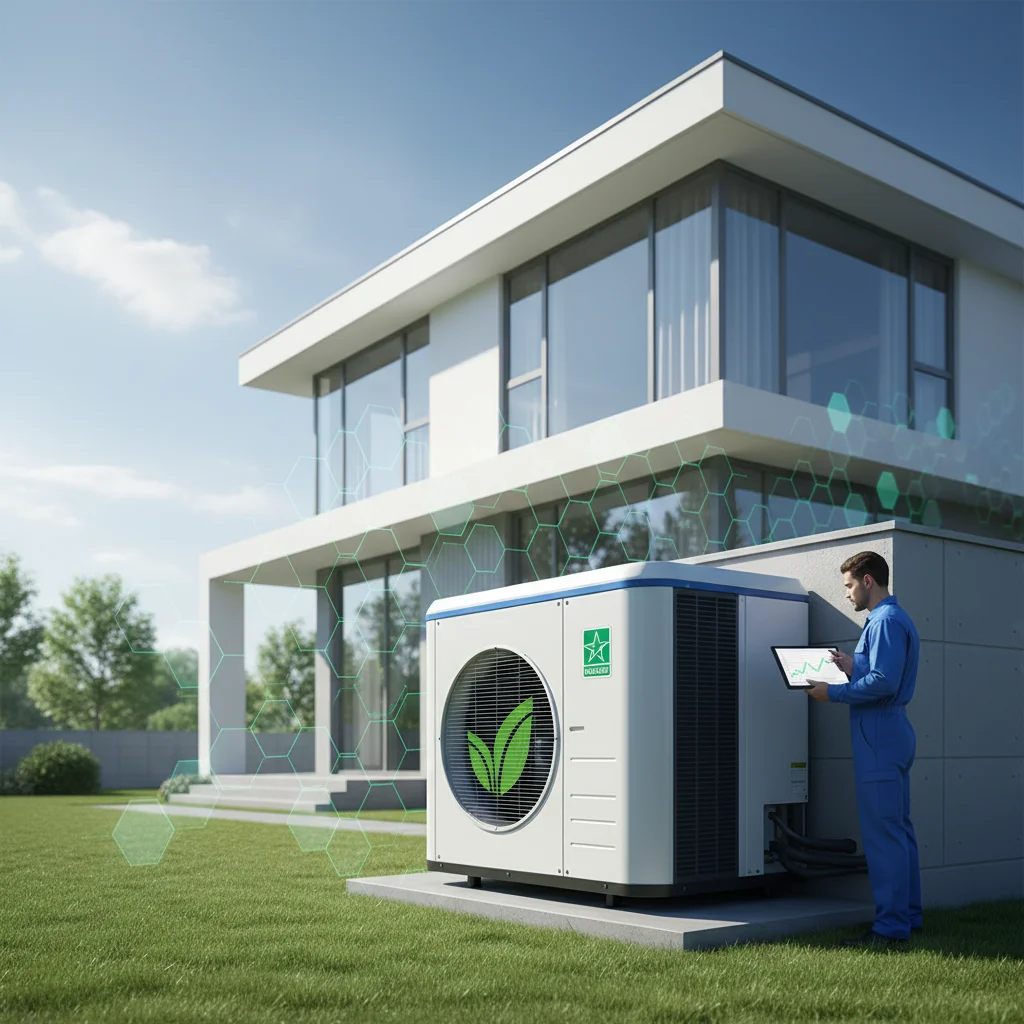
Homeowners who skip annual HVAC maintenance spend 30% more on utility bills and face emergency repair costs averaging $450-$600, according to the Department of Energy. Regular maintenance reduces energy consumption by 15-25% and extends equipment life by 5-10 years.
What Does HVAC Maintenance Cost in 2025-2026?
Professional HVAC maintenance visits cost $150-$300 per service call in California, with annual contracts averaging $200-$500 for two visits. Service plans typically include filter replacement, coil cleaning, refrigerant level checks, thermostat calibration, and electrical connection inspection. These contracts reduce emergency repair costs by 40% compared to homeowners who schedule no preventive service.
And the price varies by system type. Central air conditioning tune-ups cost $100-$200, while heat pump maintenance runs $150-$250 due to dual heating and cooling functions. Furnace inspections average $80-$150 for gas systems and $100-$200 for oil furnaces. So homeowners with dual-fuel systems—combining a furnace with a heat pump—pay $250-$400 annually for comprehensive maintenance.
But here's the tension: 42% of California homeowners skip annual HVAC service to save money upfront, then spend $2,000-$4,000 on premature equipment replacement. Regular maintenance costs represent just 2-3% of total equipment replacement expenses while preventing 85% of major system failures.
Maintenance contracts include seasonal tasks that prevent costly breakdowns. Spring cooling prep involves cleaning condensate drains, testing capacitors, measuring airflow across evaporator coils, and checking refrigerant pressures. Fall heating prep covers burner inspection, flame sensor cleaning, heat exchanger examination, and carbon monoxide testing. These biannual visits catch 90% of issues before they cause system shutdown.
California contractors charge $50-$100 more than national averages due to higher labor costs and strict HVAC licensing requirements. And coastal regions see 15-20% higher prices than inland areas. But utility rebate programs offset these costs—PG&E offers $50-$75 rebates for maintenance on ENERGY STAR certified equipment, while Southern California Edison provides $35-$50 credits for verified tune-ups on systems rated SEER2 16 or higher.
Use our free rebate calculator to find maintenance incentives available in your area.
Which HVAC Maintenance Services Qualify for Rebates and Tax Credits?
Maintenance costs don't qualify for federal IRA tax credits, but equipment upgrades during service visits do. The federal Residential Clean Energy Credit (Section 25D) ended for expenditures made after December 31, 2025, and the IRS treats an expenditure as made when installation is completed (IRS FS-2025-05). Federal tax credits for this work have ended, but state, local and utility rebates may still apply; check what is available at your address with the DuloCore rebate calculator.
State and utility programs reward preventive maintenance directly. California's TECH Clean California initiative provides $3,000-$8,000 incentives for heat pump installations when paired with annual maintenance agreements. And the program requires contractors to perform post-installation tune-ups within 12 months to validate rebate claims. So homeowners who commit to ongoing service unlock higher upfront incentives.
"Regular maintenance ensures HVAC systems operate at peak efficiency, reducing energy waste and qualifying equipment for performance-based utility rebates." — U.S. Department of Energy
Bay Area Air Quality Management District offers $250-$500 rebates for replacing outdated thermostats with smart models during maintenance visits. These devices reduce energy consumption by 10-15% through automated temperature scheduling and remote monitoring. But rebates require professional installation verification and documentation of ENERGY STAR certification.
Equipment replacement during maintenance qualifies for multiple stacked incentives. Homeowners installing 16+ SEER2 heat pumps receive 30% federal tax credits ($2,000 cap), $3,000-$8,000 California state rebates, and $500-$1,000 utility incentives—totaling $5,500-$11,000 in combined benefits. Or gas furnace upgrades to 97%+ AFUE models qualify for $600-$1,200 in utility rebates when paired with smart thermostat installation.
Maintenance documentation proves equipment eligibility for future incentive programs. Contractors provide service reports showing SEER2, HSPF2, and AFUE ratings, refrigerant charge levels, and airflow measurements. These records validate that systems meet minimum efficiency thresholds when homeowners apply for rebates or tax credits. And they establish baseline performance for utility demand-response programs that pay $50-$150 annually for allowing remote thermostat adjustments during peak hours.
Learn more about current incentive programs in our energy tax credits guide.
How Do SEER2 and AFUE Ratings Impact Your Maintenance Costs and Efficiency?
SEER2 (Seasonal Energy Efficiency Ratio 2) measures cooling efficiency, while AFUE (Annual Fuel Utilization Efficiency) rates heating performance. Systems with higher ratings require less frequent repairs and lower maintenance costs due to advanced components and optimized designs. Equipment rated 16+ SEER2 or 95%+ AFUE reduces annual maintenance expenses by $50-$100 compared to minimum-efficiency models.
And the rating gap affects operating costs dramatically. A 16 SEER2 central AC system consumes 37% less electricity than a 10 SEER unit—saving $300-$500 annually on cooling bills in California's climate. Or a 97% AFUE gas furnace wastes just 3% of fuel compared to 20% waste in older 80% AFUE models, cutting heating costs by $200-$350 per year.
Higher-efficiency equipment reduces maintenance frequency and complexity. Systems with variable-speed compressors and modulating burners run more consistently at lower capacities, reducing mechanical stress and extending component life by 40-60%. So technicians spend less time replacing capacitors, contactors, and blower motors on premium equipment.
But maintenance complexity increases with advanced features. Heat pumps with inverter-driven compressors require specialized diagnostic tools and refrigerant handling certification. And contractors charge $50-$100 premium fees for servicing variable-speed equipment compared to single-stage systems. These higher service costs offset by fewer breakdowns—inverter systems fail 30-40% less often than conventional models.
SEER2 ratings directly correlate with rebate eligibility. California utility programs require minimum 16 SEER2 for AC rebates and 15+ SEER2 or 8.5+ HSPF2 for heat pump rebates. Equipment below these thresholds qualifies for no incentives, even with perfect maintenance records. Or federal tax credits now require 16+ SEER2 for central AC and 8.0+ HSPF2 for heat pumps—eliminating benefits for standard-efficiency models installed before 2026.
"The transition to SEER2 and HSPF2 metrics in 2023 created more accurate efficiency measurements that reflect real-world operating conditions rather than laboratory test results." — ENERGY STAR
Maintenance preserves rated efficiency over equipment lifespan. Dirty coils reduce SEER2 ratings by 1-2 points, costing $100-$200 annually in wasted energy. And refrigerant undercharge from slow leaks drops efficiency by 5-10%, erasing savings from high-efficiency equipment. Professional maintenance restores peak performance and prevents efficiency degradation that nullifies rebate investments.
What's the ROI and Payback Period for Preventive HVAC Maintenance Plans?
Annual maintenance contracts generate positive ROI within 12-18 months through reduced energy bills and avoided emergency repairs. Homeowners spending $200-$500 on preventive service save $300-$600 on utility costs and prevent $800-$1,500 in breakdown repairs—yielding 200-300% annual returns.
And the payback accelerates with equipment age. Systems 8-15 years old benefit most from maintenance due to higher failure rates without service. Or newer equipment under manufacturer warranty sees lower immediate savings but extends operational life from 12-15 years to 18-22 years, delaying $6,000-$12,000 replacement costs.
But maintenance ROI varies by climate and usage intensity. California homeowners using AC 6-8 months per year recoup maintenance costs in 8-12 months through efficiency gains. Coastal regions with mild climates and 3-4 months of annual cooling see 18-24 month payback periods. So maintenance delivers faster returns in hot inland valleys than temperate coastal areas.
Emergency repair avoidance drives the strongest ROI component. HVAC breakdowns during peak cooling or heating seasons cost $450-$1,200 for after-hours service calls, compared to $150-$300 for scheduled maintenance visits. And compressor replacements—$1,500-$3,000—occur 80% less often in well-maintained systems than neglected equipment.
Maintenance contracts include hidden value beyond direct cost savings. Priority service scheduling reduces wait times from 3-5 days to same-day or next-day appointments. And contract holders receive 10-20% discounts on parts and repairs when issues arise. These benefits compound over 5-10 year equipment lifecycles, adding $500-$1,000 in avoided costs.
Equipment warranties often require documented annual maintenance. Manufacturers void 5-10 year parts warranties if homeowners skip professional service, exposing them to full replacement costs for failed components. So maintenance protects $800-$2,000 in warranty coverage that disappears without service records.
Compare maintenance investments to alternative approaches:
| Option | Annual Cost | Energy Savings | Repair Avoidance | Net Benefit |
|---|---|---|---|---|
| No maintenance | $0 | $0 | -$800 to -$1,500 | -$800 to -$1,500 |
| DIY maintenance | $50-$100 | $150-$250 | -$400 to -$800 | -$200 to -$450 |
| Professional maintenance | $200-$500 | $300-$600 | -$100 to -$300 | $0 to $100 |
| Service contract | $200-$500 | $300-$600 | $0 | $100 to $400 |
Professional maintenance with service contracts delivers the highest net benefit through guaranteed service, priority scheduling, and repair cost protection. And contracts transfer emergency repair risk to contractors, eliminating unexpected $1,000+ expenses that break household budgets.
Calculate your maintenance ROI with our rebate calculator to compare costs against available incentives.
How Does Regular Maintenance Compare to Alternative Cooling and Heating Solutions?
Maintaining existing HVAC equipment costs $200-$500 annually, while alternative technologies require $15,000-$30,000 upfront investments with 8-15 year payback periods. But high-efficiency replacements deliver 40-60% energy savings that exceed maintenance benefits after 5-7 years.
Heat pump replacements offer the strongest alternative to traditional maintenance. Installing 16+ SEER2, 8.5+ HSPF2 heat pumps costs $8,000-$15,000 before incentives, minus $5,500-$11,000 in combined federal tax credits and California rebates. Or net costs of $2,500-$9,000 generate $800-$1,500 annual energy savings, creating 2-6 year payback periods that outperform maintaining 12+ year old equipment.
Geothermal systems provide maximum efficiency but require 15-20 year commitments. Installation costs $25,000-$40,000 for ground-source heat pumps, reduced to $17,500-$28,000 after 30% federal tax credits. These systems deliver 300-600% efficiency compared to 250-400% for air-source heat pumps, saving $1,200-$2,000 annually. But high upfront costs create 12-18 year payback periods suitable only for homeowners planning long-term occupancy.
And ductless mini-split systems offer zoned comfort impossible with central HVAC maintenance. Installing 3-4 indoor units costs $6,000-$12,000, providing independent temperature control that reduces energy waste by 25-35% compared to whole-home systems. Or homeowners using just 40-60% of living space save $500-$800 annually by heating and cooling only occupied rooms.
Maintenance extends equipment life but can't match efficiency gains from modern replacements. Servicing a 15-year-old 10 SEER AC system maintains 8-9 SEER effective performance, while replacing it with 16 SEER equipment delivers 78% efficiency improvement and $400-$700 annual savings. So replacement becomes cost-effective when equipment reaches 12-15 years old or requires repairs exceeding $1,000.
Smart thermostats provide low-cost alternatives to full equipment replacement. Installing ENERGY STAR certified models costs $150-$300 and reduces HVAC runtime by 10-15% through automated scheduling and remote monitoring. And California utility rebates of $50-$100 cut net costs to $50-$250 with 6-18 month payback periods—the fastest ROI of any HVAC investment.
Hybrid systems combine maintenance and upgrades for optimal economics. Homeowners install heat pumps for cooling and mild-weather heating while maintaining existing furnaces for extreme cold. This approach costs $5,000-$10,000 after incentives and reduces annual energy bills by 30-40%, creating 4-8 year payback periods with lower risk than full system replacement.
Read more about equipment options in our HVAC efficiency guide.
Official Sources
- U.S. Department of Energy - Energy Saver — Federal guidance on HVAC efficiency, maintenance best practices, and rebate programs
- DSIRE USA — Database of state and utility incentives for energy-efficient equipment and maintenance programs
- ENERGY STAR — EPA program providing efficiency standards, product certification, and rebate information
Related Reading: Learn more about Hvac Maintenance Energy Savings.
Frequently Asked Questions
How much does HVAC maintenance cost per year?
Annual HVAC maintenance costs $200-$500 for service contracts covering two seasonal visits in California. Single tune-ups cost $150-$300 depending on system type—central AC runs $100-$200, heat pumps $150-$250, and furnaces $80-$150. These costs prevent $800-$1,500 in emergency repairs and reduce energy bills by $300-$600 annually through restored efficiency.
What is included in a professional HVAC maintenance visit?
Professional maintenance includes filter replacement, evaporator and condenser coil cleaning, refrigerant level inspection, electrical connection tightening, thermostat calibration, condensate drain clearing, and system performance testing. And spring visits focus on cooling preparation while fall service covers heating system checks including burner inspection, heat exchanger examination, and carbon monoxide testing. Each visit takes 60-90 minutes and includes written documentation of system condition.
How often should HVAC systems be serviced?
HVAC systems require professional maintenance twice annually—spring preparation for cooling season and fall preparation for heating. Or heat pumps providing year-round heating and cooling benefit from quarterly inspections due to continuous operation. Homeowners replace air filters monthly or every 90 days depending on filter type, while outdoor unit cleaning occurs during biannual service visits. Equipment warranties often require documented annual maintenance to remain valid.
Can I claim HVAC maintenance as a tax deduction?
Routine HVAC maintenance doesn't qualify for federal tax deductions or credits. The federal Energy Efficient Home Improvement Credit (Section 25C) ended for property placed in service after December 31, 2025 (IRS FS-2025-05). And homeowners operating rental properties deduct maintenance costs as business expenses if systems serve tenant units.
What is the difference between HVAC maintenance and repair costs?
Maintenance involves scheduled preventive service costing $150-$300 per visit that includes cleaning, inspection, and minor adjustments to prevent breakdowns. Repairs address specific failures—replacing capacitors ($150-$400), fixing refrigerant leaks ($200-$1,500), or installing new compressors ($1,500-$3,000). And emergency repairs during peak seasons cost 50-100% more than scheduled maintenance due to after-hours service charges. Regular maintenance reduces repair frequency by 80% and extends equipment life by 5-10 years.
Ready to maximize your HVAC efficiency? Use our free rebate calculator to discover federal tax credits, state rebates, and utility incentives available for maintenance and equipment upgrades in your area. Calculate your savings in 60 seconds.
Updated on April 14, 2026. Fact-checked by DuloCore Editors. About our research team.
Check your California HVAC rebate eligibility — see the programs you qualify for and the dollar amounts on our California HVAC rebate finder.