American homeowners waste $25 billion annually on energy bills because dirty HVAC ducts force systems to work 20-40% harder than designed capacity. And the average household accumulates 40 pounds of dust, pollen, and debris in ductwork every year, creating resistance that drains efficiency and drives up monthly costs. Professional duct cleaning removes these blockages and restores airflow, but the $450-$1,000 service price raises a critical question: does cleaning qualify for rebates, and when does the efficiency gain justify the expense?
How Much Does HVAC Duct Cleaning Cost in 2026?
Professional HVAC duct cleaning costs $450-$1,000 for homes under 2,500 square feet, with prices scaling to $1,200-$2,000 for larger properties. National averages settle at $35-$50 per vent, though geographic location, duct accessibility, contamination severity, and system complexity drive final pricing. Urban markets charge 15-30% premiums over rural areas, and homes with mold remediation needs add $600-$2,000 to baseline costs.
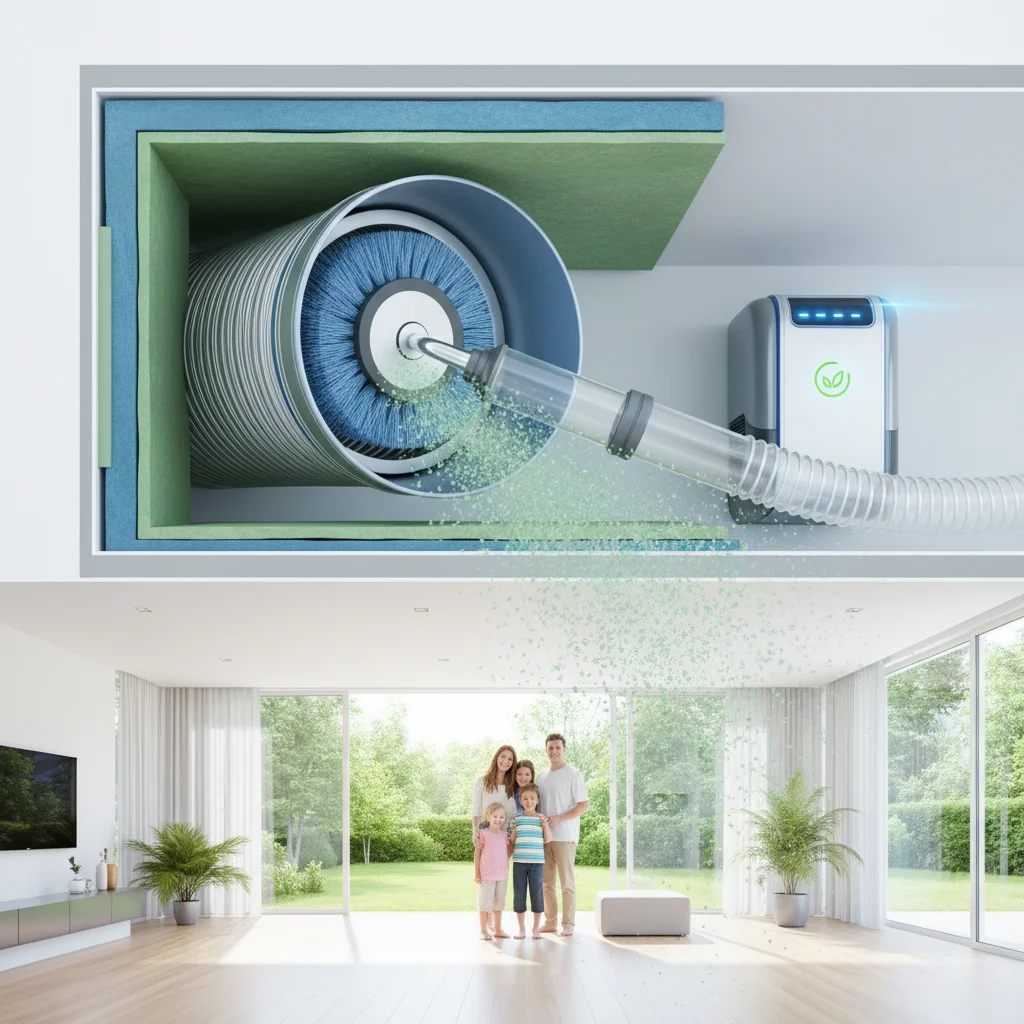
Standard residential duct cleaning includes supply and return vents, main trunk lines, and furnace or air handler compartments. So technicians use rotating brushes, high-powered vacuums with HEPA filtration, and compressed air tools to dislodge debris without damaging ductwork. The process takes 2-4 hours for average homes, with longer timelines for properties with multiple HVAC zones or severe contamination.
But pricing varies by service scope. Basic packages cover mechanical cleaning of accessible ducts, while comprehensive services add sanitization, seal inspection, and minor repairs. And homes built before 1990 often contain asbestos-wrapped ducts requiring specialized handling that adds $500-$1,500 to project costs. Properties with flexible ductwork pay less than rigid metal systems because cleaning crews access flex ducts more easily.
"Indoor air can be 2-5 times more polluted than outdoor air, and HVAC systems circulate contaminants throughout living spaces if ducts remain uncleaned." — EPA Indoor Air Quality Guide
Geographic pricing differences reflect labor costs and market competition. California and Northeast markets charge $600-$1,200 for standard homes, while Midwest and Southern regions average $400-$800. So homeowners in competitive markets with multiple service providers negotiate better rates than rural areas with limited options.
Additional costs emerge from duct repairs, register replacement, and insulation upgrades discovered during cleaning. Technicians identify air leaks, disconnected sections, and damaged insulation that reduce system efficiency by 20-30%. Repair costs range from $150 for minor seal fixes to $2,500 for extensive duct replacement in crawlspaces or attics.
Which Duct Cleaning Services Qualify for Tax Credits and Rebates?
Duct cleaning alone doesn't qualify for federal tax credits under the Inflation Reduction Act, but cleaning performed as part of whole-home energy retrofits or HVAC system replacements may qualify for state and utility rebates. IRA provisions allocate $4.5 billion for home energy rebates through state programs launching in 2026, with duct sealing and insulation upgrades eligible for up to $1,600 per household. And duct cleaning costs sometimes qualify when documented as necessary preparation for heat pump installations or furnace replacements that do qualify for 30% federal credit (this federal credit ended for property placed in service after December 31, 2025)s.
Sixteen states now offer utility rebates for duct sealing and cleaning when combined with efficiency improvements. California's Building Initiative for Low-Emissions Development program rebates up to $400 for duct testing and sealing paired with HVAC upgrades. New York's Clean Heat program includes duct remediation in whole-home retrofits, while Massachusetts offers $250-$500 rebates through Mass Save for duct sealing that demonstrates 15% leakage reduction.
But standalone duct cleaning without measurable efficiency improvements rarely qualifies for financial incentives. Programs require third-party verification showing post-cleaning energy savings through blower door tests or duct leakage assessments. So homeowners planning HVAC replacements maximize rebate eligibility by scheduling duct cleaning and sealing before installing qualifying equipment like ENERGY STAR-certified heat pumps or furnaces.
"Duct sealing alone reduces heating and cooling costs by 15-20% in homes with significant leakage, making it one of the most cost-effective energy improvements available." — U.S. Department of Energy
Use our free rebate calculator to find available state and utility programs for duct sealing paired with HVAC upgrades.
Insurance coverage for duct cleaning depends on contamination causes. Standard homeowners policies exclude routine maintenance but cover cleaning necessitated by covered perils like fire, smoke damage, or water intrusion from burst pipes. And mold remediation triggered by roof leaks or plumbing failures may qualify for reimbursement if the policy includes mold coverage riders.
How Much Will Duct Cleaning Improve Your System's Efficiency Rating?
Duct cleaning restores 8-15% of lost HVAC efficiency in systems with heavy contamination, translating to $120-$300 annual energy savings for households spending $2,000 yearly on heating and cooling. Laboratory tests by the National Air Duct Cleaners Association show dirty ductwork increases static pressure by 0.2-0.5 inches of water column, forcing blowers to consume 15-25% more electricity to maintain airflow. Clean ducts reduce this resistance and allow systems to operate at design specifications.
Efficiency gains depend on pre-cleaning contamination levels. Homes with light dust accumulation see 3-5% improvements, while properties with pet dander, construction debris, or decades of neglect achieve 12-18% gains. And older HVAC systems with lower baseline efficiency ratings benefit more than modern high-efficiency units because they operate closer to performance thresholds where airflow restrictions cause disproportionate energy waste.
But cleaning alone doesn't address duct leakage, the primary efficiency drain in most homes. The average residential duct system loses 25-40% of heated or cooled air through gaps, disconnected joints, and poorly sealed registers. So combining cleaning with professional sealing that reduces leakage to 10% or less delivers 20-35% total efficiency improvements worth $300-$600 annually in energy savings.
ENERGY STAR estimates homes in hot climates with air conditioning runtime exceeding 1,500 hours annually see faster payback from duct improvements than cold-climate properties relying primarily on heating. And poorly insulated ductwork running through unconditioned spaces like attics and crawlspaces wastes 15-25% of energy before air reaches living areas, making insulation upgrades as valuable as cleaning for efficiency recovery.
Third-party verification through blower door tests and duct leakage assessments costs $200-$400 but provides baseline measurements proving efficiency gains. Programs like ENERGY STAR Home Upgrade require documented improvements for rebate eligibility.
What's the ROI and Payback Period for Professional Duct Cleaning?
Professional duct cleaning generates positive ROI when efficiency gains exceed service costs within 3-5 years, achievable in homes with severe contamination saving $200-$400 annually on energy bills. A $600 cleaning investment pays back in 2-3 years for properties achieving 15% efficiency improvements, while homes with modest 5% gains require 6-10 years to break even on energy savings alone.
But financial returns improve when cleaning prevents HVAC equipment failures. Dirty ducts force systems to cycle more frequently, increasing compressor wear and shortening equipment lifespan from 15-20 years to 10-12 years. And replacing a furnace or air conditioner costs $3,500-$8,000, making the $450-$1,000 cleaning investment a fraction of replacement expenses if it extends equipment life by 2-3 years.
Indoor air quality improvements deliver non-monetary value difficult to quantify. Cleaner ducts reduce airborne allergens, particulates, and respiratory irritants that trigger asthma attacks costing $3,000-$5,000 annually in medical expenses for affected households. So families with allergy sufferers realize health-related ROI beyond energy savings.
Property value gains provide another return metric. Homes with documented duct cleaning and sealing sell 2-4% faster than comparable properties, and buyers increasingly request HVAC maintenance records during inspections. And pre-sale cleaning removes musty odors that reduce perceived home value by $1,000-$3,000 in buyer negotiations.
Optimal ROI requires strategic timing. Homeowners planning to sell within 1-2 years maximize returns by cleaning immediately before listing. Properties with 10+ year-old HVAC systems benefit more from cleaning that extends equipment life than newer systems operating efficiently. And homes in high-pollen regions with annual allergy seasons justify more frequent cleaning every 3-5 years versus low-contamination environments where 7-10 year intervals suffice.
How Does Duct Cleaning Compare to Other HVAC Maintenance Alternatives?
Duct cleaning costs $450-$1,000 and delivers 8-15% efficiency gains, while alternative HVAC maintenance options like filter upgrades, thermostat replacements, and professional tune-ups offer different cost-benefit profiles. Monthly air filter replacements cost $80-$120 annually and prevent 60% of duct contamination but don't remove existing debris. So combining quarterly filter changes with less frequent professional cleaning maximizes both prevention and remediation.
| Maintenance Option | Cost | Annual Savings | Efficiency Gain | Lifespan Extension |
|---|---|---|---|---|
| Duct Cleaning | $450-$1,000 | $120-$300 | 8-15% | 2-3 years |
| Filter Upgrades (MERV 13+) | $80-$120/year | $60-$100 | 3-5% | 1-2 years |
| Smart Thermostat | $150-$300 | $150-$250 | 10-15% | N/A |
| Annual HVAC Tune-up | $100-$200 | $100-$200 | 5-10% | 3-5 years |
| Duct Sealing | $500-$1,500 | $300-$600 | 20-35% | 10+ years |
Smart thermostats cost $150-$300 installed and reduce energy consumption 10-15% through optimized scheduling and occupancy sensing, delivering faster payback than duct cleaning for tech-savvy households. And annual professional HVAC tune-ups cost $100-$200 but include coil cleaning, refrigerant checks, and electrical inspections that prevent 80% of emergency breakdowns costing $500-$2,000 in repairs.
But duct sealing provides the highest efficiency returns at $500-$1,500 for professionally sealed systems reducing leakage from 30% to under 10%. Sealing costs 50-100% more than cleaning but delivers 2-3 times greater energy savings, making it the superior investment for homes with significant leakage measured through blower door tests.
Combining strategies maximizes cost-effectiveness. Homeowners install MERV 13 filters quarterly, schedule biennial HVAC tune-ups, and clean ducts every 5-7 years to maintain peak efficiency. And properties planning heat pump installations through programs like California's TECH Clean California initiative coordinate duct sealing and cleaning to qualify for combined rebates reaching $8,000-$10,000.
How Long Do the Benefits of Duct Cleaning Last?
Professional duct cleaning maintains efficiency improvements for 3-7 years in homes with good filtration and minimal contamination sources, while properties with pets, smoking, or construction activity require cleaning every 3-5 years to prevent performance degradation. Laboratory testing shows cleaned ducts accumulate 50% of original contamination within 36-48 months under normal conditions, with airflow resistance increasing proportionally as debris accumulates.
But cleaning longevity depends on post-service maintenance practices. Homes using MERV 11-13 filters changed quarterly maintain clean ducts 40-60% longer than properties with basic fiberglass filters replaced annually. And sealing supply and return registers with gaskets prevents 70% of dust infiltration that recontaminates ductwork within 18-24 months.
Pet ownership accelerates recontamination by 50-80%. Households with multiple shedding animals see dander and hair buildup requiring cleaning every 3-4 years versus 7-10 years for pet-free homes. And properties in high-pollen regions with seasonal allergies benefit from 5-year cleaning intervals versus 7-10 years in low-allergen climates.
"Regular filter changes and duct maintenance extend HVAC equipment life by 20-30% and prevent 60-70% of emergency breakdowns caused by restricted airflow." — NADCA White Paper
Construction and renovation activities dramatically shorten cleaning intervals. Drywall dust, sawdust, and insulation fibers generated during remodels infiltrate ductwork and necessitate cleaning within 6-12 months post-project. So contractors recommend temporary vent sealing during construction to prevent contamination requiring premature cleaning.
Homes with basement or crawlspace moisture issues experience mold and mildew growth that contaminates ducts within 12-24 months of cleaning. Addressing humidity sources through dehumidifiers and vapor barriers extends cleaning benefits to 5-7 years. And HVAC systems with UV air purifiers and whole-home filtration maintain cleaner ducts 30-50% longer than basic setups.
Official Sources
- EPA Indoor Air Quality — Federal guidance on residential air quality and duct maintenance standards
- ENERGY STAR Home Upgrade — Whole-home efficiency improvements including duct sealing and HVAC optimization
- DSIRE Database — State-by-state rebates and incentives for home energy improvements
Related Reading: Learn more about Duct Leakage Testing Home.
Frequently Asked Questions
How much does HVAC duct cleaning cost?
Professional HVAC duct cleaning costs $450-$1,000 for homes under 2,500 square feet, with national averages at $35-$50 per vent. Larger properties pay $1,200-$2,000, and homes requiring mold remediation add $600-$2,000. Geographic location drives pricing variations, with urban markets charging 15-30% premiums over rural areas. Comprehensive services including sanitization and minor repairs cost 20-40% more than basic mechanical cleaning packages.
Is HVAC duct cleaning worth the cost?
HVAC duct cleaning worth the investment when homes achieve 8-15% efficiency gains translating to $120-$300 annual energy savings. Properties with heavy contamination, pets, or allergy sufferers see 2-3 year payback periods. But homes with light dust accumulation and modern high-efficiency systems benefit less, requiring 6-10 years to recoup costs through energy savings alone. Combining cleaning with duct sealing delivers 20-35% total efficiency improvements justifying the combined $950-$2,500 investment.
How often should HVAC ducts be cleaned?
HVAC ducts require professional cleaning every 3-7 years depending on contamination sources and filtration quality. Homes with pets need cleaning every 3-5 years, while pet-free properties with MERV 11-13 filters maintain clean ducts for 7-10 years. And properties in high-pollen regions, homes with smokers, or recent construction projects require 3-5 year intervals. The National Air Duct Cleaners Association recommends inspection every 3 years with cleaning when visible debris accumulates or airflow noticeably decreases.
Does homeowners insurance cover HVAC duct cleaning?
Homeowners insurance covers HVAC duct cleaning when contamination results from covered perils like fire, smoke damage, or water intrusion from burst pipes. Standard policies exclude routine maintenance but reimburse cleaning necessitated by insured events. And mold remediation triggered by roof leaks or plumbing failures qualifies for coverage if policies include mold damage riders, typically capped at $1,000-$10,000 depending on policy limits and contamination severity.
What's the difference between HVAC duct cleaning and air filter replacement?
HVAC duct cleaning removes accumulated debris from supply and return ducts, trunk lines, and air handler compartments using rotating brushes and high-powered vacuums, costing $450-$1,000 every 3-7 years. Air filter replacement captures airborne particles before entering ductwork, costs $80-$120 annually for quarterly changes, and prevents 60% of future contamination. Filters don't remove existing duct debris, so both services complement each other: filters prevent recontamination while professional cleaning remediates existing buildup restoring 8-15% efficiency.
Ready to maximize your HVAC efficiency and savings? Our rebate calculator identifies available state and utility incentives for duct sealing, heat pump installations, and whole-home energy upgrades. Calculate your potential savings in under 2 minutes and discover programs offering up to $1,600 for duct improvements paired with qualifying HVAC replacements.
Last reviewed: April 14, 2026. Reviewed by DuloCore Energy Specialists. About the team.
Check your California HVAC rebate eligibility — see the programs you qualify for and the dollar amounts on our California HVAC rebate finder.