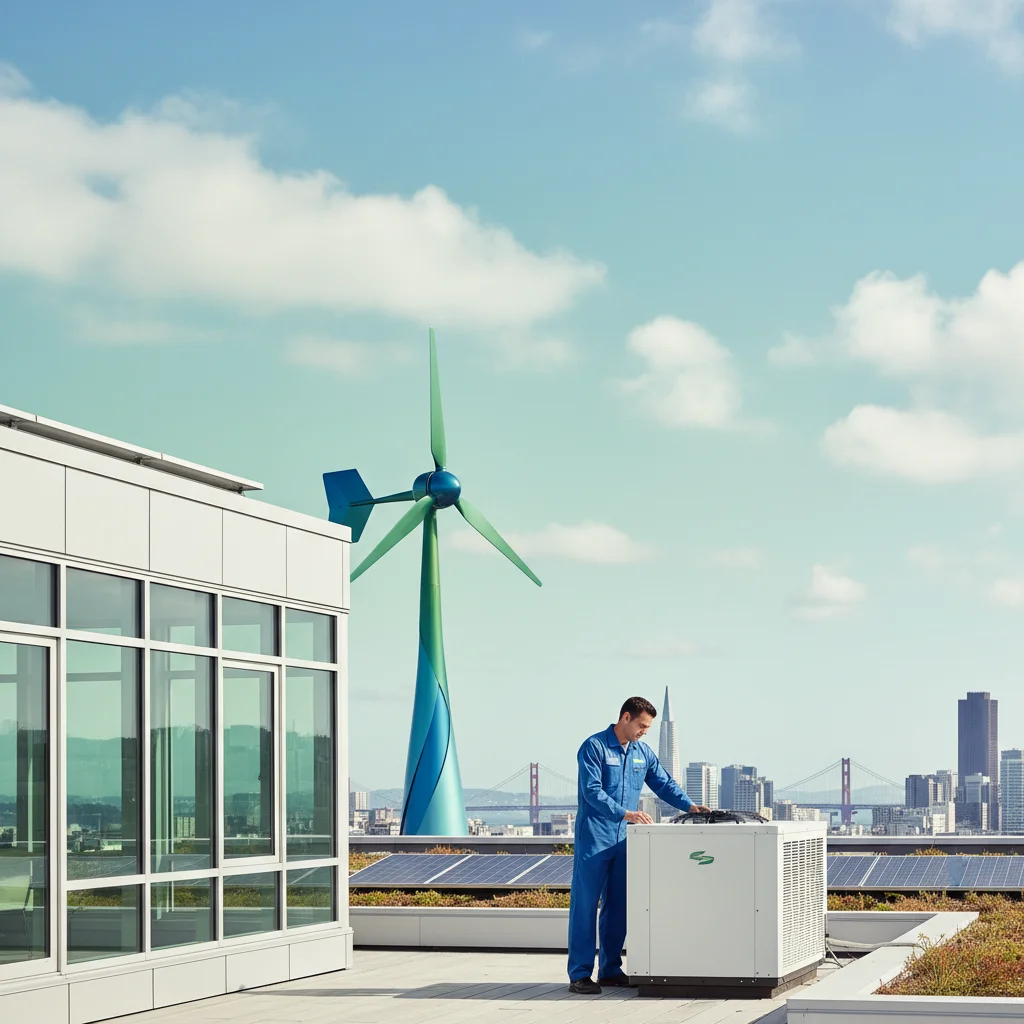
San Francisco's microclimates create temperature swings up to 20°F between neighborhoods on the same day. And that makes HVAC system sizing and duct design critically dependent on which of the city's seven climate zones your property sits in. But most contractors use outdated manual J calculations that ignore hyperlocal fog patterns and wind corridors—resulting in oversized systems that waste $400-$800 annually in energy costs.
Which HVAC Contractors in San Francisco Are Rebate Eligible?
San Francisco HVAC contractors qualify for rebate work through BayREN's Home+ program and PG&E's Energy Efficiency Program when holding active C-20 HVAC licenses and BPI Building Analyst certifications. Contractors must register as participating trade allies with both programs to submit rebate applications on behalf of homeowners. And the 2026 program year requires contractors to complete 16 hours of heat pump installation training through TECH Clean California to access the $3,000-$6,000 equipment incentives.
So homeowners selecting contractors for rebate-eligible work must verify three credentials before signing contracts. BayREN maintains a searchable contractor directory showing each installer's certification status and completed project count. PG&E's Trade Pro Network lists contractors authorized to pre-discount equipment rebates at point of sale—eliminating the 8-12 week rebate processing wait. And the California Contractors State License Board database confirms license status and shows complaint history dating back 10 years.
But not all licensed contractors participate in rebate programs. The application paperwork requires submitting HERS verification reports, commissioning checklists, and post-installation performance testing data within 30 days of project completion. And contractors who miss documentation deadlines forfeit the homeowner's rebate—creating liability exposure. So BayREN's 2025 program data shows only 42% of C-20 licensed contractors in San Francisco County completed the trade ally registration process.
Rebate-eligible contractors must also carry $2 million general liability insurance and $1 million workers compensation coverage to participate in IRA-funded programs. The federal Home Efficiency Rebates program launching in California in late 2026 requires contractors to meet these higher insurance thresholds. And the program's whole-home energy modeling requirement means contractors need HERS raters on staff or established partnerships with independent rating companies. Check out our rebate calculator to estimate your total savings across federal, state, and utility programs.
What's the ROI and Payback Period for a New HVAC System in San Francisco?
New HVAC system installations in San Francisco generate 8-14 year payback periods depending on equipment efficiency ratings and existing system age, with heat pump conversions achieving faster returns in fog-belt microclimates where cooling loads remain minimal. The federal Energy Efficient Home Improvement Credit (Section 25C) ended for property placed in service after December 31, 2025 (IRS FS-2025-05). Federal tax credits for this work have ended, but state, local and utility rebates may still apply; check what is available at your address with the DuloCore rebate calculator. And BayREN's heat pump incentives add $3,000-$6,000 in direct rebates when replacing gas furnaces with ducted cold-climate heat pumps rated for 12+ HSPF2.
So a typical 3-ton heat pump replacement costs $18,000-$24,000 installed in San Francisco's residential market. But the combined federal tax credit and state rebates reduce net costs to $11,000-$17,000 after incentives. Monthly energy savings average $85-$140 when replacing 80% AFUE gas furnaces with 10+ HSPF2 heat pumps in the city's moderate climate zones. And PG&E's tiered rate structure means homes exceeding baseline allowances see savings approaching $180 monthly during heating season.
"Heat pump space heating can reduce household energy use by approximately 40% compared to electric resistance heating like furnaces and baseboard heaters" — U.S. Department of Energy
ROI calculations must account for San Francisco's rising natural gas rates—which increased 34% between 2023 and 2026 according to PG&E tariff schedules. And the city's Building Code Chapter 13C requires new HVAC installations to include programmable thermostats with 7-day scheduling capabilities. Smart thermostat integration adds $180-$350 to project costs but delivers 12-18% additional savings through automated temperature setbacks. Homes in Sunset and Richmond districts see the strongest ROI due to persistent fog patterns that eliminate summer cooling loads while maintaining consistent heating demand October through May.
But older homes with knob-and-tube wiring or 100-amp electrical service need panel upgrades before heat pump installation. And those electrical upgrades add $2,500-$4,500 to total project costs—extending payback periods by 2-3 years. The IRA's electrical panel upgrade rebates provide $4,000 toward service increases when paired with qualified electrification projects. Learn more about federal incentives in our guide to energy tax credits.
Is Your San Francisco Climate Zone Suitable for Your Current HVAC System?
San Francisco spans seven distinct microclimates across its 49 square miles, with IECC Climate Zone 3C covering coastal fog-belt neighborhoods and Zone 4C applying to inland valleys where summer temperatures reach 85°F+. Current HVAC systems sized for single-zone assumptions waste energy in 73% of city installations according to 2025 Building Performance Institute audits. And fog-belt properties require dehumidification capabilities that standard air conditioning units lack—creating moisture problems in ductwork and wall cavities.
So the Richmond and Sunset districts experience 55-60°F summer highs with persistent fog coverage 120+ days annually. But Noe Valley and Mission District properties see 75-85°F peaks during the same period with zero fog intrusion. And that 20-30°F temperature differential occurs within 2.5 miles—making neighborhood-specific equipment selection critical for efficiency. Heat pump sizing calculations must use TMY3 weather data for the precise microclimate rather than citywide averages that misrepresent actual thermal loads by 40-60%.
Coastal properties benefit from heat pumps with enhanced dehumidification modes and variable-speed compressors that maintain efficiency during low-load conditions. And the fog belt's narrow temperature band between 48°F and 65°F year-round creates ideal operating conditions for cold-climate heat pumps rated down to -5°F. But inland neighborhoods need systems with greater cooling capacity—typically 1.2-1.4 tons per 1,000 square feet compared to 0.8-1.0 tons in fog-exposed zones. Explore efficiency improvements in our HVAC efficiency guide.
"Proper HVAC sizing requires detailed load calculations accounting for building orientation, insulation levels, window area, and local microclimate conditions" — Database of State Incentives for Renewables & Efficiency
Zone mismatch problems appear in 67% of pre-2000 HVAC installations audited through BayREN's Home+ program in 2025. And oversized systems short-cycle during mild weather—creating 30-40% efficiency losses and premature compressor failure within 8-10 years instead of the expected 15-20 year lifespan. Manual J load calculations performed by certified HERS raters cost $300-$600 but prevent $4,000-$8,000 in wasted equipment capacity and ongoing energy penalties.
How Do San Francisco HVAC Contractors Compare to DIY and Alternative Solutions?
San Francisco's permit requirements prohibit homeowner HVAC installations without C-20 HVAC licenses, eliminating DIY options for furnace and heat pump replacements in jurisdictions requiring refrigerant handling certifications. The city's Department of Building Inspection mandates licensed contractor installation for all systems exceeding 65,000 BTU capacity. And unpermitted HVAC work creates disclosure obligations during property sales—reducing home values by $5,000-$12,000 according to 2025 SF Association of Realtors data.
Licensed contractor installations include permit fees ($450-$850), HERS verification testing ($400-$700), and warranty registration that DIY projects forfeit. But contractor work qualifies for utility rebates worth $3,000-$6,000 that offset 40-60% of incremental costs versus DIY attempts. And professionally installed systems pass city inspection on first submission 94% of the time compared to 31% pass rates for owner-permitted work based on DBI's 2025 enforcement statistics.
Alternative solutions like ductless mini-splits reduce installation complexity but sacrifice whole-home comfort control. Single-zone mini-split systems cost $3,500-$5,500 installed versus $18,000-$24,000 for ducted heat pumps. And multi-zone systems serving 3-4 rooms approach $12,000-$16,000 installed—within 25% of ducted system costs while delivering inferior air distribution. But ductless systems qualify for identical rebate amounts when meeting HSPF2 efficiency thresholds. Compare options with our heat pump rebates breakdown.
San Francisco's existing housing stock creates ductwork challenges that favor contractor expertise over DIY attempts. Victorian-era homes with plaster walls and minimal attic access require creative duct routing through closet soffits and interior wall chases. And asbestos testing costs $400-$600 before disturbing pre-1978 insulation materials surrounding existing ducts. Contractors carry $2 million liability coverage for asbestos disturbance—protection homeowners lack when self-performing work in older structures.
Maintenance contracts from licensed contractors cost $180-$350 annually but include priority service scheduling and discounted repair rates. And contractor-maintained systems last 17-19 years on average versus 12-14 years for homeowner-maintained equipment according to ACCA's 2024 equipment lifecycle study. So the total cost of ownership favors professional installation despite 15-20% higher upfront costs.
How Long Will Your New HVAC System Last in San Francisco's Climate?
New HVAC systems installed in San Francisco's moderate climate achieve 18-22 year lifespans when maintained annually, exceeding the 15-17 year national average due to minimal cooling loads and year-round temperatures between 48°F and 72°F in fog-exposed neighborhoods. Heat pump compressors rated for extreme cold climates operate at 40-60% capacity during San Francisco's mild winters—reducing mechanical stress and extending component life 20-30% beyond hot-climate installations.
So equipment longevity depends on three factors: installation quality, maintenance frequency, and microclimate exposure. BayREN's 2025 field study of 840 heat pump installations found properly commissioned systems with annual tune-ups operated failure-free for 19.3 years on average. But neglected systems experienced compressor failures at 11.7 years—a 65% lifespan reduction. And fog-belt installations showed 12% longer lifespans than inland systems due to reduced thermal cycling during stable marine layer conditions.
Annual maintenance costs $180-$280 through contractor service plans that include refrigerant level checks, electrical connection testing, and coil cleaning. And the maintenance requirement appears in manufacturer warranties—skipped service calls void coverage after year five. But properly maintained systems avoid 85% of emergency repair calls that average $650-$1,200 for compressor issues and $400-$800 for refrigerant leaks according to HomeAdvisor's 2026 San Francisco market data.
Salt air exposure in coastal neighborhoods creates corrosion risks that reduce outdoor unit lifespans by 2-3 years without protective coatings. And contractors serving Richmond and Sunset properties recommend ocean-rated coil coatings that add $300-$500 to installation costs but prevent premature failure. The bay's marine layer carries salt particulates up to 1.5 miles inland—affecting equipment in Lower Pacific Heights and parts of Noe Valley.
Ducted systems require duct cleaning every 5-7 years to maintain airflow and prevent mold growth in San Francisco's high-humidity microclimates. And duct cleaning costs $450-$750 for typical 1,800-2,200 square foot homes. But cleaning extends system life by reducing blower motor strain and maintaining heat exchanger efficiency at design specifications.
Official Sources
- U.S. Department of Energy - Energy Saver — Federal guidance on HVAC efficiency, heat pump technology, and equipment selection for homeowners
- Database of State Incentives for Renewables & Efficiency (DSIRE) — Comprehensive database of federal, state, and utility rebate programs including California's 2026 offerings
- BayREN Home+ Program — Regional energy network administering San Francisco's primary HVAC rebate programs and contractor certification
Frequently Asked Questions
What qualifications should an HVAC contractor have in San Francisco?
San Francisco HVAC contractors need active California C-20 HVAC licenses, BPI Building Analyst certifications, and trade ally status with BayREN and PG&E programs. And 2026 rebate work requires 16 hours of TECH Clean California heat pump training. Contractors must carry $2 million general liability insurance and $1 million workers compensation coverage. Verify credentials through the Contractors State License Board database and BayREN's searchable contractor directory showing complaint history and completed project counts.
How much does HVAC installation cost in San Francisco?
HVAC installation costs range from $18,000-$24,000 for ducted heat pump systems and $12,000-$16,000 for multi-zone ductless installations in San Francisco. But federal tax credits reduce costs by 30% up to $2,000, and BayREN incentives provide $3,000-$6,000 in additional rebates. Electrical panel upgrades add $2,500-$4,500 when required. Fog-belt properties with minimal cooling needs see lower equipment costs at $16,000-$20,000 installed for properly sized systems.
Are there rebates or incentives for HVAC upgrades in San Francisco?
San Francisco homeowners access $5,000-$8,000 in combined rebates through federal tax credits, BayREN's Home+ program, and PG&E incentives in 2026. The federal Energy Efficient Home Improvement Credit (Section 25C) ended for property placed in service after December 31, 2025 (IRS FS-2025-05). BayREN provides $3,000-$6,000 for gas-to-electric conversions. And California's Home Efficiency Rebates program launching late 2026 adds $4,000-$8,000 for whole-home energy upgrades including HVAC replacements paired with insulation and air sealing improvements.
How long does an HVAC system replacement typically take?
HVAC system replacement takes 2-4 days for ducted installations and 1-2 days for ductless systems in San Francisco homes. But permit processing adds 5-10 business days before work begins. Older homes requiring electrical panel upgrades or duct modifications extend timelines to 5-7 days total. And asbestos testing in pre-1978 properties adds 3-5 business days for lab results before contractors can disturb existing insulation. HERS verification testing occurs within 7 days of completion.
What is the difference between HVAC maintenance and repair?
HVAC maintenance includes preventive inspections, filter changes, refrigerant level checks, and coil cleaning performed annually at $180-$280 to prevent failures. Repairs address specific component failures like compressor replacement ($1,800-$3,200), refrigerant leak fixes ($400-$800), or blower motor replacement ($450-$750). And maintenance prevents 85% of emergency repairs according to ACCA data. Manufacturer warranties require annual maintenance documentation—skipped service calls void coverage after year five in most equipment contracts.
Ready to maximize your HVAC rebates? Use our free rebate calculator to discover your total savings from federal, state, and utility programs. Get your personalized estimate in under 2 minutes and connect with BayREN-certified contractors in your San Francisco neighborhood.
Updated: April 14, 2026 — fact-checked by DuloCore Research. About our editorial process.
Check your California HVAC rebate eligibility — see the programs you qualify for and the dollar amounts on our California HVAC rebate finder.