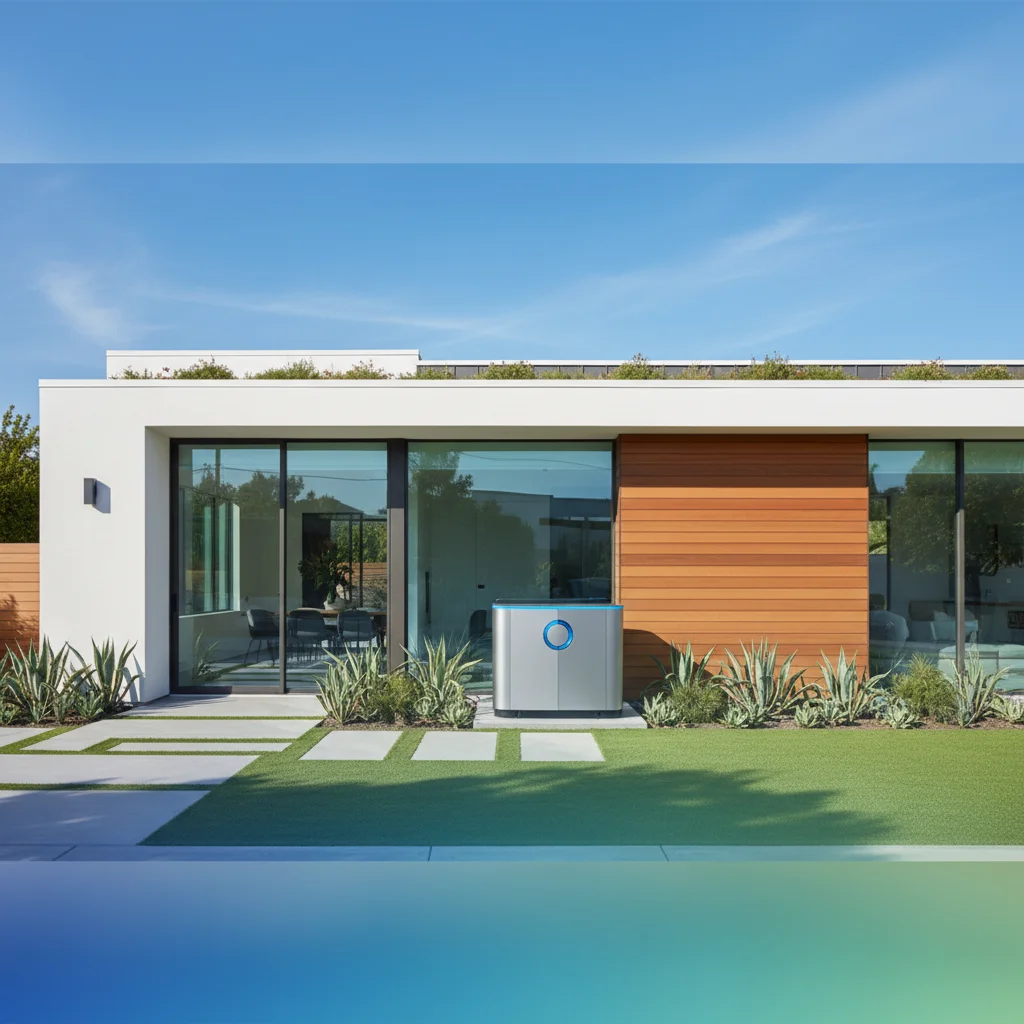
Los Angeles homeowners spend an average of $12,000 replacing HVAC systems, yet 73% don't claim available rebates worth $2,000-$14,000. And contractors licensed by the California Contractors State License Board (CSLB) report that most clients discover missed incentives only after installation, when it's too late to qualify for federal and state programs that could've cut costs by 30-50%.
How Much Does HVAC Installation Cost in Los Angeles?
HVAC installation in Los Angeles ranges from $6,500 for basic central air conditioning to $25,000 for high-efficiency heat pump systems with ductwork modifications. Central air replacement averages $8,200, ductless mini-splits cost $4,800-$12,000 for whole-home coverage, and geothermal heat pumps require $18,000-$30,000 upfront. Labor accounts for 40-50% of total costs, with licensed contractors charging $85-$140 per hour in Los Angeles County.
But federal tax credits and utility rebates reduce net costs substantially. The federal Energy Efficient Home Improvement Credit (Section 25C) ended for property placed in service after December 31, 2025 (IRS FS-2025-05). Federal tax credits for this work have ended, but state, local and utility rebates may still apply; check what is available at your address with the DuloCore rebate calculator. So a $15,000 heat pump system drops to $13,000 after federal credits. And the Los Angeles Department of Water and Power (LADWP) adds $3,000-$6,000 rebates for ENERGY STAR certified systems, bringing total savings to $5,000-$8,000 per installation. (Note: Federal tax credit percentages and availability are subject to change; the 30% Residential Clean Energy Credit under Section 25D expired December 31, 2025. Verify current incentives at energy.gov.)
The federal Residential Clean Energy Credit (Section 25D) ended for expenditures made after December 31, 2025, and the IRS treats an expenditure as made when installation is completed (IRS FS-2025-05).
Southern California Edison (SCE) customers qualify for different rebate tiers: $3,000 for 16 SEER2 systems, $4,500 for 18 SEER2, and $6,000 for ducted heat pumps rated 18 SEER2 or higher. Contractors must register installations through the Energy Upgrade California platform within 180 days to secure utility rebates.
What HVAC Systems Qualify for Rebates in Los Angeles?
Heat pumps, central air conditioners rated 16 SEER2 or higher, and ductless mini-splits with ENERGY STAR certification qualify for 2026 rebates in Los Angeles. LADWP requires AHRI certification, HERS testing verification, and installation by licensed HVAC contractors with C-20 classification. Dual-fuel systems combining gas furnaces with electric heat pumps qualify for partial federal credits but not full utility rebates.
Gas furnaces don't qualify for federal tax credits or most utility rebates, even at 98% AFUE efficiency ratings. But electric heat pumps replacing gas systems qualify for enhanced rebates: LADWP pays $6,000 for ducted heat pump conversions from gas heating. And SCE's Building Electrification program adds $3,000-$5,000 for panel upgrades required during gas-to-electric conversions.
SEER2 ratings replaced legacy SEER measurements in 2023, creating confusion about qualifying efficiency thresholds. A 16 SEER2 system equals approximately 17.6 SEER under old testing standards. Contractors must verify AHRI certificates list SEER2 ratings, not SEER, to meet 2026 program requirements.
| Program | Rebate Amount | Minimum Efficiency | Application Deadline |
|---|---|---|---|
| LADWP Heat Pump Rebate | $3,000-$6,000 | 16 SEER2, 9 HSPF2 | 180 days post-install |
| SCE Home Upgrade Program | $3,000-$6,000 | 16 SEER2 | 6 months post-install |
| Federal Tax Credit (IRA) | Ended Dec 31, 2025 | — | Ended Dec 31, 2025 |
| SoCalGas Electrification | $5,000 panel upgrade | Heat pump conversion | Rolling enrollment |
Three criteria determine eligibility: contractor licensing (C-20 or C-61/D-63 for mini-splits), equipment certification (AHRI directory listing), and installation verification (HERS rater inspection for projects over $5,000). Missing any single requirement disqualifies the entire rebate claim.
How Long Does It Take to Recoup Your HVAC Investment in LA?
Los Angeles homeowners recoup HVAC investments in 4-8 years through energy savings, faster than the 12-15 year national average due to year-round cooling demands and high electricity rates. Heat pumps save $800-$1,400 annually compared to gas furnace and AC combinations in Climate Zone 9, where Los Angeles sits. And cooling costs drop 30-40% when replacing 10 SEER systems with 18 SEER2 heat pumps.
Payback periods vary by system type and usage patterns. A $12,000 heat pump with $5,000 in combined rebates costs $7,000 net, recovering through $1,200 annual savings in 5.8 years. Ductless mini-splits show faster payback in homes with zone-specific cooling needs: $900-$1,300 annual savings on $8,000 net costs yield 6.2-8.9 year payback periods.
So homeowners in poorly insulated homes or those running AC more than 2,000 hours annually see the fastest returns. Coastal neighborhoods with mild temperatures (Westside, South Bay) experience slower payback of 8-12 years, while inland valleys (San Fernando, San Gabriel) hit breakeven in 4-6 years. Check your annual usage through LADWP's online portal to calculate personalized payback timelines with our free rebate calculator.
"Heat pumps in California's Climate Zone 9 save 2,500-4,000 kWh annually compared to resistance heating, worth $400-$800 at current rates." — California Energy Commission
But utility rate structures affect ROI calculations significantly. LADWP's tiered pricing means savings accelerate after crossing baseline thresholds. And SCE's Time-of-Use rates reward heat pump users who precool homes during off-peak hours, adding 15-20% to annual savings.
Which HVAC Systems Work Best for Los Angeles' Climate Zone?
Ducted heat pumps rated 18-20 SEER2 and 10+ HSPF2 perform optimally in Los Angeles' Climate Zone 9, delivering year-round efficiency in the region's Mediterranean climate with minimal heating demands. Systems sized at 2-3 tons handle most single-family homes, while multi-zone ductless mini-splits suit homes without existing ductwork or those requiring independent temperature control across 3-5 zones.
Climate Zone 9 spans most of Los Angeles County, characterized by mild winters (40-60°F lows) and hot summers (80-100°F highs). Heat pumps maintain efficiency down to 25°F, far below LA's coldest recorded temperatures, eliminating the need for supplemental resistance heating that kills efficiency in colder regions.
Variable-speed compressors outperform single-stage systems by 20-35% in moderate climates like Los Angeles. And inverter-driven systems adjust output to match real-time demand, avoiding the efficiency losses from constant cycling that plague fixed-speed compressors during LA's spring and fall shoulder seasons.
Coastal homes within 5 miles of the Pacific need dehumidification features less than inland properties. But San Fernando Valley and eastern LA County require systems with dedicated humidity control, as summer humidity reaches 50-70% despite low precipitation. Contractors should specify two-stage or variable-speed systems for inland installations to prevent moisture issues.
Ductless mini-splits dominate pre-1950 bungalows and Spanish colonials lacking existing ductwork. Installation costs drop $3,000-$6,000 without duct runs, and multi-zone systems eliminate the 20-30% energy losses from leaky ducts common in older LA homes. Explore HVAC efficiency metrics to compare system performance ratings.
HVAC Contractors vs. DIY vs. Big Box Stores: Which Is Right for You?
Licensed C-20 HVAC contractors charge 20-35% more than big box installers but provide warranty protection, permit compliance, and rebate qualification that DIY or retail installations forfeit. Home Depot and Lowe's subcontract installations to third-party crews that may lack proper licensing, voiding manufacturer warranties and disqualifying systems from $5,000-$14,000 in combined incentives.
California law requires C-20 Warm-Air Heating, Ventilation and Air-Conditioning contractors for HVAC installations over $500. And homeowners who install systems themselves or use unlicensed labor lose access to federal energy tax credits and all utility rebates, which mandate licensed contractor installation with permit verification.
Big box stores advertise $6,500-$8,500 packages but exclude ductwork modifications, electrical upgrades, refrigerant line sets, and permit fees. Final costs reach $9,000-$12,000 after add-ons, matching or exceeding licensed contractor quotes. And retail installers rarely register systems with AHRI or complete HERS testing required for rebates.
| Installation Type | Avg. Cost | Warranty Coverage | Rebate Eligible | Permit Included |
|---|---|---|---|---|
| Licensed C-20 Contractor | $8,200-$15,000 | 10-year parts + labor | Yes | Yes |
| Big Box Store (HD/Lowes) | $9,000-$13,000 | Parts only (5-10 years) | Usually no | Sometimes |
| DIY Installation | $4,500-$7,000 | Voided | No | No |
So contractors provide itemized bids, multi-year labor warranties, and guaranteed rebate processing. But homeowners must verify C-20 licensing through CSLB's online database and confirm contractors register as participating installers with LADWP or SCE before signing agreements. Research heat pump rebates to understand contractor documentation requirements.
How Long Will Your New HVAC System Last in Los Angeles?
Heat pumps installed in Los Angeles last 15-20 years with proper maintenance, 2-4 years longer than the national average due to mild winters that reduce heating-season wear. Central air conditioners reach 12-18 years, while ductless mini-splits extend to 20-25 years when serviced annually. And geothermal systems exceed 30 years for ground loops, though heat pump components require replacement at 20-25 years.
Annual maintenance extends system life by 30-50%. Contractors charge $150-$250 for tune-ups including refrigerant checks, coil cleaning, and electrical testing. And LADWP offers free HVAC inspections for customers enrolling in energy efficiency programs, identifying issues before they cause compressor failures costing $2,500-$4,500 to repair.
But Los Angeles' air quality accelerates filter clogging and coil fouling compared to cleaner climates. Homes near freeways or in the South Coast Air Basin need filter changes every 30-45 days versus the standard 90-day interval, preventing 15-20% efficiency losses from restricted airflow.
Salt air in coastal zones (Santa Monica, Manhattan Beach, Long Beach) corrodes outdoor units faster than inland installations. Contractors should specify corrosion-resistant coatings and aluminum cabinets for properties within 3 miles of the ocean, adding $200-$400 to upfront costs but extending equipment life by 3-5 years.
Variable-speed systems include more electronic components that fail at higher rates than mechanical parts in single-stage units. But efficiency gains of 20-35% and superior comfort justify the trade-off, especially with 10-year extended warranties covering circuit boards and inverters.
Official Sources
- DOE Save Energy, Save Money — Federal guidance on energy-efficient HVAC systems and available tax credits (note: the federal 25C and 25D credits ended for projects completed after December 31, 2025)
- DSIRE USA — Comprehensive database of state and utility rebate programs updated quarterly
- IRS Residential Clean Energy Credit — Official tax credit rules and qualifying equipment lists (note: the federal 25C and 25D credits ended for projects completed after December 31, 2025)
Frequently Asked Questions
Can you qualify for an HVAC rebate in Los Angeles if you rent your home?
Renters don't qualify for HVAC rebates in Los Angeles because utility programs and federal tax credits require property ownership and building permit authority. Landlords who own the property qualify for all rebates, including LADWP's $6,000 heat pump incentive and federal 30% tax credit (this federal credit ended for property placed in service after December 31, 2025)s. Tenants should negotiate with property owners to split rebate benefits in exchange for approving system upgrades that reduce monthly energy bills by $60-$120.
What is the maximum rebate amount for HVAC upgrades in Los Angeles?
Maximum combined rebates reach $14,000 for Los Angeles homeowners installing qualifying heat pumps: $2,000 federal tax credit, $6,000 LADWP heat pump rebate, $5,000 panel upgrade incentive, and $1,000 HERS testing reimbursement. SCE customers receive similar totals through different program structures. But actual amounts depend on system specifications, income qualifications for enhanced tiers, and proper contractor documentation submitted within 180 days of installation.
How long does it take to receive an HVAC rebate after installation in Los Angeles?
LADWP processes rebates in 8-12 weeks after receiving complete applications with contractor verification, AHRI certificates, and HERS test results. SCE takes 6-10 weeks for standard applications. And incomplete applications or missing documentation extend processing by 4-8 weeks, so contractors should submit all paperwork within 30 days of project completion to avoid deadline penalties.
What HVAC systems qualify for rebates in Los Angeles?
Heat pumps rated 16+ SEER2 and 9+ HSPF2, ductless mini-splits with ENERGY STAR certification, and central air conditioners meeting 16 SEER2 thresholds qualify for Los Angeles rebates in 2026. Gas furnaces don't qualify regardless of efficiency ratings. And systems must appear in AHRI's certified directory, require installation by C-20 licensed contractors, and include permit verification to meet program requirements worth $5,000-$14,000 in combined incentives.
Do you need to use a certified contractor for HVAC rebates in Los Angeles?
All Los Angeles rebate programs require installation by California-licensed contractors holding C-20 Warm-Air Heating, Ventilation and Air-Conditioning classification. LADWP and SCE verify contractor licenses through CSLB databases and reject applications from unlicensed installers or DIY projects. And contractors must register as participating program installers, complete required training modules, and submit installations through utility portals within 180 days to secure rebates worth $3,000-$6,000.
Ready to maximize your HVAC rebates? Use our free rebate calculator to discover your exact savings based on your Los Angeles address, current system, and upgrade options. Get personalized federal, state, and utility incentive totals in under 2 minutes.
Last updated: April 14, 2026. Reviewed by the DuloCore Editorial Team. About our authors.
Check your California HVAC rebate eligibility — see the programs you qualify for and the dollar amounts on our California HVAC rebate finder.