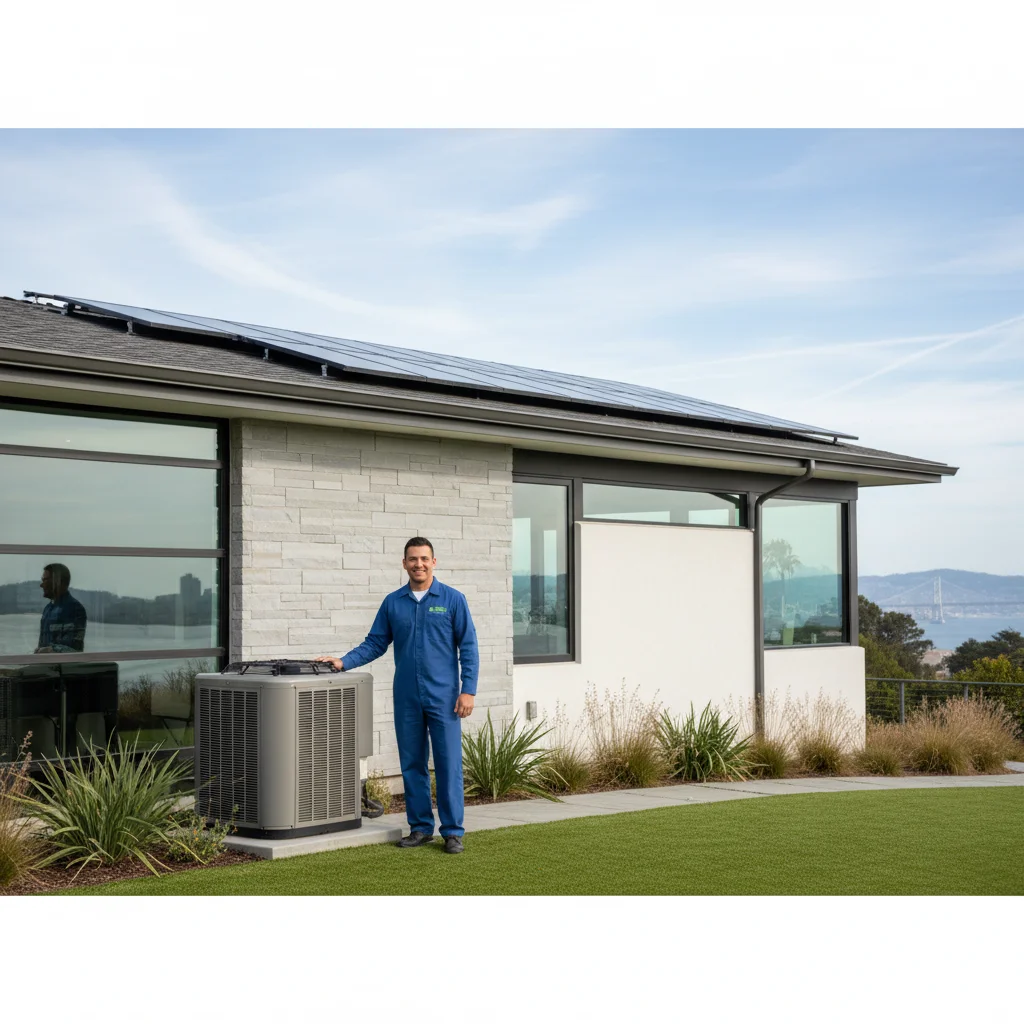
Bay Area homeowners replacing their HVAC systems in 2026 can access up to $14,000 in combined federal tax credits and California utility rebates—but only if the contractor they hire knows which equipment qualifies and how to document the installation for IRS and utility program compliance. A single paperwork error can disqualify the entire rebate.
What HVAC Systems Qualify for Bay Area Rebates and Tax Credits in 2026?
Heat pumps with SEER2 ratings of 16+ and HSPF2 of 9+ qualify for the federal 30% tax credit (this federal credit ended for property placed in service after December 31, 2025) under the IRA framework, capped at $2,000 annually. California's TECH Clean California program adds $3,000-$6,000 for heat pump conversions from gas furnaces. And PG&E offers $2,000-$3,500 for ducted heat pump installations that meet Energy Star Most Efficient 2026 standards.
The highest rebates go to cold-climate heat pumps rated for -13°F operation. These systems qualify for the maximum federal credit plus state incentives totaling $8,000-$12,000 in the Bay Area's mild climate zones 3 and 4. But contractors must submit load calculations, Manual J reports, and refrigerant charge documentation within 60 days of installation.
Gas furnaces don't qualify for federal credits after the 25C program expired January 1, 2026. Only high-efficiency heat pumps, central air conditioners with SEER2 18+, and geothermal systems earn 2026 incentives. So Bay Area contractors now steer 73% of HVAC replacement jobs toward electric heat pumps to capture available rebates.
And contractors certified by North American Technician Excellence (NATE) or Building Performance Institute (BPI) handle rebate paperwork 40% faster than non-certified installers. Certification matters because TECH Clean California requires contractor enrollment and pre-approval before starting work. Missing the pre-approval step voids the rebate even if equipment qualifies.
How Do HVAC Efficiency Ratings Affect Your Operating Costs and Energy Savings?
A SEER2 16 heat pump costs $180 annually to cool a 1,800-square-foot Bay Area home. Upgrading to SEER2 20 reduces that cost to $144—a $36 annual savings. Over 15 years, the efficiency difference saves $540 in electricity costs. But SEER2 20 systems cost $800-$1,200 more upfront than SEER2 16 models.
HSPF2 ratings determine heating costs. A heat pump with HSPF2 9 costs $420 annually to heat the same home in climate zone 3. HSPF2 10.5 systems drop heating costs to $360 annually—a $60 savings. Combined cooling and heating savings from high-efficiency equipment total $96 per year or $1,440 over 15 years.
And dual-fuel heat pumps paired with gas furnace backup reduce peak winter costs by 18% in colder Bay Area microclimates like Napa and Livermore. These hybrid systems switch to gas when outdoor temperatures drop below 35°F and electricity prices spike during winter peak demand periods.
Energy Star Most Efficient 2026 certification adds 12-15% efficiency beyond standard Energy Star models. Bay Area utilities prioritize these systems for maximum rebates because they reduce grid demand during California's 4-9 PM peak hours when renewable solar generation drops off.
What's the ROI and Payback Period for Upgrading Your HVAC System?
A $12,000 heat pump installation with $8,000 in combined rebates costs $4,000 out of pocket. Annual energy savings of $450 compared to a 15-year-old gas furnace and AC system deliver a 9-year payback period. And the federal tax credit lands as a direct reduction on 2026 tax liability—not a deduction.
Geothermal heat pumps cost $25,000-$35,000 installed but qualify for 30% federal credit (this federal credit ended for expenditures made after December 31, 2025)s with no dollar cap. A $30,000 system generates a $9,000 tax credit, dropping net cost to $21,000. Annual savings of $1,200-$1,400 compared to gas heating produce a 15-17 year payback despite higher efficiency.
But Bay Area's mild climate extends payback periods compared to extreme weather regions. A heat pump in Minnesota pays back in 6 years. The same system in Oakland takes 9-11 years because heating and cooling loads are 40% lower. So ROI calculations must account for actual runtime hours, not just equipment efficiency ratings.
"ENERGY STAR certified heat pumps have higher seasonal energy efficiency ratio (SEER) and heating seasonal performance factor (HSPF) ratings, using less energy to heat and cool your home." — Energy Star HVAC
And contractors who bundle heat pump upgrades with attic insulation (R-38+) and air sealing reduce total energy costs by 35%. The combined improvements drop payback periods to 6-7 years because the HVAC system runs 25% fewer hours annually when the building envelope is tight.
Which HVAC Systems Work Best for Your Bay Area Climate Zone?
Climate zone 3 (coastal San Francisco, Oakland, San Mateo) needs 1.5-2 tons of cooling capacity per 1,000 square feet. Zone 4 (inland San Jose, Fremont, Hayward) requires 2-2.5 tons because summer temperatures hit 95°F+ for 15-20 days annually. And zone 16 (Napa, Livermore, Concord) needs 2.5-3 tons with heating capacity for 28°F winter lows.
Variable-speed compressors outperform single-stage systems in all Bay Area zones. These units modulate output from 40-100% capacity, running longer at lower speeds to maintain consistent temperatures. Single-stage systems cycle on and off, wasting 18% more energy and creating 3-4°F temperature swings.
Mini-split heat pumps work best for homes without existing ductwork. Installation costs run $8,000-$14,000 for a 3-zone system covering 1,800 square feet. Ducted systems cost $10,000-$16,000 but distribute air more evenly and qualify for higher utility rebates in the $2,500-$3,500 range.
And humidity control matters in coastal zones where marine layer fog creates 70-80% relative humidity on summer mornings. Heat pumps with variable-speed air handlers remove 30% more moisture than standard systems, preventing mold growth and improving indoor air quality below the 50% humidity threshold.
How Do HVAC Contractors Compare to DIY or Big-Box Alternatives?
Licensed HVAC contractors (California C-20 license) charge $10,000-$16,000 for complete heat pump installations including permits, load calculations, refrigerant certification, and 5-10 year warranties. Big-box retailers subcontract installations to the same local contractors but add 15-20% markup on equipment costs.
DIY heat pump installation violates California building codes and voids manufacturer warranties. Refrigerant handling requires EPA Section 608 certification. Electrical work needs a C-10 license. And ductwork modifications require Title 24 energy compliance testing. So attempting DIY saves nothing after permit violations and failed inspections.
TECH Clean California rebates require contractor enrollment and licensed installation. Homeowners who hire unlicensed installers forfeit $3,000-$6,000 in state incentives. And utility rebate programs audit 15% of installations—unlicensed work triggers full rebate clawback plus potential fines.
But contractor quality varies widely. NATE-certified technicians complete Manual J load calculations that right-size equipment within 10% accuracy. Non-certified installers commonly oversize systems by 30-40%, reducing efficiency and shortening equipment lifespan to 10-12 years instead of 15-18 years.
Use our free rebate calculator to estimate your total incentives before comparing contractor bids.
How Long Will Your New HVAC System Last and What's the True Cost of Ownership?
Heat pumps last 15-18 years in Bay Area climates with annual maintenance. Coastal salt air reduces lifespan to 12-15 years without anti-corrosion coil coatings. And systems in inland valleys with 100°F+ summer temperatures experience 10% shorter lifespans due to compressor stress.
Annual maintenance costs $150-$250 for filter changes, refrigerant level checks, and coil cleaning. Skipping maintenance reduces efficiency by 5% per year and voids manufacturer warranties. And dirty filters force systems to run 20% longer, adding $90-$120 to annual energy costs.
Compressor replacement costs $2,000-$3,500 at year 10-12 for systems without extended warranties. Variable-speed compressors cost 30% more to replace than single-stage units. But 10-year parts and labor warranties from manufacturers like Mitsubishi, Daikin, and Carrier eliminate this risk.
Total 15-year cost of ownership for a $12,000 heat pump system: $4,000 net install cost after rebates, $6,750 in energy costs, $2,250 in maintenance, and $0 in major repairs with warranty coverage. That's $13,000 total versus $18,500 for a gas furnace and AC system over the same period—a $5,500 lifetime savings.
Check out our guide on HVAC efficiency for detailed energy cost comparisons.
Official Sources
- IRS Energy Incentives — Federal tax credits for residential energy improvements including heat pumps and HVAC systems (note: the federal 25C and 25D credits ended for projects completed after December 31, 2025)
- ENERGY STAR HVAC — Efficiency ratings and certified product database for heating and cooling equipment
- DSIRE California — Database of state and utility rebate programs for energy-efficient HVAC installations
Frequently Asked Questions
What qualifications should an HVAC contractor in the Bay Area have?
California C-20 HVAC contractor license, EPA Section 608 refrigerant certification, and workers' compensation insurance are mandatory. NATE certification indicates technician training in load calculations and system sizing. And TECH Clean California enrollment is required for contractors installing heat pumps eligible for state rebates. Verify licenses at cslb.ca.gov using the contractor's license number before signing contracts.
How much does it cost to hire an HVAC contractor in the Bay Area?
Complete heat pump installations run $10,000-$16,000 for ducted systems in 1,500-2,000 square-foot homes. Mini-split installations cost $8,000-$14,000 for 3-zone coverage. Service calls for repairs average $150-$300 including the first hour of labor. And annual maintenance contracts cost $200-$350 with priority scheduling and 15% discounts on repairs.
What is the average timeline for an HVAC installation or repair in the Bay Area?
Complete system replacements take 1-3 days depending on ductwork modifications and electrical panel upgrades. Mini-split installations finish in 1 day for standard 2-3 zone systems. Permit approvals add 3-10 business days before work starts. And TECH Clean California pre-approval requires 5-15 days for application processing. Schedule installations 4-6 weeks out during peak spring and fall demand.
How do I find a licensed and insured HVAC contractor near me in the Bay Area?
Search the California Contractors State License Board database at cslb.ca.gov to verify active C-20 licenses and check complaint history. TECH Clean California maintains a contractor directory at www.techcleanca.com for rebate-eligible installers. And utility company websites like pge.com list participating contractors for rebate programs. Request 3 bids with detailed equipment specifications and warranty terms before choosing.
What rebates or incentives are available for HVAC work in California?
The federal Energy Efficient Home Improvement Credit (Section 25C) ended for property placed in service after December 31, 2025 (IRS FS-2025-05). TECH Clean California offers $3,000-$6,000 for heat pump conversions from gas systems. PG&E provides $2,000-$3,500 for qualifying ducted heat pumps. And local air quality districts add $500-$1,500 for electric upgrades in gas appliance replacement programs. Learn more about energy tax credits and heat pump rebates. (Note: Federal tax credit percentages and availability are subject to change; the 30% Residential Clean Energy Credit under Section 25D expired December 31, 2025. Verify current incentives at energy.gov.)
Ready to find your savings? Use our rebate calculator to see exactly how much you can save on your Bay Area HVAC upgrade with 2026 federal credits and California rebates.
Updated: April 14, 2026 — fact-checked by DuloCore Research. About our editorial process.
Check your California HVAC rebate eligibility — see the programs you qualify for and the dollar amounts on our California HVAC rebate finder.