Improper humidity levels force your air conditioner to work up to 25% harder, directly increasing your summer electricity bills. And this wasted energy doesn't just inflate costs; it accelerates wear on your HVAC system and degrades indoor air quality. So addressing moisture issues is not a matter of comfort, but a direct line to cutting household energy consumption and long-term maintenance expenses.
What Rebates and Eligible Equipment Are Available for Humidity Control Energy Audits?
Humidity control energy audit rebates are financial incentives offered by states and utilities, providing homeowners up to $300 in 2026 for a professional assessment. Eligible equipment often includes ENERGY STAR certified whole-home dehumidifiers, energy recovery ventilators (ERVs), and smart thermostats with advanced humidity-sensing capabilities.
State and utility programs for 2026 offer direct rebates for the cost of a specialized audit focused on moisture intrusion and ventilation. And these incentives often range from $150 to $300, covering a portion of the professional assessment fee. But the primary goal is to identify sources of excess humidity. So eligible equipment for subsequent rebates, identified during the audit, includes ENERGY STAR certified whole-home dehumidifiers, which use 15% less energy than conventional models. Other qualifying upgrades include Energy Recovery Ventilators (ERVs), which manage humidity while bringing in fresh air, and smart thermostats with integrated humidity controls. A comprehensive home energy audit is the first step in pinpointing where these upgrades deliver the most value.
The Real Cost of Unchecked Humidity
So why does this matter? Uncontrolled indoor humidity above 60% makes your home feel warmer than the thermostat setting, forcing your air conditioner to run longer and work harder to achieve the same level of comfort. And this added strain increases cooling costs by up to 25% and shortens the lifespan of your HVAC equipment. But the problem extends beyond energy waste, as high humidity promotes mold growth, which can cause costly structural damage and negatively impact respiratory health.
Am I Eligible? Understanding Income Limits and State/Utility-Specific Requirements
Eligibility for 2026 humidity control audit rebates is determined by geographic location, utility provider, and, in some cases, household income. And many state-level programs, like those funded through the Department of Energy, reserve enhanced rebates for households earning below 80% of the Area Median Income (AMI).
Your eligibility for a humidity control audit rebate depends entirely on your specific state and utility provider's 2026 programs. So homeowners must reside in the designated service area to qualify. And while some utility rebates are available to all customers, many state-administered funds are income-restricted. For example, programs often target households at or below 80% of the Area Median Income (AMI) to ensure funds reach those who need them most. But other programs are universally available, focusing instead on the age of the home or the presence of outdated HVAC systems. Always verify the specific criteria for your location before scheduling an audit.
How Do I Apply? Navigating the Application Process, Deadlines, and Funding Status
The 2026 application process typically involves finding a certified auditor, scheduling the assessment, and submitting the paid invoice and audit report to the utility or state portal. And homeowners must apply before the program's funding is exhausted, with many deadlines falling in Q4 2026, often by December 31st.
Navigating the application process requires careful attention to detail. So the first step is to confirm your eligibility and the program's funding status on your utility or state energy office website. And most programs require you to use a BPI (Building Performance Institute) certified technician. After the audit is complete, you will submit a digital application that includes the technician's report and a final invoice. But deadlines are strict, with most 2026 programs closing applications by December 31, 2026, or whenever funds are depleted. Use our free rebate calculator to see what incentives you qualify for before you start.
| Program/Utility | Rebate Amount (2026) | Key Eligibility Requirement | Application Deadline |
|---|---|---|---|
| NYSERDA (New York) | Up to $250 | Must use a BPI GoldStar Contractor | December 15, 2026 |
| Mass Save (MA) | $150 | Customer of participating utility | Rolling (funds-based) |
| PG&E (California) | Up to $200 | Home must be 5+ years old | November 30, 2026 |
Can I Combine Incentives? Rules for Stacking Rebates and Contractor Requirements
Homeowners can typically stack a utility rebate for a humidity control audit with state-level incentives for equipment upgrades identified in the audit. However, federal energy tax credits for 2026 don't cover the audit itself but apply to qualifying equipment like high-efficiency heat pumps.
Stacking incentives is a common strategy to maximize savings. For instance, a homeowner can receive a $150 rebate from their utility for the audit itself. And if the audit recommends a new whole-home dehumidifier, a separate state rebate of $300 may be available for that purchase.
"The Database of State Incentives for Renewables & Efficiency® is the most comprehensive source of information on incentives and policies that support renewables and energy efficiency in the United States." — DSIRE So you can combine local programs. But it's important to note that the IRA federal tax credits don't apply to the audit fee. And those credits, which provide up to $2,000 for certain installations, are for the resulting equipment upgrades, such as new heat pump rebates. Most programs mandate the use of licensed and insured contractors for all work.
Official Sources
- ENERGY STAR — Federal program from the EPA providing efficiency standards and information on certified products, including dehumidifiers and ventilation fans.
- Database of State Incentives for Renewables & Efficiency (DSIRE) — A comprehensive database of state, local, utility, and federal incentives for energy efficiency projects.
Frequently Asked Questions
What are the eligibility requirements for a humidity control energy audit rebate?
Eligibility for a 2026 rebate is primarily based on your location and utility provider. And many programs require you to be a residential customer of a specific utility. Some state-level programs have income requirements, often targeting households at or below 80% of the Area Median Income (AMI). So you must always check your local program's specific rules.
What is the typical cost of a humidity control energy audit, and are there rebates available?
A specialized humidity control energy audit typically costs between $300 and $600. And yes, rebates are widely available from state and utility programs in 2026, usually covering between $150 and $300 of the total cost. So these rebates can reduce your out-of-pocket expense by up to 50%, making the audit much more accessible.
How does a humidity control energy audit differ from a standard home energy audit?
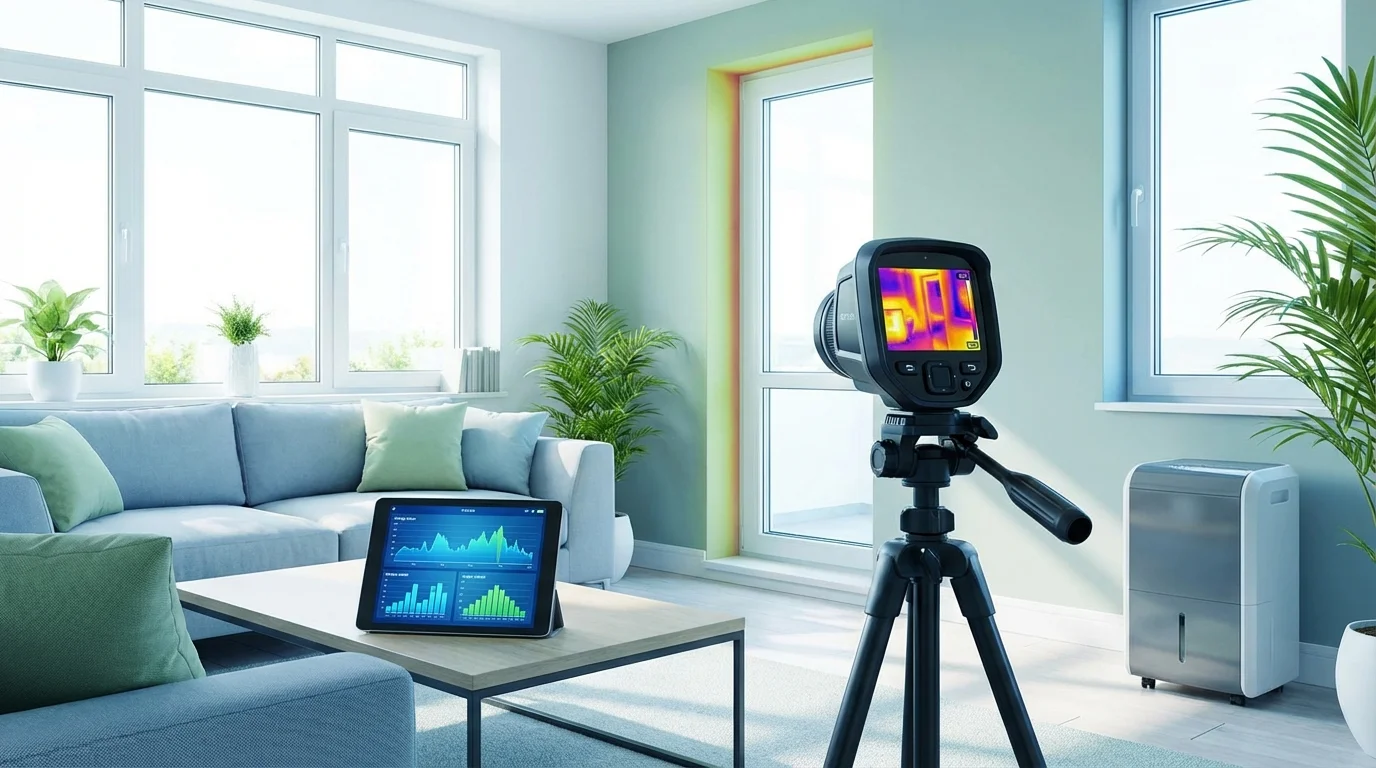
A standard home energy audit provides a broad overview of energy use, including insulation and air leaks. But a humidity control audit is more specialized. It uses tools like hygrometers and infrared cameras specifically to identify moisture sources, measure relative humidity throughout the home, and assess the performance of ventilation and dehumidification systems. So it provides targeted recommendations for moisture management.
Find Every Humidity Control Rebate You Qualify For
Don't leave money on the table. Our tools instantly search every federal, state, and utility incentive available for your home.
Calculate Your Savings NowUpdated: April 14, 2026 — fact-checked by DuloCore Research. About our editorial process.