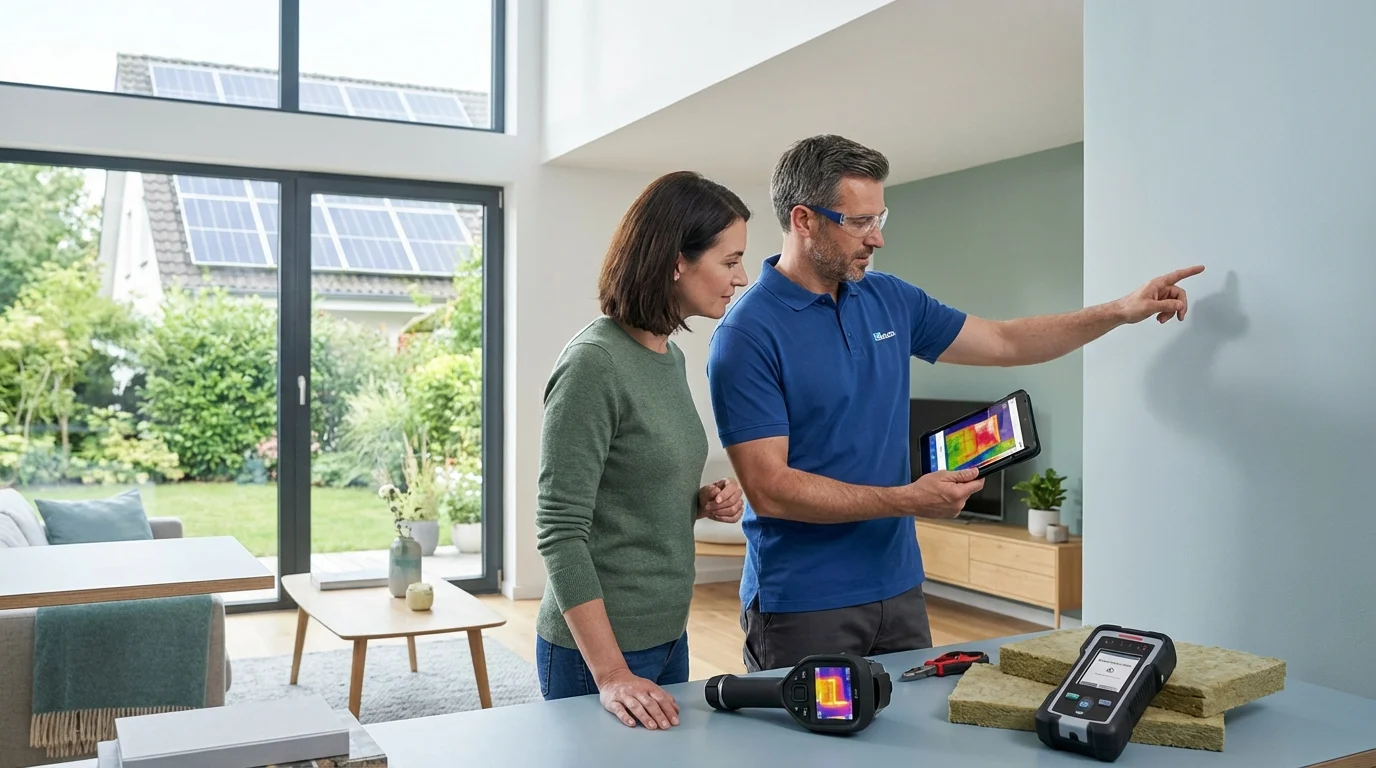
The average U.S. household has air leaks equivalent to leaving a window open every day of the year, contributing to 20-40% of the energy used for heating and cooling being wasted. A professional energy audit is the first step in identifying these costly problems. But choosing the right auditor is critical for unlocking thousands in rebates and tax credits designed to fix them.
What Financial Incentives Are Available for Energy Audits and Upgrades in My State or Utility Area?
Financial incentives for home energy audits in 2026 include federal tax credits, state rebates, and utility programs that cover a portion of the audit cost and subsequent upgrades. These programs offer direct rebates from $150 up to $500 for the audit itself and thousands more for insulation or appliance upgrades.
Homeowners access a layered system of financial incentives for energy efficiency improvements. The federal government, through the Inflation Reduction Act (IRA), offers energy tax credits covering up to 30% of the cost for certain upgrades identified in an audit, capped at $1,200 annually for most projects. So state energy offices provide direct rebates that often have specific income requirements. And local utility companies offer their own programs, which can include a free or discounted audit, sometimes valued at over $400. For instance, a state program may offer a $250 rebate for the audit, while the local utility provides an additional $100 bill credit. These programs are specific to your location and are updated for 2026.
Am I Eligible for Energy Audit Rebates and Do Income Limits Apply?
Eligibility for 2026 energy audit rebates is determined by property type, location, and household income, with many programs setting limits at 80% or 150% of the Area Median Income (AMI). Homeowners of single-family residences or small multi-family buildings are typically eligible for these programs.
Eligibility criteria vary widely between programs. So most state and utility rebates are restricted to primary residences, excluding rental properties or vacation homes. And income qualification is a common requirement for enhanced rebates. For example, a household earning below 80% of the AMI qualifies for a rebate covering 100% of an insulation project's cost, up to $4,000. But households earning between 80% and 150% of AMI qualify for a 50% rebate. Homeowners must verify their specific utility provider and state program rules, as these thresholds and property requirements are non-negotiable and strictly enforced.
"Many states and utilities offer rebates or other incentives for certain energy-saving products and improvements. The Database of State Incentives for Renewables & Efficiency® (DSIRE) is the most comprehensive source of information on these incentives." — U.S. Department of Energy
What is the Application Process and What Are the Deadlines for Energy Audit Incentives?
The application process for 2026 energy audit incentives typically involves pre-approval, contractor verification, and document submission within a 30 to 90-day deadline after the audit is completed. Missing a deadline results in a forfeiture of the rebate, which averages between $150 and $300.
Securing an energy audit rebate requires a multi-step process. First, homeowners often need to apply for pre-approval from their utility or state program before scheduling the audit. So after the audit, a formal application must be submitted, including a copy of the paid invoice and the auditor's certification number. And deadlines are absolute; most 2026 programs require all paperwork to be filed within 90 days of the service date. Forgetting to attach the auditor's report or missing the submission window by even one day means the rebate, often worth over $200, is lost.
How Do I Find a Qualified Energy Auditor and What Contractor Requirements Should I Look For?
A qualified energy auditor is found by searching state or utility-approved contractor lists and verifying their professional certifications, such as BPI or RESNET. These auditors must carry general liability insurance of at least $1 million and possess active state licensing to be eligible for rebate programs.
Choosing an auditor from a utility-approved list is the safest route. These professionals have already been vetted to meet strict program requirements. Homeowners must confirm the auditor holds a current Building Performance Institute (BPI) Building Analyst or Residential Energy Services Network (RESNET) HERS Rater certification. And it's critical to ask for proof of insurance—a minimum of $1 million in general liability is standard—before any work begins. Hiring an uncertified or uninsured auditor not only risks a poor-quality home energy audit but also disqualifies the homeowner from receiving any related state or utility rebates, which can total over $5,000 for subsequent upgrades.
2026 State Energy Audit Rebate Program Comparison
| Program Name | Rebate Amount (Audit) | Income Limit (AMI) | Application Deadline |
|---|---|---|---|
| State A Efficiency Program | $300 | < 150% | 60 days post-audit |
| State B Home Performance | $150 | None | Dec 31, 2026 |
| Utility C Energy Saver | 100% Covered | < 80% | 90 days post-audit |
How Can I Maximize My Savings by Stacking Rebates and Checking Funding Status?
Homeowners maximize savings by stacking a federal tax credit with state and utility rebates, a strategy that reduces total project costs by over 50%. Checking a program's funding status is critical, as many 2026 funds are limited and distributed on a first-come, first-served basis.
Stacking incentives is the key to affordability. For example, a homeowner installs $6,000 worth of insulation identified by an audit. They receive a $2,000 rebate from their state, a $500 rebate from their utility, and a 30% federal tax credit ($1,050) on the remaining $3,500 cost. So the total out-of-pocket cost drops from $6,000 to just $2,450. But this only works if the programs have available funds. State rebate programs often run out of money by the third quarter of the year. Always check the program's website for "funding status" before committing to a project. Use our free rebate calculator to see which incentives you can stack.
Official Sources
- Database of State Incentives for Renewables & Efficiency (DSIRE) — A comprehensive U.S. database of incentives and policies for renewables and energy efficiency.
- ENERGY STAR Rebate Finder — An EPA-managed tool to find local rebates on ENERGY STAR certified products.
Related Reading: Learn more about Deep Energy Retrofit Planning and Most Cost Effective Energy Upgrades.
Frequently Asked Questions
What certifications should a qualified energy auditor have?
A qualified energy auditor holds active certifications from either the Building Performance Institute (BPI) as a Building Analyst Professional or from the Residential Energy Services Network (RESNET) as a HERS Rater. These certifications ensure the auditor is trained in building science principles and proficient with diagnostic tools like blower doors and infrared cameras. Many 2026 state rebate programs require one of these two credentials.
What should I expect from a professional home energy audit?
A professional audit takes 2 to 4 hours and includes a visual inspection, a blower door test to measure air leakage, and thermographic imaging to identify insulation gaps. The auditor will also inspect your HVAC system, water heater, and appliances. Afterwards, you receive a detailed report with prioritized recommendations for energy-saving improvements and estimated cost savings for each.
How much does a home energy audit usually cost?
A professional home energy audit typically costs between $300 and $600 for an average-sized home in 2026. The final price depends on the home's size, age, and location. Many utility companies offer discounted or free audits to their customers, often reducing the out-of-pocket cost to under $100 after instant rebates are applied.
What questions should I ask an energy auditor before hiring them?
Before hiring, ask for proof of their BPI or RESNET certification and general liability insurance. Inquire about their experience with homes similar to yours and ask for a sample report to review. It's also critical to ask if they are on your utility's list of approved contractors, as this is often a requirement for qualifying for rebates.
Are there any red flags to watch out for when choosing an energy auditor?
Red flags include auditors who also perform the contracting work they recommend, as this creates a conflict of interest. Be wary of any auditor who provides a quote without an on-site visit or pressures you into immediate decisions. A professional auditor's primary role is to provide an objective, data-driven assessment, not to sell you specific products or services.
Unlock Your Home's Savings Potential
An energy audit is your roadmap to a more efficient home and thousands in savings. Find out exactly which rebates and tax credits you qualify for in under 2 minutes.
Calculate Your Savings NowUpdated on April 14, 2026. Fact-checked by DuloCore Editors. About our research team.