Up to 30% of the energy used to heat and cool the average American home is wasted due to air leaks, poor insulation, and inefficient equipment. This isn't just a comfort issue; it's a direct drain on your finances, costing households an average of $600 per year in lost energy. So understanding the timeline for an energy audit is the first step toward plugging those leaks and unlocking thousands in home energy rebates before program funds run out.
How Long Does a Typical Home Energy Audit Really Take?
A professional home energy audit takes 2 to 4 hours to complete for an average 2,000-square-foot home in 2026. The exact duration depends on the home's size, the complexity of its HVAC systems, and the inclusion of advanced diagnostics like blower door tests and infrared thermography.
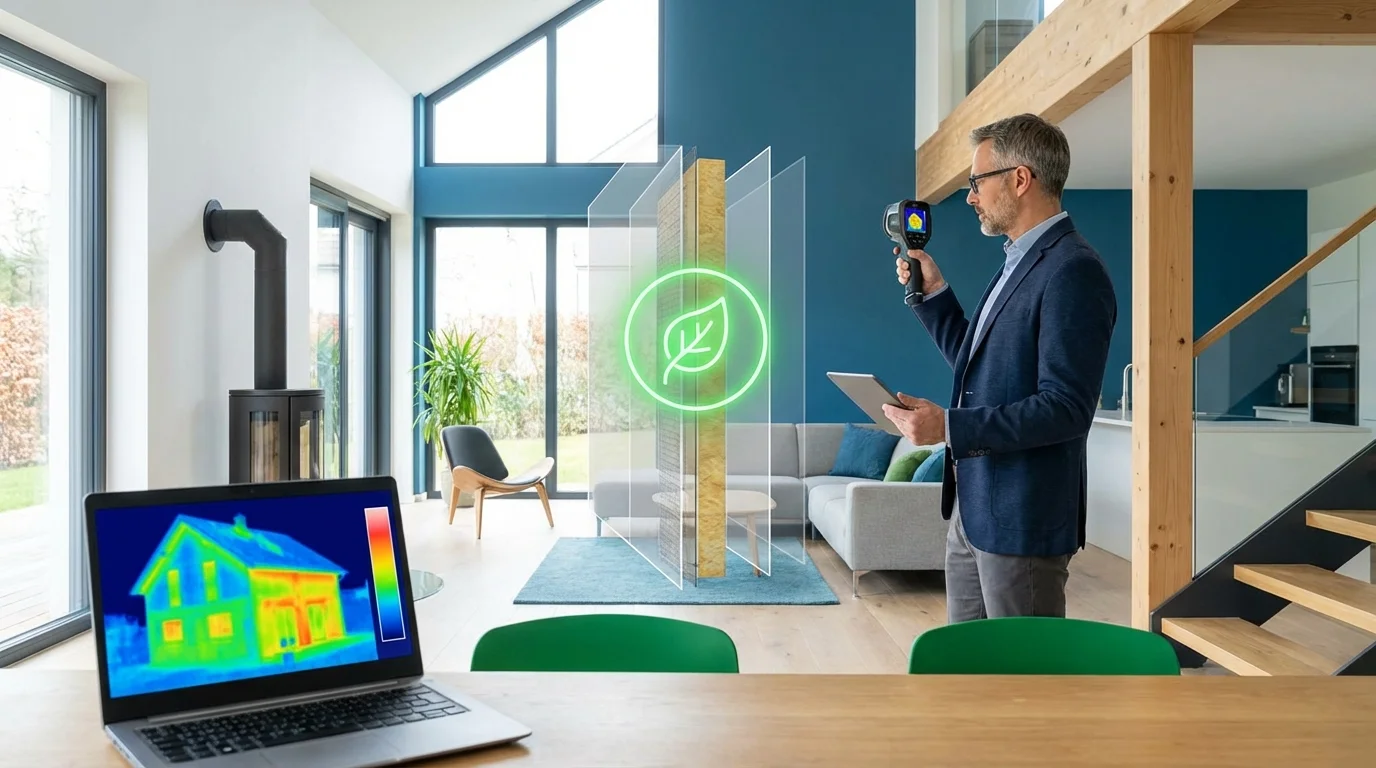
The on-site portion of a comprehensive home energy audit is a thorough investigation. An auditor typically begins with a visual inspection of the home's exterior and interior, including the attic, basement, and crawl spaces, which takes about 60-90 minutes. So they'll need access to every room. But the most valuable diagnostics take additional time. A blower door test, which depressurizes the house to find air leaks, adds another 45-60 minutes. And conducting an infrared scan of walls and ceilings to identify insulation gaps requires another 30 minutes. Older or larger homes with multiple heating and cooling systems naturally extend this timeline. So a 4,000 sq. ft. home with complex ductwork will push the audit closer to the 4-hour mark.
The core tension for homeowners isn't the 2-4 hour time commitment; it's the financial consequence of inaction. The U.S. Department of Energy states that a properly executed audit can identify improvements that cut annual energy bills by 5% to 30%. For a household with a $2,200 annual energy bill, that's a savings of up to $660 every year. So the real question isn't about the audit's length, but about how quickly you can turn its findings into savings and rebates.
What Happens After Your Energy Audit: From Recommendations to Rebates?
After a home energy audit, homeowners receive a detailed report within 5 to 10 business days. This document outlines specific energy-saving recommendations, estimated costs, projected savings, and a prioritized action plan for accessing up to $14,000 in 2026 home energy rebates.
This report is your roadmap to efficiency and savings. It doesn't just say "you have leaks"; it quantifies them and prioritizes fixes with the highest return on investment. For example, the report will rank upgrades like adding 12 inches of attic insulation, air sealing around windows, or installing a new high-efficiency heat pump. Each recommendation includes estimated project costs, projected annual savings in dollars, and the specific 2026 rebates you qualify for. And this documentation is critical, as most state and utility rebate programs require a professional audit report to be submitted with your application for heat pump rebates and other incentives. Use our free rebate calculator to see what you qualify for.
What Energy Audit Rebates and Incentives Are Available, and What Makes You Eligible?
In 2026, homeowners can access rebates covering 50-100% of an energy audit's cost, often capped at $150-$500, through state or utility programs. Eligibility requires using a certified auditor and sometimes meeting income thresholds, with low-income households often receiving the highest rebate percentages under IRA guidelines.
The Inflation Reduction Act (IRA) provides funding to state energy offices, which then design their own rebate programs. A common incentive is a rebate for the initial energy audit itself. For instance, a state program may offer a $150 rebate for any homeowner who completes an audit with a Building Performance Institute (BPI) certified professional. But for households earning less than 80% of the Area Median Income (AMI), these programs often cover 100% of the audit cost. Beyond the audit, the upgrades it recommends qualify for federal energy tax credits of up to 30% of the project cost, capped at $3,200 annually.
"The Bipartisan Infrastructure Law and Inflation Reduction Act are the most significant pieces of clean energy legislation in our nation's history, and they include a number of provisions that will help Americans save money on their energy bills." — U.S. Department of Energy
| Program Type | Typical Rebate/Credit Amount (2026) | Key Eligibility Rules | Application Deadline |
|---|---|---|---|
| State Energy Audit Rebate | $150 - $500 (or 50-100% of cost) | Must use state-certified auditor; income limits may apply | Varies by state; often Dec 31, 2026 |
| Utility Energy Audit Rebate | $50 - $200 | Must be a customer of the specific utility | Often first-come, first-served until funds depleted |
| Federal Tax Credit (for upgrades) | Ended Dec 31, 2025 | — | Ended Dec 31, 2025 |
How Do You Apply for Energy Audit and Upgrade Incentives, and What Are the Key Deadlines and Contractor Rules?
To apply for 2026 energy incentives, homeowners first schedule an audit with a BPI-certified contractor. Applications are then submitted through state energy office portals or utility websites, requiring the audit report and contractor invoices before the program's deadline, often December 31, 2026.
The application process is precise. First, you must find an auditor or contractor who is certified and listed on your state or utility's approved vendor list; using an unapproved contractor will disqualify your application. So after the audit is complete and you've chosen your upgrades, you'll collect dated invoices and proof of payment. And then you'll complete the application form, which is typically online. This requires uploading the full audit report, contractor invoices, and equipment model numbers. The deadlines are strict—most state programs for 2026 will close applications at the end of the calendar year or whenever their allocated funds are exhausted, whichever comes first. So prompt submission is essential.
Can You Stack Energy Efficiency Rebates, and How Do State and Utility Programs Differ in Funding Status?
Homeowners can stack multiple 2026 energy rebates, combining federal tax credits with state and utility incentives. However, the total incentive value cannot exceed 100% of the project cost. Funding status varies widely, with many state programs operating on a first-come, first-served basis.
Stacking is the key to maximizing savings. For example, a homeowner installing a $9,000 heat pump can combine a $2,000 state rebate, a $500 utility rebate, and a federal tax credit of 30% on the remaining $6,500 ($1,950), for a total savings of $4,450. But the availability of these funds isn't guaranteed.
"Many state and utility incentives are subject to funding availability and can change at any time. Homeowners and businesses are encouraged to check program websites frequently for the most up-to-date information on funding status and application deadlines." — DSIRE
And this is a critical point: state programs fueled by the IRA have a finite budget. So once the 2026 allocation is exhausted, the program closes to new applicants until the next funding cycle. Therefore, acting early in the year gives you the best chance of securing these funds before they run out.
Official Sources
- ENERGY STAR — Federal guidance on what to expect during a professional home energy audit.
- Database of State Incentives for Renewables & Efficiency (DSIRE) — A comprehensive database of state, local, utility, and federal incentives for energy efficiency.
Frequently Asked Questions
How long does a typical professional home energy audit usually last?
A typical professional home energy audit for an average-sized home (around 2,000 square feet) usually lasts between 2 and 4 hours. This includes a visual inspection of the entire property, conversations with the homeowner about energy usage patterns, and diagnostic testing like a blower door test, which itself takes about 45-60 minutes to set up and run correctly.
What factors can affect the total time an energy audit takes?
Several factors affect an audit's duration. The primary factor is the size of the home; a 4,000 sq. ft. house will take longer than a 1,500 sq. ft. one. The home's age and complexity, such as having multiple HVAC systems, attics, or crawl spaces, also add time. Finally, the scope of the audit—a comprehensive audit with infrared scanning and duct blaster tests will take 1-2 hours longer than a basic visual inspection.
How long after the energy audit will I receive the detailed report and recommendations?
You will typically receive your detailed energy audit report within 5 to 10 business days after the on-site assessment. This allows the auditor time to analyze the data collected from diagnostic tests, calculate potential energy savings for various upgrades, research available rebates, and compile a comprehensive, prioritized list of recommendations for your home.
Do different types of energy audits, like basic vs. comprehensive, take different amounts of time?
Yes, the type of audit directly impacts the time required. A basic or "walk-through" audit may only take 1 hour
Updated: April 14, 2026 — fact-checked by DuloCore Research. About our editorial process.