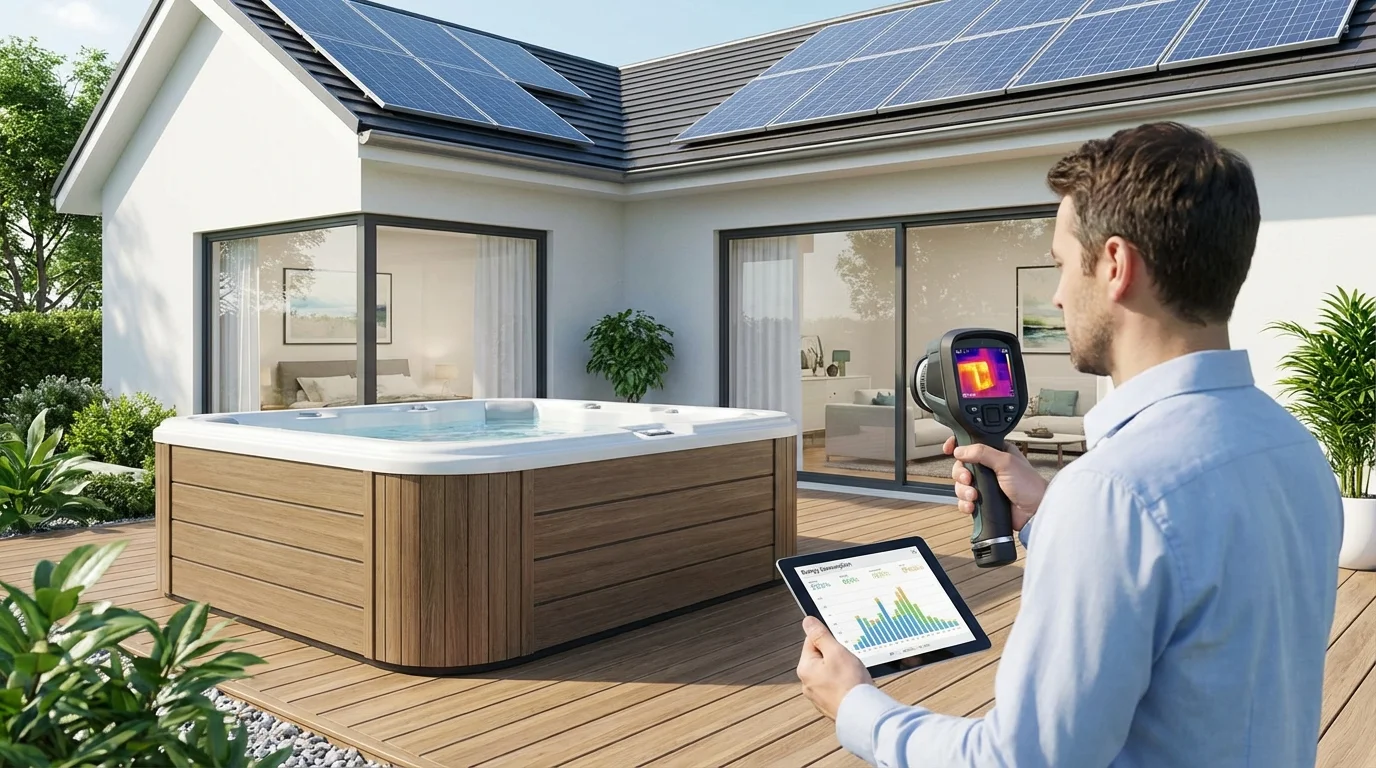
An uninsulated or inefficient hot tub adds an average of $600 to a homeowner's annual electricity bill. So that relaxing soak comes at a steep, ongoing price, often without the owner's full awareness of the energy drain. But identifying this waste is the first step toward cutting those costs by up to 75% through targeted upgrades and available financial incentives.
What rebates and incentives are available for hot tub energy audits and upgrades in my state?
State and utility programs for 2026 offer rebates for hot tub energy efficiency upgrades, including new insulated covers, high-efficiency pumps, and timers. These incentives provide direct financial credits, often ranging from $150 to $500, to offset the cost of equipment that reduces electricity consumption and lowers utility bills.
Many state energy offices and local utilities provide direct rebates for purchasing qualifying energy-efficient hot tub components. So homeowners often find programs offering a $250 credit for installing a new pump motor that meets specific efficiency standards. But these programs are geographically specific and tied to the service area of the sponsoring utility. And some incentives are structured as part of a broader home energy audit, where the hot tub is assessed alongside other household systems. The Database of State Incentives for Renewables & Efficiency (DSIRE) is a primary resource for locating these local programs. So checking with your specific electricity provider is the most direct way to uncover available 2026 funds. Use our free rebate calculator to find savings in your area.
Am I eligible for hot tub energy efficiency rebates based on my income, location, and equipment?
Eligibility for 2026 hot tub rebates is determined by income level, geographic location within a utility's service territory, and the specific equipment installed. Programs often have income caps, such as serving households below 80% of the Area Median Income (AMI), and require proof of residency to qualify.
Your eligibility hinges on three main factors. First is location, as rebates are almost always tied to your specific utility provider, like Con Edison or PG&E. So you must be a customer in good standing. Second is income, with certain programs reserved for low-to-moderate-income households, offering enhanced rebates of up to $750. And third is the equipment itself; a new hot tub cover must meet a minimum R-value (insulation rating), typically R-12 or higher, to qualify.
So verifying these specific criteria against your chosen program's 2026 guidelines is a mandatory step before making any purchase or scheduling an installation. These details are often linked to broader energy tax credits.
What is the application process for hot tub energy consumption rebates and who can perform the audit or upgrades?
The 2026 application process for hot tub rebates typically involves a pre-approval application, followed by the audit or upgrade performed by a certified professional. After installation, homeowners submit invoices and equipment specifications to the program administrator, with rebate checks issued within 6 to 8 weeks of approval.
The process begins with identifying a relevant program through your utility or a state database. So you'll complete an initial application, often online, to confirm eligibility. But some programs require the work to be performed by a licensed contractor or a technician with specific certifications. Once the upgrade is complete—for instance, a new variable-speed pump is installed—you submit the final invoice and the product's ENERGY STAR certification number. And the program administrator then reviews the documents to verify compliance before processing the payment. It's critical to follow the specified workflow, as purchasing equipment before receiving pre-approval can result in disqualification.
How do deadlines, funding status, and stacking rules impact my hot tub energy efficiency project?
Project success depends on adhering to 2026 program deadlines, which are typically December 31, monitoring limited funding that is allocated on a first-come basis, and understanding stacking rules. Stacking rules dictate whether you can combine multiple incentives, such as a $200 state rebate and a $100 utility credit, for the same upgrade.
Most rebate programs for 2026 operate with a fixed budget and a hard deadline, usually the end of the calendar year. So when the allocated funds run out, the program closes to new applicants, regardless of the deadline. But understanding stacking rules is essential for maximizing savings. For example, a homeowner can often combine a manufacturer's rebate with a utility incentive for a new high-efficiency heater. And some programs explicitly forbid stacking with other offers.
"DSIRE is the most comprehensive source of information on incentives and policies that support renewables and energy efficiency in the United States." — DSIRE
So always verify the current funding status and rules before committing to a project. This ensures you can access the full financial benefit, which is sometimes comparable to savings from larger projects like heat pump rebates.
Hot Tub Efficiency Rebate Program Comparison (2026)
| Program Name | Rebate Amount | Eligible Equipment | Application Deadline |
|---|---|---|---|
| State Energy Fund | $250 | ENERGY STAR certified pumps | 12/31/2026 |
| Local Utility Green Saver | $150 | Insulated covers (R-12+) | 10/31/2026 or when funds are depleted |
| LMI Weatherization Grant | Up to $500 | Pumps & insulated covers | Rolling basis; funds limited |
Official Sources
- ENERGY.GOV Save Money — Official U.S. Department of Energy portal for information on energy-saving programs, rebates, and federal tax credits. (note: the federal 25C and 25D credits ended for projects completed after December 31, 2025)
- DSIREUSA.ORG — A comprehensive database of state, local, utility, and federal incentives for renewable energy and energy efficiency.
Frequently Asked Questions
Is my hot tub eligible for an energy consumption audit program?
Eligibility depends on your location and utility provider. Most 2026 programs focus on whole-home audits but include hot tubs as a major energy consumer. So if your utility offers a home energy assessment, the hot tub's energy use, pump efficiency, and cover insulation (requiring an R-value of at least 12) will likely be evaluated. Check your local utility's website for specific program criteria.
What does a hot tub energy consumption audit involve?
A hot tub energy audit involves a technician measuring the electricity usage of the pump, heater, and jets using a kilowatt-hour meter. They also assess the insulation quality of the cover and shell for heat loss, often with an infrared camera. The final report quantifies energy waste in kWh and dollars, typically identifying potential annual savings of $200-$400 from specific upgrades.
How much does a hot tub energy consumption audit typically cost?
A standalone hot tub energy audit costs between $150 and $300. But many utility companies offer subsidized or free energy audits as part of a comprehensive home assessment. So homeowners often pay a reduced co-pay of only $50 for the entire service. The cost is frequently recouped within 6-12 months through energy savings.
Unlock Your Hot Tub Savings
Your inefficient hot tub is costing you hundreds. Find out exactly how much you can save with targeted, rebate-eligible upgrades.
Calculate Your Rebates NowLast updated: April 14, 2026. Reviewed by the DuloCore Editorial Team. About our authors.