Update (2026): The federal Energy Efficient Home Improvement Credit (Section 25C) expired December 31, 2025, following the passage of the OBBBA. Check state and local programs for current incentives.
Air leaks in the average American home are equivalent to leaving a window wide open all year round, wasting up to 30% of heating and cooling energy. This invisible drain on your finances is precisely what the Home Performance with ENERGY STAR program targets. So, instead of letting conditioned air escape, homeowners are now leveraging this program to seal their homes, upgrade equipment, and cut energy bills by hundreds of dollars annually.
What Home Performance with ENERGY STAR Rebates and Incentives are Available in My State and Through My Utility?
Home Performance with ENERGY STAR is a federal program that partners with state and local utilities to offer 2026 rebates up to $4,000 for whole-home energy efficiency improvements. So these incentives, which vary by location, cover assessments, air sealing, insulation, and high-efficiency HVAC upgrades.
The specific rebates available through the Home Performance with ENERGY STAR (HPwES) program are managed at the local level. And this means the dollar amounts and covered improvements change depending on your state and utility provider. For example, a utility in New York offers up to $4,000 for completing a list of approved upgrades, while a program in California provides a 15% rebate on total project costs. The process always begins with a comprehensive home energy audit from a certified professional. This assessment identifies key areas of energy loss, such as insufficient insulation or leaky ductwork. So based on the audit's findings, the program provides a roadmap for improvements that qualify for incentives, ensuring you invest in upgrades that deliver the highest return. Homeowners must check their local utility's website for 2026 program specifics.
Do I Qualify? Understanding Income Limits and Eligible Equipment for ENERGY STAR Rebates.
Qualification for 2026 ENERGY STAR rebates depends on state-specific income limits, often set at 80% of the area median income (AMI) for maximum rebates. And eligible equipment includes ENERGY STAR certified heat pumps, water heaters, insulation, and windows, requiring professional installation for program compliance.
Eligibility for HPwES rebates hinges on two main factors: your location and the equipment you install. But unlike some federal programs, HPwES is often available to all homeowners, with enhanced rebates sometimes offered to those meeting certain income thresholds. For example, a household earning below 80% of the Area Median Income (AMI) receives a rebate covering 80% of project costs, while households above that threshold receive a 50% rebate. So the equipment itself must be ENERGY STAR certified. This includes high-efficiency systems like heat pumps, which can qualify for substantial heat pump rebates.
"ENERGY STAR certified products are independently certified to save energy without sacrificing features or functionality." — ENERGY STAR
And other eligible upgrades commonly include air sealing, attic insulation, high-performance windows, and ENERGY STAR certified water heaters. So verifying your utility's list of qualifying products is a critical first step.
How Do I Apply for Home Performance with ENERGY STAR Rebates and What is the Application Deadline?
Homeowners apply for Home Performance with ENERGY STAR rebates through their local utility or a program-approved contractor after completing a home energy assessment. So application deadlines for 2026 programs are typically December 31, 2026, but homeowners must verify local submission dates to secure funding.
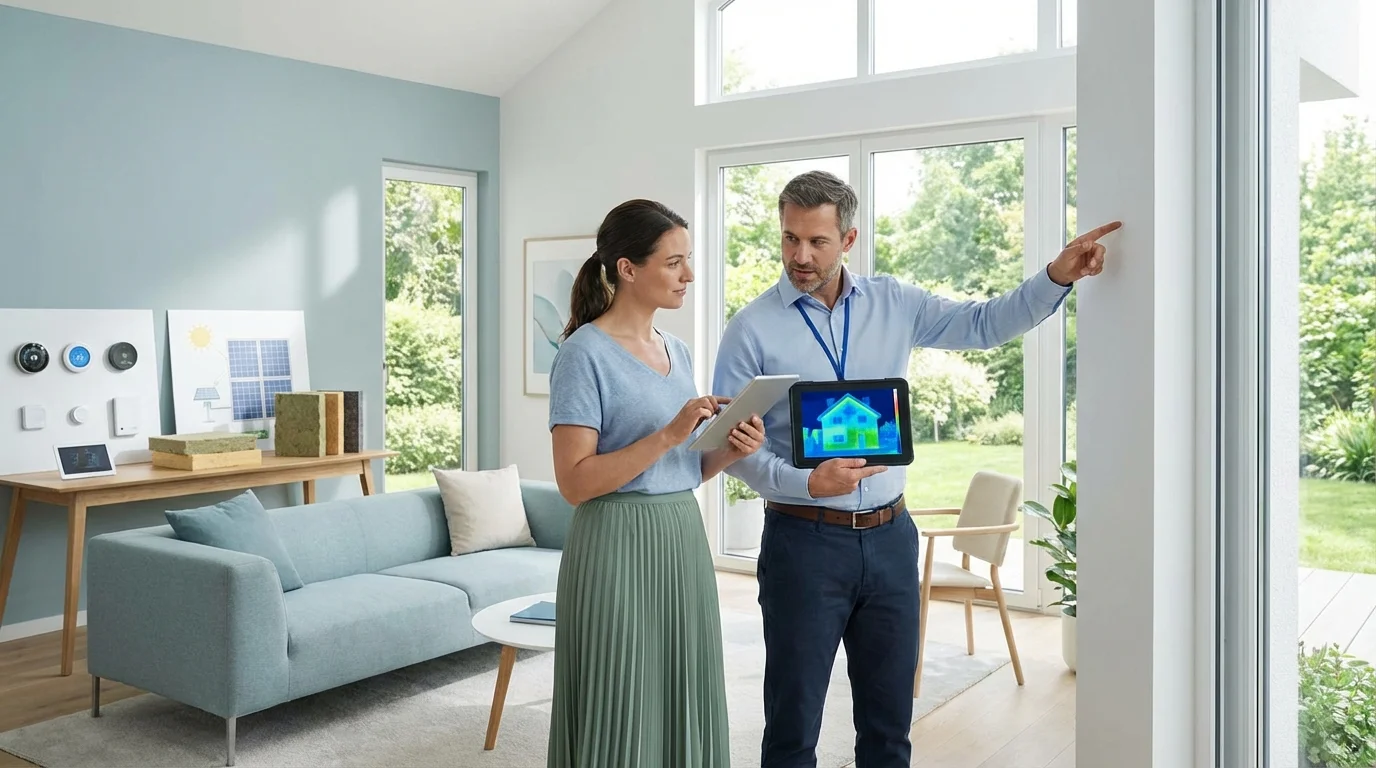
The application process is designed to be streamlined through program-approved contractors. And the first step is scheduling a home energy assessment with a Building Performance Institute (BPI) certified professional participating in your local HPwES program. After the assessment, the contractor provides a list of recommended improvements and an estimate of potential rebates. So once you approve the work, the contractor completes the upgrades and often handles the rebate paperwork on your behalf, deducting the incentive directly from your final invoice. But some utilities require the homeowner to submit the application directly. Deadlines are strict; most 2026 programs require all work and paperwork to be submitted by December 31, 2026. But funding is limited, so applying earlier in the year is always the safer path. Use our free rebate calculator to estimate your potential savings before you start.
Can I Stack Home Performance with ENERGY STAR Rebates with Other Programs, and What are the Contractor Requirements?
Homeowners can stack Home Performance with ENERGY STAR rebates with federal IRA energy tax credits and manufacturer incentives in 2026. But all work must be completed by a BPI (Building Performance Institute) certified contractor to ensure program compliance and quality standards are met.
Stacking incentives is one of the most effective ways to reduce the cost of home energy upgrades. And the rebates from HPwES are designed to be combined with other available financial incentives. For instance, after receiving a $3,000 rebate from your utility for insulation and air sealing, you can also claim the federal tax credit, which covers 30% of the remaining project cost, up to $1,200 for those specific improvements in 2026. So this layering of incentives dramatically shortens the payback period. A critical requirement, however, is the use of a qualified contractor.
"Many state and utility rebate programs require that your new equipment be installed by a certified or licensed professional." — U.S. Department of Energy
HPwES programs mandate that all work be performed by a BPI certified professional to ensure the upgrades are done correctly and achieve the projected energy savings.
Comparison of 2026 Home Energy Incentive Programs
| Program Feature | Home Performance with ENERGY STAR | State Weatherization Program (WAP) | Federal IRA Tax Credits |
|---|---|---|---|
| Max Incentive | Up to $4,000 (varies by state) | Varies, often covers 100% of costs | 30% of project cost, up to $3,200 annually |
| Primary Focus | Whole-home efficiency, diagnostics | Health, safety, and energy savings | High-efficiency equipment installation |
| Income Limit | Varies; moderate-income focused | Low-income (typically <200% FPL) | No income limit |
| Deadline | Typically Dec. 31, 2026 (local) | Varies by state agency | December 31, 2025 |
What is the Current Funding Status for Home Performance with ENERGY STAR Programs?
As of 2026, Home Performance with ENERGY STAR programs are actively funded through state energy offices and utility partnerships, supported by federal allocations. But funding is finite and awarded on a first-come, first-served basis, so homeowners must apply early before annual program budgets are exhausted.
Funding for HPwES is generally robust heading into 2026, thanks to a combination of state-level initiatives and support from the federal government. But these funds are allocated on an annual basis and are not unlimited. Programs in popular regions often exhaust their budgets before the end of the calendar year. For example, some state programs ran out of funding by October in previous years, leaving late-season applicants without incentives. So it is imperative for homeowners to confirm the current funding status with their local utility before beginning a project. Many utilities now feature a real-time funding tracker on their websites. And acting early in the year, typically between January and May, provides the best chance of securing a rebate for your 2026 home improvement projects. Checking the DSIRE database is another way to track program status.
Official Sources
- ENERGY STAR Rebate Finder — An official tool from the EPA to find local rebates and special offers for ENERGY STAR certified products.
- DSIRE Database — A comprehensive source of information on state, local, utility, and federal incentives and policies that promote renewable energy and energy efficiency.
Related Reading: Learn more about Green Home Certification Process.
Frequently Asked Questions
What are the eligibility requirements for Home Performance with ENERGY STAR rebates?
Eligibility primarily depends on your location, as programs are managed by local utilities. And homeowners must typically work with a program-approved, BPI-certified contractor. So while some programs are open to all residents, others have income requirements, often offering larger rebates for households under 80% or 150% of the Area Median Income.
How much can I save with Home Performance with ENERGY STAR rebates?
Savings vary by state and project scope but can be substantial. Rebates often range from $1,000 to $4,000 for completing a package of improvements like air sealing and insulation. And some programs offer a percentage of the project cost, such as 50% back up to a $3,000 cap, for a comprehensive energy retrofit in 2026.
How do I apply for Home Performance with ENERGY STAR rebates?
The application process starts by finding a participating contractor in your area. This contractor performs a required home energy assessment to identify eligible upgrades. And in most cases, the contractor will manage and submit the rebate application on your behalf, deducting the rebate amount directly from your final invoice for the project.
Are there deadlines for applying to the Home Performance with ENERGY STAR program?
Yes, deadlines are strict. Most programs operate on a calendar year, with application deadlines typically set for December 31, 2026. However, because funding is limited and distributed on a first-come, first-served basis, programs can close earlier once their annual budget is exhausted. So applying well before the end of the year is recommended.
What home improvements are covered by Home Performance with ENERGY STAR rebates?
Covered improvements focus on a "whole-house" approach. This includes air sealing to close leaks, adding insulation in attics and walls, and upgrading to high-efficiency heating and cooling systems like ENERGY STAR certified heat pumps. And upgrades to windows and water heaters are also commonly included in 2026 programs.
Don't Guess Your Savings
Find out exactly how much you can get back on your next home improvement project. Our free, up-to-date tool provides instant rebate estimates based on your ZIP code.
Calculate Your Rebates NowLast updated: April 14, 2026. Reviewed by the DuloCore Editorial Team. About our authors.