Update (2026): The federal Energy Efficient Home Improvement Credit (Section 25C) expired December 31, 2025, following the passage of the OBBBA. Check state and local programs for current incentives.
Up to 30% of the energy used in the average American home is wasted due to inefficiencies like air leaks, poor insulation, and outdated equipment. This energy loss translates directly into higher utility bills month after month, costing homeowners thousands of dollars annually. But identifying the exact source of this waste is the first step toward reclaiming that money through targeted upgrades.
How Can a Home Energy Scoring Tool Uncover Rebate Amounts and Eligible Equipment for My Home?
A home energy scoring tool is a data-driven platform that analyzes property details to identify specific energy-saving upgrades. It cross-references this data with a database of 2026 federal, state, and utility programs to reveal precise rebate amounts and lists of qualifying equipment, such as heat pumps or insulation.
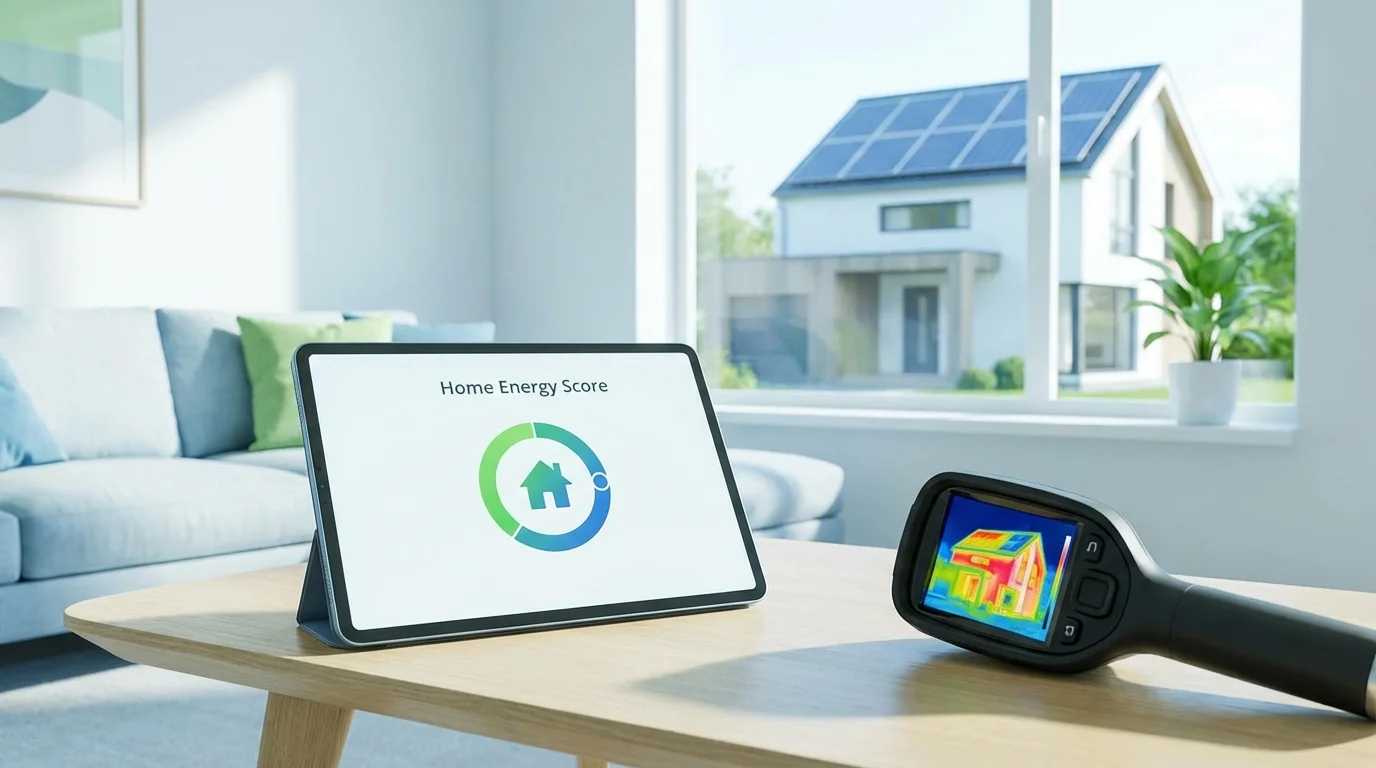
A home energy score, often on a scale of 1 to 10, provides a clear benchmark of your home's current energy performance. So, a lower score, like a 3, indicates a higher potential for savings. The scoring tool then translates this performance gap into specific recommendations. For example, it will identify if your home qualifies for the $8,000 federal rebate for a high-efficiency heat pump or the 30% tax credit (this federal credit ended for property placed in service after December 31, 2025) for weatherization projects. And it connects these opportunities directly to your home's unique characteristics, moving beyond generic advice. It also specifies equipment models that meet ENERGY STAR or CEE Tier requirements, ensuring any purchase is eligible for the maximum available funds. Use our free rebate calculator to find your savings.
Am I Eligible for Home Energy Upgrades Based on My State, Utility, and Income Limits?
A home energy scoring tool is an eligibility engine that cross-references a homeowner's location, utility provider, and household income against 2026 program requirements. It instantly filters thousands of incentives to show only those for which the user qualifies, including income-based programs offering up to 100% of project costs.
Eligibility for 2026 energy rebates is determined by three main factors: geography, utility provider, and income. State-level programs, like those in California or New York, have specific residency requirements. And utility rebates are only available to customers of that specific provider, such as PG&E or Con Edison. But the most impactful factor is often Area Median Income (AMI). For instance, the federal Home Electrification and Appliance Rebate (HEAR) program covers 100% of costs up to $14,000 for households earning less than 80% of AMI. So, the tool uses this data to confirm your qualification for these powerful incentives, which are often missed by homeowners who are unaware of the income-based criteria.
"The Database of State Incentives for Renewables & Efficiency (DSIRE) is the most comprehensive source of information on incentives and policies that support renewables and energy efficiency in the United States." — DSIRE
What is the Application Process and What Deadlines Should I Know for Energy Rebates?
The application process for 2026 energy rebates is a multi-step procedure that typically involves getting a pre-project assessment, submitting an online application with equipment quotes, and providing post-project proof of installation. Most state and utility programs operate on an annual cycle with deadlines often falling in Q4 2026.
After a home energy scoring tool identifies eligible projects, the first step is often pre-approval. This requires submitting project details and contractor quotes to the program administrator before work begins. And once approved, the installation is completed. But the final step is crucial: submitting the final invoice, proof of payment, and any required photos or documentation to receive the rebate check or instant discount. So, it's critical to track deadlines. Many utility programs exhaust their annual funding by October or November. Federal energy tax credits are claimed on your 2026 tax return filed in 2027, with a firm deadline of April 15, 2027. Missing a single deadline means forfeiting thousands in savings.
Home Energy Rebate Program Comparison (2026)
| Program Feature | Federal IRA Rebates (HEAR) | State Program (Example: NYSERDA) | Utility Program (Example: Con Edison) |
|---|---|---|---|
| Max Rebate Amount | Up to $14,000 per household | $500 - $5,000 per measure | $250 - $1,500 per unit |
| Primary Eligibility | Income-based (<150% AMI) | NY State Residency | Active Con Edison Account |
| Key Deadline (2026) | Program runs through December 31, 2025 | Varies; often Dec 31, 2026 | Funds deplete; check status |
| Eligible Equipment | Heat pumps, insulation, wiring | Air sealing, windows, boilers | Smart thermostats, appliances |
How Can I Check the Funding Status of Programs and Are There Rules for Stacking Rebates?
A home energy scoring tool provides real-time updates on program funding levels by integrating directly with state and utility rebate portals. It also clarifies stacking rules, specifying which 2026 federal credits can be combined with local incentives to cover up to 100% of a project's total cost.
Many state and utility rebate programs operate with a fixed annual budget. Once the funds are exhausted for the year, the program closes to new applicants. So, checking the funding status before starting a project is essential. A reliable tool shows if a program is "Open," "Limited Funding," or "Closed." And understanding stacking rules is just as important. For example, a homeowner can combine a federal IRA tax credit, which covers 30% of costs, with a state-level heat pump rebate of $2,000. But some utility rebates cannot be stacked with state incentives for the same piece of equipment. The rules are complex, but a scoring tool automates this analysis, ensuring you claim every dollar available.
What Are the Contractor Requirements for Home Energy Scoring Tool Recommended Improvements?
Contractor requirements for 2026 energy rebates mandate that installations be performed by licensed and insured professionals, often holding specific certifications. Many programs require contractors to be listed on an approved network, such as those certified by the Building Performance Institute (BPI) or RESNET.
You can't just hire any contractor for a rebate-eligible project. To ensure quality and energy savings, most programs maintain a list of approved installers. And using an uncertified contractor will result in a denied rebate application, even if the equipment is correct. For example, insulation and air sealing projects often require a BPI Certified Professional to qualify for the maximum incentives. So, when a home energy scoring tool recommends an upgrade, it also provides access to a database of pre-vetted, certified local contractors who meet the specific requirements of the rebate programs in your area. This eliminates the risk of a failed application due to improper installer credentials. A detailed home energy audit often uncovers multiple areas for improvement.
Official Sources
- ENERGY STAR Rebate Finder — A tool from the U.S. EPA to find local rebates on certified energy-efficient products.
- Database of State Incentives for Renewables & Efficiency (DSIRE) — A comprehensive database of federal, state, and local clean energy policies and incentives.
- IRS Credits and Deductions Under the IRA — Official guidance from the IRS on federal energy tax credits available for homeowners. (note: the federal 25C and 25D credits ended for projects completed after December 31, 2025)
Related Reading: Learn more about Resnet Hers Rater Find.
Frequently Asked Questions
Who is eligible to get a home energy score for their property?
Any homeowner, landlord, or even a prospective buyer is eligible to get a home energy score for a residential property. The score is tied to the property, not the person. Some cities, like Portland, Oregon, even mandate a Home Energy Score report for any home being listed for sale. This requirement helps standardize energy transparency in the real estate market, giving buyers clear insight into potential utility costs before purchase.
What is involved in getting a home energy score for my home?
Getting a home energy score involves a 1-2 hour visit from a certified Home Energy Score Assessor. The assessor collects around 40 data points on the home's features, including insulation levels, window types, and the efficiency of heating and cooling systems. They then input this data into the U.S. Department of Energy's scoring software, which generates a 1-10 score and a list of recommended improvements. The process typically costs between $100 and $250.
How does a home energy score impact potential home improvement rebate amounts?
A home energy score directly impacts rebate amounts by providing the baseline data required by many performance-based incentive programs. For instance, some 2026 programs offer a higher rebate for projects that achieve a 20% or greater improvement in energy efficiency. Without an initial score to measure against, a homeowner cannot qualify for these tiered, performance-based incentives. It serves as the official starting point for calculating savings and unlocking larger rebate checks.
What is the difference between a home energy score and a full energy audit?
A home energy score is a standardized, asset-based rating that takes 1-2 hours and provides a quick "miles-per-gallon" style report. A full energy audit is a more comprehensive diagnostic process, lasting 2-4 hours, that includes tests like a blower door test for air leakage and thermographic imaging to find insulation gaps. An audit provides a more detailed, customized report but also costs more, typically $300 to $700, while a score is a lower-cost entry point.
Ready to Uncover Your Home's Hidden Savings?
Don't let high energy bills drain your budget. Use DuloCore's free home energy scoring tool to instantly identify eligible rebates and tax credits worth up to $14,000 for your home.
Updated on April 14, 2026. Fact-checked by DuloCore Editors. About our research team.