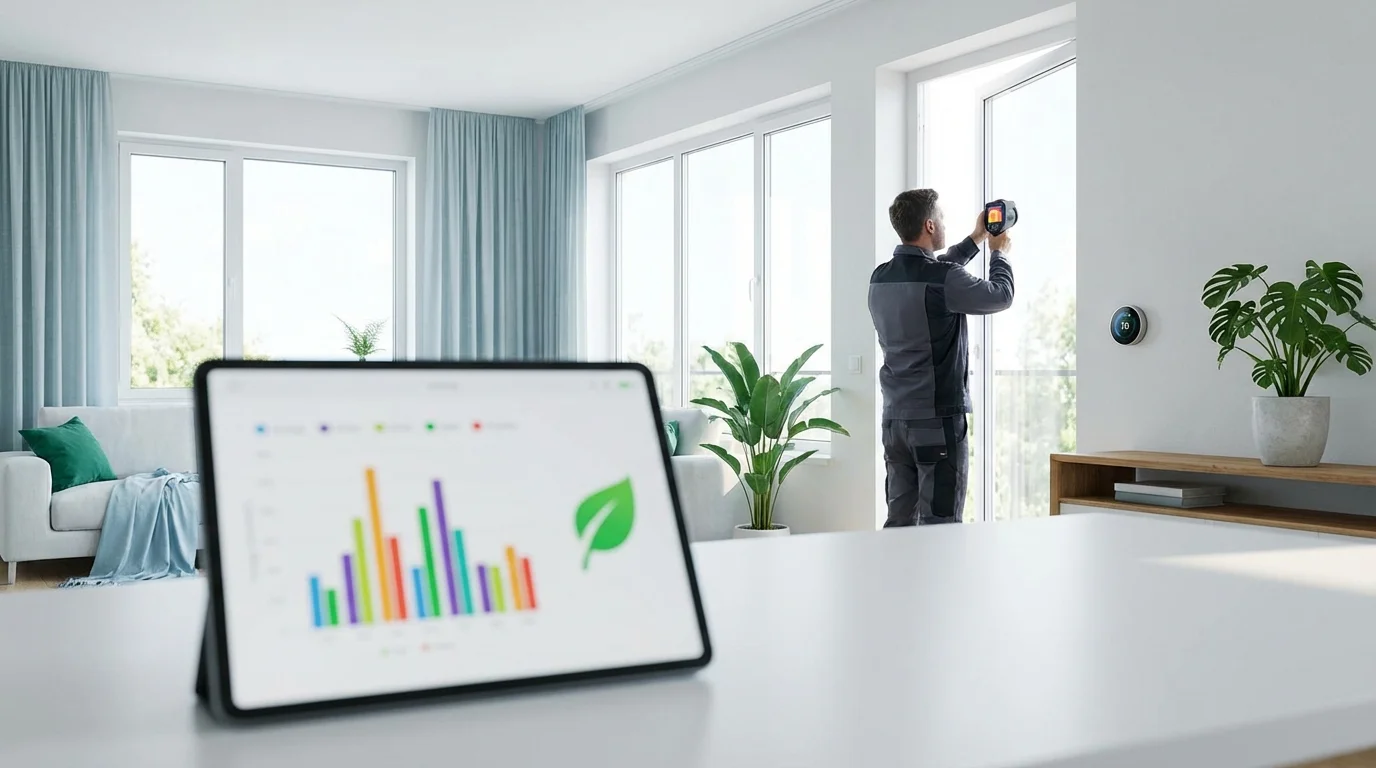
Residential electricity prices have increased over 15% in the last two years, yet the average American household wastes an estimated 20% of the electricity it pays for. Without real-time data, homeowners are blind to the specific appliances and "vampire loads" driving up their monthly bills. So identifying and eliminating this waste is the fastest way to reduce energy costs without sacrificing comfort.
Which Home Energy Monitoring Apps Best Suit My Usage and Budget?
Hardware-based monitors like Sense and Emporia offer granular, real-time, appliance-level data for 2026, requiring a one-time hardware purchase of $300-$500. But utility-provided apps integrate directly with smart meters at no cost, providing whole-home data without the detailed breakdown, making them a budget-conscious starting point.
The choice between energy monitoring apps depends on the desired level of detail and budget. Hardware-based systems, such as Sense or Emporia Vue, install directly into a home's electrical panel. And they use machine learning to identify the unique electrical signature of individual appliances, providing second-by-second data on what’s using power. So this allows homeowners to pinpoint inefficient devices. But the upfront cost for this hardware ranges from $300 to $500. Alternatively, many utility companies now offer free apps that connect to a home's smart meter. These apps provide daily or hourly whole-home usage data but don't break it down by appliance. They are an excellent entry point for understanding overall consumption patterns before investing in a more advanced system.
Choosing a monitoring system is critical because "vampire" or "phantom" energy loads from devices in standby mode cost the average U.S. household between $100 and $200 every year. These small, constant drains from TVs, chargers, and smart speakers add up, accounting for up to 10% of a home's total electricity use. So an energy monitoring app makes this invisible waste visible, empowering homeowners to take action and capture those savings.
What Financial Incentives Are Available for Home Energy Monitoring Equipment and Services?
For 2026, financial incentives primarily come from local utility rebate programs, which offer $25 to $75 for qualifying smart monitors or thermostats. And state energy programs sometimes bundle monitor costs into a broader home energy audit grant, covering up to 50% of the total service.
Direct federal energy tax credits for standalone energy monitors are not available under the 2026 IRA framework. But these devices often qualify for incentives when included as part of a larger energy efficiency project. For example, some utility programs require a smart thermostat or monitor to be installed to qualify for more lucrative heat pump rebates. And many local utilities offer instant rebates or bill credits of $25-$75 for purchasing specific Energy Star certified smart thermostats with monitoring capabilities. So homeowners should always check their utility’s online marketplace before purchasing.
"Many utilities offer rebates or other incentives for smart home energy management systems. Check with your local utility for programs in your area." — U.S. Department of Energy
How Do I Qualify for State, Utility, and Federal Energy Monitoring Rebates?
Qualification for 2026 energy monitoring rebates hinges on your utility provider and geographic location, as most programs are local. And eligibility often requires owning a home with a compatible smart meter or purchasing a specific model from a pre-approved list provided by the utility.
Utility rebate programs are the most common source of funding. So the first step is to log into your utility provider's online portal and search for their 2026 rebate catalog. But some programs have specific requirements, such as enrolling in a demand-response program that allows the utility to make small adjustments to your thermostat during peak demand hours. State-level incentives are less common and are often part of larger grant programs aimed at low-to-moderate income households, typically defined as those earning below 80% of the Area Median Income (AMI). Federal programs don't offer direct rebates for monitors alone, but their cost is sometimes eligible for inclusion in the total project cost for larger tax credit claims.
Energy Monitoring Rebate Program Comparison (2026)
| Program Type | Typical Rebate Amount | Key Eligibility Requirement | Application Process |
|---|---|---|---|
| Utility Smart Thermostat | $25 - $75 | Must be a customer, purchase an approved model | Online portal with proof of purchase |
| State Energy Audit Grant | Covers 50-80% of audit cost | Income-based (e.g., <80% AMI) | Pre-approval via state energy office |
| Demand-Response Program | Annual bill credit of $20-$50 | Enrollment, Wi-Fi connected device | Opt-in via utility website |
What is the Application Process and Timeline for Energy Monitoring Rebates?
The application process for 2026 utility rebates is typically completed online in under 15 minutes, requiring a digital copy of the purchase receipt. And homeowners usually receive a bill credit or check within 4-8 weeks of submitting a valid application with all required documentation.
For most utility rebates, the process is streamlined. Homeowners purchase a qualifying device, fill out a form on the utility’s website, and upload a picture of the receipt and the product’s serial number. So the approval is often automated. But for state-funded programs tied to energy audits, the process is more involved. It often requires pre-approval before the audit is conducted and post-verification from a certified contractor. This multi-step process extends the timeline to 8-12 weeks from application to reimbursement. In all cases, accurate documentation is paramount; incorrect model numbers or missing receipts are the most common reasons for application denial, forcing the homeowner to restart the process.
How Do Specific Apps Help Me Track Savings and Navigate Rebate Opportunities?
Advanced 2026 apps like Emporia and Sense use AI to disaggregate a home's energy signal, providing real-time cost tracking for individual appliances. And their dashboards visualize savings from efficiency upgrades, while some integrate with databases to flag local rebates for new equipment purchases.
These hardware-based monitoring apps move beyond simple whole-home tracking. By identifying specific devices—the refrigerator, the HVAC system, the EV charger—they show precisely where money is being spent. And this granular data is invaluable for measuring the ROI of an upgrade. For instance, after installing a new heat pump, the app's dashboard will show a 40-60% drop in heating-related energy costs. But some platforms are also adding features that scan for local and federal incentives. So when the app detects high usage from an old water heater, it also alerts the user that a $600 rebate is available for a new heat pump water heater. Use our free rebate calculator to verify potential savings.
Official Sources
- Database of State Incentives for Renewables & Efficiency (DSIRE) — The most comprehensive U.S. source of information on incentives and policies that support renewables and energy efficiency.
- ENERGY STAR Rebate Finder — An official U.S. government tool for finding local rebates on ENERGY STAR certified products.
Related Reading: Learn more about Iot Energy Monitoring Devices.
Frequently Asked Questions
What are the most accurate home energy monitoring apps for tracking real-time usage?
For real-time, appliance-level accuracy, hardware-based monitors like the Sense Home Energy Monitor or Emporia Vue Gen 2 are market leaders in 2026. They install directly in your electrical panel and use machine learning to identify individual devices, providing data that is typically over 95% accurate after an initial learning period of a few weeks.
How do popular energy monitoring apps compare in terms of features and data visualization?
Sense is known for its advanced AI-driven appliance detection and clean, user-friendly interface that gamifies energy saving. But Emporia Vue offers more granular circuit-level monitoring with up to 16 sensors, providing detailed, exportable data for users who want to dive deep into analytics. Free utility apps offer basic daily or hourly graphs of whole-home usage without appliance-specific details.
Are there free home energy monitoring apps, or do they all require a subscription or hardware purchase?
Many free options exist. Most utility companies provide a free app that connects to your smart meter to show overall usage. And software-only apps like OhmConnect link to your utility account to track usage patterns and reward you for saving energy during peak hours. However, for real-time, appliance-level data, a one-time hardware purchase of $300-$500 is required.
Find and Claim Your Energy Rebates
Don't leave money on the table. Use DuloCore's free tools to discover every home energy rebate and tax credit you qualify for in your area.
Last updated: April 14, 2026. Reviewed by the DuloCore Editorial Team. About our authors.