Update (2026): The federal Energy Efficient Home Improvement Credit (Section 25C) expired December 31, 2025, following the passage of the OBBBA. Check state and local programs for current incentives.
American households collectively spend over $200 billion on energy each year, with drafts, air leaks, and outdated appliances wasting up to 30% of that energy. As utility rates climb, identifying these inefficiencies is no longer just about environmental consciousness; it's a direct financial imperative. So homeowners are turning to sophisticated software to pinpoint exactly where every dollar is leaking out of their walls, windows, and attics.
What are the top home energy audit software tools for identifying energy-saving opportunities?
Home energy audit software tools like the U.S. Department of Energy's Home Energy Score and RESNET's HERS Index are industry-standard platforms for 2026. These tools provide a comprehensive analysis of a home's energy performance, identifying specific upgrades that deliver the highest return on investment.
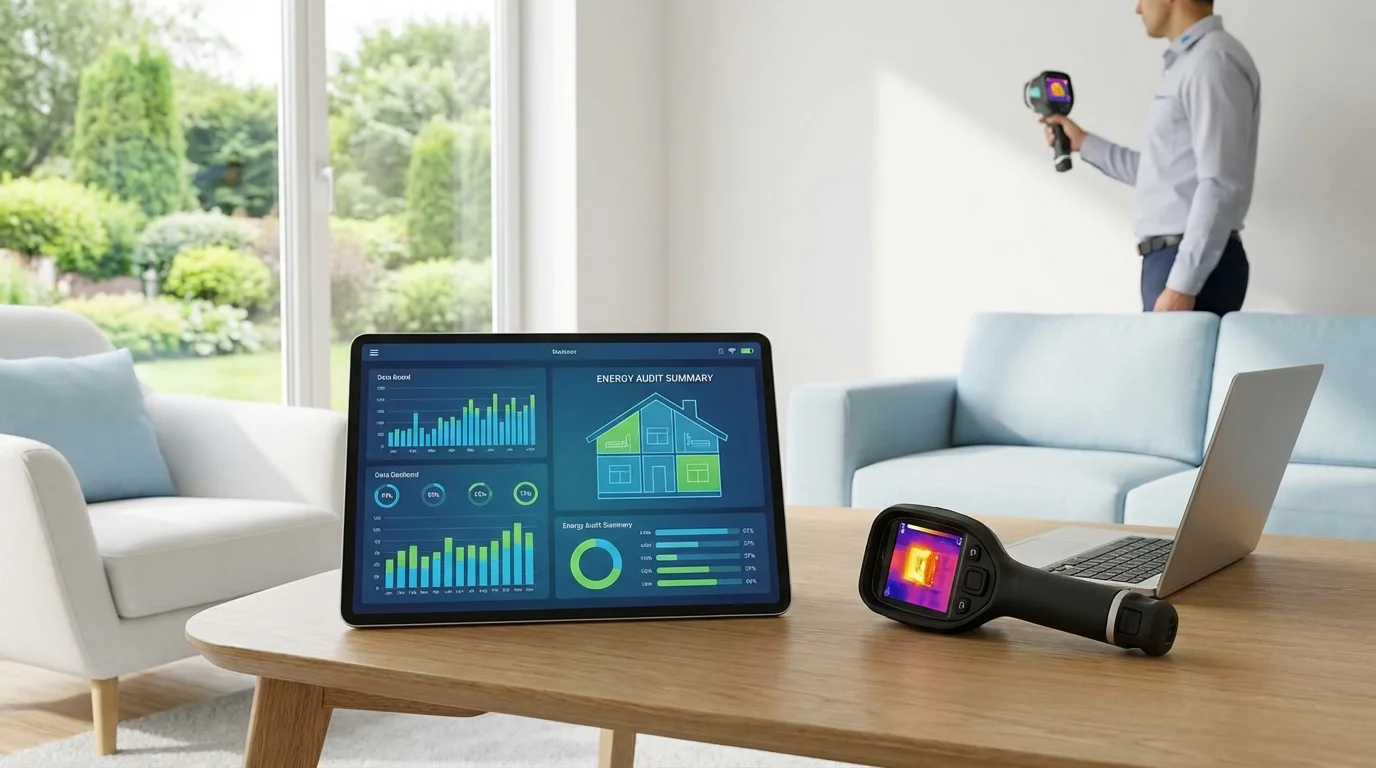
These diagnostic platforms function by creating a digital model of a home. So they analyze inputs like utility bill history, square footage, insulation R-values, window types, and HVAC system efficiency. The software then simulates energy consumption to pinpoint the primary sources of waste, such as air leakage, which accounts for 25-40% of the energy used for heating and cooling in a typical home. And the output is a prioritized list of upgrades, from air sealing and insulation to installing a new heat pump. A detailed home energy audit is the first step in this process.
The core tension for homeowners is the gap between knowing their energy bills are high and knowing exactly which of the dozens of potential upgrades will fix the problem and qualify for thousands in rebates. So without data-driven guidance, a homeowner risks investing $15,000 in new windows when a $2,000 attic insulation project would have delivered three times the savings. The Inflation Reduction Act (IRA) provides up to $14,000 in point-of-sale rebates, but unlocking that funding depends entirely on selecting the right eligible equipment.
How can energy audit software help me find eligible equipment for state and utility rebates?
Advanced energy audit software platforms cross-reference audit findings with a dynamic 2026 database of federal, state, and utility rebate programs. They automatically identify specific ENERGY STAR certified heat pumps, water heaters, and insulation products that qualify for incentives up to $8,000 per appliance.
These tools connect the "what" (your home's needs) with the "how" (the funding to fix it). After the software identifies a need, like an inefficient furnace, it scans databases like DSIRE for active programs. And it filters by your location, income level, and utility provider to present a list of eligible appliance model numbers. This eliminates the guesswork of navigating complex program requirements. So instead of manually searching for a qualifying heat pump, the software provides a direct link to a list of models that meet the specific SEER2 and HSPF2 ratings required for 2026 heat pump rebates.
"DSIRE is the most comprehensive source of information on incentives and policies that support renewables and energy efficiency in the United States." — DSIREusa.org
What are the typical rebate amounts, income limits, and stacking rules for home energy efficiency upgrades?
For 2026, IRA rebates provide up to $14,000 per household. This includes up to $8,000 for a heat pump, $1,750 for a heat pump water heater, and $1,600 for insulation and air sealing. But these amounts are means-tested based on Area Median Income (AMI).
Households earning less than 80% of AMI qualify for 100% of the equipment and installation costs, up to the program caps. And households earning between 80% and 150% of AMI qualify for 50% of the project costs. So these point-of-sale rebates are often stackable with federal energy tax credits, which cover 30% of the project cost with a $2,000 annual cap for heat pumps. Many state and utility programs also offer additional incentives, allowing homeowners to combine multiple funding sources. Use our free rebate calculator to find your exact savings.
What is the application process, deadline, and current funding status for energy efficiency incentives?
The 2026 application process typically involves a home energy audit, obtaining a quote from a qualified contractor, and submitting a pre-approval application through a state energy office portal. IRA program funding extends through December 31, 2025, but state-administered funds are limited and distributed on a first-come, first-served basis.
The process is sequential and requires documentation. First, the audit identifies the project. Second, a contractor provides a detailed scope of work and cost. Third, the homeowner or contractor submits this information for pre-approval before any equipment is purchased. And once approved, the work is completed, and final documentation is submitted for the rebate payment. So funding status is critical; homeowners must check their state energy office's website for 2026 program availability, as some states exhaust their annual allocations quickly.
How do contractor requirements impact my eligibility for home energy audit software-driven rebates?
Most 2026 state and utility rebate programs mandate that all work be performed by a licensed, insured, and program-approved contractor. So using an uncertified installer automatically voids eligibility for federal IRA rebates of up to $14,000 and most local incentives, regardless of equipment quality.
These requirements exist to ensure installations meet specific performance and safety standards, guaranteeing the projected energy savings are realized. And many audit software platforms, including DuloCore, integrate a network of pre-vetted contractors who are already familiar with the rebate application and documentation process, which simplifies the project for the homeowner.
"To ensure that your new equipment is installed correctly, the U.S. Department of Energy recommends that you hire a qualified contractor who is licensed and insured." — Energy.gov
So this requirement protects both the homeowner's investment and the integrity of the rebate program. Choosing a contractor from a program's approved list is a non-negotiable step for securing financial incentives for a geothermal tax credit or other major upgrade.
How do different home energy audit software tools compare in features, cost, and rebate integration?
Free government tools like the DOE's Home Energy Score provide a basic energy performance rating and general recommendations. But comprehensive platforms like DuloCore integrate real-time 2026 rebate data, a vetted contractor network, and project financing options, offering an end-to-end solution for homeowners.
The primary difference is scope. A basic online calculator offers a rough estimate, while a professional audit using RESNET-certified software costs between $300 and $600 and provides a detailed diagnostic report required for many rebates. And platforms like DuloCore bridge this gap by using utility data and home characteristics to deliver a free, instant audit and then connecting users directly to the specific rebates and contractors needed to complete the recommended projects. So the choice depends on whether a homeowner needs a simple assessment or a complete project management tool.
2026 Home Energy Rebate Comparison
| Program / Incentive | Max Amount (2026) | Income Eligibility | Key Requirement |
|---|---|---|---|
| IRA HEAR Rebates | Up to $14,000 | < 150% Area Median Income | Point-of-sale discount |
| Federal Tax Credits | Ended Dec 31, 2025 | — | Ended Dec 31, 2025 |
| State/Utility Rebates | Varies ($250 - $5,000+) | Varies by program | Pre-approval often needed |
Official Sources
- ENERGY.GOV Save — Official U.S. Department of Energy portal for information on home energy savings, rebates, and tax credits available under the IRA. (note: the federal 25C and 25D credits ended for projects completed after December 31, 2025)
- DSIRE — A comprehensive database of state, local, utility, and federal incentives and policies that promote renewable energy and energy efficiency.
Related Reading: Learn more about Energy Modeling Software Home.
Frequently Asked Questions
How can home energy audit software identify eligible improvements for rebates?
Home energy audit software analyzes a home's energy consumption data against a database of federal, state, and utility rebate requirements for 2026. It identifies specific upgrades, like installing a heat pump with a SEER2 rating of 16 or higher, that meet the technical specifications for programs like the IRA's $8,000 heat pump rebate, ensuring the proposed project qualifies for funding.
What information do home energy audit software tools require to perform an analysis?
To perform an accurate analysis, these tools typically require 12 months of utility bill data (both electric and gas), the home's square footage, year built, and details about existing systems. This includes the age and type of the HVAC system, water heater, window types (e.g., single-pane), and known insulation levels in the attic and walls.
Is there free home energy audit software available for homeowners?
Yes, several free tools are available. The U.S. Department of Energy offers the Home Energy Score tool for a basic assessment. And platforms like DuloCore provide a more advanced, free analysis that integrates real-time 2026 rebate information from over 1,000 utility and state programs, connecting homeowners directly to available savings without an upfront cost.
Last reviewed: April 14, 2026. Reviewed by DuloCore Energy Specialists. About the team.