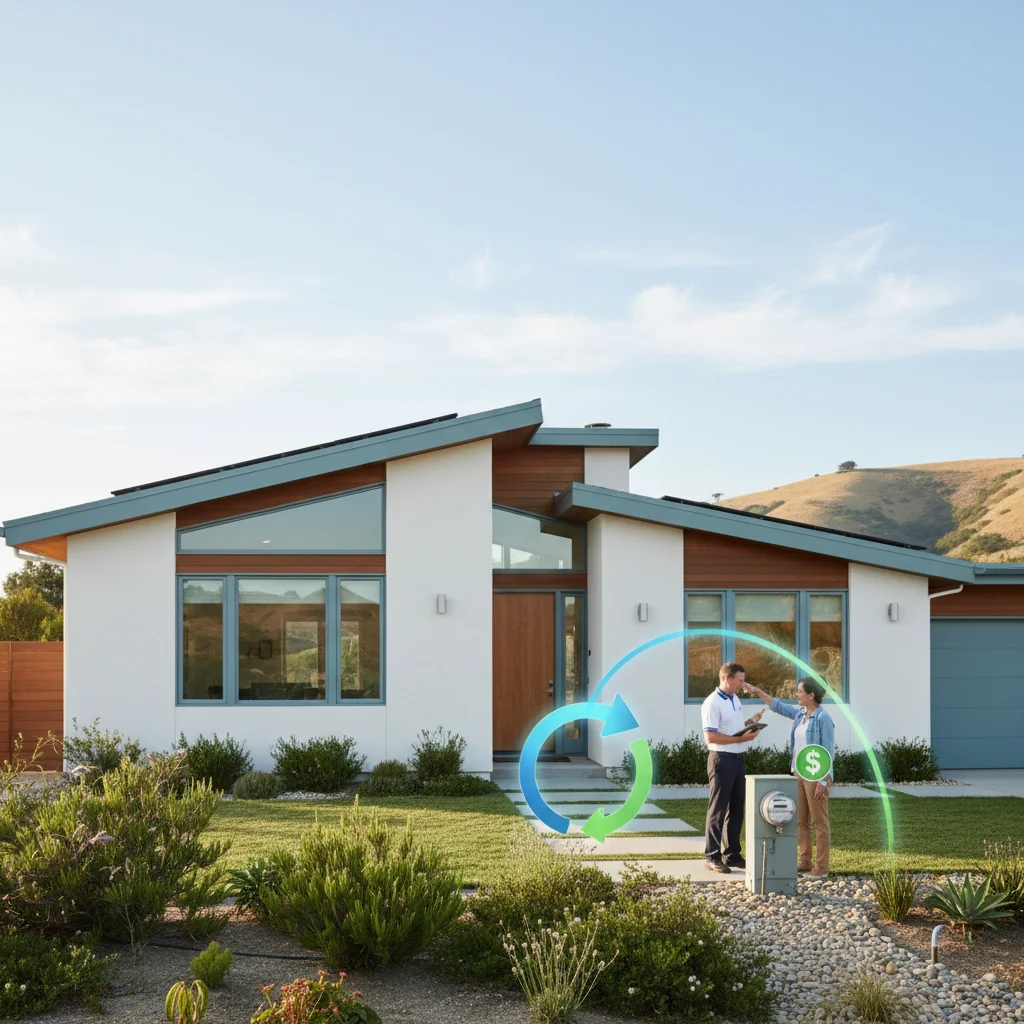
Bay Area homeowners left $47 million in energy audit rebates unclaimed in 2025 — and 2026 programs just doubled their funding. Pacific Gas & Electric, the Bay Area Air Quality Management District, and California's TECH Clean California initiative now offer combined rebates up to $1,200 for comprehensive home energy assessments, but most expire by December 2026.
What Are the Current Deadlines for Bay Area Home Energy Audit Rebates in 2026?
Bay Area home energy audit rebates in 2026 operate on rolling deadlines tied to funding availability across three primary programs: PG&E's Home Upgrade program (first-come basis through December 31, 2026), BayREN's single-family program (application window closes September 30, 2026), and California's TECH Clean California audit incentives (funding depleted in October 2025, reauthorization pending). Homeowners miss an average of $850 in rebates by applying after regional funds run dry.
So what's at stake? Bay Area electricity rates jumped 34% between January 2024 and January 2026, making energy audits the fastest ROI home improvement investment at 6-18 months payback. And audit rebates stack with federal IRA tax credits — but only if you apply before your utility district exhausts its 2026 allocation.
PG&E Home Upgrade Program
PG&E allocates $23 million annually for energy audit rebates across its Bay Area service territory. The 2026 program offers $400 base rebates for HERS-certified whole-home assessments, plus $200 bonus incentives for homes built before 1990. Applications submitted after July typically face 8-12 week processing delays as funding nears depletion.
"Customers who complete a comprehensive energy assessment reduce their annual energy use by an average of 15-25% within the first year." — PG&E Energy Efficiency Programs
But PG&E's rebate excludes DIY audits. Only BPI-certified or HERS-certified professionals qualify, and the audit must include blower door testing, duct leakage analysis, and thermal imaging. Homeowners pay $300-$500 upfront, then receive the $400-$600 rebate within 60-90 days of submitted documentation.
BayREN Single-Family Program
The Bay Area Regional Energy Network administers separate audit incentives for Alameda, Contra Costa, Marin, San Mateo, and Napa counties. BayREN's 2026 allocation provides $500 rebates for energy assessments paired with immediate upgrades totaling $2,000 or more. The September 30 deadline applies only to audit scheduling — installations can extend through December.
And BayREN requires pre-approval. Homeowners submit an application, receive a conditional rebate reservation, then schedule the audit within 45 days. Missing the scheduling window voids the reservation. The program processed 8,400 reservations in 2025 — 2,100 expired due to missed scheduling deadlines.
TECH Clean California Audit Incentives
California's Technology and Equipment for Clean Heating initiative offered $300 audit rebates for electrification planning through October 2025. The 2026 reauthorization bill passed the State Assembly in March 2026 but awaits Senate approval. If approved, the new allocation provides $400 rebates for audits that include heat pump load calculations and electrical panel capacity assessments.
So homeowners planning electrification projects should monitor TECH Clean California's program page for reauthorization announcements. Historical data shows reauthorized programs open applications within 30 days of funding approval — and 40% of allocations get reserved in the first two weeks.
What Documentation Do You Need to Qualify for a Home Energy Audit Rebate?
Bay Area energy audit rebate applications require proof of property ownership, PG&E account verification, completed HERS report or BPI audit summary, itemized auditor invoice with certification numbers, and pre-audit utility bills covering 12 consecutive months. Missing documentation causes 62% of initial application rejections and adds 4-6 weeks to processing times.
Property ownership documentation accepts county assessor records, mortgage statements, or property tax bills dated within 90 days of application. But trust-held properties require additional trustee authorization letters. And multi-unit buildings with shared meters need landlord consent forms even if individual units have submeters.
HERS Reports and BPI Audit Summaries
Both Home Energy Rating System reports and Building Performance Institute audit summaries satisfy technical documentation requirements, but they measure different metrics. HERS reports assign a numerical score (lower is better, with 100 representing a standard new home built to 2006 IECC standards). BPI audits focus on health and safety issues like combustion appliance backdrafting and carbon monoxide risks.
PG&E accepts HERS reports from CHEERS-registered raters or BPI audits from GCI- or RESNET-certified professionals. The report must include blower door test results (measured in CFM50), duct leakage data (as percentage of conditioned floor area), and insulation R-values for attic, walls, and crawlspace. Reports older than 180 days at application submission get rejected.
Utility Bill Requirements
Pre-audit utility bills establish baseline energy consumption for rebate eligibility verification. Programs require 12 consecutive months of PG&E statements showing average monthly usage exceeding 500 kWh or 25 therms. Homes with solar panels must submit both grid-supplied and solar generation data.
But utility bills from previous owners don't qualify. New homeowners closing escrow within the past 12 months can substitute the seller's bills if they provide a signed release authorization. And recently constructed homes with fewer than 12 months of occupancy qualify with 6 months of bills plus final building inspection documentation.
How Much Can You Save? Bay Area Rebate Amounts by Program
Bay Area homeowners accessing all available 2026 energy audit rebates collect $800-$1,200 in combined incentives across utility, regional, and state programs, with total amounts varying by county, home age, and income qualification. San Francisco and Alameda County residents qualify for the highest combined rebates at $1,200 when stacking PG&E, BayREN, and municipal programs.
| Program | Rebate Amount | Income Requirements | Geographic Limits | Application Deadline |
|---|---|---|---|---|
| PG&E Home Upgrade | $400-$600 | None | PG&E territory (9 Bay Area counties) | December 31, 2026 |
| BayREN Single-Family | $500 | Must spend $2,000+ on upgrades | Alameda, Contra Costa, Marin, San Mateo, Napa counties | September 30, 2026 |
| San Francisco Energy Watch | $300 | SF residents only | San Francisco city limits | June 30, 2026 |
| East Bay Community Energy | $200 | EBCE customers only | Alameda County (excluding Alameda city) | October 15, 2026 |
Income-qualified households earning below 80% Area Median Income receive enhanced rebates through PG&E's Energy Savings Assistance program — up to $1,000 for comprehensive audits including minor weatherization repairs. But the program caps eligibility at single-family homes and duplexes, excluding condominiums and homes in HOA communities.
How Audit Rebates Stack with Upgrade Incentives
Energy audit rebates combine with equipment upgrade rebates, creating total incentive packages worth $3,000-$15,000 for whole-home electrification projects. A San Mateo County homeowner installing a heat pump, heat pump water heater, and insulation upgrades collects the $1,000 audit rebate plus $4,000 in heat pump rebates, $1,500 water heater rebates, and $1,200 insulation rebates — totaling $7,700 before federal tax credits.
The federal Energy Efficient Home Improvement Credit (Section 25C) ended for property placed in service after December 31, 2025 (IRS FS-2025-05). Federal tax credits for this work have ended, but state, local and utility rebates may still apply; check what is available at your address with the DuloCore rebate calculator. The same San Mateo project costing $25,000 qualifies for $7,500 in federal credits (30% of $25,000), bringing total incentives to $15,200 — a 61% reduction in net cost. Use our free rebate calculator to model your specific combination.
Are You Eligible? Requirements for Bay Area Energy Audit Rebates
Bay Area energy audit rebate eligibility requires current property ownership, active PG&E residential electric service, single-family or duplex zoning, and completion of audit by BPI-certified or HERS-certified professionals within 180 days before application submission. Rental properties qualify only if landlords occupy one unit in a duplex or triplex configuration.
Mobile homes, condominiums, and townhomes with shared building systems face additional restrictions. PG&E's Home Upgrade program excludes mobile homes entirely. BayREN accepts condominiums if the homeowner controls HVAC and water heating equipment independently — but shared boiler or chiller systems disqualify the property.
Professional Certification Requirements
Only auditors holding current BPI Building Analyst certification or RESNET HERS Rater certification qualify for rebate-eligible assessments. California requires BPI professionals to carry $1 million general liability insurance and maintain active CSLB C-2, C-20, or C-61 contractor licenses. HERS raters must register with CHEERS (California Home Energy Efficiency Rating System) and complete 8 hours of continuing education annually.
So verify certifications before scheduling. Expired certifications void rebate eligibility even if the audit itself meets technical standards. Check the BPI Contractor Directory or CHEERS Rater Locator for active professionals.
Income Qualification and Enhanced Rebates
Households earning below 80% Area Median Income qualify for enhanced rebates through PG&E's Energy Savings Assistance program and BayREN's low-income offerings. For 2026, 80% AMI thresholds range from $78,400 for single-person households in rural Napa County to $141,600 for eight-person households in San Francisco and San Mateo counties.
But income verification requires tax returns or paystubs from the most recent calendar year. Self-employed applicants submit Schedule C documentation. And mixed-income households with some members above 80% AMI still qualify if the property owner's individual income falls below the threshold.
What's the Step-by-Step Process to Claim Your Rebate?
Bay Area home energy audit rebate claims follow a five-step sequence: submit pre-approval application with property documentation, schedule certified auditor within 45-day window, complete HERS or BPI assessment with required testing protocols, upload final report and auditor invoice within 30 days, and receive rebate payment via check or bill credit in 60-90 days.
Pre-approval applications take 3-7 business days for processing. PG&E and BayREN issue reservation numbers valid for 45 days from approval date. Missing the scheduling deadline voids the reservation — applicants must resubmit and wait for new approval.
Scheduling and Completing the Audit
Certified auditors conduct 2-4 hour on-site assessments measuring insulation levels, air leakage, duct performance, HVAC efficiency, water heating capacity, and appliance energy consumption. Blower door testing quantifies whole-house air leakage in CFM50 (cubic feet per minute at 50 Pascals pressure difference). Duct leakage testing measures conditioned air loss as percentage of total airflow.
And thermal imaging identifies insulation gaps, air leakage paths, and moisture intrusion. Auditors photograph deficiencies and include images in final reports. PG&E requires minimum 10 thermal images per audit. BayREN requires annotated diagrams showing deficiency locations.
Submitting Documentation for Payment
Final documentation submission portals accept PDF uploads up to 25MB total file size. Required files include completed HERS report or BPI audit summary (5-15 pages), itemized auditor invoice showing certification numbers and testing results, proof of payment (cancelled check or credit card statement), and signed homeowner certification form.
But incorrect file formats cause automatic rejection. JPEG images of documents get rejected — only PDF scans accepted. And partial payments or payment plans require additional documentation showing full invoice amount and payment schedule completion date.
How Do Bay Area Rebate Programs Compare to State and Federal Incentives?
Bay Area energy audit rebates deliver faster payment timelines (60-90 days) and simpler application processes than federal tax credits (claimed on following year's tax return). The federal Energy Efficient Home Improvement Credit (Section 25C) ended for property placed in service after December 31, 2025 (IRS FS-2025-05). Strategic homeowners stack all three incentive layers for maximum savings.
A standalone audit with no upgrades doesn't qualify for federal credits. But audits completed in 2026 with recommended upgrades installed by December 31, 2026 claim the 30% credit on 2026 tax returns filed in April 2027.
And state-level TECH Clean California incentives (pending 2026 reauthorization) add $400 for audits analyzing electrification pathways. So a $500 audit costs just $100 net after collecting the $400 TECH rebate — and if the homeowner installs recommended heat pump systems, the audit cost gets absorbed into the 30% federal tax credit calculation.
Payment Speed Comparison
| Incentive Type | Payment Timeline | Application Complexity | Maximum Amount |
|---|---|---|---|
| PG&E Rebate | 60-90 days | Low (online portal) | $600 |
| BayREN Rebate | 75-120 days | Medium (pre-approval required) | $500 |
| Federal IRA Credit | — | Ended Dec 31, 2025 | Ended Dec 31, 2025 |
| TECH Clean CA | 45-60 days (if reauthorized) | Low (online portal) | $400 |
Utility and regional rebates arrive as checks or bill credits. Households with $2,000 tax liability can't claim $3,000 in credits — the excess $1,000 disappears.
Official Sources
- U.S. Department of Energy - Energy Saver — Federal guidance on home energy audits, efficiency upgrades, and available incentives
- Database of State Incentives for Renewables & Efficiency (DSIRE) — Comprehensive directory of California energy rebates and tax incentives by utility and municipality
- PG&E Home Upgrade Program — Official PG&E rebate program details, eligibility requirements, and application portal
Related Reading: Learn more about Energy Audit Checklist and Energy Audit Coastal Homes.
Related Reading: Learn more about Energy Audit Hot Humid Climate and Energy Audit Insurance Benefits.
Frequently Asked Questions
What qualifies for a home energy audit rebate in the Bay Area?
Bay Area home energy audit rebates require comprehensive HERS or BPI assessments conducted by certified professionals including blower door testing (measuring air leakage in CFM50), duct leakage analysis, thermal imaging, and insulation evaluation across attic, walls, and crawlspace. Property must be owner-occupied single-family or duplex with active PG&E service. DIY audits and online-only assessments don't qualify. The audit must occur within 180 days before rebate application submission, and auditors must carry current BPI Building Analyst or RESNET HERS Rater certification.
How much money can you get from a home energy audit rebate?
Bay Area homeowners collect $800-$1,200 in combined audit rebates by stacking PG&E's $400-$600 base incentive, BayREN's $500 regional rebate (Alameda, Contra Costa, Marin, San Mateo, Napa counties), and municipal programs offering $200-$300 in cities like San Francisco. Income-qualified households below 80% Area Median Income receive enhanced rebates up to $1,000 through PG&E's Energy Savings Assistance program. The federal Energy Efficient Home Improvement Credit (Section 25C) ended for property placed in service after December 31, 2025 (IRS FS-2025-05).
How long does it take to receive a home energy audit rebate?
PG&E processes audit rebates in 60-90 days from documentation submission. BayREN rebates take 75-120 days due to pre-approval requirements and multi-county coordination. San Francisco Energy Watch and East Bay Community Energy municipal programs average 45-75 day processing. Payment arrives as check mailed to property address or bill credit applied to PG&E account. Incomplete documentation or certification issues add 4-6 weeks to processing times. And applications submitted after September typically face delays as programs approach annual funding exhaustion.
Are home energy audit rebates available in my Bay Area city?
PG&E's $400-$600 audit rebate covers all nine Bay Area counties in its service territory: Alameda, Contra Costa, Marin, Napa, San Francisco, San Mateo, Santa Clara, Solano, and Sonoma. BayREN's $500 rebate operates in five counties: Alameda, Contra Costa, Marin, San Mateo, and Napa. Municipal programs add coverage in San Francisco (Energy Watch $300 rebate) and Alameda County through East Bay Community Energy ($200 rebate). Check DSIRE's California incentives database for city-specific programs and current availability.
What's the difference between a home energy audit rebate and other energy efficiency incentives?
Home energy audit rebates reimburse the assessment cost ($300-$600), while equipment rebates cover heat pumps ($3,000-$8,000), water heaters ($1,000-$1,750), and insulation ($800-$1,200). Audit rebates require no home improvements — just completion of certified assessment. Equipment rebates require purchasing and installing qualifying systems. And federal energy tax credits offer 30% of total project costs claimed on tax returns, while utility rebates arrive as checks or bill credits within 60-120 days. Strategic homeowners stack audit rebates with equipment incentives and federal credits for combined savings of $5,000-$15,000.
Ready to maximize your rebate savings? Use our free rebate calculator to discover exactly how much you can save on your Bay Area home energy audit and efficiency upgrades. Get personalized estimates in under 2 minutes — no email required.
Last updated April 14, 2026 — reviewed by DuloCore Editorial. About our authors.