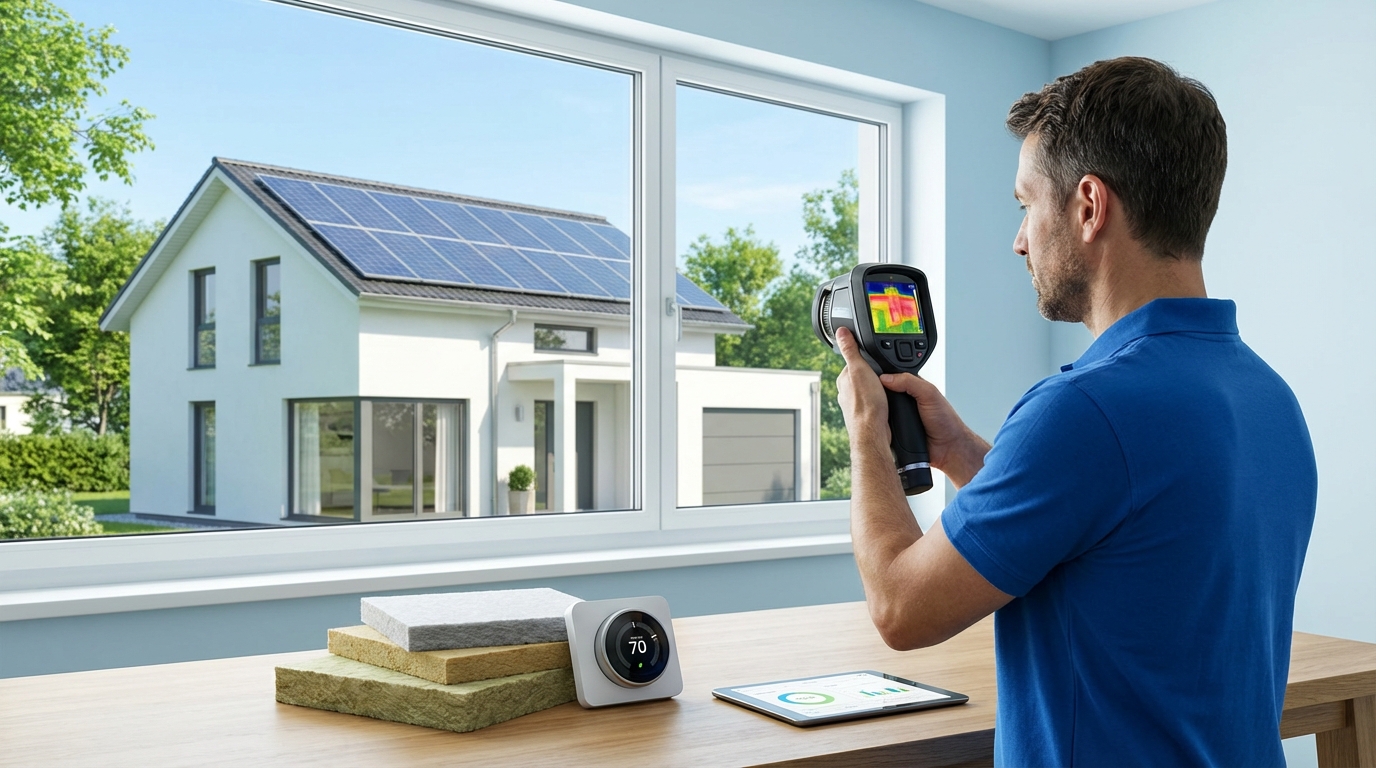
The average American home has enough air leaks to equal leaving a window open every day of the year, driving up heating and cooling costs by 15% to 25%. These invisible gaps in your home's thermal envelope are constantly draining your bank account. So, stopping this energy waste isn't just about comfort; it's about plugging a direct financial leak that inflates your utility bills month after month.
What Home Energy Audit Rebates and Incentives Are Available in My State and From My Utility?
State and utility energy audit rebates in 2026 offer homeowners direct financial incentives, often covering 50-100% of the audit cost, up to $500. These programs are designed to identify energy waste and unlock further funding for upgrades like insulation and heat pumps.
Most 2026 home energy audit rebates are administered directly by local utility companies or state energy offices. And these programs typically offer a flat rebate of $150 to $500 or cover a percentage of the total audit cost, often up to 75%. For example, programs like NYSERDA in New York or Mass Save in Massachusetts provide either free or heavily discounted audits to eligible residents. The goal of these incentives is to create a clear pathway for homeowners to make informed upgrades. But the audit itself is just the first step. So, completing an audit often makes you eligible for thousands of dollars in additional heat pump rebates and insulation incentives. The Database of State Incentives for Renewables & Efficiency (DSIRE) is a critical resource for finding the exact programs available in your zip code.
Am I Eligible for Energy Audit Rebates, and What Equipment Qualifies for Funding?
Eligibility for 2026 energy audit rebates typically requires being a customer of the sponsoring utility and owning a single-family home or small multi-family building. Income-qualified programs often offer free audits, while standard rebates cover the diagnostic service itself, not equipment purchased during the audit.
To qualify for a home energy audit rebate, you must be the homeowner and a customer of the sponsoring utility. And these programs are generally restricted to residential buildings with one to four units. Some programs have additional requirements, such as the age of the home. But the most common differentiator is income. Households earning below 80% of the Area Median Income (AMI) often qualify for completely free audits and increased rebate amounts for subsequent upgrades. The rebate itself applies directly to the cost of the professional audit service. So, this service includes a blower door test, thermographic imaging, and a detailed report. This report is your key to unlocking further funding for specific equipment like new insulation, air sealing, high-efficiency windows, and ENERGY STAR certified appliances.
What is the Application Process for Home Energy Audit Programs, and What Are the Deadlines?
The 2026 application process for energy audit rebates involves finding a certified auditor, scheduling the assessment, and submitting an invoice and application to the utility, often online. Deadlines are typically December 31, 2026, but funding is limited and can be exhausted before year-end.
The application process is designed to be straightforward. First, you must identify an approved contractor through your utility's online portal. Or, you can use a service like DuloCore to find a vetted professional. Once you schedule and complete the audit, the contractor provides an itemized invoice and a findings report. And you will submit these documents, along with a completed rebate application form, through the utility’s website. Some programs require pre-approval before the audit takes place. So, always verify the specific steps with your provider. While most programs list a December 31, 2026 deadline, funding is allocated annually and operates on a first-come, first-served basis. Program funds are often depleted by Q4. Use our free rebate calculator to see what’s available now.
Can I Stack Energy Audit Rebates, and What is the Current Funding Status of These Programs?
Homeowners can often stack a utility rebate for the energy audit itself with federal tax credits for the subsequent energy-efficient upgrades identified in the audit. As of Q1 2026, most state and utility programs are fully funded, but budgets are allocated annually and deplete quickly.
You typically cannot claim two rebates for the exact same energy audit. But you can and should stack incentives across different stages of your home improvement project. For example, your utility may pay $300 for the audit. The federal Energy Efficient Home Improvement Credit (Section 25C) ended for property placed in service after December 31, 2025 (IRS FS-2025-05). Federal tax credits for this work have ended, but state, local and utility rebates may still apply; check what is available at your address with the DuloCore rebate calculator. So, the audit acts as a gateway to unlocking these larger savings. As of early 2026, most state-level programs have received their full annual funding. However, these funds are finite.
"Many states and utilities offer rebates or other incentives for certain energy-saving products and improvements. The Database of State Incentives for Renewables & Efficiency (DSIRE) is the most comprehensive source of information on these incentives." — U.S. Department of Energy
Always check the program's funding status on your utility's website before scheduling an audit.
What Qualifications Should I Look for in a Home Energy Audit Contractor?
A qualified home energy audit contractor for 2026 programs must hold certifications like BPI (Building Performance Institute) or RESNET HERS Rater. These credentials ensure the auditor uses diagnostic tools like blower doors and infrared cameras and is approved by local utility rebate programs.
Don't hire just any contractor. To ensure your audit qualifies for a rebate, the auditor must have the right credentials. The two most recognized certifications in the U.S. are from the Building Performance Institute (BPI) and the Residential Energy Services Network (RESNET). And auditors with these certifications are trained in building science principles and proficient with diagnostic equipment. So, they can accurately pinpoint air leaks, insulation gaps, and HVAC inefficiencies. Most importantly, utility rebate programs maintain a list of pre-approved, certified contractors. Hiring an auditor from this list is often a mandatory requirement for rebate eligibility. A comprehensive home energy audit from a certified professional provides a prioritized roadmap for improvements that maximize both comfort and energy savings.
2026 Home Energy Audit Program Comparison
| Program Name | Rebate Amount | Key Eligibility | 2026 Deadline |
|---|---|---|---|
| State Energy Office (Generic) | Up to $500 or 75% of cost | Must be a homeowner, use an approved auditor | December 31, 2026 (or when funds are depleted) |
| Local Utility Program (Generic) | $150-$300 flat rebate | Must be a utility customer in good standing | December 31, 2026 |
| Income-Qualified Program | 100% of cost (Free Audit) | Household income <80% of Area Median Income | Rolling basis, check for current funding |
Official Sources
- Database of State Incentives for Renewables & Efficiency (DSIRE) — A comprehensive database of state, local, utility, and federal incentives for energy efficiency.
- ENERGY STAR Rebate Finder — An official EPA tool to find rebates on ENERGY STAR certified products in your zip code.
Related Reading: Learn more about Insulation Contractors Near Me and Thermal Bridging Home Audit.
Frequently Asked Questions
How much does a home energy audit cost, and can I get a rebate for it?
A professional home energy audit typically costs between $300 and $700, depending on your home's size and location. And yes, many utility and state programs offer rebates that cover 50-100% of this cost, often capped at around $500. For 2026, these rebates are widely available but require using a program-approved auditor.
What does a home energy audit involve and how long does it take?
A comprehensive audit takes 2 to 4 hours and includes a visual inspection, a blower door test to measure air leakage, and infrared thermography to identify insulation gaps. The auditor will also assess your HVAC system, appliances, and lighting. You'll receive a detailed report with prioritized recommendations for energy-saving improvements within 7-10 business days.
Who qualifies for a free or subsidized home energy audit in my area?
Many states and utilities offer free or heavily subsidized audits for income-qualified households, typically those earning less than 80% of the Area Median Income (AMI). Some utilities also offer free "virtual" or basic audits to all customers. Check your local utility's website for specific 2026 income thresholds and program availability in your area.
Ready to Uncover Your Home's Hidden Energy Savings?
An energy audit is the first step to lowering your bills and unlocking thousands in rebates. Use the DuloCore Rebate Calculator to instantly find out how much you can save on an audit and other energy-efficient upgrades in your area.
Updated: April 14, 2026 — fact-checked by DuloCore Research. About our editorial process.