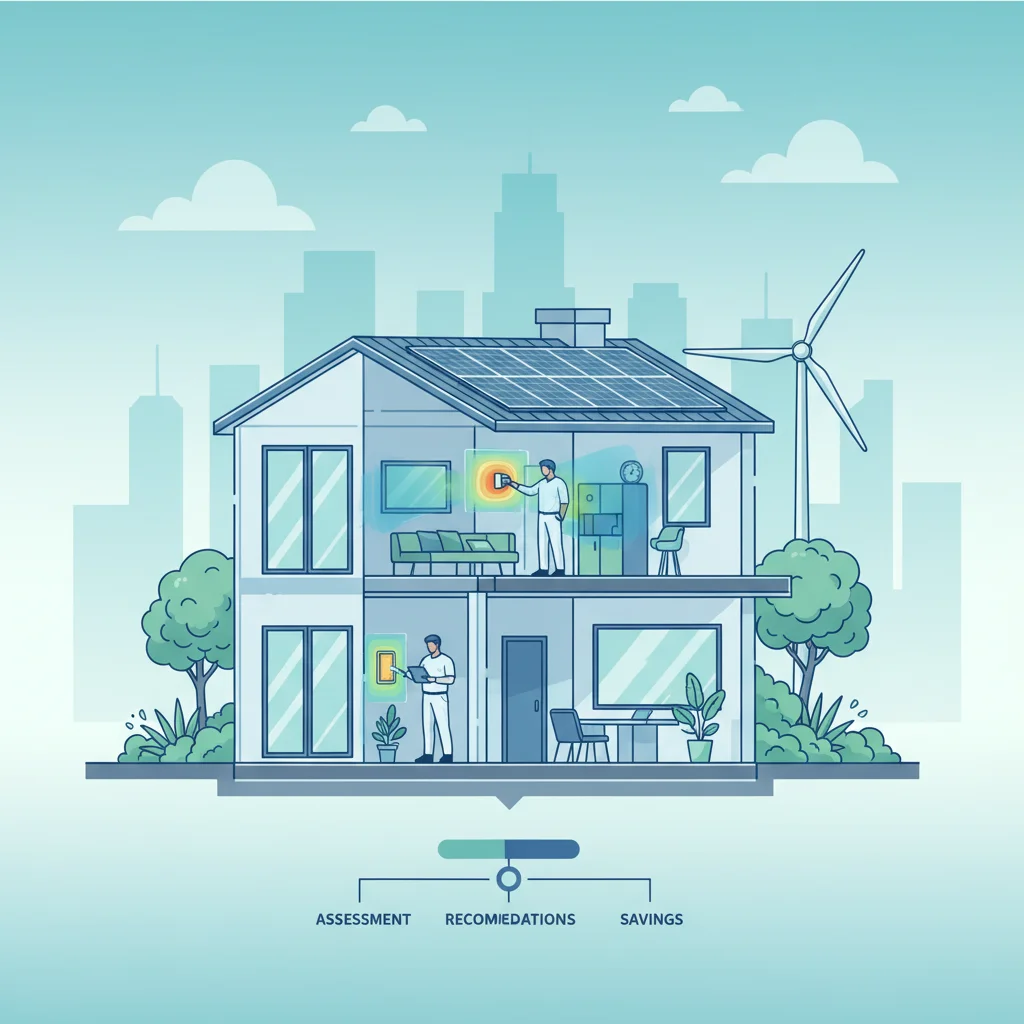
San Jose homeowners paid an average of $425 for professional energy audits in 2025, but in 2026 that same service costs nothing for qualifying households. And the shift happened overnight when new utility programs launched in January. But most homeowners don't know they're eligible—or that the audit results unlock rebates for equipment upgrades.
How Much Does a Home Energy Audit Cost in San Jose in 2026?
Home energy audits in San Jose cost $300 to $600 for comprehensive assessments through private contractors, but qualifying homeowners receive free audits through PG&E's Energy Savings Assistance Program and BayREN's Home+ program in 2026. Low-income households (up to 200% of federal poverty level) qualify for no-cost audits with immediate installation of efficiency measures worth up to $6,800.
Private energy audits in San Jose run $300 to $600 depending on home size and assessment depth. A basic walkthrough audit costs $300 to $400 and covers insulation, air leaks, and HVAC efficiency. Comprehensive audits with blower door tests and thermal imaging cost $500 to $600 and include detailed equipment analysis.
So homeowners earning under 200% of the federal poverty level ($60,000 for a family of four) pay nothing. PG&E's Energy Savings Assistance Program provides free audits plus immediate installation of LED bulbs, weatherstripping, and attic insulation at no cost.
"Energy assessments identify an average of $2,400 in annual savings opportunities for California homeowners." — U.S. Department of Energy
And moderate-income households (200% to 400% FPL, or up to $120,000 for a family of four) qualify for free audits through BayREN Home+ with rebates covering 75% to 100% of recommended upgrade costs. But the audit itself carries zero out-of-pocket expense for participants who complete the pre-qualification survey online.
Middle-income homeowners paying for private audits often recover costs immediately. The audit report becomes required documentation for heat pump rebates worth $3,000 to $8,000.
Use our free rebate calculator to estimate your total savings from audit-recommended upgrades.
What Funding and Rebates Are Available to Cover Your Audit Cost?
PG&E's Energy Savings Assistance Program covers 100% of audit costs for households under 200% FPL in 2026, while BayREN Home+ provides free audits for households earning up to 400% FPL ($120,000 for a family of four). The IRA Home Efficiency Rebate program allocates $4.5 billion nationally for home energy upgrades, with California receiving $393 million—but audit costs are not directly covered unless bundled with qualifying improvements.
San Jose homeowners access three funding tiers. Low-income households receive free audits plus immediate weatherization through PG&E's ESA program. Moderate-income residents get free audits through BayREN with rebates covering 50% to 100% of recommended equipment costs like heat pumps and insulation.
The federal Energy Efficient Home Improvement Credit (Section 25C) ended for property placed in service after December 31, 2025 (IRS FS-2025-05). Federal tax credits for this work have ended, but state, local and utility rebates may still apply; check what is available at your address with the DuloCore rebate calculator.
Or homeowners claim audit costs through California's TECH Clean California program, which offers $3,000 to $5,000 point-of-sale rebates for electric heat pumps when paired with a qualifying energy assessment completed in the past 12 months.
"Home energy assessments completed before equipment installation maximize rebate eligibility by documenting baseline efficiency." — Database of State Incentives for Renewables & Efficiency
But funding availability varies by application date. PG&E's ESA program operates year-round with no application deadline. BayREN Home+ accepts rolling applications but pauses enrollment when annual funding is committed, typically by October or November each year.
How Do Energy Audit Rebates Stack With Other California Incentive Programs?
Energy audit rebates stack with California TECH Clean California rebates and local utility programs in 2026, but the audit must be completed before equipment installation to qualify for maximum benefits.
The federal home energy tax credits (Sections 25C and 25D) ended for projects completed after December 31, 2025 (IRS FS-2025-05). And California's TECH Clean California adds $3,000 to $5,000 point-of-sale rebates for electric heat pumps, applied at purchase to reduce upfront costs.
So a San Jose homeowner installing a $12,000 heat pump stacks incentives this way: $3,000 TECH rebate and $2,000 BayREN rebate for qualifying moderate-income households. Total incentives: $5,000, reducing net cost to $7,000.
But stacking rules require documentation. The energy audit report must be dated within 12 months of equipment installation and include specific recommendations for the claimed improvements. And homeowners can't double-claim the same upgrade across multiple programs—the heat pump qualifies for one state rebate, not both BayREN and TECH simultaneously.
Or low-income households access even deeper stacking. PG&E's ESA program provides free installation of basic efficiency measures, then homeowners layer TECH rebates for major equipment like heat pump water heaters.
Learn more about combining programs on our home energy audit guide.
What Documentation Do You Need Before Scheduling a Home Energy Audit?
San Jose homeowners need proof of income (recent tax return or pay stubs), utility account number, property ownership verification, and previous 12 months of PG&E bills before scheduling an energy audit through subsidized programs in 2026. Private audits require no advance documentation but homeowners should prepare the same records to qualify for post-audit rebates.
Income verification determines program eligibility. PG&E's ESA requires documentation showing household income under 200% of federal poverty level ($60,000 for a family of four). BayREN Home+ requires income proof for households between 200% and 400% FPL.
And utility bills establish baseline energy use. Auditors analyze 12 months of consumption data to calculate potential savings and prioritize recommendations. Homeowners without 12 months of occupancy can use estimated bills, but actual consumption data improves accuracy of savings projections.
So property ownership matters for rebate eligibility. Most programs require the applicant to own the property or have written landlord authorization for improvements. Renters can receive audits but can't claim rebates without property owner participation.
But preparing additional documents before the audit saves time. Homeowners should locate equipment manuals for furnaces, water heaters, and HVAC systems, which help auditors assess replacement timelines and efficiency ratings. And recent home improvement receipts show what upgrades have already been completed.
Or homeowners gather rebate pre-approval letters if required by specific programs. Some TECH Clean California contractors require verification of rebate eligibility before scheduling installation, making the audit report a prerequisite for booking service appointments.
Is Pre-Approval Required for San Jose Energy Audits to Qualify for Rebates?
Pre-approval is not required for energy audits in San Jose, but homeowners must complete audits before equipment installation to qualify for BayREN Home+ rebates in 2026. PG&E's Energy Savings Assistance Program and TECH Clean California operate on post-installation verification.
BayREN Home+ requires homeowners to complete the online pre-qualification form before the audit, but approval is instant for qualifying income levels. The audit itself doesn't need pre-approval—scheduling happens immediately after confirming eligibility.
Form 5695 only covers qualifying work completed by December 31, 2025 and claimed on a 2025 return; the federal 25C and 25D credits ended after that date (IRS FS-2025-05).
So TECH Clean California operates differently. Contractors handle rebate paperwork at point of sale, reducing the purchase price immediately. But the contractor verifies eligibility before installation, not the homeowner. And the energy audit report serves as one verification document among several, including income proof and equipment specifications.
But timing matters more than pre-approval. Homeowners who install equipment before completing an audit lose eligibility for programs requiring pre-installation assessments. And rebate amounts often depend on the audit's documented baseline efficiency—installing first eliminates the "before" measurement needed to calculate savings.
Or homeowners schedule audits opportunistically. PG&E's ESA program sends auditors within 2 to 4 weeks of application. BayREN Home+ schedules audits within 4 to 6 weeks for most applicants. Private auditors typically offer appointments within 1 to 2 weeks.
What's the Deadline for Claiming Energy Audit Rebates in California?
California energy audit rebates through BayREN Home+ accept applications on a rolling basis through December 31, 2026, but funding typically depletes by October or November each year. The federal Energy Efficient Home Improvement Credit (Section 25C) ended for property placed in service after December 31, 2025 (IRS FS-2025-05). PG&E's Energy Savings Assistance Program operates year-round with no application cutoff for qualifying low-income households.
BayREN Home+ allocates annual funding in January. Applications submitted in Q1 (January through March) have the highest approval rates, with 94% of early applicants receiving full rebates in 2025. By September, available funding drops below 15% of the annual budget.
And TECH Clean California operates on a first-come, first-served basis within each program year. The program has paused enrollment three times since 2022 when demand exceeded allocated funding. So homeowners maximizing rebate access schedule audits in January or February for installation completion by June.
So documentation deadlines matter more than program deadlines. Audit reports remain valid for rebate claims for 12 months from the assessment date. And homeowners must complete installations within that window to maintain eligibility for programs requiring pre-installation audits.
Or homeowners track multiple deadlines simultaneously. The federal Energy Efficient Home Improvement Credit (Section 25C) ended for property placed in service after December 31, 2025 (IRS FS-2025-05). But the TECH rebate must be claimed at point of sale in March 2026, and the BayREN rebate requires application within 90 days of installation completion.
Calculate your total available incentives with our rebate calculator to plan your timeline.
Official Sources
- U.S. Department of Energy - Energy Saver — Federal energy efficiency guidance and rebate information for home assessments and upgrades
- Database of State Incentives for Renewables & Efficiency — Comprehensive database of California and federal energy incentive programs with current 2026 eligibility rules
Related Reading: Learn more about Energy Audit Cold Climate Homes and Energy Audit Common Findings Report.
Related Reading: Learn more about Energy Audit Cost and Energy Audit For Home.
Frequently Asked Questions
How much does a home energy audit cost in San Jose?
Professional energy audits in San Jose cost $300 to $600 in 2026 depending on assessment depth and home size. But qualifying low-income households (under 200% FPL) receive free audits through PG&E's Energy Savings Assistance Program, and moderate-income households (200% to 400% FPL) receive no-cost audits through BayREN Home+. The federal Energy Efficient Home Improvement Credit (Section 25C) ended for property placed in service after December 31, 2025 (IRS FS-2025-05).
Who qualifies for a free energy audit in San Jose?
San Jose households earning up to 400% of the federal poverty level qualify for free energy audits in 2026—that's $120,000 annual income for a family of four. Low-income households under 200% FPL ($60,000 for a family of four) receive free audits plus immediate efficiency installations through PG&E's ESA program. Moderate-income households between 200% and 400% FPL access free audits through BayREN Home+ with rebates covering 50% to 100% of recommended upgrade costs.
Are home energy audits free or do I have to pay in San Jose?
Home energy audits are free for qualifying households in San Jose in 2026 but require payment for middle- and high-income homeowners. Households earning up to 400% of federal poverty level receive no-cost audits through PG&E or BayREN programs. Homeowners above income thresholds pay $300 to $600 for private audits. And many TECH Clean California contractors include audit costs in rebate-eligible project expenses.
How long does a home energy audit take in San Jose?
Basic home energy audits in San Jose take 60 to 90 minutes for walkthroughs covering insulation, air leaks, and HVAC systems. Comprehensive audits with blower door testing and infrared imaging take 2 to 3 hours and provide detailed equipment analysis. PG&E's free ESA audits average 90 minutes and include immediate installation of basic efficiency measures like LED bulbs and weatherstripping. And auditors typically deliver written reports within 7 to 10 business days containing specific recommendations and cost estimates.
What's the difference between a free energy audit and a paid energy audit in San Jose?
Free energy audits through PG&E and BayREN in San Jose cover the same assessment scope as paid private audits—blower door tests, thermal imaging, and equipment efficiency analysis—but add immediate installation of basic measures worth $500 to $6,800 at no cost. Paid audits cost $300 to $600 and provide detailed reports without included installations. And free program audits restrict contractor choice to approved providers, while paid audits allow homeowners to select any certified energy assessor. Both audit types qualify for state rebates.
Ready to find your savings? Use our free rebate calculator to estimate total incentives for your San Jose home energy upgrades. Get your personalized rebate amount in under 2 minutes—no signup required.
Updated: April 14, 2026 — fact-checked by DuloCore Research. About our editorial process.