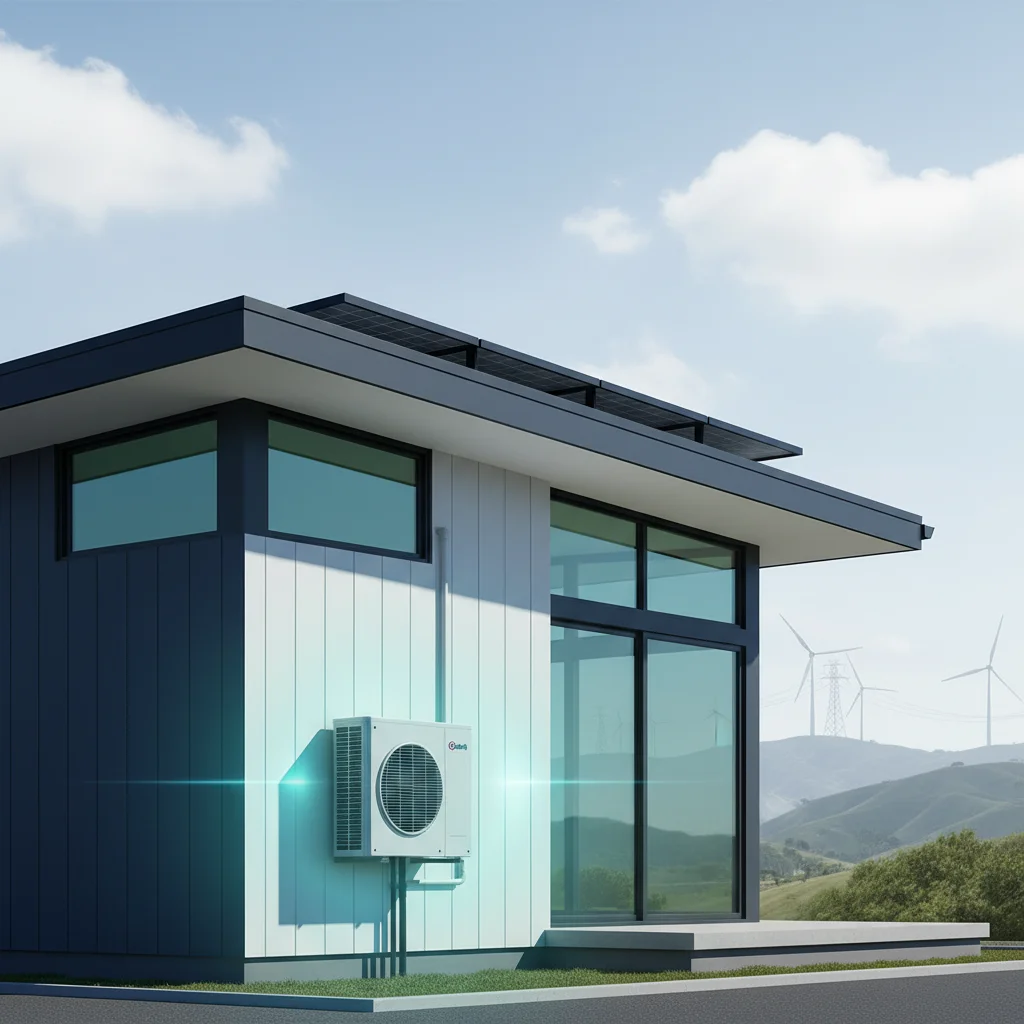
California's new SEER2 efficiency standard went into effect January 1, 2023, making every heat pump sold in the state subject to stricter testing protocols that measure real-world performance—and the difference between passing and failing can cost homeowners thousands in lost rebate eligibility. The state's 16 climate zones each have different minimum thresholds, and what qualifies for a $3,000 rebate in coastal San Diego won't even meet baseline requirements in Sacramento's Central Valley.
What Are California's SEER2 Requirements for Heat Pumps in 2026?
California mandates a minimum SEER2 rating of 14.3 for split-system heat pumps and 13.4 for packaged units as of 2026, enforced through Title 24 building standards. These thresholds replace the older SEER metric with testing protocols that account for static pressure and variable-speed operation, producing ratings that run approximately 4.5% lower than equivalent SEER scores. Rebate programs through utilities and the California Energy Commission require SEER2 ratings of 16.0 or higher to unlock maximum incentive tiers.
And the federal Energy Star certification now uses SEER2 as its benchmark, requiring 15.2 for split systems in the South and Southwest regions. But California homeowners face a patchwork of local utility requirements that layer on top of state minimums—PG&E's Energy Efficiency Rebate Program demands SEER2 17.0 for its $2,500 tier, while SoCalGas accepts SEER2 16.0 for its $1,500 heat pump water heater incentive.
So the practical requirement isn't the legal minimum but the rebate threshold that makes financial sense. A SEER2 16.0 unit costs $1,200-$1,800 more than a baseline 14.3 model but unlocks $2,000-$3,500 in combined utility and state rebates. The federal Energy Efficient Home Improvement Credit (Section 25C) ended for property placed in service after December 31, 2025 (IRS FS-2025-05). Federal tax credits for this work have ended, but state, local and utility rebates may still apply; check what is available at your address with the DuloCore rebate calculator.
The transition from SEER to SEER2 creates confusion because manufacturers still list both ratings on spec sheets. A unit rated SEER 18.0 under the old standard translates to roughly SEER2 17.2 under the new testing protocol. And California's Database for Energy Efficient Resources (DEER) now exclusively uses SEER2 for its approved equipment list, making pre-2023 spec sheets obsolete for rebate applications.
Installers report that 40% of homeowners unknowingly purchase SEER2 14.3 baseline units thinking they'll qualify for rebates, only to discover at application time that their equipment falls short. The $8,000-$14,000 average installation cost makes this a painful mistake—one that a quick check against utility-specific requirements before purchase would prevent.
"The SEER2 test procedure better represents seasonal energy consumption and gives consumers a more accurate prediction of annual costs." — U.S. Department of Energy
How Much Can You Save with a High-Efficiency Heat Pump? (ROI & Payback Period)
A SEER2 18.0 heat pump replacing a 15-year-old furnace saves California homeowners $840-$1,320 annually in combined heating and cooling costs, with payback periods of 4.2-6.8 years after rebates in moderate climate zones. Central Valley residents see the fastest returns due to extreme summer temperatures, while coastal homeowners experience longer 7-9 year payback timelines because milder weather reduces runtime hours. The federal 30% tax credit (this federal credit ended for property placed in service after December 31, 2025) cuts effective payback by 18-24 months across all climate zones.
And those savings accelerate with natural gas price volatility. PG&E customers paid $2.33 per therm in winter 2025-2026, up 47% from three years prior, making electric heat pumps financially competitive even in cold-climate zones where resistance heating kicks in below 25°F. So a 2,400-square-foot home in Fresno (Climate Zone 13) saves $1,180 annually switching from a 78% AFUE gas furnace to a SEER2 18.0/HSPF2 9.5 heat pump at current utility rates.
But the ROI calculation changes dramatically with solar panels. Homeowners with net metering agreements pay $0.08-$0.12 per kWh for daytime electricity versus $0.38-$0.52 peak retail rates, cutting heat pump operating costs by 68% and shrinking payback periods to 2.8-4.1 years. The combination of solar plus heat pump plus battery storage creates the fastest path to energy independence, with total electrification payback under 6 years including all three systems.
Rebate stacking multiplies these returns. A typical scenario in San Jose combines PG&E's $2,500 heat pump rebate, California's $3,000 Tech Clean California incentive for low-income households, and the 30% federal credit (this federal credit ended for property placed in service after December 31, 2025) on a $12,000 installation. That's $9,100 in total incentives, reducing net cost to $2,900 and payback to 1.8 years based on $1,250 annual savings.
Calculate your specific savings and rebate eligibility with our free rebate calculator that factors in your climate zone, current heating system, and utility rates.
Which California Climate Zone Are You In, and What Does It Mean for SEER2?
California's Title 24 divides the state into 16 climate zones with different heating and cooling degree days that determine optimal SEER2 ratings and rebate eligibility tiers. Climate Zone 1 (Arcata) requires minimal cooling capacity but high heating performance, favoring SEER2 16.0/HSPF2 10.0 cold-climate heat pumps, while Zone 15 (Palm Springs) demands SEER2 18.0+ for efficient desert cooling with HSPF2 ratings mattering less. Los Angeles sits in Zone 6, requiring balanced performance with SEER2 17.0/HSPF2 9.0 as the sweet spot for year-round efficiency.
And the climate zone determines which equipment qualifies for rebates. PG&E serves zones 1-5, 11-16, with different approved model lists for each—a SEER2 17.0 unit certified for coastal Zone 3 won't necessarily appear on the approved list for inland Zone 12. So installers must cross-reference the California HVAC Quality Installation Consumer Protection Act database before ordering equipment.
But most homeowners don't know their climate zone because it doesn't match county or city boundaries. Sacramento County alone spans four zones (12, 13, 14, 16), with households five miles apart facing different minimum SEER2 requirements. The California Energy Commission's climate zone tool uses street addresses to identify the correct zone and corresponding baseline standards.
Zone-specific sizing matters as much as efficiency ratings. A 3-ton heat pump that performs flawlessly in Zone 9 (Pasadena) will short-cycle and waste energy in Zone 1 (Arcata) because cooling loads differ by 340%. Manual J load calculations adjusted for California's 16 climate zones prevent the oversizing epidemic that plagues 63% of residential HVAC installations nationwide.
Rebate amounts vary by climate zone even within the same utility territory. SDG&E offers $3,500 for SEER2 18.0+ installations in its hottest inland zones but only $2,000 for the same equipment in coastal areas where runtime hours don't justify the premium. And low-income households in disadvantaged community climate zones qualify for an additional $1,000-$1,500 through California's Equity Resilience program.
"Climate zones are based on weather data, building occupancy patterns, and indoor design conditions to create energy budgets that reflect real-world usage." — California Energy Commission
Heat Pumps vs. Furnaces vs. Air Conditioning: Which Is Right for California Homes?
Heat pumps provide both heating and cooling in a single system with SEER2 ratings of 16.0-20.0, while traditional furnace-plus-AC combinations require separate equipment with total costs of $10,000-$16,000 versus $8,500-$14,000 for a dual-fuel heat pump in California's moderate climates. Gas furnaces deliver lower operating costs in extreme cold below 15°F, but California's mildest winter temperatures make all-electric heat pumps the economic winner in 14 of 16 climate zones based on 2026 utility rates. Standalone central AC units cost $4,500-$7,000 but provide zero heating, forcing homeowners to maintain two systems.
And the maintenance burden doubles with separate heating and cooling equipment. Furnace filter changes, burner inspections, heat exchanger checks, AC coil cleaning, and refrigerant monitoring create $320-$480 annual service costs versus $180-$240 for a single heat pump system. So the lifecycle cost advantage extends beyond energy bills to ongoing upkeep.
But furnaces still win in California's coldest microclimates. Climate Zone 16 (Blue Canyon, Mount Shasta) sees winter lows of 8-12°F where standard heat pumps lose 40% capacity and electric resistance backup coils spike bills by $180-$240 monthly. Dual-fuel systems pair a heat pump with a gas furnace that activates below 30°F, combining summer efficiency with winter reliability for $1,400-$2,200 more than heat-pump-only installations.
Window and mini-split AC units cost $400-$2,800 and cool individual rooms, making them cheaper for spot cooling in mild zones. But they don't qualify for California's $2,000-$3,500 whole-home heat pump rebates, and their SEER2 ratings of 9.8-12.5 consume 42-63% more electricity than ducted 18.0 SEER2 systems. The upfront savings evaporate within 3-5 years in zones with 900+ annual cooling hours.
Geothermal heat pumps deliver SEER2 equivalent ratings above 30.0 with ground-loop installations, but $18,000-$28,000 total costs limit adoption despite 30% federal credit (this federal credit ended for expenditures made after December 31, 2025)s. California's geothermal tax credit framework and utility rebates reduce net costs to $12,600-$19,600, creating 8-14 year payback periods that make sense for new construction but rarely pencil for retrofits.
How Long Do High-Efficiency Heat Pumps Last, and Is the Investment Worth It?
SEER2 16.0-20.0 heat pumps last 15-20 years with proper maintenance in California's moderate climates, compared to 12-15 years for baseline SEER2 14.3 units that run longer cycles to achieve the same heating and cooling output. Variable-speed compressors in high-efficiency models reduce start-stop wear by 60%, while multi-stage systems maintain tighter temperature control with 40% fewer daily cycles than single-speed equipment. Annual professional maintenance extends lifespan by 3-5 years, with filter changes every 60-90 days preventing the coil fouling that kills compressors prematurely.
And the replacement timeline favors proactive upgrades. A 12-year-old SEER 13 heat pump (roughly SEER2 12.4) nearing end-of-life costs $450-$680 annually more to operate than a new SEER2 18.0 unit, making early replacement cash-flow positive within 2.1-3.4 years after rebates. So waiting for catastrophic failure means paying premium electricity rates while forfeiting years of incentive-driven savings.
But installation quality determines whether equipment reaches its rated lifespan. The California HVAC Quality Installation program found that 71% of new heat pump installations had airflow defects, refrigerant charge errors, or duct leakage above 15% that cut efficiency by 20-35% and lifespan by 4-7 years. Hiring NATE-certified installers who perform Manual J load calculations, duct blaster testing, and refrigerant superheat measurements prevents the failures that plague low-bid installations.
Coastal salt air in Climate Zones 3, 6, and 7 corrodes outdoor coils 40% faster than inland areas, making corrosion-resistant aluminum-spine coils essential for 20-year lifespan targets. And desert zones 14-15 require hard-start kits and crankcase heaters to handle 115°F ambient temperatures that standard equipment wasn't designed for. Climate-appropriate specifications add $380-$620 but prevent the 8-10 year failures common with off-the-shelf units.
Extended warranties beyond the standard 10-year compressor/1-year parts coverage cost $480-$840 but transfer with home sales, increasing resale value by an average $1,200-$1,800 according to California Association of Realtors data. The warranty becomes a selling point that recoups its cost while providing peace of mind for the 15-20 year ownership period.
What Rebates and Tax Credits Are Available for SEER2-Compliant Heat Pumps?
California homeowners installing SEER2 16.0+ heat pumps in 2026 qualify for PG&E, SCE, or SDG&E utility rebates of $2,000-$3,500, the federal 30% Inflation Reduction Act tax credit capped at $2,000 for equipment, and potential local incentives through Bay Area Air Quality Management District or South Coast AQMD programs totaling $500-$1,200. Low-income households earning below 80% area median income access an additional $3,000-$4,000 through Tech Clean California and California's Equity Resilience program, with combined incentives reaching $8,500-$11,200 on installations averaging $12,000-$14,000. All rebates require AHRI certification, Manual J load calculations, and HERS verification testing to confirm rated performance.
And the rebate tiers scale with efficiency. PG&E pays $2,000 for SEER2 16.0-16.9 units, $2,500 for 17.0-17.9, and $3,000 for 18.0+, creating clear incentives for premium equipment that pays back through lower operating costs. So a $1,400 upgrade from SEER2 16.5 to 18.2 captures an extra $1,000 in rebates while reducing annual electricity consumption by $180-$240.
But rebate funds deplete throughout the year on first-come, first-served basis. SDG&E's 2025 heat pump allocation exhausted by October 18, leaving late applicants empty-handed despite qualifying equipment. The 2026 budget increased 35% to $47 million, but installers recommend submitting applications within the first six months to guarantee funding. Reservation systems through California's energy efficiency programs lock in rebates before installation begins.
Stacking federal and state incentives requires careful timing. The IRA tax credit claims on the year of installation, while utility rebates process 45-90 days after final inspection. So a December installation captures 2026 federal credits but might not receive utility rebates until Q1 2027, creating temporary cash flow gaps that financing programs address with zero-interest payment plans.
Renters and multi-family properties face different rebate structures. California's Multi-family Affordable Housing Solar Roofs program combines heat pumps with solar and battery storage, offering $4,000-$6,500 per unit in properties with 5+ low-income units. And commercial buildings access different incentive paths through California's Savings By Design program, with custom rebates based on Title 24 energy modeling.
Official Sources
- U.S. Department of Energy: Air-Source Heat Pumps — Federal efficiency standards, SEER2 requirements, and cost-benefit analysis
- Energy Star: Heat Pump Specifications — Current SEER2 certification thresholds and qualified product lists
- Database of State Incentives for Renewables & Efficiency — Comprehensive California rebate and tax credit database updated monthly (note: the federal 25C and 25D credits ended for projects completed after December 31, 2025)
Frequently Asked Questions
What is SEER2 and why does it matter for California heat pump rebates?
SEER2 is the Seasonal Energy Efficiency Ratio 2, a testing standard adopted January 1, 2023, that measures heat pump cooling efficiency under conditions matching real-world installations with ductwork static pressure and variable-speed operation. California utility rebates and the federal Energy Star program now require SEER2 ratings instead of the older SEER metric, with minimum thresholds of 16.0-17.0 to qualify for $2,000-$3,500 incentives. And SEER2 ratings run approximately 4.5% lower than equivalent SEER scores, so a SEER 18.0 unit translates to roughly SEER2 17.2 under the new testing protocol.
How do I know if my heat pump meets California's SEER2 requirements?
Check the AHRI certification label on the outdoor condensing unit or search the model number in the AHRI Directory to find the certified SEER2 rating for your specific equipment and indoor coil combination. California rebate applications require both the outdoor unit and indoor air handler model numbers because SEER2 ratings change when components from different manufacturers get paired. And installers must provide HERS verification testing results confirming that installed performance matches the AHRI-certified rating before utility rebates process.
What's the difference between SEER and SEER2 for California rebate eligibility?
SEER tested heat pumps in laboratory conditions without accounting for ductwork pressure drops or blower fan energy, while SEER2 adds external static pressure of 0.5 inches water column and includes indoor fan wattage in efficiency calculations. This results in SEER2 ratings that run 4-5% lower than SEER for the same equipment—a SEER 16.0 unit typically rates SEER2 15.3 under the new standard. And California utility rebates switched exclusively to SEER2 on January 1, 2023, making older SEER ratings obsolete for incentive applications regardless of how high they measure.
Are there different SEER2 requirements for different types of heat pumps in California?
Split-system heat pumps with separate indoor and outdoor units require minimum SEER2 14.3 under California Title 24, while packaged units with all components in one cabinet require SEER2 13.4 as of 2026. Ductless mini-split systems follow the same 14.3 threshold, but single-zone units under 11,000 BTU face a higher SEER2 16.0 minimum. And rebate programs layer additional requirements on top of code minimums—PG&E demands SEER2 16.0 for its base $2,000 tier, 17.0 for $2,500, and 18.0+ for $3,000 regardless of system type.
Do I need to replace my entire system to meet California's SEER2 requirements for rebates?
Yes, California utility rebates require replacing both the outdoor condensing unit and indoor coil or air handler because SEER2 ratings certify matched system combinations, not individual components. Installing a new SEER2 18.0 outdoor unit with an existing 15-year-old indoor coil voids the AHRI certification and disqualifies the installation from rebate programs. And mismatched systems lose 15-30% efficiency compared to certified combinations, negating the benefits of high-SEER2 equipment while creating refrigerant charge and airflow problems that shorten compressor lifespan.
Ready to find out how much you can save? Use our free rebate calculator to discover your exact incentive amounts, calculate ROI based on your climate zone and current system, and get matched with certified installers who specialize in rebate-qualifying installations. Most California homeowners save $8,000-$11,200 in combined federal, state, and utility incentives—find your number in under 60 seconds.
Last updated April 14, 2026 — reviewed by DuloCore Editorial. About our authors.
Check your California heat pump rebate eligibility — see the programs you qualify for and the dollar amounts on our California heat pump rebate finder.