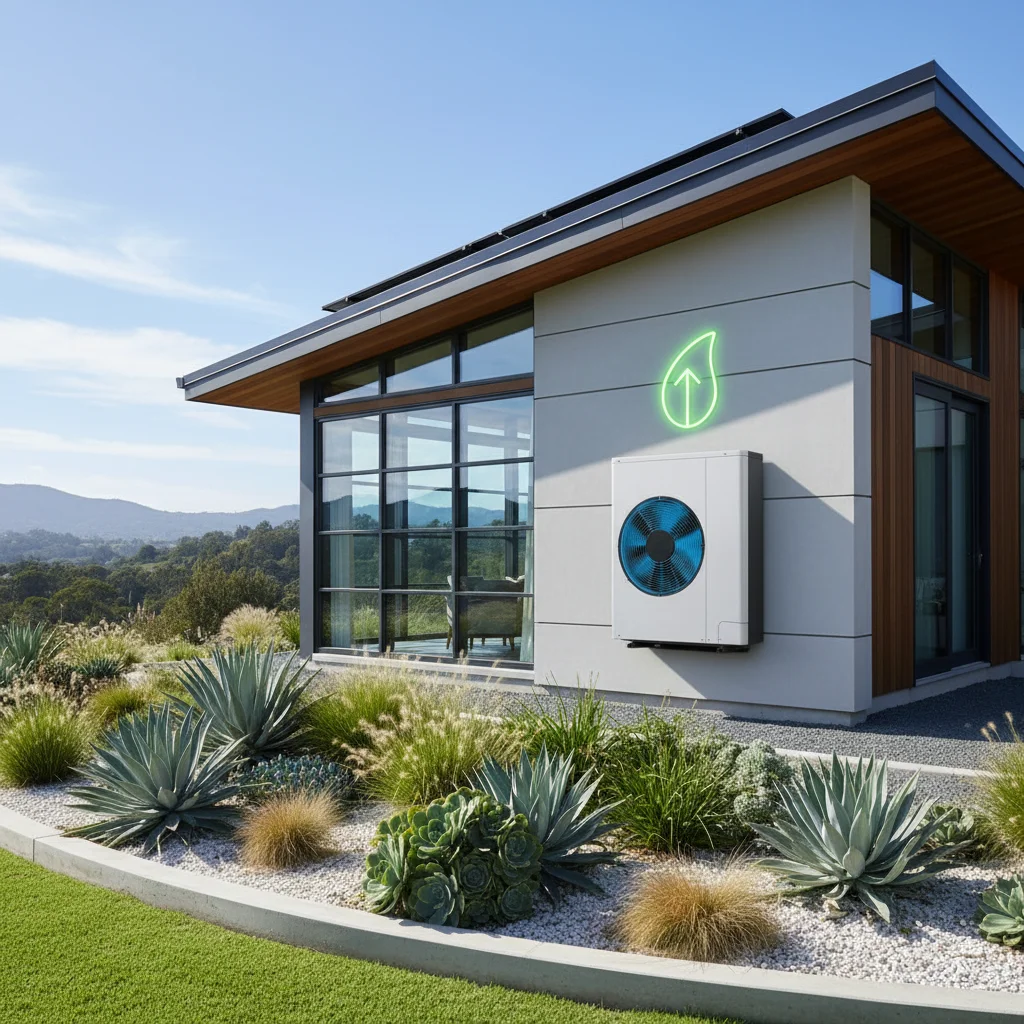
Homeowners replacing aging HVAC systems in 2026 now face a new efficiency benchmark that can swing annual cooling costs by $200 to $600. And the rating system changed in January 2024, rendering a decade of manufacturer marketing materials obsolete overnight. The new SEER2 standard reflects real-world operating conditions rather than lab-optimized fantasies, dropping efficiency claims for most models by 4% to 8% compared to their old SEER ratings.
What SEER2 Rating Should You Look for in a Heat Pump?
SEER2 is a seasonal energy efficiency ratio measuring heat pump cooling efficiency under updated 2024 test procedures. The federal Energy Efficient Home Improvement Credit (Section 25C) ended for property placed in service after December 31, 2025 (IRS FS-2025-05). Federal tax credits for this work have ended, but state, local and utility rebates may still apply; check what is available at your address with the DuloCore rebate calculator. California's Title 24 mandates SEER2 14 or higher for Climate Zones 2-16, while Energy Star certification requires SEER2 15.2 or above.
Most California homeowners install SEER2 16-18 heat pumps, balancing upfront cost against 10- to 15-year operating expenses. And these mid-tier models qualify for the $2,000 federal tax credit under the Inflation Reduction Act's Efficient Home Improvement Credit. Premium models reaching SEER2 20-22 cost $1,500 to $3,000 more but reduce cooling costs by 20% to 25% compared to minimum-efficiency units.
But climate zone dictates optimal efficiency. Coastal regions rarely justify SEER2 above 16 due to mild summers, while inland valleys see payback periods shrink to 4 to 6 years for SEER2 20+ systems. So homeowners in Fresno or Sacramento gain $400 to $600 in annual cooling savings with high-efficiency models, recovering the premium in half the time compared to San Francisco buyers. Check our rebate calculator to model savings for your specific location and cooling load.
How Does SEER2 Compare to SEER Ratings for Heat Pumps?
SEER2 ratings run approximately 4% to 8% lower than legacy SEER ratings for the same physical equipment due to updated test standards implemented January 1, 2024. A heat pump rated SEER 18 under pre-2024 testing protocols typically achieves SEER2 16.5 to 17 under current procedures. The Department of Energy revised test conditions to reflect external static pressure, off-mode power consumption, and variable-speed compressor cycling patterns ignored in the original 1992 SEER methodology.
The conversion isn't linear across efficiency tiers. And budget models show smaller gaps—SEER 14 equipment often lands at SEER2 13.4 to 13.8—while premium variable-speed systems experience larger drops. But manufacturers can't simply relabel products; every model required new testing and compliance certification by January 2024. So any heat pump manufactured or imported after that date must display SEER2 ratings on its EnergyGuide label.
California's Title 24 and federal energy tax credits transitioned to SEER2 thresholds in 2024, creating confusion for homeowners comparing pre-2024 quotes against current equipment. A contractor's 2023 proposal for a SEER 16 system doesn't guarantee the 2026 replacement model qualifies for tax credits at SEER2 15. Verify current ratings before finalizing purchases.
What Are the Best Heat Pump Alternatives to SEER2-Rated Models?
Ductless mini-split heat pumps operate independently of SEER2 ratings, using instead the SEER2 metric for ducted systems but often marketed under their own EER2 (Energy Efficiency Ratio 2) cooling scores and HSPF2 (Heating Seasonal Performance Factor 2) for heating. Premium multi-zone mini-splits reach EER2 12 to 14, delivering equivalent or superior efficiency to SEER2 20-22 ducted systems while eliminating 25% to 40% of energy losses associated with ductwork.
Geothermal heat pumps bypass SEER2 entirely, rated instead by EER for cooling and COP (Coefficient of Performance) for heating. And geothermal systems achieve EER 16 to 30 by exchanging heat with stable 55°F to 60°F ground temperatures rather than fluctuating outdoor air. But installation costs range from $18,000 to $35,000 for ground loop drilling, compared to $8,000 to $15,000 for ducted air-source heat pumps.
The federal Residential Clean Energy Credit (Section 25D) ended for expenditures made after December 31, 2025, and the IRS treats an expenditure as made when installation is completed (IRS FS-2025-05). California's TECH Clean California initiative offers additional $3,000 to $5,000 rebates for heat pump water heaters paired with geothermal HVAC installations. Review current heat pump rebates to compare total cost of ownership across technologies.
How Much Can You Save on Energy Costs With a High SEER2 Heat Pump?
California homeowners replacing SEER 10 central air conditioning with SEER2 16 heat pumps reduce annual cooling costs by $280 to $520, based on PG&E's average $0.38 per kWh residential electricity rate and 1,000 to 1,800 cooling hours per year. And upgrading from SEER2 14 minimum-efficiency models to SEER2 20 systems saves an additional $140 to $210 annually in inland climate zones. But coastal regions with under 600 cooling hours see smaller savings of $80 to $120 per year for the same efficiency jump.
Heating mode delivers larger savings for California's 3,000 to 5,000 heating hours. HSPF2 9.5 to 10 heat pumps cut natural gas furnace operating costs by 45% to 60%, saving $600 to $1,100 annually at current $2.40 per therm gas prices. So total year-round savings for a SEER2 18/HSPF2 10 system reach $900 to $1,600 compared to a 15-year-old furnace and air conditioner combination.
But savings vary by square footage and insulation quality. A poorly insulated 2,400-square-foot home in Riverside runs cooling loads 35% to 50% higher than an equivalent Energy Star-certified home, extending payback periods from 5 years to 8 or 9 years for premium SEER2 20+ equipment. California's Energy Upgrade California program offers $4,000 to $8,000 in combined rebates for whole-home retrofits pairing heat pumps with attic insulation and air sealing.
Are There Tax Credits or Rebates Available for SEER2 Heat Pumps?
The federal Energy Efficient Home Improvement Credit (Section 25C) ended for property placed in service after December 31, 2025 (IRS FS-2025-05). Form 5695 only covers qualifying work completed by December 31, 2025 and claimed on a 2025 return; the federal 25C and 25D credits ended after that date (IRS FS-2025-05). But the $2,000 cap combines all qualified home improvements—installing both a heat pump and heat pump water heater in the same year doesn't double the credit.
California utilities layer state incentives atop federal credits. PG&E's Energy Efficiency Rebate program offers $500 to $2,000 for SEER2 15+ heat pumps in CARE/FERA income-qualified households. And SCE's Residential Rebate program provides $1,500 to $3,000 for ducted heat pump installations replacing electric resistance heat or natural gas furnaces. SMUD delivers $3,000 for SEER2 16+ models in Sacramento County through its Heat Pump Rebate program.
So a Fresno homeowner installing a $12,000 SEER2 18 heat pump system captures $2,000 federal credit plus $2,500 PG&E rebate, reducing net cost to $7,500. But rebates require pre-approval and licensed contractor installation—DIY projects forfeit utility incentives even if they qualify for federal credits. And combine heat pump rebates with weatherization programs; California's Building Initiative for Low-Emissions Development (BUILD) program offers $4,500 for heat pump installations paired with home electrification upgrades.
What's the Installation Cost for a High SEER2 Heat Pump System?
California contractors charge $8,500 to $18,000 for complete ducted heat pump installations, with SEER2 14-16 systems landing at $8,500 to $12,000 and SEER2 18-22 models reaching $13,000 to $18,000. And costs scale by tonnage—2-ton systems for 1,000-square-foot homes start at $8,500, while 5-ton units for 2,800-square-foot homes run $14,000 to $18,000. But existing ductwork conditions swing quotes by $2,000 to $5,000; homes with undersized or leaking ducts require $3,500 to $7,500 in HVAC duct replacement before heat pump installation.
Variable-speed inverter compressors add $1,800 to $3,200 to system costs but deliver 8% to 15% better seasonal efficiency than single-stage models at the same nominal SEER2 rating. And smart thermostats with demand response capability cost an additional $300 to $500 but unlock $50 to $125 annual utility bill credits through PG&E's SmartRate and SCE's Demand Response programs.
So total project costs including ductwork, electrical panel upgrades (15% to 25% of installations require $1,200 to $2,500 panel upgrades), and permits range from $11,000 to $24,000 before rebates and tax credits. But net costs after applying $2,000 federal credits and $1,500 to $3,000 utility rebates drop to $6,500 to $19,000. Finance programs through HERO, Ygrene, and Renew Financial offer PACE loans at 5.5% to 7.9% APR for 15- to 20-year terms, with payments structured as property tax assessments.
Official Sources
- ENERGY STAR Heat Pumps — Federal certification requirements and qualified product lists for SEER2-rated systems
- Department of Energy Save Hub — IRA tax credit guidance, rebate program details, and energy efficiency resources (note: the federal 25C and 25D credits ended for projects completed after December 31, 2025)
- DSIRE California Incentives — Comprehensive database of state, utility, and local rebate programs with current 2026 eligibility rules
Related Reading: Learn more about Hers Rating Home Energy.
Frequently Asked Questions
What does SEER2 rating mean for heat pumps?
SEER2 measures seasonal cooling efficiency under Department of Energy test standards implemented January 1, 2024. The rating represents BTUs of cooling delivered per watt-hour of electricity consumed across a typical cooling season. And SEER2 tests include external static pressure and off-mode power draw ignored in legacy SEER calculations, producing ratings 4% to 8% lower for equivalent equipment.
How does SEER2 rating affect heat pump efficiency and energy savings?
Each SEER2 point above the federal minimum of 13.4 reduces annual cooling costs by 6% to 8% for California homeowners. A SEER2 18 system uses 30% less electricity than a SEER2 14 model for the same cooling output. So upgrading from minimum-efficiency to mid-tier equipment saves $200 to $350 annually in inland climate zones with 1,200+ cooling hours.
What SEER2 rating do I need to qualify for federal tax credits?
The federal Energy Efficient Home Improvement Credit (Section 25C) ended for property placed in service after December 31, 2025 (IRS FS-2025-05). And systems must also meet EER2 12 cooling efficiency and HSPF2 9 heating efficiency thresholds. The federal Residential Clean Energy Credit (Section 25D) ended for expenditures made after December 31, 2025, and the IRS treats an expenditure as made when installation is completed (IRS FS-2025-05).
How is SEER2 rating different from the old SEER rating?
SEER2 testing adds external static pressure of 0.5 inches water column to simulate real ductwork resistance, while legacy SEER tests used zero static pressure. And SEER2 accounts for off-mode electricity consumption from crankcase heaters and controls. So the same physical heat pump scores SEER2 16.5 under new tests versus SEER 18 under pre-2024 protocols.
Does a higher SEER2 rating mean lower operating costs?
Higher SEER2 ratings reduce per-hour cooling costs but total savings depend on climate and usage patterns. A SEER2 22 system costs 35% less per cooling hour than SEER2 14 equipment. But coastal California homes using 400 cooling hours annually save only $80 to $120 yearly, while Fresno homes running 1,600 hours save $450 to $600 with the same efficiency upgrade.
Ready to calculate your heat pump savings? Use our free rebate calculator to estimate federal tax credits, utility rebates, and annual energy cost reductions for your specific home and climate zone. Get personalized quotes from California-licensed contractors and compare total cost of ownership across SEER2 efficiency tiers.
Updated on April 14, 2026. Fact-checked by DuloCore Editors. About our research team.
Check your California heat pump rebate eligibility — see the programs you qualify for and the dollar amounts on our California heat pump rebate finder.